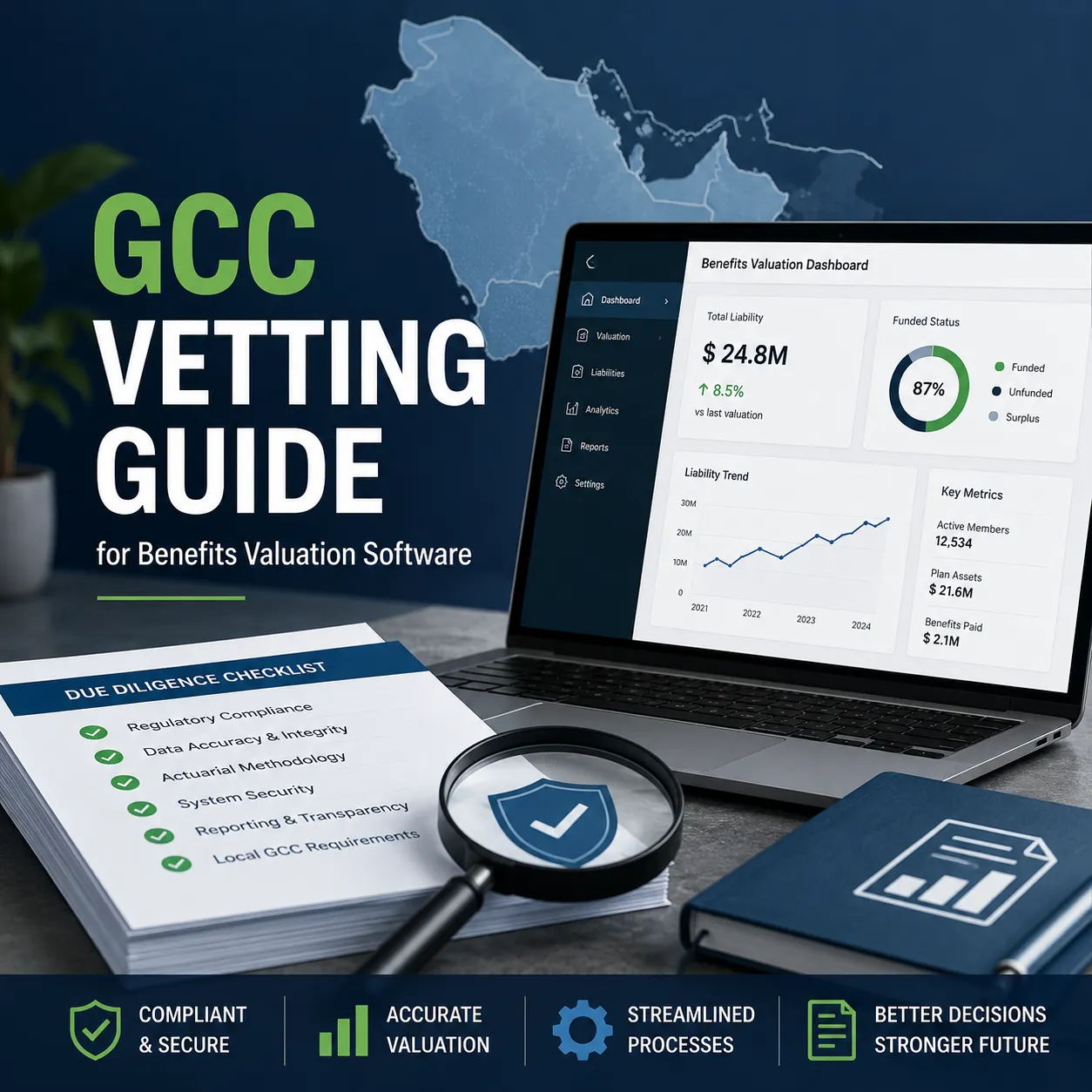
Finance and actuarial teams in the GCC use this guide to assess end of service benefits valuation software before committing to a vendor — covering calculation methodology, regional compliance, integration depth, and the red flags most procurement checklists miss.
✓ Written by IFRS TECH’s advisory team · ✓ Serving GCC, Europe & APAC · ✓ Actuaries + CPAs + CFAs
TL;DR
Choosing the right benefits valuation software for Middle East contexts isn’t a standard procurement exercise. The GCC’s end of service benefits valuation requirements differ country by country, and the wrong software will produce liabilities your auditors won’t sign off on. This article covers the five criteria that separate capable tools from costly mistakes, the red flags most teams ignore, and a practical checklist for regional end of service evaluations. Don’t shortlist a vendor until you’ve run them through these questions.
Why Most GCC Teams Get This Decision Wrong
EOSB liabilities across GCC companies sit at over USD 400 billion on corporate balance sheets, with USD 100 billion of that in the UAE alone. That’s not a footnote figure. It’s a number that moves auditors, boards, and regulators.
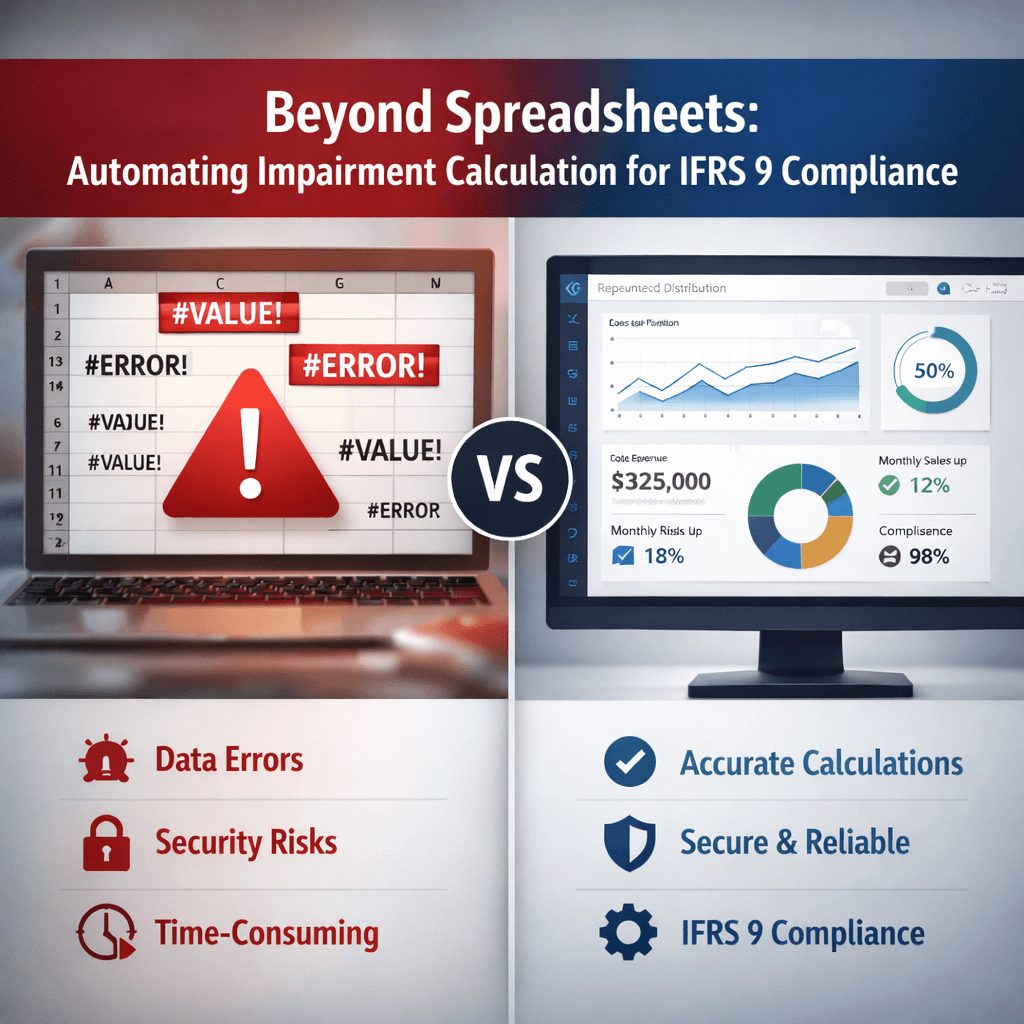
And yet, one in four finance teams in the region still use spreadsheets or generic actuarial tools for their end of service benefits valuation middle east work. The result? Liability estimates that break down the moment a country changes its labor law, discount rate assumptions that don’t reflect local bond markets, and valuation dashboards that can’t answer basic audit questions without a week of manual work.
The problem isn’t that good software doesn’t exist. It’s that most teams vet it like they’d vet any other accounting tool.
What this article covers:
- The five core vetting criteria for end of service benefits valuation software in the Middle East, with specific questions to ask vendors
- Regional requirements that generic platforms consistently fail to handle
- A practical checklist for regional end of service evaluations before sign-off
IFRS TECH’s advisory team has supported gratuity valuation processes across Saudi Arabia, the UAE, Bahrain, Kuwait, and Oman. The criteria below reflect what actually breaks in production, not what looks good in a demo.
Not sure how your current tool stacks up? See how IFRS TECH’s IAS 19 Valuation Tool handles GCC-specific gratuity calculations and real-time reporting →
What Makes Benefits Valuation Software Different in the Middle East?
Before getting into criteria, it’s worth being clear about why generic valuation software fails here. The GCC isn’t just one compliance environment with a single set of rules.
Jurisdiction-Specific Gratuity Calculation Logic
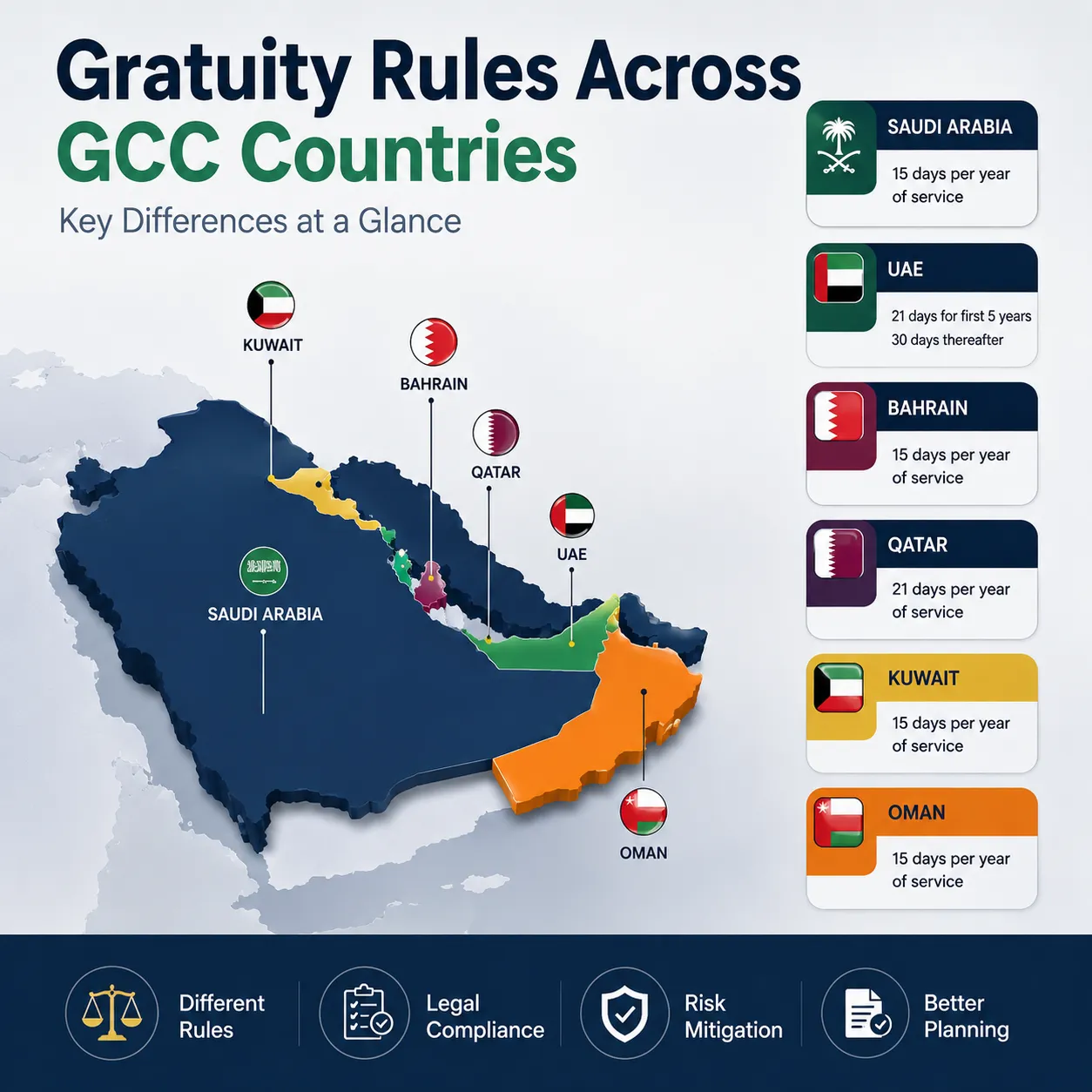
Saudi Arabia calculates gratuity under Royal Decree No. M/51. The UAE operates under separate labor law, with Ministerial Decree No. 1 of 2024 adding new requirements. Bahrain became the first GCC country to fully replace the traditional gratuity model with a funded system in March 2024. Qatar and Oman each tie their EOSB calculations to Wage Protection System records.
That’s five different calculation frameworks in one region. A platform that treats “GCC” as one market will produce incorrect liabilities in at least some of those jurisdictions.
Ask any vendor: does your calculation engine hold separate logic for each GCC country, or does it apply a single gratuity methodology across the region? If the answer isn’t specific, that’s your answer.
Multi-Currency and Multi-Entity Reporting
Most listed companies in the GCC operate across multiple countries. A Saudi group might have entities in the UAE, Bahrain, and Oman, each with local employees, local currencies, and local labor laws. Your benefits valuation software needs to consolidate those into group-level IFRS reporting without manual reconciliation in between.
This is an area where many tools claim capability they don’t actually have. I’ve seen finance teams spend two weeks manually combining country-level outputs from software that marketed itself as “multi-entity.” Full stop.
Local Data Residency and Privacy Compliance
Saudi Arabia’s PDPL regulations and the UAE’s data laws require that employee data stays within approved jurisdictions. The GCC reported businesses face potential losses of USD 1.3 billion from data breaches. That risk is real for any platform that stores employee compensation data on servers outside the region.
Cloud-based valuation tools built on Oracle Cloud or equivalent infrastructure with confirmed PDPL compliance aren’t a luxury — they’re a baseline requirement for any Saudi-listed entity or company operating under CITC oversight.
Quick self-check: Can your current benefits valuation software generate a separate IAS 19 liability report for each GCC entity your group operates in, without manual data stitching between exports? If not, your audit risk is higher than your last valuation report shows.
The Core Vetting Criteria for End of Service Benefits Valuation
These five criteria define good middle east tools. Run every shortlisted vendor through each one before you move to demo.
Criterion 1 — Does the Calculation Engine Actually Handle GCC Labor Law?
This is the first question, not the fifth. Plenty of platforms claim IAS 19 compliance. Far fewer have calculation logic that correctly handles the difference between a Saudi resignation with less than two years’ service and a UAE termination under the 2024 decree.
The right approach is to ask the vendor to walk you through the calculation for a specific scenario — a UAE employee with eight years’ service who resigns voluntarily. Ask them to show you the calculation logic, not just the output. If they can’t explain where each input feeds in real-time, the tool is probably a black box you’ll have to defend to your auditors anyway.
For teams managing IAS 19 actuarial valuation across multiple entities, this distinction matters even more. The Projected Unit Credit method must be applied correctly per entity, not approximated at group level.
Criterion 2 — How Does the Valuation Dashboard Present Assumptions?
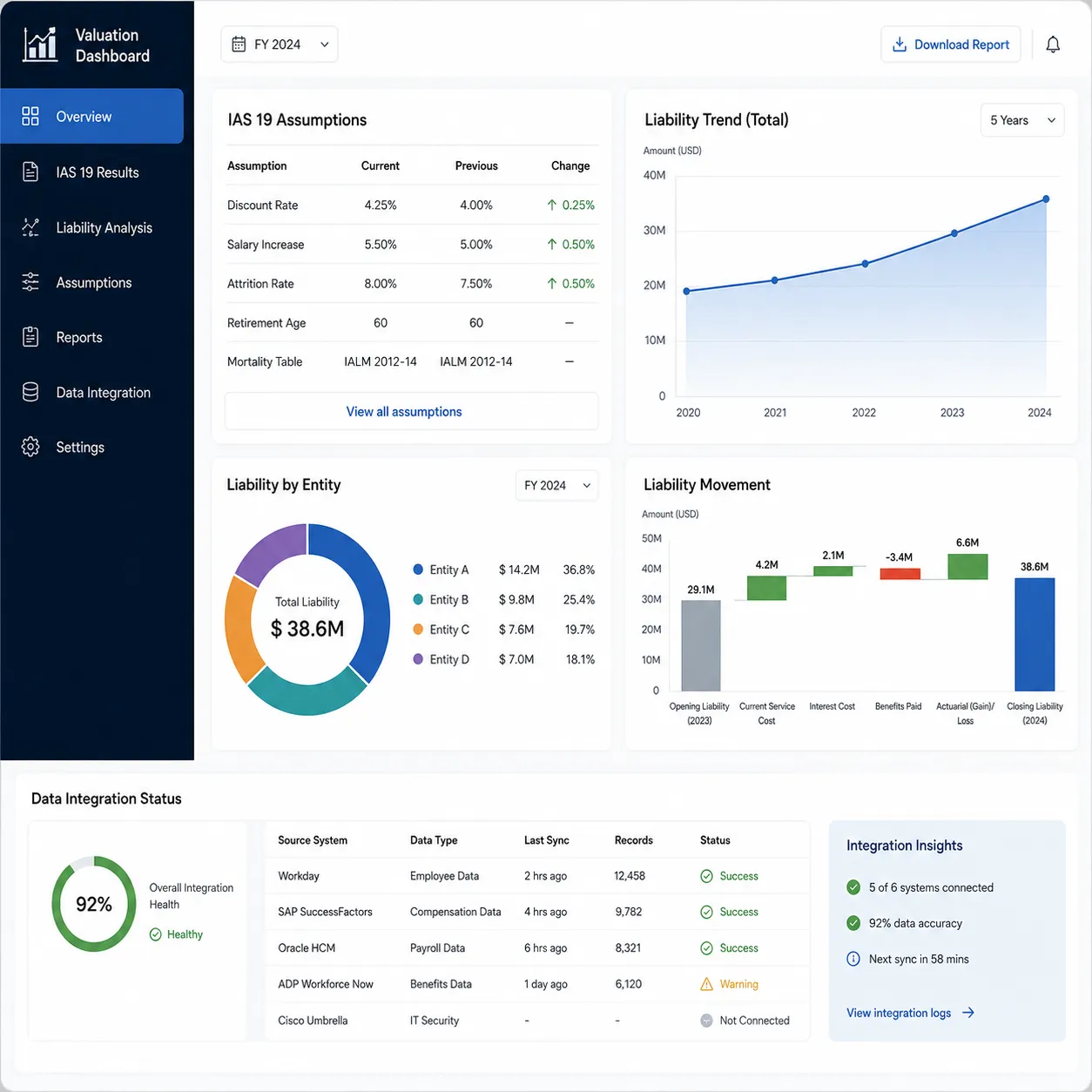
A valuation dashboard that shows you a liability number without surfacing the assumptions behind it is not a valuation tool — it’s a calculator. And calculators don’t get auditors comfortable.
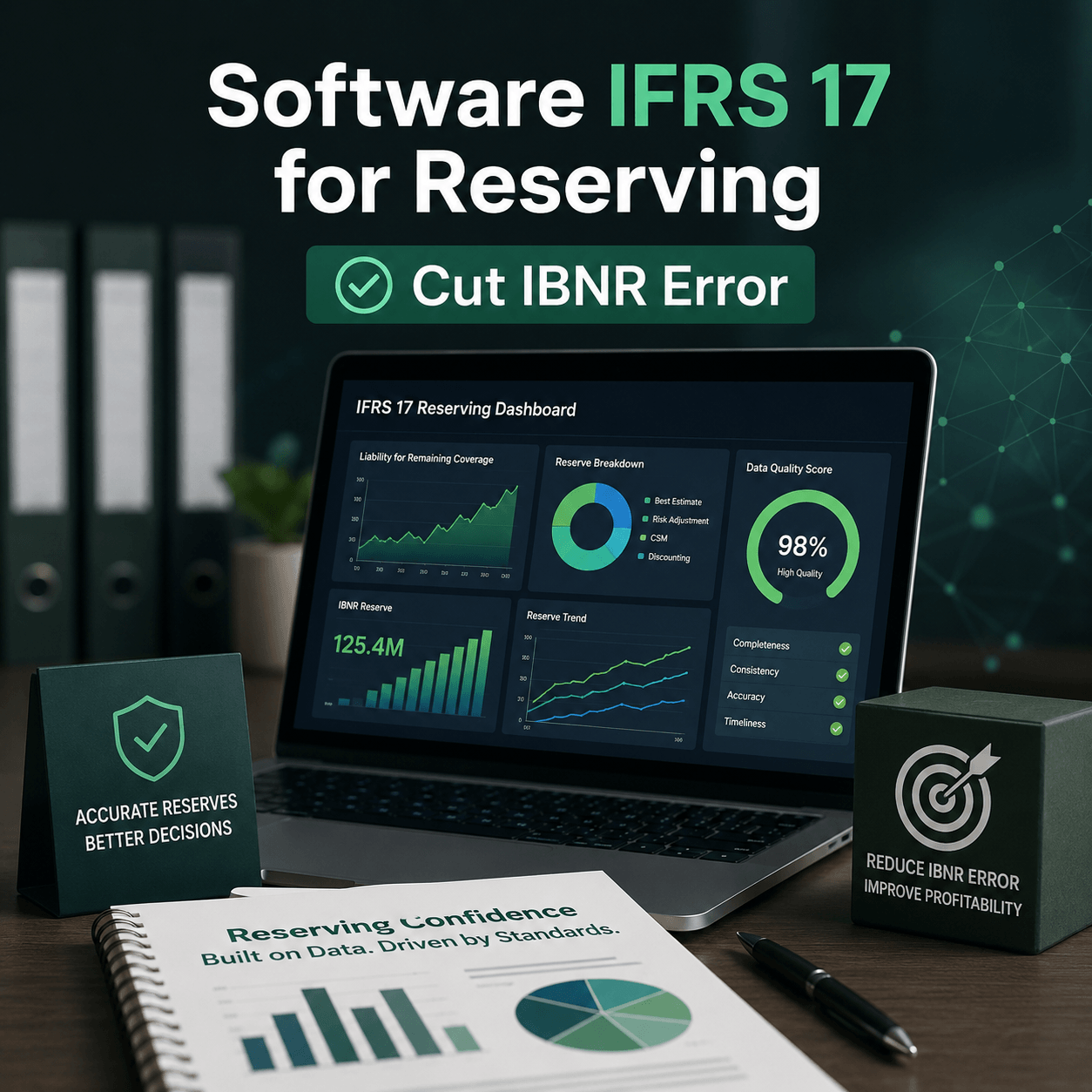
Your dashboard needs to show discount rates, salary escalation assumptions, employee turnover rates, and mortality tables — per entity, per period, with version history. When your auditor asks why the discount rate changed between Q2 and Q3, you should be able to pull that answer in 30 seconds.
Some platforms bury assumptions in a settings panel that most users never open. That’s a red flag. If the assumption logic isn’t front-and-center in the reporting view, the tool wasn’t built for audit scrutiny.
Download: IFRS TECH’s Benefits Valuation Software Vetting Checklist
A five-page checklist covering all criteria in this article, built for GCC finance teams preparing for vendor demos. Includes specific questions to ask, red flags to watch for, and decision scoring.
📧 Send to: [email protected] with subject line “Vetting Checklist” — or take IFRS TECH’s 5-question Benefits Software Readiness Assessment to see where your current setup falls short.
Criterion 3 — Can It Run Real-Time Valuation Software Updates?
The GCC regulatory environment changes fast. Bahrain replaced its gratuity model in March 2024. The UAE launched two new EOSB savings schemes in July 2024, with contributions of 5.83% of salary for the first five years, rising to 8.3% thereafter. That kind of regulatory shift breaks tools with static calculation logic.
Real-time valuation software doesn’t mean live stock-price feeds. It means the platform updates its assumption defaults when regulatory parameters change, lets you rerun valuations against revised inputs without starting over, and produces updated outputs within minutes rather than days.
Ask vendors: what was the last regulatory change in the GCC that required an update to their calculation engine, and how long did that update take? If they can’t name a specific regulatory change, they probably haven’t been tracking GCC labor law the way you need them to.
Teams relying on manual IAS 19 valuation processes should note: every manual step you add between a regulatory change and your updated valuation is a window for error.
Criterion 4 — How Deep Is the IAS 19 Methodology Baked In?
There’s a difference between a platform that supports IAS 19 and one where IAS 19 is the core architecture. The first category will get you into trouble the moment your auditor asks for a sensitivity analysis or corridor amortization. The second category produces audit-ready reports with every assumption documented and every calculation traceable.
The Projected Unit Credit method isn’t optional under IAS 19. Neither is the disclosure of actuarial gains and losses in Other Comprehensive Income. Your software needs to generate those disclosures automatically, not prompt you to manually enter them.
For a full breakdown of how robust actuarial valuation software for IAS compliance should behave, the IASB’s own guidance on IAS 19 is worth reading alongside any vendor pitch.
Criterion 5 — What Does Integration with HR Systems Look Like?
Cloud tools reduce total cost of ownership by 30 to 40 percent compared with on-premise alternatives, but that advantage disappears quickly if your benefits valuation software can’t pull clean data from your HRIS.
Many teams focus too heavily on price and too lightly on integration. If the tool can’t read from SAP SuccessFactors, Oracle HCM, or whatever system holds your GCC headcount data, your valuations aren’t accurate — they’re approximations based on whatever your HR team last exported to a spreadsheet.
Get the vendor to show you a live data pull from an HR system during the demo. Not a mock dataset. Not a CSV upload. A live pull. If they pivot away from that request, take note.
IFRS TECH’s advisory team has completed IAS 19 gratuity valuations for over 200 entities across the GCC, including listed companies audited by all Big Four firms. See the IAS 19 Valuation Tool.
Red Flags That Should End a Vendor Conversation
Most vetting processes focus on what a tool does. This one is about what to watch for.
- The demo only shows one country’s calculations. A regional tool should demo Saudi Arabia and UAE in the same session. If the vendor switches from jurisdiction to jurisdiction by manually changing settings, the multi-country logic isn’t automated — it’s a workaround.
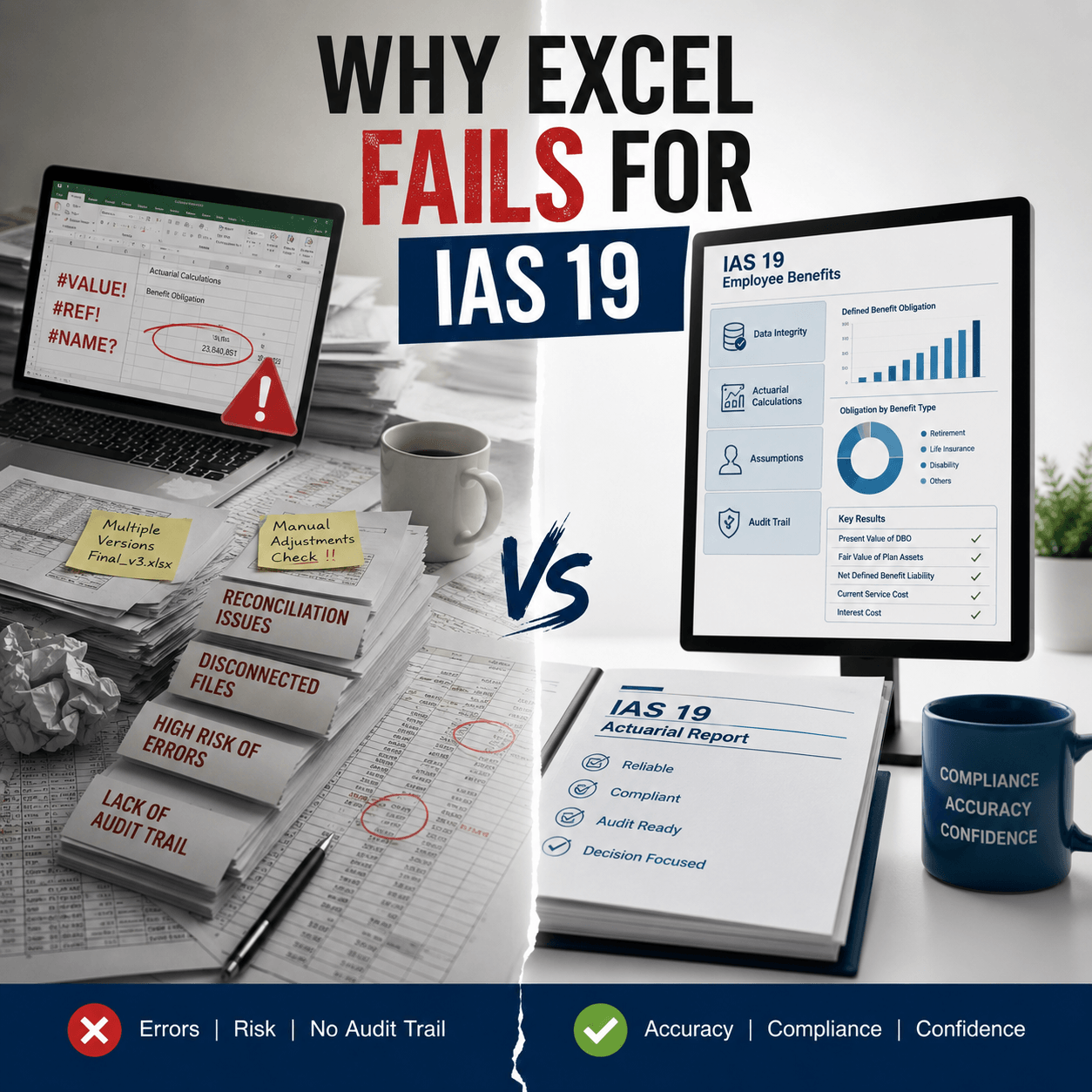
- Audit trails are described as “reports.” An audit trail is a timestamped, version-controlled log of every assumption change and calculation run. A report is a summary document. These are not the same thing.
- The vendor can’t name their signing actuary. Any tool producing IAS 19 valuations for external reporting needs a qualified actuary to sign the output. If the vendor is vague about who holds that credential, your auditor will not be.
- Data residency is an afterthought. GCC penalties for data compliance failures now start at AED/SAR 100,000 and escalate to operational blocks on visas, tenders, and services. A vendor who can’t confirm where your employee data is stored in the first sales call is telling you something important.
One Criterion Most Teams Skip Entirely
You might think the most important vetting question is about calculation accuracy. It’s not.
It’s about what happens when something goes wrong during your audit. Because it will. A discount rate assumption gets challenged. An employee record is missing. A country-level output doesn’t reconcile with the group figure.
The real test of a benefits valuation software vendor is their response time and depth of support in that moment. Not their SLA document. Not their onboarding team. Their actual actuaries.
Ask for a named contact who holds a Fellow-level actuarial qualification, their average response time is during year-end reporting periods, specifically November through February when most GCC entities are finalizing annual statements, the person who signs your valuation report or if there’s a layer of account management between you and them.
I don’t have hard data on how often support failures cause audit delays versus calculation errors. But based on what I’ve seen in GCC audit rooms, it’s closer than most teams expect.
Checklist for Regional End of Service Software Evaluations
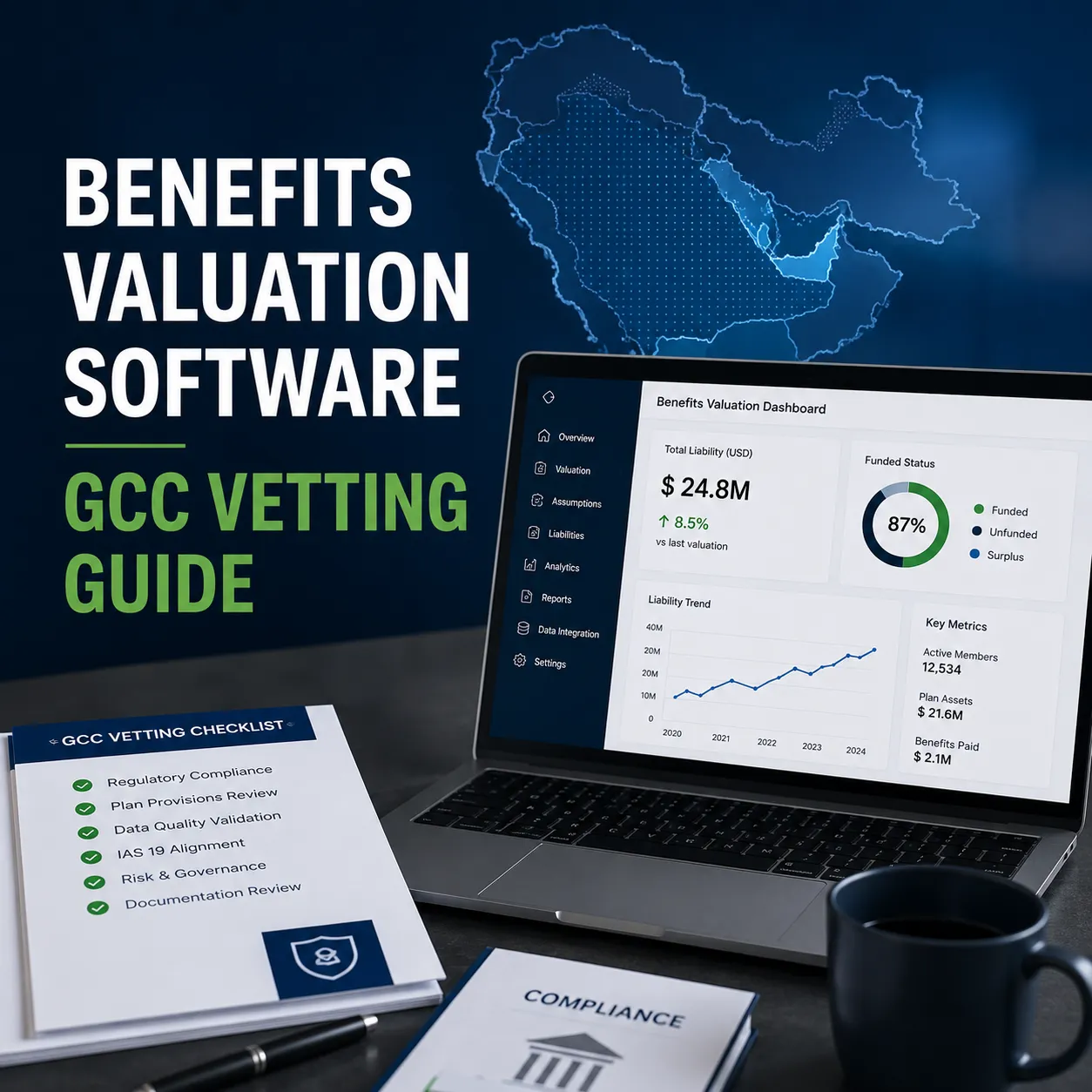
Use this before your final vendor shortlist. These are the questions for avoiding poor vetting in gratuity software decisions.
- Does the calculation engine hold separate logic for each GCC country’s labor law, including Saudi Arabia’s Royal Decree M/51 and UAE’s 2024 labor decree?
- Can the platform produce separate IAS 19 reports per entity and consolidate them at group level without manual intervention?
- Where is employee data stored, and does the vendor confirm compliance with Saudi PDPL and UAE data protection laws?
- Does the valuation dashboard surface discount rate, salary escalation, and turnover assumptions in the main reporting view with full version history?
- How long did it take the vendor to update the platform following the UAE EOSB Savings Scheme launch in July 2024?
- Can the tool run a live data pull from your HR system during the demo, using real employee records?
- Who is the named Fellow-level actuary who signs your valuation output, and what is their typical response time during year-end?
- Does the platform support both the traditional gratuity model and the new UAE Savings Scheme contribution model in parallel?
For IAS 19 pension valuation platforms, add questions about corridor method support, OCI disclosure generation, and multi-plan sensitivity analysis.
What Good End of Service Benefits Valuation Middle East Software Looks Like in Practice
The best criteria for asset benefits contexts in the GCC come down to one practical test: can a finance team produce a signed, audit-ready IAS 19 valuation report for a multi-entity GCC group within 48 hours of receiving updated employee data?
That’s the bar. Not a polished demo. Not a reference list of named clients. The 48-hour test.
Platforms that pass it tend to share a few characteristics. They’re built on actuarial methodology from the ground up, not retrofitted onto general compliance software. They connect directly to HR systems rather than depending on CSV imports. And they’re backed by qualified actuaries who understand that the IAS 19 valuation process doesn’t end when the calculation runs — it ends when the auditor signs the financial statements.
IFRS TECH’s share plan valuations and accounting software and the IAS 19 Valuation Tool are built for exactly this context — GCC entities that need regional compliance depth, real-time updates, and actuary-backed reporting without the lag of traditional consulting cycles. For teams also managing pension obligations, the pension actuarial valuation software page covers what to look for there.
What You Now Know
- Benefits valuation software for the Middle East must hold separate calculation logic per GCC jurisdiction — tools that treat the region as a single compliance environment will produce inaccurate EOSB liabilities in at least some countries.
- The five core vetting criteria (calculation engine depth, dashboard transparency, real-time updates, IAS 19 methodology, HR integration) separate capable platforms from costly shortcuts.
- The most overlooked vetting criterion is actuary-level support during audit — not what’s in the SLA, but who picks up when your Q4 valuation gets challenged by your external auditor at 11pm.
GCC EOSB liabilities don’t stay still. Saudi Arabia, the UAE, Bahrain, and Qatar are all in active reform cycles. The benefits valuation software you choose today needs to track those changes, not just report on yesterday’s calculations. Run the checklist above on every vendor. Push for the 48-hour test. And if your current tool can’t tell you, in plain language, exactly which actuary will sign your IAS 19 report — that’s a procurement decision worth revisiting before your next audit cycle starts.
See how IFRS TECH’s IAS 19 Valuation Tool team handles GCC-specific gratuity valuations →
Built on Oracle Cloud, PDPL-compliant, and backed by qualified actuaries serving Saudi Arabia, UAE, Bahrain, and beyond. Your next audit-ready valuation report starts here.
Explore the IAS 19 Valuation Tool
✓ Signed actuarial reports · ✓ GCC jurisdiction logic · ✓ Real-time regulatory updates
Frequently Asked Questions
What criteria define good benefits valuation software for the Middle East?
Good benefits valuation software for the Middle East must hold separate calculation logic per GCC country, apply the IAS 19 Projected Unit Credit method correctly, surface all actuarial assumptions in the reporting view, connect directly to HR systems, and be backed by a qualified signing actuary. Regional data residency compliance with PDPL and UAE data laws is non-negotiable for listed entities.
How does end of service benefits valuation middle east differ from global EOSB software?
GCC EOSB rules vary country by country. Saudi Arabia, the UAE, Bahrain, Qatar, and Oman each apply different calculation formulas, service thresholds, and termination-type adjustments. Global platforms that treat gratuity as a generic defined benefit obligation typically fail to handle these distinctions accurately, which creates audit exposure for any entity with regional operations.
What are the red flags in choosing benefits valuation providers for the GCC?
Key red flags include: demo limited to one country’s calculations, audit trails described as report summaries, no named Fellow-level signing actuary, and vague answers on data residency. Any vendor that can’t confirm compliance with Saudi PDPL or UAE data protection requirements in the first conversation is a risk, given penalties that now escalate to operational blocks on visas and tenders.
How does a valuation dashboard improve gratuity valuation accuracy?
A well-built valuation dashboard surfaces discount rates, salary escalation assumptions, and employee turnover rates per entity with full version history. This lets finance teams answer auditor questions in real time rather than rebuilding assumptions manually. Platforms where assumptions are buried in settings panels, rather than the main reporting view, consistently cause delays during year-end audit reviews.
What is the checklist for regional end of service evaluations before vendor sign-off?
Before signing off on any end of service benefits valuation software, confirm: jurisdiction-specific calculation logic per GCC country, direct HR system integration, PDPL-compliant data storage, real-time regulatory update capability, a named signing actuary, and the ability to run a 48-hour full-group valuation. Generic platforms almost always fail at least two of these eight checkpoints.