TL;DR
Choosing the right IAS 19 valuation tools directly affects how fast and accurately your finance team closes its books. This article compares cloud and on-premise options across cost, accuracy, security, and HR system integration. Cloud tools reduce total cost of ownership by 30 to 40 percent and cut reporting timelines by days. On-premise tools give your IT team more control but carry higher overhead and slower deployment. Read the full guide to compare your options and pick the right fit before your next reporting cycle.
Your organization’s IAS 19 valuation tools determine how fast and accurately you can close your books.
Finance teams reporting under IFRS are under increasing pressure to produce auditor-ready outputs on tight deadlines.
So the real question isn’t whether to upgrade your approach to IAS 19 valuation. It’s whether cloud-based options are right for your team.
From there, this article breaks down the real differences between cloud and on-premise IAS 19 valuation tools, what to look for before you choose, and which questions to ask vendors.
What Are IAS 19 Valuation Tools in the Cloud?
IAS 19 valuation tools are software systems that calculate employee benefit obligations under the IAS 19 Employee Benefits standard.
Cloud-based versions of these tools run on remote servers and connect through the internet, rather than sitting on your company’s own hardware.
The infrastructure isn’t yours to manage. Instead, you access the software through a browser or secure connection, and the vendor handles updates, backups, and security patches.
In other words, that’s the core distinction.
Key Features of Cloud-Based Actuarial Tools
Most cloud IAS 19 tools include automated actuarial calculations using the Projected Unit Credit Method, as required by the standard.
On top of that, they offer real-time data processing, role-based access controls, HR system integrations, and instant report generation.
The better platforms include scenario testing, sensitivity analysis, and IAS 19 disclosure note generation built directly into the workflow.
How Cloud Technology Supports IAS 19 Compliance
IFRS requires organizations to apply consistent actuarial assumptions, document them fully, and produce auditable output. Cloud IAS valuation platforms are built to support this. As a result, assumption libraries, calculation audit trails, and report templates are stored centrally, so your team works from a single version of the truth.
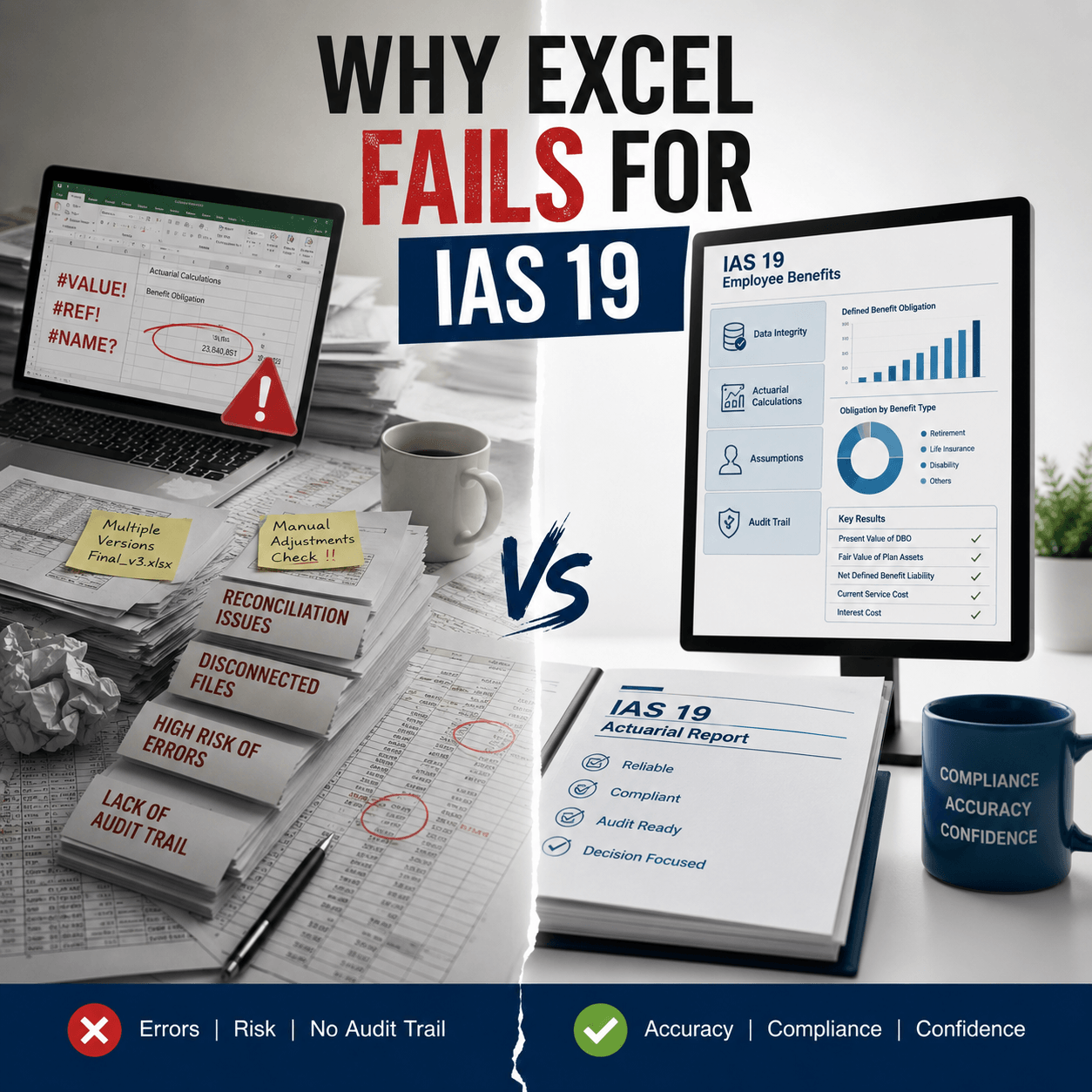
That’s a meaningful difference from maintaining spreadsheets or on-premise tools with version control issues.
Benefits of Cloud-Based IAS 19 Valuation Tools
Switching to cloud-based IAS 19 tools isn’t just a technology choice. That said, the real impact shows up in how your finance team operates day to day.
Scalability and Cost Efficiency
Cloud deployments scale with your organization without requiring hardware investment. Research from MI shows cloud-native deployments in pension administration software can produce 30 to 40 percent reductions in total cost of ownership, driven by lower IT overhead and elastic scaling versus on-premises systems.
Because of that, you pay for what you use. If your workforce size changes or you need to run more frequent IAS valuations, the platform grows with you.
Real-Time Data Access and Automation
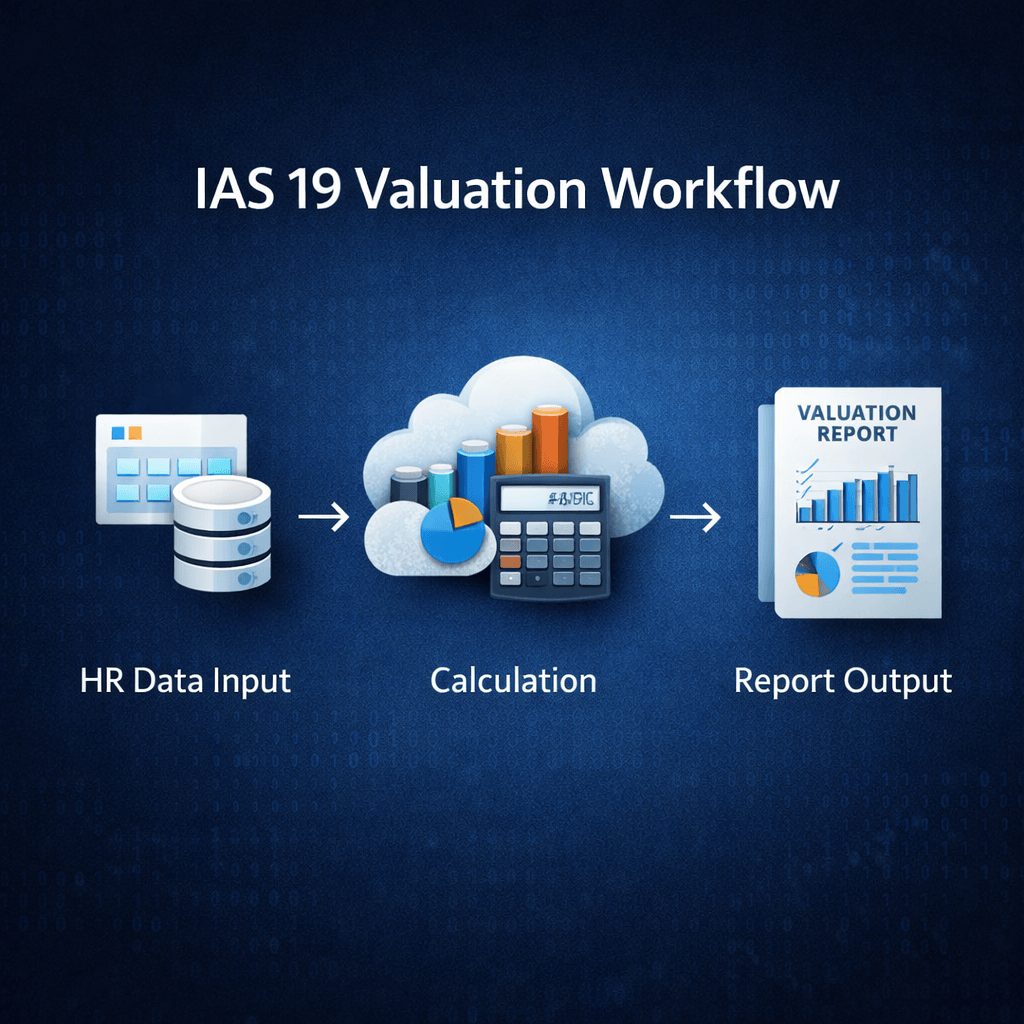
Cloud IAS 19 tools connect directly to your HR platform and pull employee data automatically. No manual uploads, and transcription errors stop being a factor.
That’s why most valuation delays actually come from data handling. Fixing that single step can cut your reporting timeline by days.
Improved Accuracy and Compliance
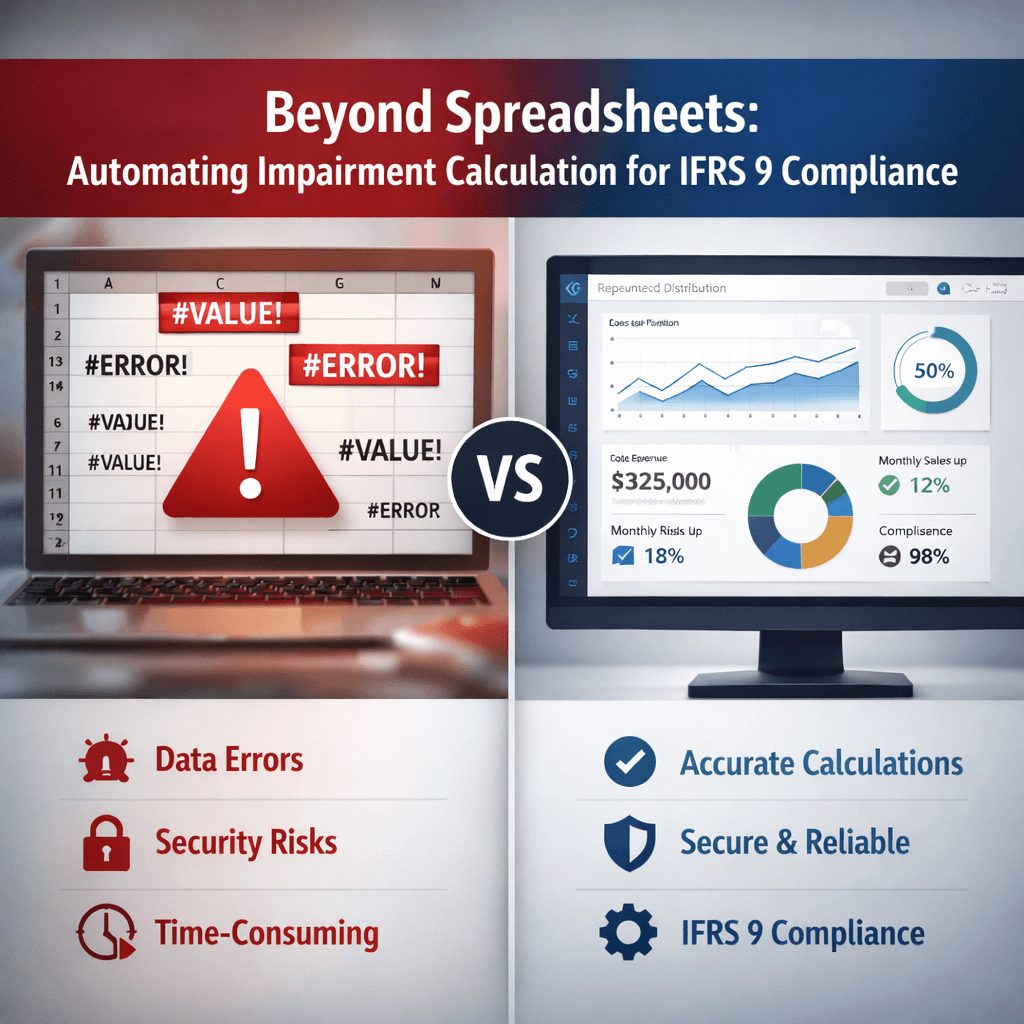
Manual errors are common in spreadsheet-based IAS 19 valuations. Cloud IAS tools apply validated calculation logic consistently across every run.
In turn, they update automatically when IFRS guidance changes, so your team isn’t manually adjusting formulas or tracking standard revisions.
Key Considerations When Choosing IAS 19 Valuation Tools
Not every cloud IAS tool fits every organization. Here’s the thing: what works for a regional bank won’t necessarily work for a mid-size manufacturer.
Data Security and Regulatory Compliance
Your IAS 19 valuation data includes sensitive employee information. Before shortlisting any vendor, know exactly how they store, encrypt, and protect it.
Look for ISO 27001 certification, end-to-end encryption, and clear data residency policies before signing anything.
Integration with HR and Payroll Systems
The accuracy of your IAS 19 valuation depends directly on the quality of your input data. If the tool can’t connect cleanly to your HR system, you’re still doing manual data work. That’s why teams reviewing ias 19 pension valuation platforms should treat integration depth as a primary selection criterion, not a secondary one.
Ask vendors specifically which HR platforms they support, how the integration is set up, and what happens when your HR system updates.
Customization and Reporting Capabilities
Auditors come with specific expectations around output format and documentation. On the flip side, your finance team has internal workflows and system formats they rely on.
Check whether the platform produces IAS 19 disclosure notes, sensitivity analyses, and signed actuarial reports in formats that import directly into your accounting system.
Cloud vs On-Premise IAS 19 Valuation Tools
This comparison shapes most evaluation decisions. Still, both options can produce compliant IAS 19 outputs. The real difference is in how you get there.
Cost Comparison and ROI
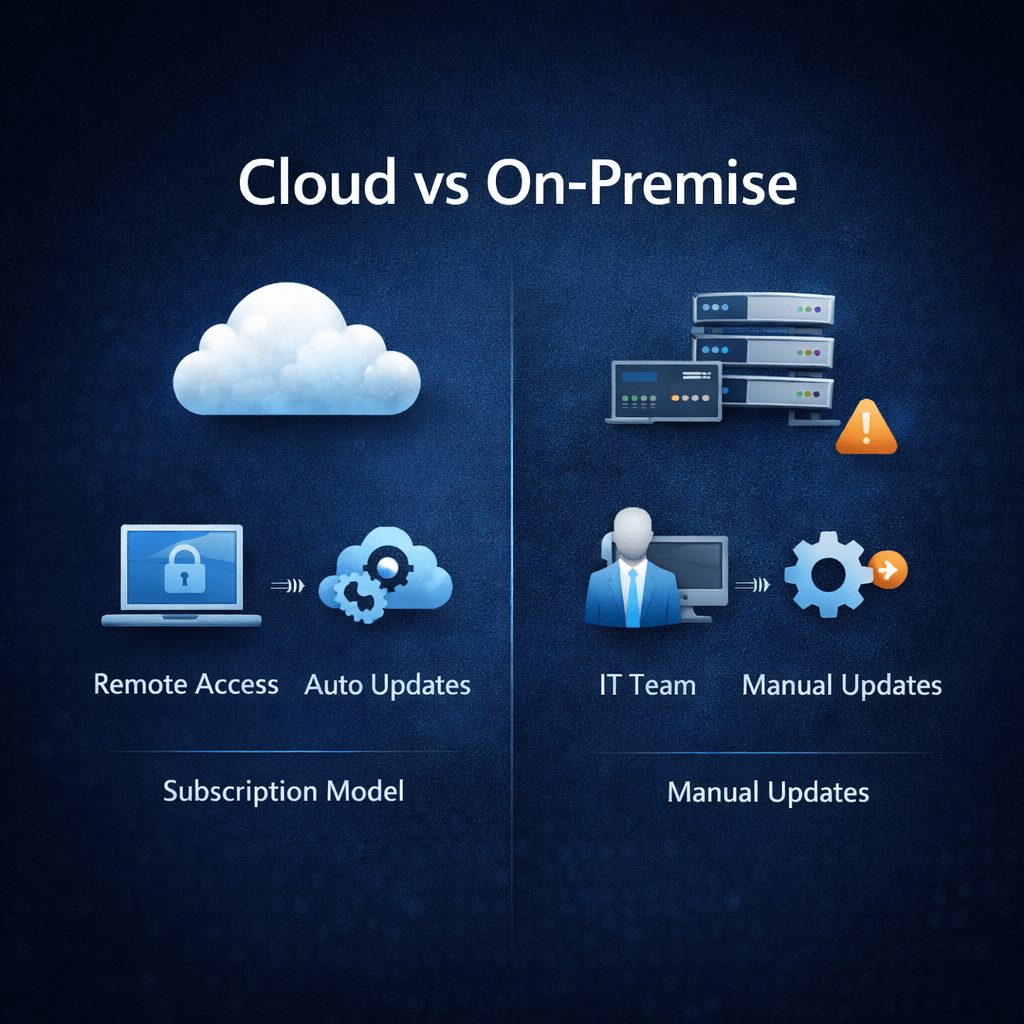
On-premise tools carry upfront licensing costs, server hardware, and ongoing IT support. At the same time, cloud tools typically use subscription pricing, which spreads cost over time. The global actuarial modeling software market reached USD 2.05 billion in 2024, according to DI, and is projected to reach USD 4.48 billion by 2033, with cloud-based deployment gaining significant traction due to subscription pricing and reduced on-premises infrastructure needs.
For most mid-size organizations, cloud tools offer a faster return on investment because you skip hardware procurement entirely.
Flexibility and Deployment Speed
Cloud IAS 19 tools deploy faster, with implementation timelines typically measured in weeks, not months.
Then again, on-premise deployments require IT coordination, server configuration, and longer testing cycles. That’s time your team isn’t running valuations.
Maintenance and IT Dependency
With on-premise IAS tools, your IT team is responsible for uptime, patches, and disaster recovery. That’s a real operational cost that often isn’t captured in initial budget comparisons.
So naturally, cloud vendors handle all of that. Your team focuses on valuations, not server maintenance.
How to Evaluate the Best IAS 19 Valuation Tools
The evaluation process matters more than most teams realize. A poor tool selection will cost you more in rework than the software ever saved you.
Must-Have Features Checklist
To start with, check that any platform meets these baseline requirements before you shortlist it. Teams reviewing ias 19 actuarial valuation software should use the following criteria as a starting point for vendor conversations.
- Automated Projected Unit Credit Method calculations
- HR system integration with data validation
- Built-in IAS 19 assumption libraries with audit documentation
- Sensitivity analysis and scenario testing
- Signed actuarial reports and disclosure note generation
- Role-based access and multi-factor authentication
- ISO 27001 or equivalent security certification
- Financial statement integration exports
Questions to Ask Before Choosing a Tool
Don’t rely on vendor demos alone. More importantly, ask direct questions about the things that actually matter in your reporting environment.
- How does the platform apply IAS 19 discount rate assumptions?
- What HR systems do you integrate with natively?
- Can your output formats be imported directly into our accounting system?
- How are calculation methodology updates handled when IFRS guidance changes?
- What does your data security architecture look like in detail?
- What’s the typical implementation timeline for an organization our size?
Common Mistakes to Avoid
Many teams focus too heavily on price and too lightly on integration. If the tool can’t pull clean data from your HR system, your valuations aren’t accurate.
For that reason, skipping the audit trail review is another mistake that comes back to hurt teams later. Auditors will ask for documentation of every assumption change, and if the platform can’t produce that automatically, you’re back to manual work.
Are Cloud-Based IAS 19 Tools Secure and Reliable?
This is the question most finance leaders ask first, and it’s the right one to ask.
Let’s be clear: cloud IAS valuation platforms built for enterprise use maintain ISO 27001 certification, end-to-end encryption, and role-based access controls as standard.
Data is encrypted in transit and at rest. Reputable vendors can show you their security architecture, penetration testing history, and compliance certifications on request.
On the other hand, on-premise tools aren’t automatically more secure. Security depends on your IT team’s capacity, your patching schedule, and your disaster recovery plan. Cloud vendors employ dedicated security teams to handle all of this full time.
Future Trends in IAS 19 Valuation Technology
The tools available for IAS valuation are advancing quickly. What’s interesting is that what’s standard today wasn’t even available five years ago.
AI and Automation in Actuarial Valuation
AI-assisted assumption setting is becoming more common in actuarial software. Platforms can now analyze historical workforce data and suggest discount rates, withdrawal rates, and salary growth assumptions based on actual demographic patterns.
Still, that doesn’t replace actuarial judgment. It means your team spends less time on assumption research and more time on review and interpretation.
Cloud Adoption Trends in Financial Reporting
Cloud adoption in financial reporting software is accelerating.
As a result, the actuarial modeling software market, valued at USD 2.05 billion in 2024 per DI, is being shaped by subscription pricing, remote access needs, and the growing complexity of IFRS disclosure requirements.
Organizations that delay cloud adoption for IAS 19 tools will find the gap between their process efficiency and industry practice widening year over year.

Final Checklist for Selecting IAS 19 Valuation Tools
Use this before you make a final vendor decision on your IAS 19 valuation tools.
- Does the platform use the Projected Unit Credit Method as specified in IAS 19?
- Does it connect directly to your HR system without manual data prep?
- Does it produce IAS 19 disclosure notes and signed actuarial reports automatically?
- Does the vendor hold ISO 27001 or equivalent security certification?
- Does the platform support unlimited scenario testing and assumption adjustments?
- Can it export reports directly into your financial reporting or accounting system?
- Does it provide a full audit trail for all assumption changes and calculation runs?
- Is the implementation timeline realistic for your next reporting cycle?
People Also Ask About IAS 19 Valuation Tools
What is the difference between cloud and on-premise IAS 19 valuation software?
Cloud IAS 19 software runs on vendor-managed servers and is accessed through the internet. On-premise software is installed and maintained on your organization’s own hardware. Cloud tools typically offer faster deployment, lower IT overhead, and automatic updates. On-premise tools give your IT team more direct control over infrastructure.
How accurate are cloud-based IAS 19 valuation tools?
Cloud IAS 19 tools that use the Projected Unit Credit Method and integrate directly with HR systems are highly accurate. Accuracy depends on the quality of your input data, the platform’s assumption validation logic, and whether the calculation engine is independently reviewed. Most enterprise-grade cloud platforms meet audit requirements without exception.
What actuarial assumptions do IAS 19 tools use?
IAS 19 requires actuarial assumptions covering discount rates based on high-quality corporate bond yields, salary growth rates, employee withdrawal rates, and mortality tables. Cloud IAS tools apply these assumptions automatically based on your workforce demographics and market data. All assumptions are documented in the output for audit purposes.
Can cloud IAS 19 tools integrate with HR and payroll systems?
Yes, most enterprise cloud IAS 19 platforms connect to major HR and payroll systems. The integration pulls employee data automatically, reducing manual data entry and the errors that come with it. You should confirm with any vendor which specific HR platforms they support natively and what custom integration options are available.
How long does it take to implement cloud IAS 19 valuation software?
Implementation timelines for cloud IAS 19 tools typically run two to four weeks for standard setups. That includes HR integration, user training, and initial validation testing. On-premise deployments often take longer due to IT infrastructure requirements. Ask vendors for a project timeline specific to your organization size and HR system.
What security standards should IAS 19 cloud software meet?
Look for ISO 27001 certification as a baseline. Your IAS 19 valuation data includes sensitive employee information, so end-to-end encryption, role-based access controls, and multi-factor authentication are all expected in enterprise-grade platforms. Ask vendors to share their most recent security audit documentation before you proceed.
Is it better to build or buy IAS 19 valuation software?
Building custom IAS 19 tools in-house requires significant development time, actuarial expertise, and ongoing maintenance. Most organizations find that buying an established cloud IAS tool is faster, more cost-effective, and lower risk. Build versus buy decisions usually favor buying when a compliant, configurable platform already exists for the specific use case.
Choosing the Right IAS 19 Valuation Tools for Your Team
Cloud-based IAS 19 valuation tools have moved well past early adoption. They’re now the standard for finance teams that need speed, accuracy, and audit-ready output without relying on manual processes.
The core decision comes down to your integration needs, security requirements, and how quickly you need to be up and running.
Prima Consulting works with organizations across sectors to assess, select, and implement the right IAS 19 valuation tools for their reporting needs. Visit primaconsulting.org to learn how their advisory team can help you make an informed decision before your next reporting cycle.