Actuarial SaaS Providers for IBNR Compliance: The Decision Criteria
For insurance CFOs, actuarial leads, and finance directors who are past the research phase and ready to select, a practitioner’s framework covering accuracy, integration support, and reserving alignment.
✓ Written by IFRS TECH’s advisory team · ✓ Serving GCC, Europe & APAC · ✓ Actuaries + CPAs + CFAs
TL;DR
Evaluating actuarial SaaS providers for IBNR compliance comes down to five criteria: reserving accuracy, integration support, IFRS 17 alignment, audit transparency, and vendor responsiveness. This article breaks down each one, explains what good looks like versus what gets teams into trouble, and gives you a working checklist before you commit. If you’re shortlisting now, start with the integration question. It’s the one most teams ask last, and it’s where most implementations stall.
Pick the wrong actuarial SaaS provider and you don’t find out until quarter-end, when your IBNR reserves don’t reconcile, your audit trail has gaps, and your actuarial team is manually bridging data between three systems that were supposed to talk to each other. That scenario plays out more often than most vendors will tell you.
The insurance software market hit USD 3.97 billion in 2024 and is growing. There’s no shortage of options. But volume of choice doesn’t solve the selection problem. It makes it worse. More providers, more feature lists, more demo environments and still, post-implementation surprises.
This article gives you a structured framework to evaluate actuarial saas providers for ibnr compliance against the specific demands of IBNR compliance. Not a marketing checklist. A practitioner’s one.
- What IBNR compliance actually requires from a SaaS platform
- The five criteria that separate capable providers from expensive mistakes
- The red flags most teams miss until it’s too late
IFRS TECH works with insurance teams across the GCC and APAC on exactly these decisions. The criteria below come from that work, not from a feature comparison spreadsheet.
Already shortlisting? See how IFRS TECH’s actuarial advisory team approaches IFRS 17 software vendor selection for complex insurance portfolios.
Why Most Actuarial SaaS Providers For IBNR Compliance Evaluations Go Wrong
Here’s the thing most teams get backwards: they evaluate features first and ask integration questions last. That’s the wrong order.
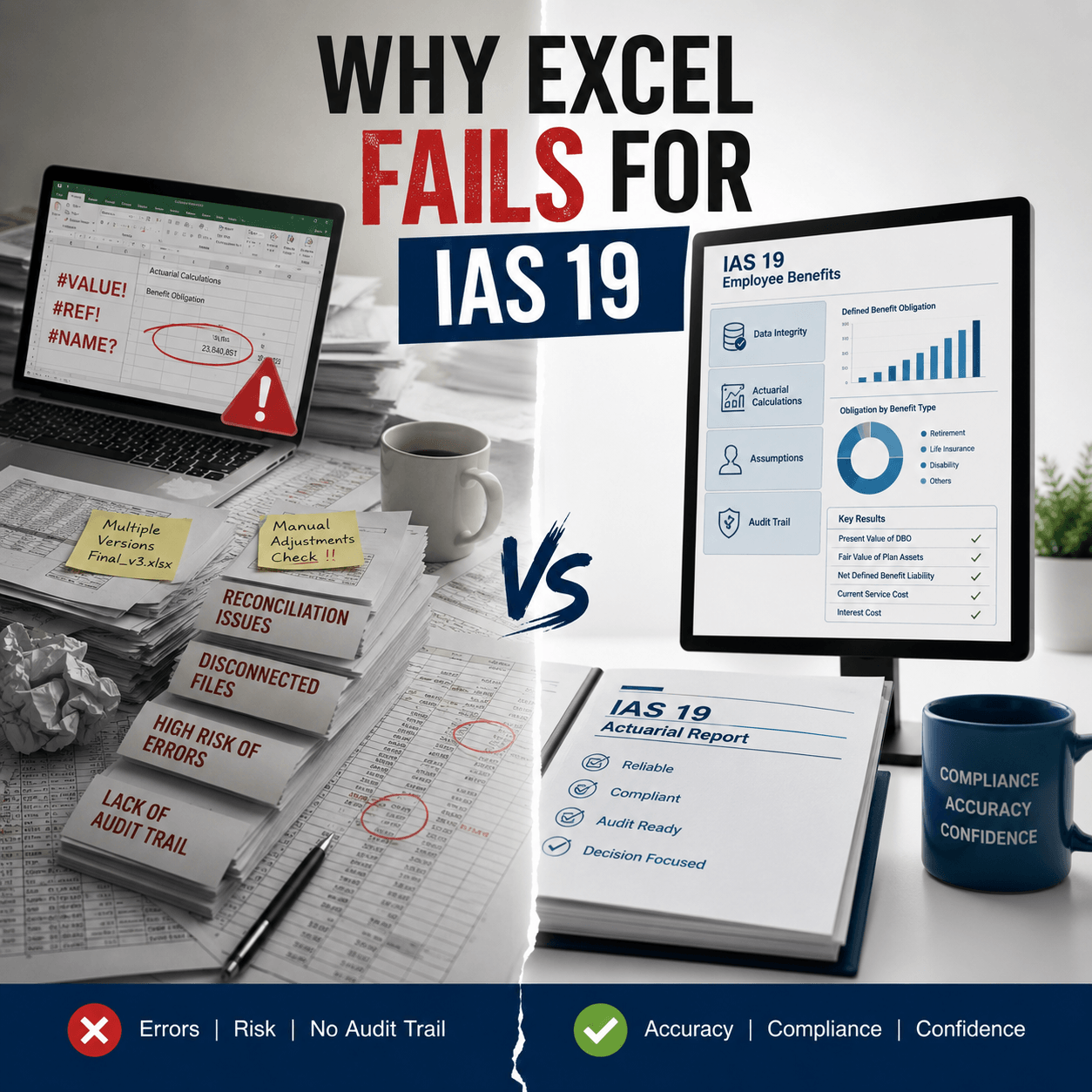
A platform can have the most sophisticated chain-ladder and Bornhuetter-Ferguson models on the market. But if it requires manual CSV exports to move data into your general ledger, you’ve bought yourself a maintenance problem dressed up as a solution. And that’s before you factor in IFRS 17, which demands that your actuarial and finance outputs be reconcilable at every step.
Every one of the 25 insurers surveyed by Deloitte Canada in 2024 reported lengthening of their financial reporting processes after IFRS 17 adoption. The ones who stretched the most were the ones whose actuarial SaaS tools weren’t built to connect to their broader finance architecture. That’s not an accident. It’s a selection failure.
The other mistake? Treating IBNR compliance as a static requirement. What your regulators and auditors will ask of your IBNR process in 2026 is not what they asked in 2022. Any vendor who can’t show you a clear roadmap for standard updates isn’t a long-term partner.
So before you finalize your shortlist, get honest about three things:
- What systems does this platform need to connect to, and how does it connect to them?
- Can it handle your specific lines of business, not just the simple ones they demo?
- What happens when a regulatory change comes in mid-year?
If the vendor’s answers to those questions are vague, keep looking.
What Does “IBNR Compliance” Actually Require from a SaaS Platform?
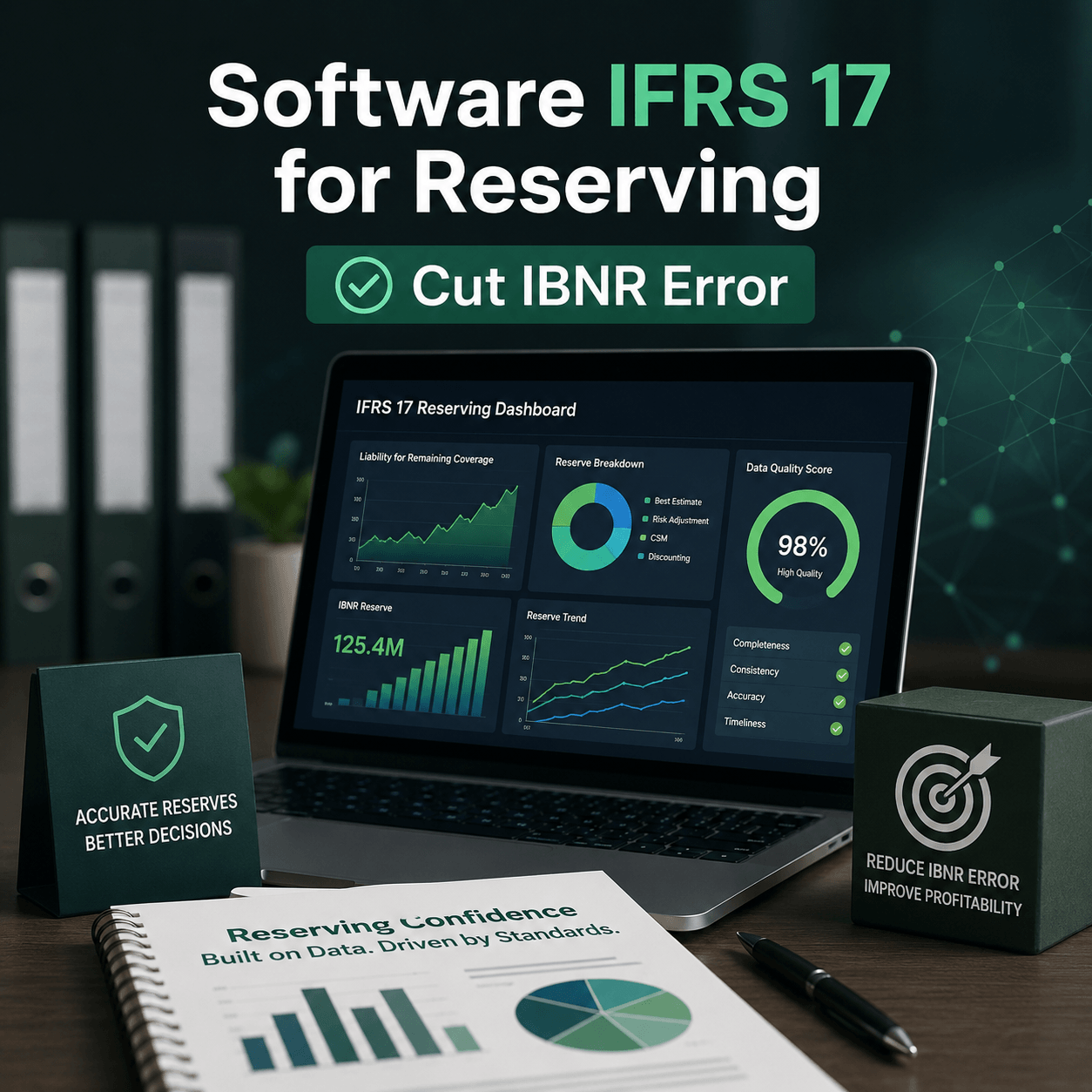
IBNR incurred But Not Reported, is the reserve for claims that have occurred but haven’t been reported yet, plus the expected development on known claims. Actuaries typically calculate the combined total because that’s how it’s used in practice. But “calculating it” and “calculating it in a way that satisfies an auditor, a regulator, and an IFRS 17 disclosure requirement” are different problems.
The Three Layers of IBNR Accuracy
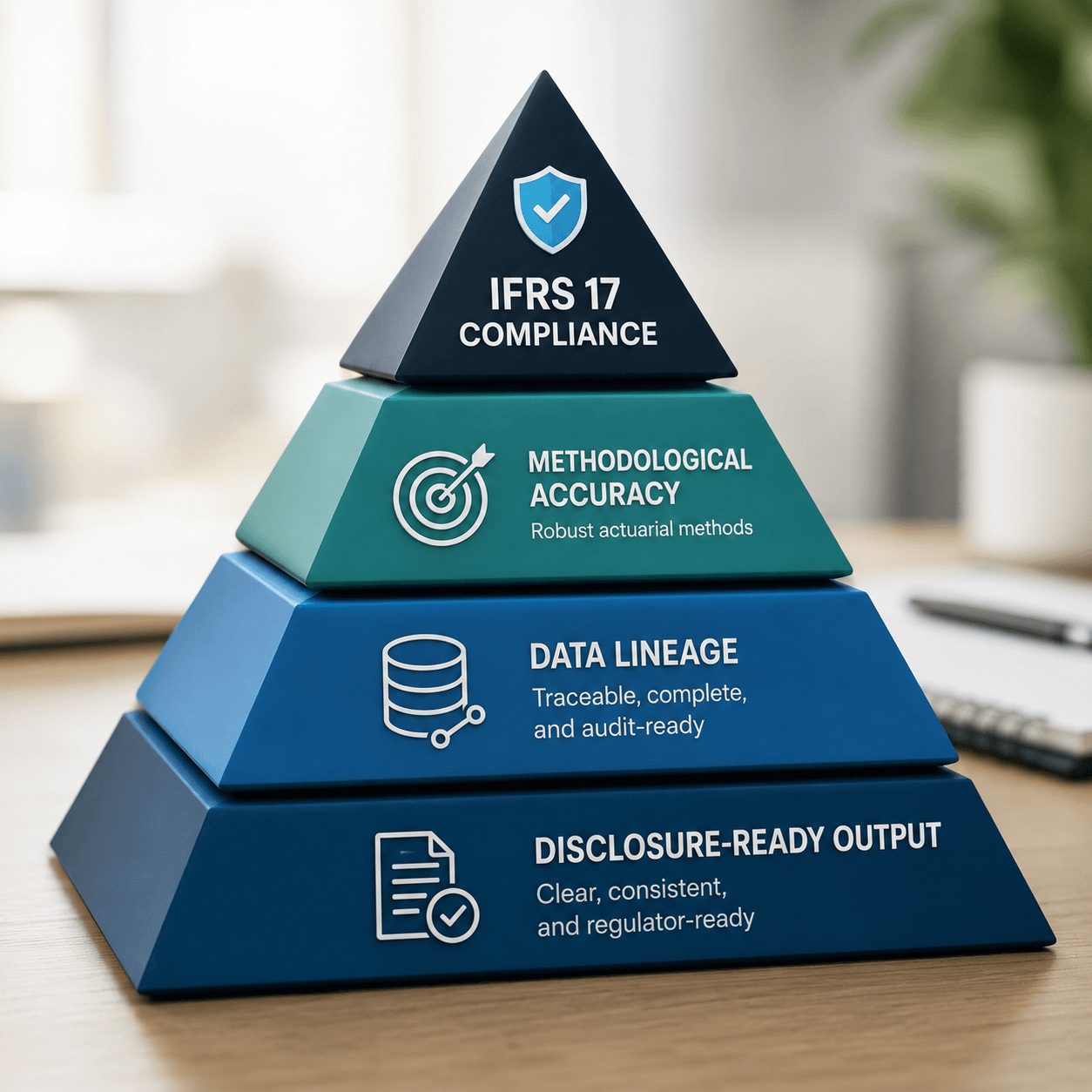
When evaluating whether an actuarial SaaS tool can support compliant IBNR calculations, you’re really asking about three layers:
Methodological accuracy. Does the platform support the standard development triangle methods chain-ladder, Bornhuetter-Ferguson, Cape Cod and does it allow actuaries to apply judgment on top of them? A platform that locks you into one method isn’t fit for a multi-line book.
Data lineage. Can you trace every IBNR figure back to its source data? This isn’t optional. NAIC’s 2025 regulatory guidance is explicit that actuarial reports and work papers must be consistent with ASOP standards and that auditors need to follow the full trail. If your platform stores outputs without linking them to inputs, you will face audit problems.
Disclosure-ready output. Under IFRS 17, your IBNR figures don’t just inform a reserve, they feed the liability for incurred claims (LIC) measurement. The platform needs to produce output that your finance team can actually use for disclosure, not just a summary your actuaries understand.
Why Pension Actuarial Valuation Software Fails Here
This comes up more than you’d expect. Some teams try to adapt pension actuarial valuation software for IBNR work because it’s already licensed, already deployed, and their actuarial team knows it. Don’t.
Pension valuation tools are built around the Projected Unit Credit Method, cohort-based liability calculations, and employee benefit assumptions. They’re not designed for claims development triangles, accident year structuring, or the dynamic tail patterns in P&C lines. Trying to force them into IBNR work produces outputs that are technically calculated but methodologically wrong for the purpose.
Use tools built for the job.
Criterion 1 — Reserving Accuracy: The Non-Negotiable Starting Point
Every vendor will tell you their platform is accurate. That’s not a useful claim. What you need to ask is: accurate under what conditions, for what lines of business, and verified how?
The actuarial modeling software market was valued at USD 2.05 billion in 2024 and is projected to double by 2033. That growth includes a lot of new entrants who’ve built platforms on general analytics infrastructure rather than purpose-built actuarial engines. The difference shows up when you run long-tail liability calculations or try to apply development patterns across sparse data triangles.
What Good Accuracy Looks Like in Practice
A credible actuarial SaaS platform for IBNR work should support at minimum:
- Multiple development methods with actuary-controlled weighting
- Tail factor selection with documented assumptions
- Benchmark triangles and industry curves for lines with thin data
- Scenario analysis and sensitivity testing built into the reserving workflow not bolted on after
- Explicit handling of large loss events so they don’t distort your development patterns
That last one matters more than most vendors advertise. One large catastrophe event, handled poorly in a development triangle, can skew IBNR estimates across multiple accident years. Ask vendors exactly how their platform handles large loss exclusions and adjustments. If they can’t walk you through it on a live demo, that’s a red flag.
Quick diagnostic: Can your current or shortlisted platform produce a full IBNR triangle with tail selection, scenario comparison, and a linked disclosure summary, all from the same data source, without manual exports? If not, ask why.
Red Flags That Signal Weak Reserving Support
You’re talking to the wrong vendor if they:
- Demo only one or two lines of business and can’t show how the platform handles, say, medical malpractice or workers’ comp tail development
- Can’t show you a real client’s audit-ready IBNR output with full data lineage
- Use the phrase “the actuary can manually adjust” more than once, that phrase almost always means the platform doesn’t actually support the feature; it offloads it to the user
- Have no certified actuaries on their support or implementation team
That last point is worth sitting with. Who answers the phone when your methodology question isn’t a software bug — it’s a judgment call about whether to apply volume-weighted or simple-average development factors? A vendor with no actuarial expertise on staff cannot help you there.
Criterion 2 — Integration Support: Where Most Providers Fall Short
You can have a technically correct IBNR model and still fail your audit if the data feeding that model isn’t clean, traceable, and consistently sourced. Integration isn’t an IT concern. It’s a compliance concern.
The IFRS 17 insurance software market reached USD 1.41 billion in 2024, yet most insurance companies still report integration as their primary post-implementation challenge. That number won’t fix itself as the market grows. It fixes itself when you ask the right questions before you sign.
API-First vs. File-Drop Architecture
This is the most important technical question in your evaluation. There are two fundamental architectures for how actuarial SaaS platforms move data:
API-first platforms connect directly to your source systems, your policy administration system, claims system, and general ledger — via bidirectional APIs. Data flows in, calculations run, results post back. No manual intervention in the middle. When something changes upstream, the platform reflects it automatically.
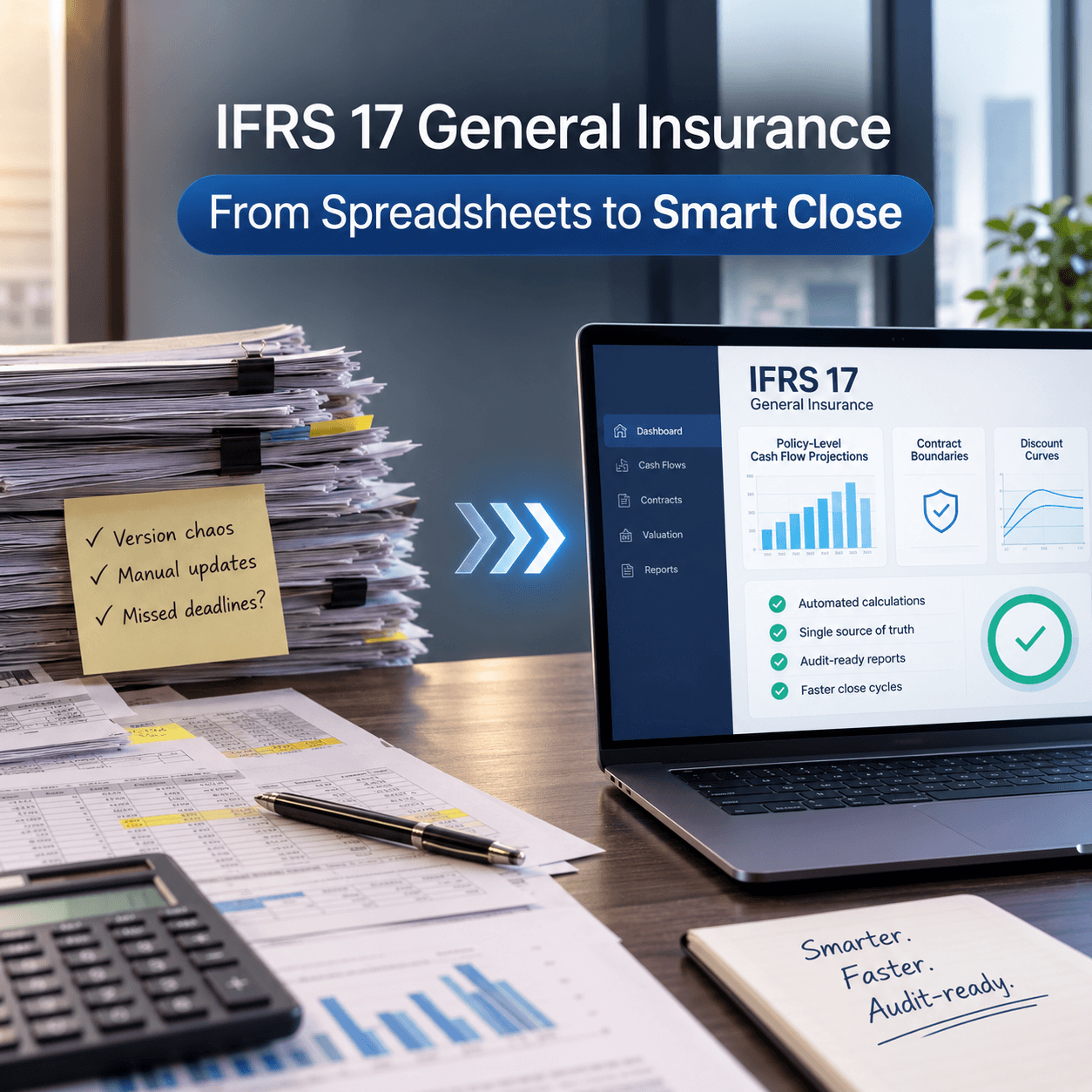
File-drop platforms require someone to export a CSV or flat file from your source system, upload it to the actuarial platform, run the calculations, then export the results and import them somewhere else. Every one of those handoffs is a version control risk, a reconciliation problem, and an audit exposure.
Ask your vendor: “How specifically does policy data enter your platform, and how do calculation results get to our general ledger?” Then listen carefully for how many times the phrase “export” or “import” appears in their answer.
For a deeper look at how data architecture shapes IFRS 17 performance downstream, the IFRS TECH resource on IFRS 17 data management systems is worth your time.
The GCC Reality: Legacy Systems and Integration Debt
For insurers operating in Saudi Arabia, the UAE, and across the GCC more broadly, this question has a specific dimension. Many regional carriers are running core systems that predate cloud-native architecture. That’s not a failure, it’s history. But it means your actuarial SaaS vendor needs to demonstrate experience integrating with older infrastructure, not just SAP S/4HANA or Oracle Fusion.
Ask for reference clients in similar markets. Ask specifically about integration timelines with legacy policy admin systems. A vendor who says “we typically integrate in three to six weeks” is giving you a number calibrated on modern infrastructure. Your timeline may look different.
Evaluating IBNR software options right now?
Take our 5-question IBNR SaaS Readiness Assessment to see where your current shortlist stands against the criteria in this article.
See how IFRS TECH’s IBNR software solutions team approaches this evaluation →
Criterion 3 — IFRS 17 Alignment and Regulatory Coverage
If your actuarial SaaS platform handles IBNR calculations but can’t feed those results directly into an IFRS 17-compliant reserving workflow, you have two systems where you need one.
This is where the market is genuinely bifurcated. Some platforms were built before IFRS 17 was effective and have added compliance modules as retrofits. Others were designed after January 2023 with IFRS 17 as a native requirement. The difference in how they handle the liability for incurred claims, the premium allocation approach, and the general measurement model is not cosmetic. It’s structural.
How Actuarial Software Must Talk to IFRS 17
Under IFRS 17, IBNR estimates don’t just stay in the actuarial department. They flow into the liability for incurred claims calculation, they affect the contractual service margin when claims emerge differently from expectation, and they require documentation that external auditors can follow without an actuary holding their hand through it.
That chain — from claims development triangle to IFRS 17 disclosure, needs to be traceable within the platform. Not via a manual handoff. KPMG’s 2024 analysis found that 8 of 55 major insurers disclosed changes in accounting policies, judgments, or estimates compared to prior periods. That number reflects how much post-implementation recalibration is still happening. Some of it is standard. Some of it is the cost of tools that weren’t built to handle the full chain.
For non-life specifically, the premium allocation approach and its interaction with IBNR estimates has real complexity. The IFRS TECH guide on IFRS 17 non-life solutions covers this in detail, and it’s worth using as a benchmark when you’re evaluating vendor capabilities in this area.
What Your Vendor Should Be Able to Demonstrate
Ask for a live walk-through — not a recorded demo — of the following sequence:
- Raw claims data enters the platform
- IBNR triangles are built and development factors selected
- IBNR estimate is produced with documented methodology
- That estimate flows to the LIC calculation under the relevant IFRS 17 measurement model
- The output populates a disclosure-ready report with full data lineage visible
If a vendor can’t walk through all five steps end-to-end in a live session, they’re not ready for your production environment.
See also: the IFRS TECH detailed breakdown of IBNR solution with IFRS 17 reserving for what that end-to-end workflow should look like in a well-configured platform.
“Enterprise platforms cut close cycles from 20+ days to 5-7 days and automate CSM calculations, a documented outcome across multiple IFRS 17 implementations.” IFRS TECH vendor shortlist analysis
Criterion 4 — Audit Trail and Transparency
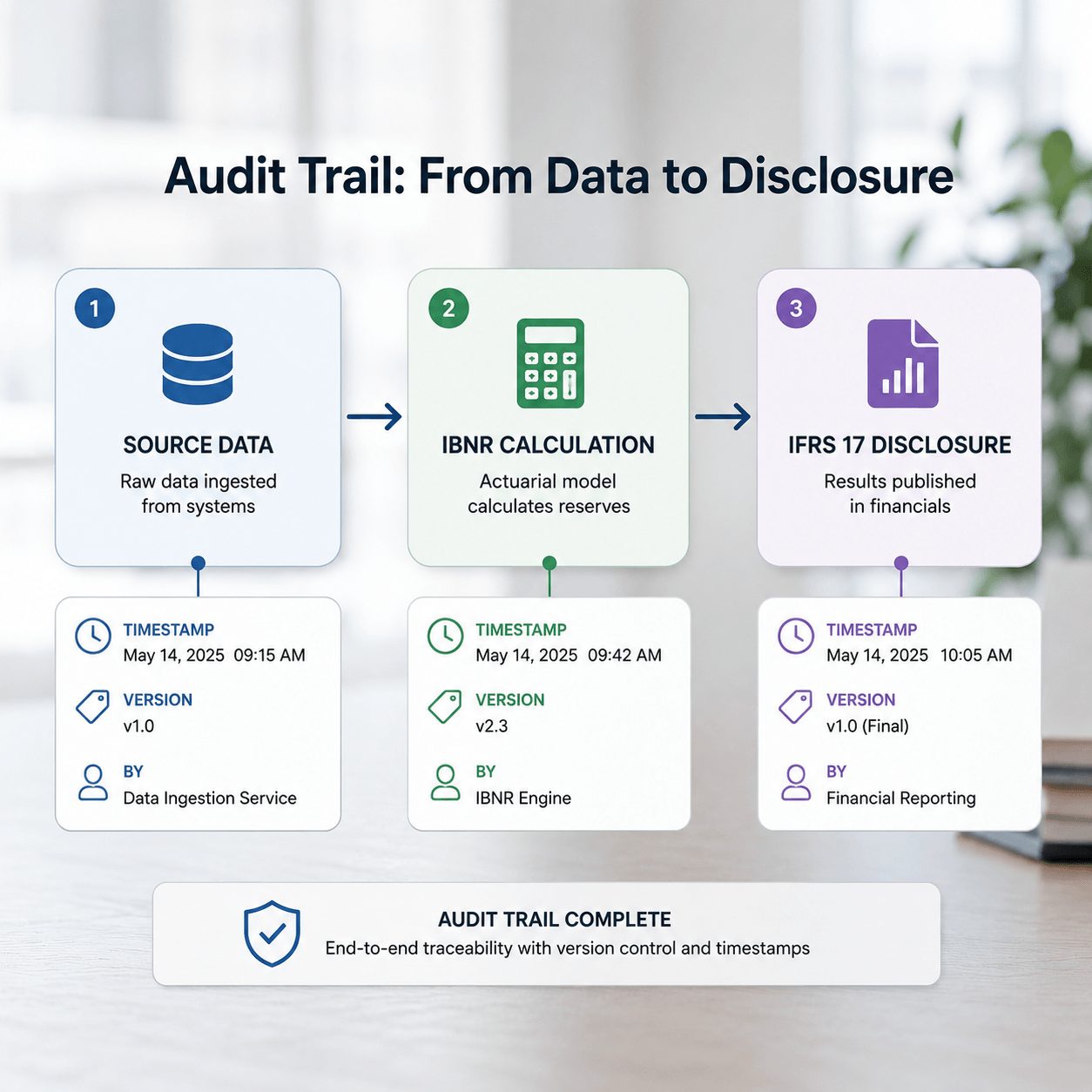
Regulators and auditors want one thing above everything else: traceability. They want to follow a number from its source to its disclosure, and they want to understand every judgment call that shaped it along the way.
Most actuarial SaaS platforms claim full audit functionality. Fewer actually deliver it. Here’s what a real audit trail requires:
- Every calculation step logged with timestamp, user, and version
- Assumption changes tracked with before/after comparison and the reason documented
- Source data linked to output, not just stored separately and cross-referenced manually
- Role-based access controls so you can show exactly who saw what and when
- Ability to reproduce any prior period calculation exactly, even if assumptions have since changed
That last one is harder than it sounds. When your Q3 2025 IBNR estimate gets reviewed in the context of a Q1 2026 audit, can your platform reproduce the Q3 calculation using the assumptions and data that were in place at that time? If the platform only keeps the output and not the state that produced it, the answer is no.
Don’t accept “we have full audit logging” without asking what that means specifically. A log that records button clicks is not the same as a log that traces data lineage. Ask to see a real audit report from a real client. If they won’t show you one under NDA, that’s telling.
The IFRS TECH resource on IFRS 17 actuarial tools in insurance covers what compliant audit trail architecture actually looks like in production, and it’s a useful reference when you’re pressure-testing vendor claims.
Criterion 5 — Support Model and Ongoing Responsiveness
Support is where vendor relationships either hold or collapse. And for actuarial SaaS, the failure mode is very specific: your team hits a methodological question at 9pm before a reporting deadline, and the support ticket goes to a generalist who has no idea what a Bornhuetter-Ferguson method is.
That’s not a hypothetical. It’s a common enough experience that it should be a formal evaluation criterion.
What “Support” Actually Means for Actuarial SaaS Providers for IBNR Compliance
There are four dimensions worth evaluating:
Actuarial depth on support staff. Does the vendor have qualified actuaries, not just software engineers, available to handle methodology questions? Ask directly. Ask for their credentials.
Regulatory update speed. When IASB issues a clarification, or when local regulators in the UAE or Saudi Arabia update their guidance, how quickly does the platform reflect those changes? Who is responsible for tracking those changes? Some vendors leave this entirely to the client.
Implementation support structure. Is the implementation handled by the vendor’s own team, or outsourced to a third-party systems integrator? Outsourced implementations create accountability gaps that tend to become your problem, not theirs.
Response SLA with teeth. A 24-hour response SLA for a critical calculation error before a reporting deadline is not adequate. Ask for the actual escalation path for P1 issues and whether there are financial penalties for SLA breaches.
The IFRS 17 compliance solutions framework from IFRS TECH lays out what a well-structured vendor support model should look like in practice. Worth comparing against what vendors propose.
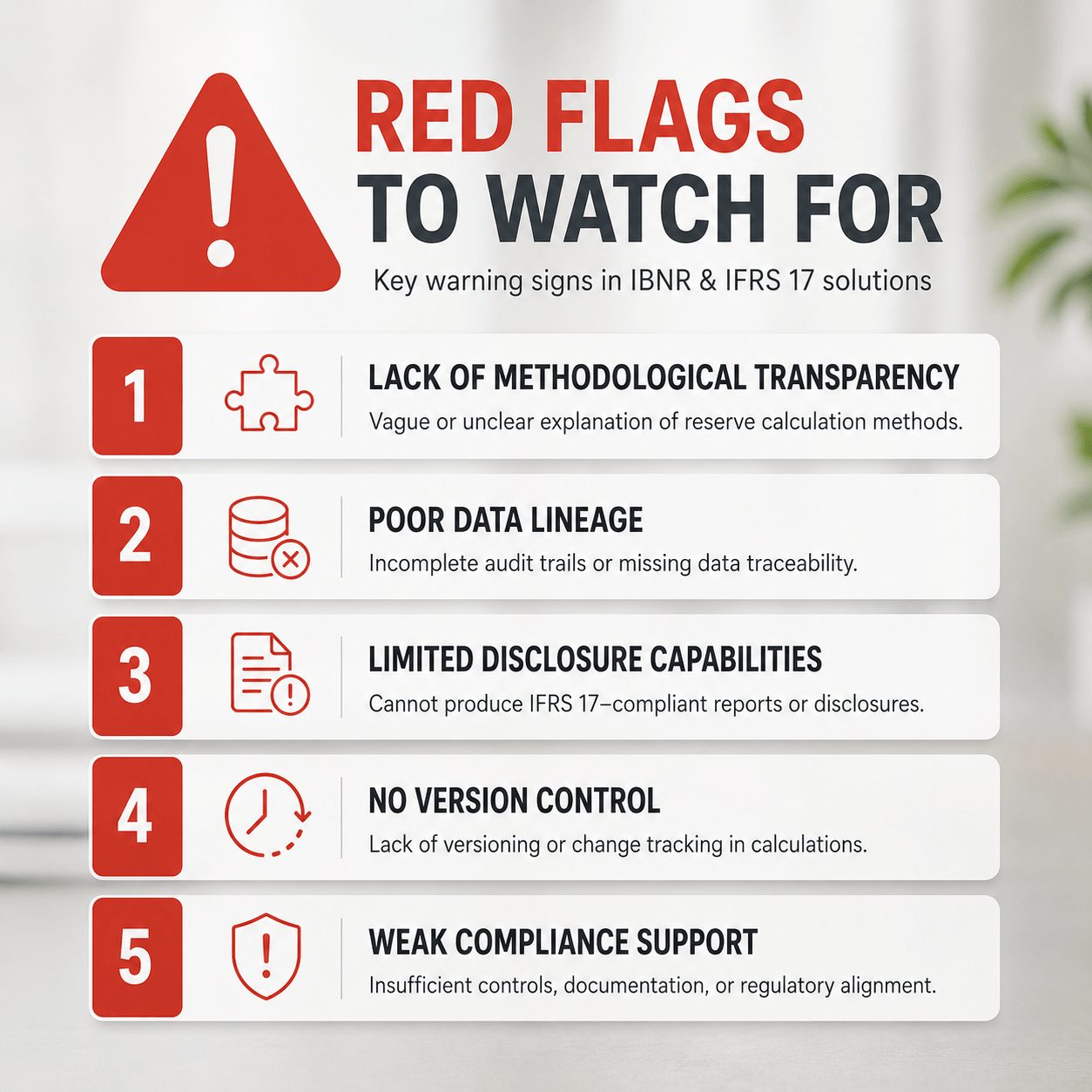
Red Flags in Actuarial SaaS Providers for IBNR Compliance Selection
Most of these only become visible if you know to look for them.
The demo uses synthetic data only. Every vendor can make a demo work with a clean, pre-loaded dataset. Ask to run a proof of concept on your actual data before you sign. Vendors who resist this are hiding something about their platform’s handling of real-world messiness.
Their reference clients are all in different lines of business than yours. A platform that’s proven for life and health actuarial valuations has not proven itself for P&C long-tail IBNR work. The methods are different. The data structures are different. Don’t let the vendor transfer credibility across incompatible use cases.
The pricing model obscures total cost. Low headline SaaS fees that scale sharply on data volume, user seats, or API calls can make a USD 40,000 annual contract look like a USD 200,000 actual cost by year two. Model out your actual volume projections against their pricing tiers. Then add 30% for what you inevitably underestimated.
No roadmap transparency. If a vendor won’t share their product roadmap under NDA, they either don’t have one or they’re building something you wouldn’t choose if you knew about it. Either is a problem.
One last one. Be very careful about platforms that list IFRS 17 software solutions as a feature rather than a core capability. The difference matters. A feature can be switched off, deprioritized, or left to lag on updates. A core capability is load-bearing.
The Decision Checklist: Applying These Criteria
Use this before you commit to any provider. These aren’t questions for the sales call. They’re questions for the technical evaluation, the reference check, and the proof of concept.
Reserving accuracy
- Does the platform support multiple development methods with actuary-controlled weighting?
- Can it handle large loss adjustments and sparse data triangles?
- Have you run a real PoC on your actual book of business?
Integration support
- Is the integration architecture API-first or file-based?
- Can it connect to your specific core systems, including legacy ones?
- What is the documented integration timeline for your environment, not their best-case client?
IFRS 17 alignment
- Is IFRS 17 support native to the platform or a retrofit module?
- Can the vendor demonstrate the full chain from IBNR triangle to IFRS 17 disclosure in a live session?
- Does the platform support the PAA and GMM models for your specific lines?
Audit trail
- Can you reproduce any prior period calculation exactly, with the assumptions in place at that time?
- Is data lineage fully traceable from source to disclosure?
- Have you seen a real audit report, under NDA, from a comparable client?
Support model
- Are qualified actuaries on the vendor’s support and implementation team?
- What is the escalation path for P1 issues before a reporting deadline?
- Who owns the regulatory update process, the vendor or you?
If you can’t get clear answers to all of these, the evaluation isn’t finished. And if a vendor discourages you from asking them, the evaluation is.
What you now know
- IBNR compliance demands accuracy at the method level, lineage at the data level, and transparency at the disclosure level, most SaaS evaluations only check the first.
- Integration architecture (API-first vs. file-drop) is the single most consequential technical decision and the one most teams ask last.
- Support quality for actuarial SaaS requires actuarial depth, not just software helpdesk responsiveness and that distinction should be a formal criterion, not an afterthought.
The right actuarial SaaS provider for IBNR compliance isn’t necessarily the one with the longest feature list or the most recognizable brand. It’s the one whose accuracy holds under your actual data, whose integration architecture doesn’t require your actuarial team to act as data engineers, and whose support model includes people who understand what IBNR actually is.
75% of financial institutions expect to increase RegTech investment by end of 2025. That investment will produce results for teams who selected well. For teams who selected on demo quality rather than production capability, it’ll produce a second vendor decision, faster.
The five criteria in this article, accuracy, integration, IFRS 17 alignment, audit trail, and support won’t make the selection easy. But they’ll make sure you’re asking the questions that actually matter. Start with integration. Ask to see a live end-to-end walkthrough on your data. And don’t sign until the support SLA has real teeth.
If your team is at the shortlist stage and you want a second set of eyes on how your candidates hold up against these criteria, see how IFRS TECH’s advisory team handles IFRS 17 insurance reporting tools selection for complex, multi-line books and what the evaluation looks like when done properly.
Ready to move from evaluation to selection?
IFRS TECH’s actuarial advisory team has supported insurers across the GCC, Europe, and APAC through IBNR software selection, implementation, and post-go-live optimization. We don’t sell software, we help you choose the right one.
See how IFRS TECH approaches IBNR software evaluation for your specific lines of business →
Serving insurers in Saudi Arabia, UAE, Bahrain, and internationally · Actuaries + CPAs + CFAs on every engagement
FAQs
What criteria define good actuarial SaaS providers for IBNR compliance?
The five core criteria are reserving accuracy (multiple methods, actuary-controlled), API-first integration, native IFRS 17 alignment, a full audit trail with data lineage, and a support model staffed by qualified actuaries. Platforms strong on features but weak on integration or audit transparency routinely fail in production.
How do I avoid poor criteria choices when selecting IBNR SaaS tools?
Avoid evaluating on demo quality alone. Run a proof of concept using your actual data before committing. Ask vendors to demonstrate the full chain from raw claims data to IFRS 17 disclosure output in a live session, not a recording. Weak platforms can’t pass this test.
What red flags should I watch for in actuarial software accuracy claims?
Watch for vendors who demo only on synthetic data, can’t show how they handle large loss adjustments, or lack qualified actuaries on their support team. Also watch for “the actuary can manually adjust” appearing frequently that usually means the platform doesn’t actually support the feature natively.
What integration support should offer actuarial SaaS providers for IBNR compliance?
Providers should offer API-based bidirectional integration with your policy admin, claims, and general ledger systems. File-based exports create reconciliation risk and audit exposure. Ask specifically whether integration is API-first or file-drop, and get a documented timeline for your actual environment, not their best-case scenario.
How do actuarial valuations connect to IBNR compliance under IFRS 17?
Under IFRS 17, IBNR estimates feed directly into the liability for incurred claims calculation. The platform must trace this flow from development triangle through LIC measurement to disclosure output. Platforms built before IFRS 17 was effective often require manual bridging between actuarial and finance outputs, a compliance risk that accumulates at every reporting cycle.