TL;DR
Choosing the right IFRS 17 actuarial tools in insurance can make or break your compliance workflow. This article breaks down three vendor model types, end-to-end platforms, best-of-breed tools, and in-house builds, so you know what fits your portfolio. You’ll learn which features matter most, how to run a real vendor evaluation, and when buying beats building. Use this guide to compare your options and pick the right actuarial software for your team.
IFRS 17 Actuarial Tools in Insurance: Comparing Vendor Models for Compliance
What Are IFRS 17 Actuarial Tools in Insurance?
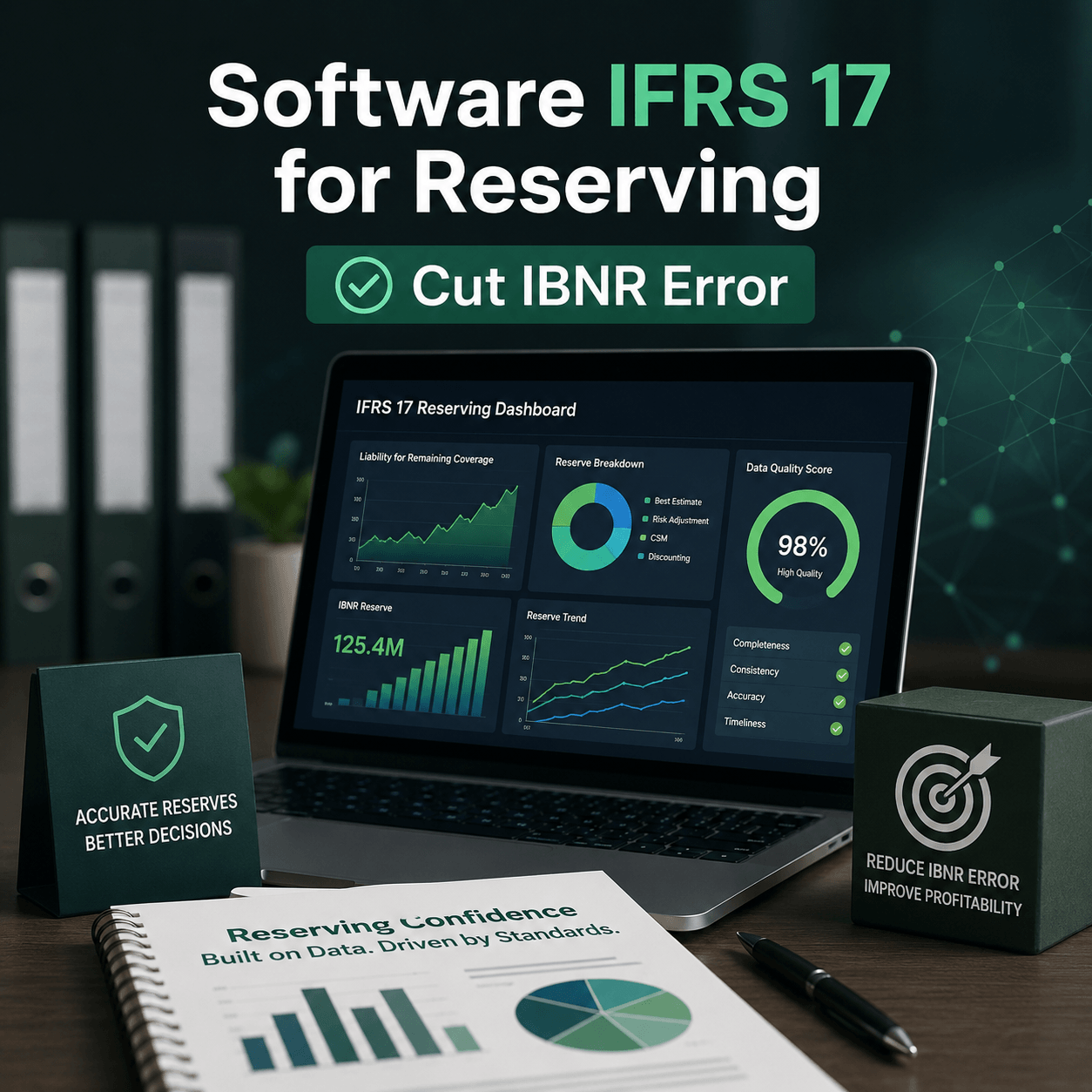
IFRS 17 actuarial tools in insurance are software systems that calculate, model, and report insurance contract liabilities under the International Financial Reporting Standard 17. They handle calculations like the Contractual Service Margin (CSM), Best Estimate Liabilities (BEL), Risk Adjustment (RA), and contract groupings across measurement models.
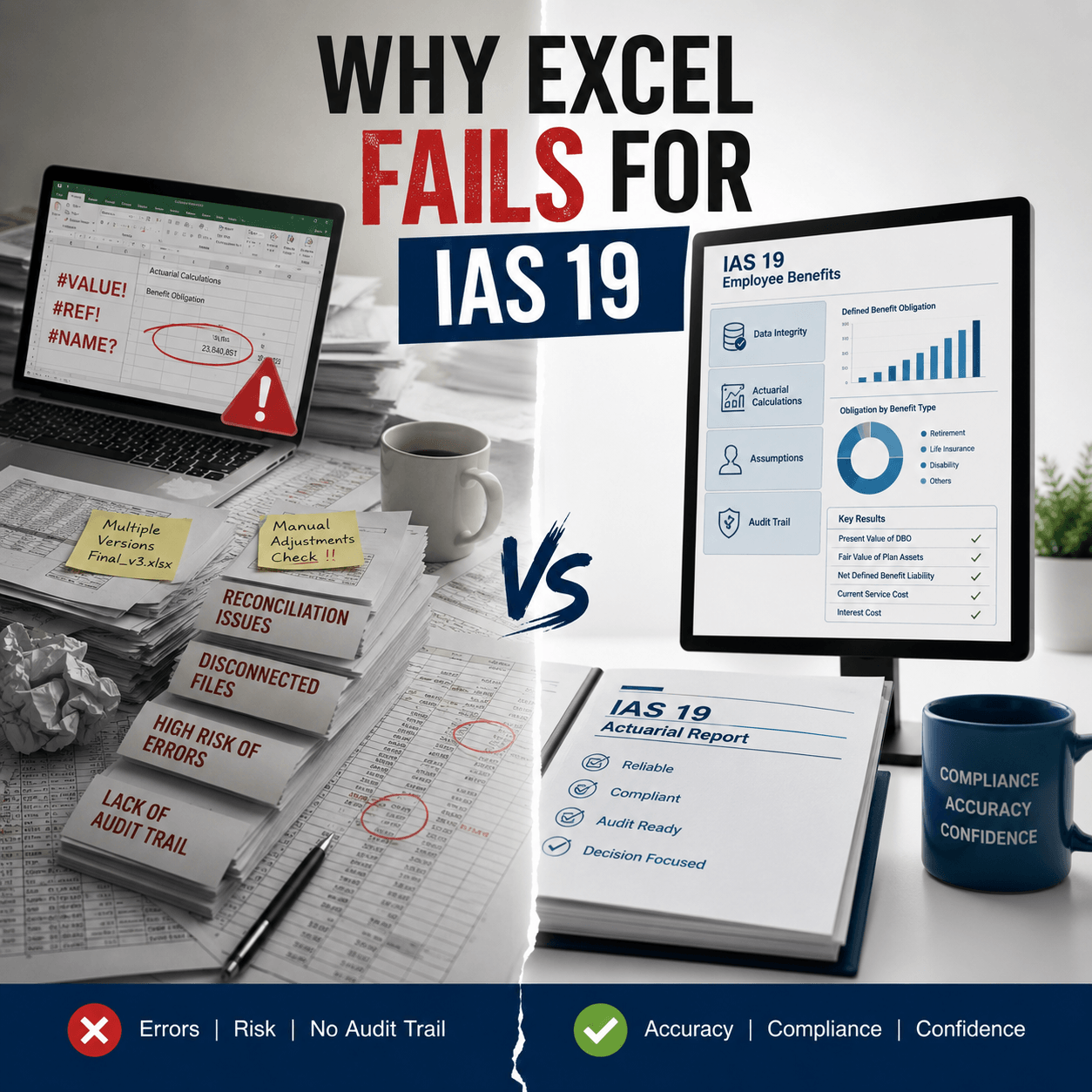
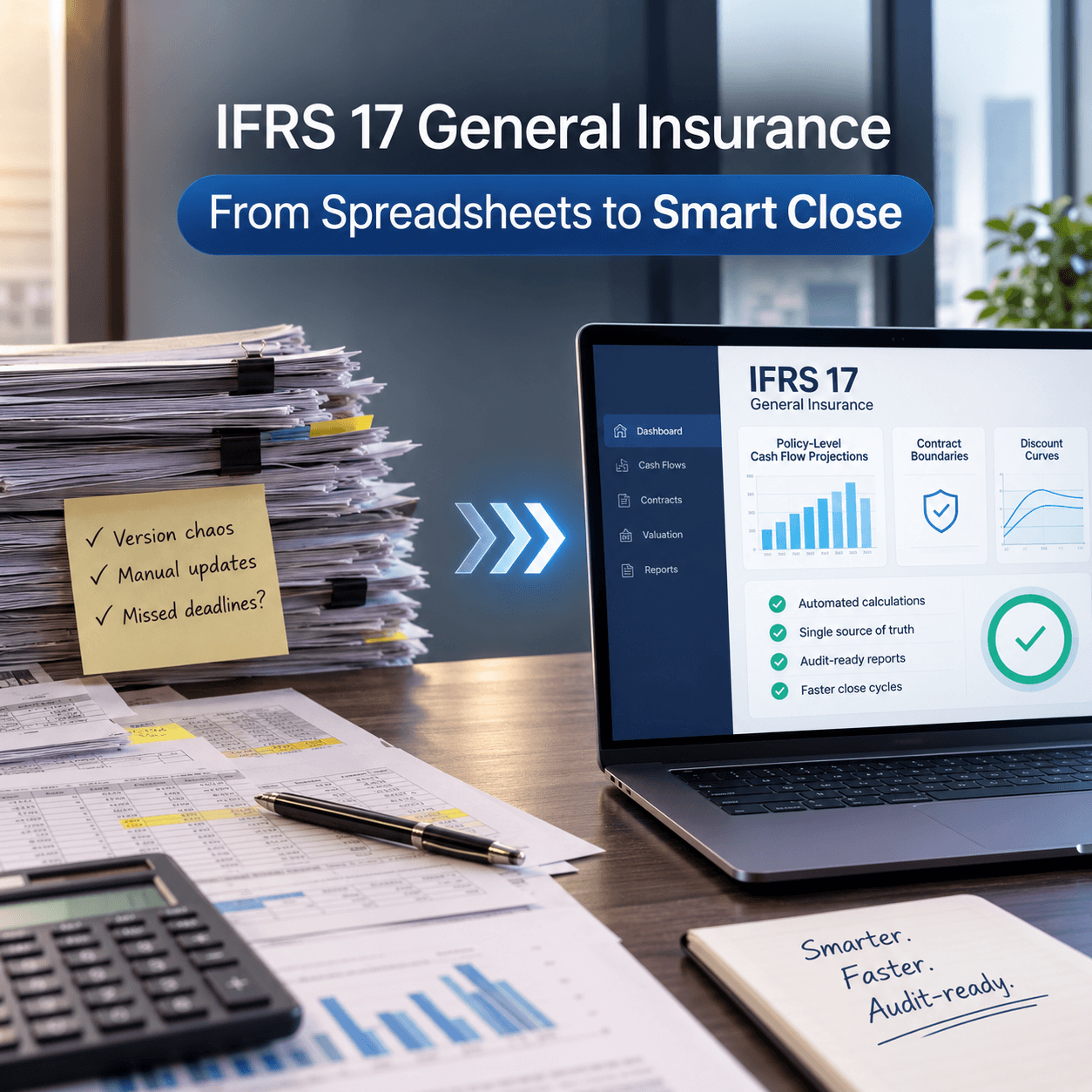
Before IFRS 17 took effect in January 2023, most insurers ran these calculations in spreadsheets. That approach doesn’t hold up against the data volume, audit requirements, and reporting frequency the standard demands. Actuarial tools replaced those processes with structured, traceable, and automated workflows.
You’re not just dealing with a single calculation here. IFRS 17 requires insurers to run multiple valuations per period, which can include base runs, sensitivities, projections, and comparatives. If your tool can’t handle that volume without slowing your finance close, it becomes a liability rather than a solution.
The global actuarial modeling software market reached USD 2.05 billion in 2024, driven in part by IFRS 17 compliance requirements. It’s projected to grow to USD 4.48 billion by 2033, at a CAGR of 9.2% [1].
That growth tells you something. Insurers aren’t treating this as a one-time compliance project. They’re treating it as a long-term technology investment.
For a broader view of how compliance solutions differ by contract type, the ifrs 17 non life solutions guide on IFRSTech is worth reading before you begin vendor comparisons.
Types of Vendor Models Explained
Not every IFRS 17 actuarial tool comes from the same mold. Vendors build their offerings around different philosophies, and those differences affect how well a tool fits your workflows, your existing systems, and your team’s capabilities.
There are three main vendor model types you’ll encounter. Let’s break them down.
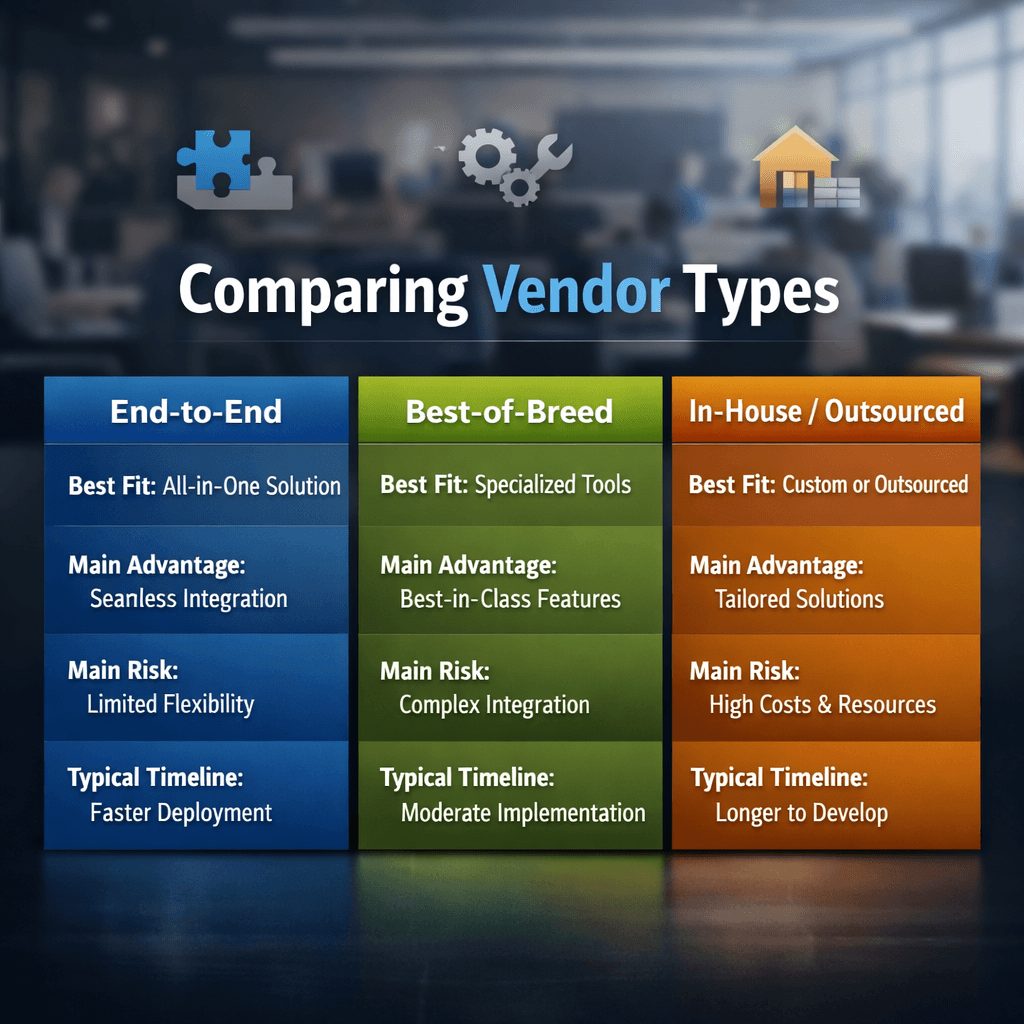
End-to-End Platform Vendors
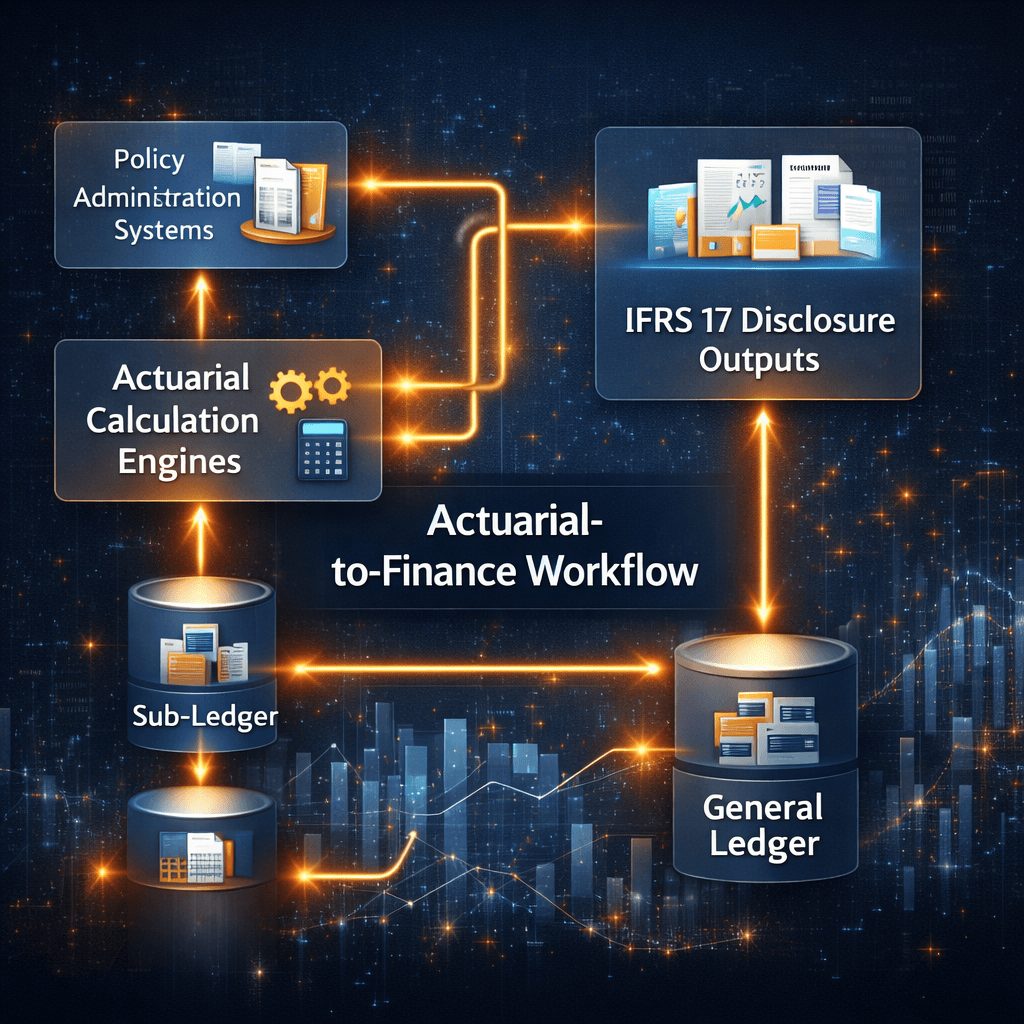
These vendors offer a single system that manages the full IFRS 17 workflow. That includes data ingestion, contract grouping, actuarial calculations, CSM management, sub-ledger posting, and regulatory disclosures, all within one product.
The appeal is obvious. You’re buying a unified system with pre-built integrations between each layer. Data doesn’t have to move between systems, so reconciliation points are fewer, and audit trails are cleaner.
That said, end-to-end platforms tend to be enterprise-grade, meaning they’re built for large, multinational insurers. Implementation timelines are longer, configuration is more involved, and the cost structure reflects that complexity.
Insurers using advanced actuarial modeling platforms reduced product launch timelines by 40% and improved capital efficiency by 15 to 20%. End-to-end vendors are most likely to deliver those gains, but only if your organization has the internal capacity to implement and operate them correctly.
Best-of-Breed Tool Providers
Best-of-breed vendors focus on doing one part of the IFRS 17 workflow exceptionally well. You might pick a specialist actuarial calculation engine, a separate CSM management tool, and a third system for regulatory reporting.
This model suits insurers who already have strong existing systems they want to keep. You’re adding targeted capability rather than replacing everything.
The trade-off is integration complexity. You’ll need to manage data flows between each component. That requires clear API design, reliable middleware, and ongoing coordination between vendors if something breaks. It also means your internal IT team carries more responsibility for keeping the stack connected.
For teams assessing how different vendor types support scalable growth, the ifrs 17 vendors for scalable compliance guide covers that angle directly.
In-House vs Outsourced Solutions
Some insurers build their own IFRS 17 tools internally. Others fully outsource the function to a third-party provider or managed service. Both are valid models, but both carry real trade-offs.
Building in-house gives you exact control over every calculation, assumption, and output. You’re not dependent on a vendor’s release cycle or roadmap. But the cost is significant. Building a custom solution can run from $200,000 to $700,000 in upfront costs depending on complexity, with timelines of 8 to 15 months and significant ongoing maintenance demands.
Outsourcing removes that burden but reduces visibility. You’re trusting a third party with the accuracy and timeliness of your IFRS 17 outputs. That’s a real governance question for your audit committee.
Key Features to Compare in IFRS 17 Tools
Once you know which vendor model type you’re evaluating, the comparison shifts to feature-level specifics. Here’s what actually matters in a working IFRS 17 environment.
Data Management and Integration
IFRS 17 is a data-intensive standard. Insurers are expected to manage data across multiple systems, including actuarial models, financial systems, and risk management platforms, and the integration of these systems is critical to ensuring compliance.
A tool that doesn’t handle granular contract-level data accurately will create reconciliation problems downstream. Look for features like automated data validation at ingestion, support for policy-level contract groupings, and clear audit trails from source data to reported output.
Ask vendors how their system handles data lineage. If you can’t trace a CSM movement back to its source assumption and cash flow driver, your auditors will flag it.
Calculation and Modeling Engines
IFRS 17 requires support for three measurement models: the General Measurement Model (GMM), the Premium Allocation Approach (PAA), and the Variable Fee Approach (VFA). Your tool must handle all three, or at minimum the ones relevant to your contract portfolio.
Beyond model coverage, look at calculation performance. If your system needs overnight batch runs for a single valuation, it’ll struggle with the 14 or more runs per period that IFRS 17 reporting typically demands. Stochastic and deterministic methods both need to be available for Risk Adjustment calculations.
IFRS 17 requires explicit disclosure of key assumptions and methodologies, and regular updating of assumptions and discount rates, meaning your valuations must reflect current market conditions rather than outdated assumptions from contract inception.
That requirement drives real demands on your calculation engine. It needs to re-run on updated assumptions quickly, not just at quarter-end.
Reporting and Compliance Capabilities
IFRS 17 disclosures are extensive. Liability reconciliations, insurance revenue analysis, onerous group tracking, and sensitivity disclosures all need to be produced consistently and traceably. Your tool should generate these automatically from the same data set used for calculations, not from a separate manual process.
Check whether the vendor’s reporting layer covers your local regulatory requirements too. IFRS 17 is principle-based, but regulators in different markets sometimes add layer-specific guidance. A tool built only for one jurisdiction may need customization for others.
For a detailed breakdown of how reporting tools differ in practice, ifrs 17 insurance reporting tools on IFRSTech covers the workflow from actuarial output to financial statement in practical terms.
How to Choose the Right Vendor Model
Vendor selection isn’t just about feature lists. It’s about fit. A tool that works well for a global life insurer may be completely wrong for a mid-sized property and casualty company.
Business Size and Complexity Fit
Your portfolio composition matters. Life insurers with long-duration contracts and variable participating features need VFA support and stochastic modeling depth. Non-life insurers writing short-tail property risks may get everything they need from PAA-focused tools at a fraction of the cost.
Contract diversity is another variable. An insurer with both life, health, and commercial liability books needs a tool that doesn’t force every contract type through the same calculation logic. Configurability at the measurement model and cohort level is what to look for.
Implementation Time and Cost
Implementation timelines vary widely between vendor model types. End-to-end platforms typically take 12 to 24 months to fully deploy. Modular best-of-breed tools can be faster to install but slower to integrate.
Your team’s internal capacity matters too. If you don’t have actuaries who can configure a complex platform, factor in training or consulting costs. Some vendors include professional services in their licensing structure. Others bill them separately, and that gap can be significant.
Scalability and Future Readiness
Think about where your business will be in five years. Will you expand into new markets? Add product lines? Face new regulatory reporting requirements? Your IFRS 17 tool should grow with those changes without requiring a full replacement.
Over 70% of insurers that invested in integrated IFRS 17 systems reported improved reporting accuracy and timeliness, while nearly 60% noted improved ability to provide forward-looking insights to management.
Cloud-native SaaS tools have an advantage here. They receive continuous updates, adapt faster to standard changes, and don’t require your IT team to manage server infrastructure. The IFRS 17 Reporting Platforms cloud segment is projected to grow at a CAGR of 14.2% through 2033 [2].
What Are the Benefits of Each Vendor Approach?
Pros and Cons of Full Suite Vendors
Full suite vendors give you the cleanest path from data input to disclosure output. There’s one vendor relationship to manage, one support team, and one upgrade cycle.
On the flip side, they’re less flexible. If one module doesn’t meet your needs, you can’t easily swap it out. You’re buying the whole system, and changing direction later is costly and disruptive. They also tend to carry higher license costs and longer implementation timelines, which can be a barrier for smaller insurers or those under timeline pressure.
Advantages of Modular Tool Selection
Modular selection lets you keep existing tools that work well and fill specific gaps. If your actuarial calculation engine is solid but your CSM management is weak, you don’t need to replace everything.
You get more pricing flexibility and can phase the investment over time. The main challenge is integration. You own the responsibility of making each component communicate correctly, and that creates ongoing dependency on your IT team and clear vendor documentation.
Common Challenges in Vendor Selection
Even with a clear framework, vendor selection still goes wrong. Here’s where most teams run into problems.
Data Migration and System Integration
Moving historical contract data to a new system is rarely clean. IFRS 17 requires contract-level granularity that many legacy policy administration systems weren’t designed to produce. You’ll likely need a data transformation layer before your actuarial tool can even receive clean input.
Actuarial departments are being compelled to step out of their traditional domains and gradually merge with finance and IT departments, making automated data flow between upstream and downstream systems an unavoidable requirement.
Budget time and resources for that integration work. It’s usually where implementation timelines expand and costs rise.
Regulatory and Compliance Risks
IFRS 17 is principle-based, which means reasonable people can interpret requirements differently. Your vendor’s calculation logic reflects their interpretation. If that interpretation differs from your auditor’s or your regulator’s, you’ll face adjustment work after deployment.
Ask vendors to show you their technical documentation on how they handle specific areas like contract boundary determination, CSM unlocking triggers, and RA methodology. These are the areas most likely to generate auditor questions.
IFRS 17 Vendor Evaluation Checklist
Critical Capabilities to Assess
Before signing with any vendor, verify these items directly, not just from marketing materials:
Support for GMM, PAA, and VFA with configurable cohort logic. Stochastic and deterministic Risk Adjustment methods. Contract-level audit trail from source data to disclosure output. Performance benchmarks for your actual portfolio size, not a generic test dataset. Integration documentation for your existing policy administration and GL systems. Automated disclosure generation covering all required IFRS 17 notes. A clear product roadmap with commitment to ongoing standard updates.
For a structured view of how ifrs 17 data management systems interact with actuarial tools, the IFRSTech guide on that topic maps those dependencies well.
Questions to Ask Before Choosing
You might be wondering what to actually ask vendors during demos and RFP responses. Here are the questions that cut through standard sales presentations:
How does your system handle mid-period assumption changes in the CSM roll-forward? Can you show me an end-to-end audit trail from a policy record to a disclosure line? What’s your average implementation timeline for an insurer with a portfolio similar to ours? How do you handle regulatory interpretation differences across jurisdictions? What’s your process when the IASB issues clarifications or amendments?
Ask for live demonstrations with your data, not synthetic test cases. Real portfolio data exposes performance and configuration issues that controlled demos hide.
Build vs Buy: Which IFRS 17 Actuarial Approach Works Best?
This question comes up in almost every IFRS 17 project. The answer depends on four variables: cost, time, control, and risk tolerance.
Building internally costs more upfront and takes longer to deploy. You get exact-fit control over every calculation, but you also own every maintenance burden and every update when the standard evolves. That’s a real ongoing commitment, not a one-time cost.
Buying from a vendor is faster to deploy, more cost-predictable over time, and transfers significant technical risk to the vendor. You trade some configurability for speed and reliability.
For most mid-size and large insurers, buying is the lower-risk path. The IFRS 17 software market is mature enough now that vendors have handled most implementation scenarios. You’re not pioneering something new. You’re choosing which proven path fits your situation.
That said, if your contract portfolio is genuinely unusual, or if you operate across markets where vendor tools don’t have proven implementations, building targeted components may be worth it. A hybrid approach, buying core calculation tools and building bespoke reporting layers on top, can balance control with speed.
The decision also matters for your actuarial team’s workload. Deloitte’s 2024 Actuarial Survey found that 68% of actuaries report spending 40% more time on financial reporting than they did under IFRS 4. A tool that automates the routine parts of that work lets your team focus on judgment-heavy areas like assumption setting and model governance.
Frequently Asked Questions
What is the role of an actuary in IFRS 17?
Actuaries are central to IFRS 17 compliance. They calculate Best Estimate Liabilities, Risk Adjustments, and the Contractual Service Margin using actuarial tools built for insurance workflows. Under IFRS 17, actuaries work directly with finance and IT teams to produce traceable, audit-ready outputs across all required measurement models.
What is IFRS 17 for insurance companies?
IFRS 17 is the international accounting standard that governs how insurance contracts are measured and reported. It replaced IFRS 4 in January 2023 and requires insurers to calculate liabilities based on current estimates of future cash flows, adjusted for risk and the time value of money. It applies to all entities that issue insurance contracts under IFRS-reporting frameworks.
What is the difference between IFRS 4 and IFRS 17?
IFRS 4 allowed insurers to use local accounting practices with limited consistency across markets. IFRS 17 replaced that flexibility with a single, standardized framework requiring current-value measurement of all insurance liabilities. The shift introduced new concepts like the Contractual Service Margin and three defined measurement models, making financial reporting more comparable globally.
How does IFRS 17 affect insurance companies?
IFRS 17 changes how insurers recognize revenue, measure liabilities, and disclose financial performance. Companies must now produce contract-level calculations across multiple valuation runs per reporting period. This requires dedicated IFRS 17 actuarial tools in insurance workflows to handle data volume, assumption updates, and disclosure requirements that spreadsheets can’t manage reliably.
Does IFRS 17 apply to non-insurance companies?
IFRS 17 applies to any entity that issues contracts meeting the definition of an insurance contract, not just licensed insurers. Companies that provide warranties, financial guarantees, or certain employee benefit arrangements may fall within scope. Organizations unsure of their exposure should review contract terms against IFRS 17 definitions before assuming the standard doesn’t apply.
How do I assess whether a vendor’s IFRS 17 tool fits my specific contract portfolio?
Run a proof-of-concept with real data. Bring a representative sample of your most complex contract types and measure calculation accuracy, performance, and auditability under those conditions. Vendor demos with synthetic data will not reveal the edge cases your portfolio will produce.
What are the biggest red flags in an IFRS 17 vendor demo?
Watch for demos that avoid live data, vendors who can’t show a full audit trail, systems that require manual exports between calculation and reporting layers, and vague answers on measurement model configuration. Overly simplified demos often mask real-world complexity gaps.
Where Vendor Selection Meets Advisory Support
Picking the right IFRS 17 actuarial tool matters, but the vendor model you choose is only part of the picture. How well you configure it, how cleanly you migrate your data, and how well your actuarial and finance teams work with the outputs determines whether your compliance is solid or fragile.
The ifrs 17 software solutions page on IFRS Tech covers the technology side in more detail, and the IFRS 17 Software tool suite addresses the full workflow from calculation to disclosure.
For insurers who need both the technology and the expertise behind it, Prima Consulting offers IFRS 17 advisory services that cover everything from vendor selection through to implementation review, audit readiness, and post-go-live governance. If you’re weighing your options or working through a specific compliance challenge, their IFRS advisory team can help you make the right call.