Why IFRS 4 Phase 2 Software Upgrades Keep Stalling
What insurers in the GCC and beyond need to know about legacy debt, data migration failure, and the compliance window that’s closing faster than most finance teams realize, 2026 and beyond.
✓ Written by IFRS TECH’s advisory team · ✓ Serving GCC, Europe & APAC · ✓ Actuaries + CPAs + CFAs
TL;DR
Transition delays in adopting IFRS 4 phase 2 software upgrades are pushing insurers toward audit risk, regulatory scrutiny, and reporting errors that compound with every passing quarter. This article covers why legacy systems are the primary blocker, how data migration breaks upgrade timelines, and what a realistic phased path to IFRS 17 compliance looks like. If your team is still on manual workarounds, the cost of waiting is no longer theoretical.
What’s Actually Behind the Delay?
Here’s the thing: most insurers didn’t plan to be late on their IFRS 4 phase 2 software upgrades. They planned to be on time. The delays came from somewhere else, a place most project sponsors don’t price in until the migration is already underway and the damage is done.
It wasn’t a lack of awareness. Deloitte research found that 87% of global insurers expected to upgrade their systems ahead of the IFRS 17 effective date. And 35% budgeted more than €50m for implementation. The intent was there. The execution is where it fell apart.
What actually happened? Legacy infrastructure. Data fragmentation. An underestimation of how radically different IFRS 17 compliance is from anything the previous IFRS 4 reporting model required. Those three factors together are responsible for almost every delayed IFRS 4 phase 2 upgrade project we’ve seen across GCC and APAC markets.
Legacy Systems That Were Never Built for IFRS 17
Most insurers are running on systems that are 20 to 30 years old. Not slightly outdated. Old enough to have been designed before contract-level granularity was a reporting concept anyone had to think about.
These systems use DB2 databases and mainframe structures. They weren’t built for policy-level cash flow projection, cohort grouping, or the kind of discount rate time-series modeling that IFRS 17 demands. Mapping data out of them isn’t a software task, it’s closer to archaeology. Painstaking, manual, expensive archaeology.
Clearwater Analytics data shows that 74% of insurance companies still rely on these legacy systems for core functions. That’s not a minority problem. That’s the industry baseline. And it’s the starting point for every IFRS 4 phase 2 upgrade conversation.
Is your team’s upgrade timeline at risk?
See how IFRS TECH’s IFRS 17 software advisory team assesses legacy system exposure and maps a realistic migration path for insurers across the GCC and APAC. Take our 5-question IFRS 17 Readiness Assessment →
The Data Gap Nobody Budgets For
You might think the hard part is selecting the right IFRS 17 software. It isn’t. The hard part is getting your data into a state where that software can do anything useful with it.
IFRS 17 insurance compliance requires granular, traceable, contract-level data. Not portfolio summaries. Not rounded actuarial estimates. Actual policy-level cash flows, premium data, claims records — synchronized and reconciled across every source system your organization runs.
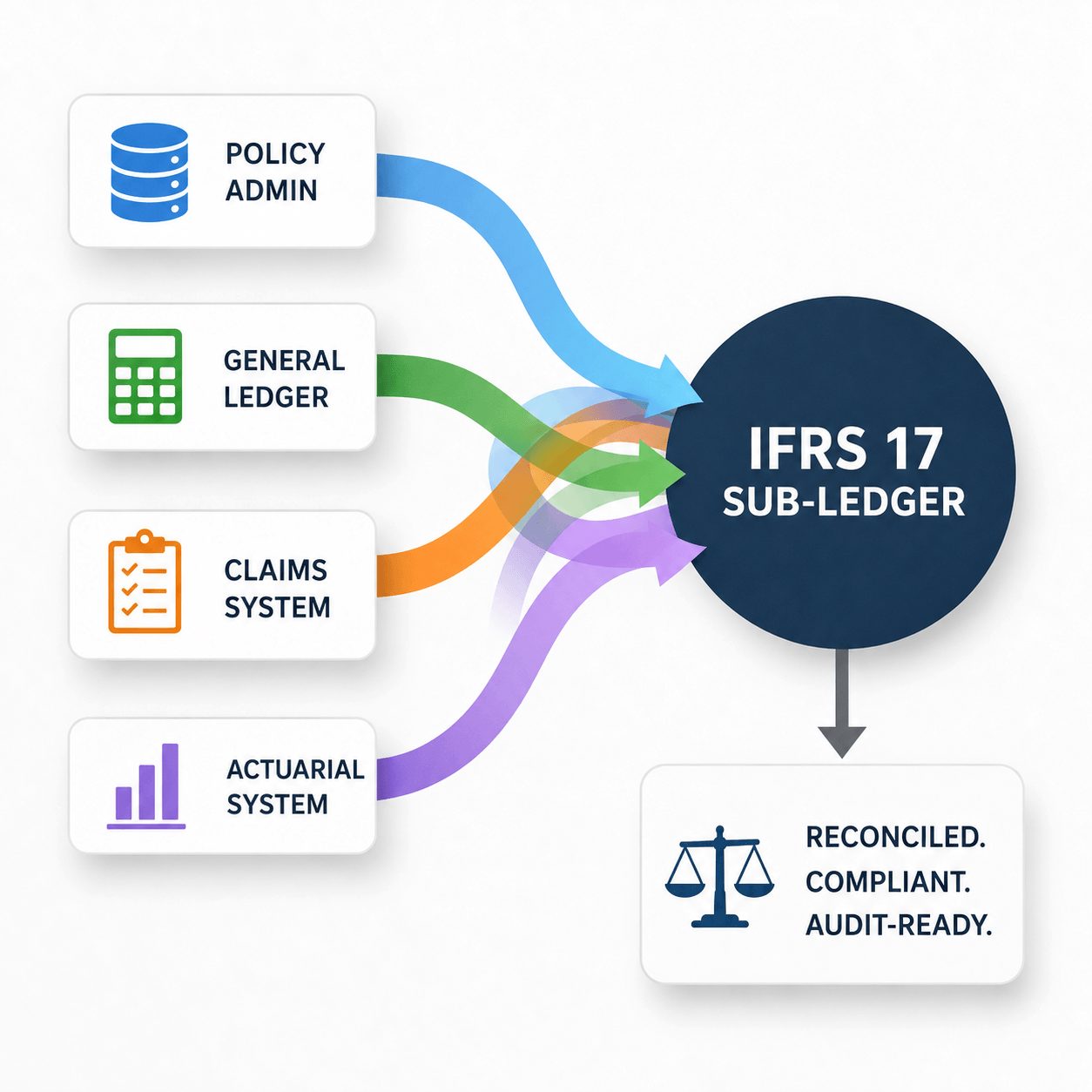
For most insurers, those systems don’t talk to each other. One insurer’s IFRS 17 program had to unify data from nine separate systems into a single common format before their platform could run a single calculation. Nine systems. One standard. That integration work alone pushed their go-live by several months.
What Do Transition Delays in IFRS 4 Phase 2 Upgrades Actually Cost?
Let’s be direct about this. The cost of delay in IFRS 4 phase 2 software adoption isn’t just a project management problem. It creates real financial exposure — in audits, in regulatory scrutiny, and in the manual labor cost that accumulates every reporting cycle you stay on an inadequate system.
Roughly 49% of insurers admitted they were behind schedule on modernization efforts, per the Earnix 2024 Industry Trends Report. That’s not a statistic about ambition. That’s a statistic about organizations carrying active compliance risk right now.
Audit Exposure Goes Up Every Quarter You Wait
IFRS 17 compliance didn’t just change how you report insurance contracts. It changed what your auditors need to see. The standard requires complete traceability — from source data all the way through to reported output. Every calculation, every assumption, every adjustment needs to be defensible and documented.
Manual processes can’t provide that. Spreadsheet-based workarounds introduce inconsistencies that auditors flag. And per KPMG’s 2024 review of insurer disclosures, the audit firms are paying close attention to whether CSM disclosures are accurate and complete — not just present.
The longer an insurer delays moving to purpose-built IFRS 17 compliance solutions, the larger the retrospective correction risk becomes. That’s not a maybe. That’s how it plays out.
Manual Workarounds Compound the Problem
Here’s what really annoys me about the standard advice given to insurers in delay. Most of it focuses on “extending the runway” with spreadsheet overlays and manual reconciliation steps. As if the solution to a broken data pipeline is to add more people carrying buckets.
It isn’t. Manual processes are error-prone by design. They create reconciliation differences. They slow your close cycle — sometimes from 30 days to 60 days or more. And they don’t scale when your portfolio grows or your product mix changes. The insurer who was already on a 60-day close under IFRS 4 is not ready for the reporting velocity that IFRS 17 demands.
The right IFRS 17 insurance reporting tools eliminate that dependency entirely. Manual workarounds just defer the cost.
So here’s a question worth sitting with: if 70% of your IT budget is already going toward maintaining systems that can’t meet the standard, at what point does the maintenance cost exceed the upgrade cost? I don’t have a universal answer — it depends on portfolio size and regional regulatory timelines. But for most mid-to-large insurers, that crossover happened a while ago.
Why Data Migration Breaks So Many Upgrade Projects
Data migration is where IFRS 4 phase 2 upgrade projects go to die. Not because the platforms are bad. Because the data that gets fed into them is worse than anyone expected.
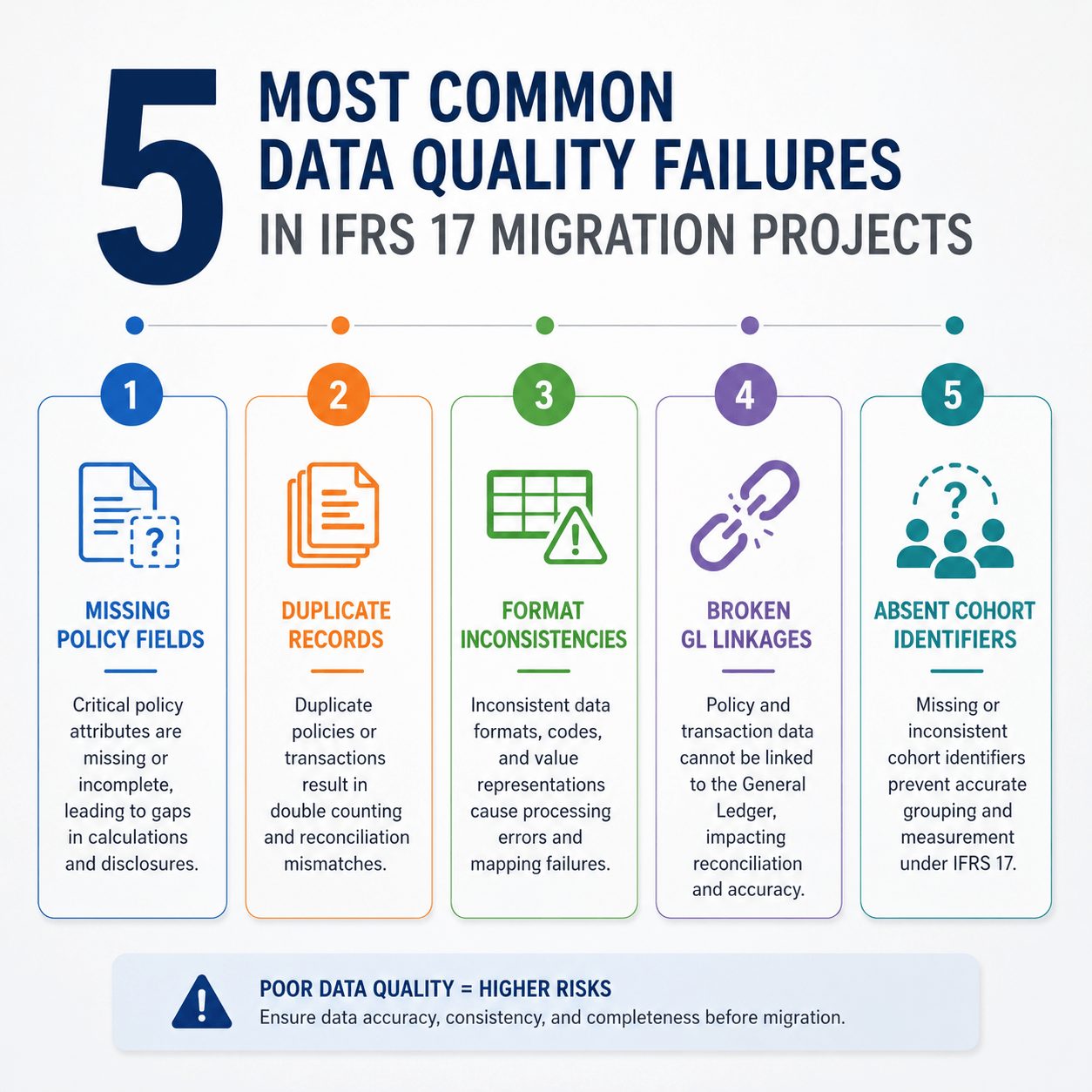
Missing values. Duplicate contract records. Non-standardized date formats built into decade-old policy admin systems that nobody wants to touch. These aren’t rare edge cases. They’re the norm. And when you discover them mid-migration — which is when most teams discover them — you lose weeks.
Nine Systems, One Standard — The Reconciliation Problem
Under IFRS 4, reconciliation across source systems was manageable. You were posting premiums directly to the P&L. The data path was short. Under IFRS 17, the path is long and branched: policy admin feeds actuarial, actuarial feeds the IFRS engine, the engine feeds the general ledger, the GL feeds reporting. Every handoff is a potential reconciliation failure point.
When your IFRS 17 data management systems aren’t built to handle that full chain, you end up with what one CFO described to me as “a different answer every time we run the calculation.” That’s not a model problem. That’s a data integrity problem baked into the migration architecture.
The fix isn’t to re-run the model. The fix is to rebuild the data pipeline from the start with contract-level traceability as a design requirement — not an afterthought.
Granularity Requirements That Legacy Systems Can’t Meet
IFRS 17 requires you to group insurance contracts into annual cohorts — organized by year of inception and profitability. Most legacy policy admin systems don’t have cohort ID fields. They weren’t designed to. So the data has to be mapped and reconstructed retroactively, which is where migration timelines blow up.
Bridging that gap requires middleware or ETL transformation layers that can reformat legacy output into IFRS-compliant structures. That work is real, it takes time, and it almost always surfaces data quality problems that weren’t visible before migration started. Plan for it. Don’t discover it.
For insurers looking at IBNR calculations specifically, IBNR software that integrates with IFRS 17 engines significantly reduces the manual reconstruction burden in the claims tail estimation process.
The IFRS 17 Compliance Gap That Phase 2 Was Supposed to Close
IFRS 4 was always a stopgap. The IASB said so when they issued it in 2004. It was a temporary standard designed to allow insurance companies to keep using their existing accounting policies while a permanent replacement was developed. That replacement — IFRS 17 — took 13 years to finalize and became effective on 1 January 2023.
The gap between what IFRS 4 permitted and what IFRS 17 requires isn’t a small technical difference. It’s a fundamentally different accounting model. And that’s why IFRS 4 phase 2 software upgrades are so much heavier than most insurers initially scoped them to be.
What IFRS 4 Allowed That IFRS 17 No Longer Does
IFRS 4 allowed insurers to use whatever accounting policies they were already using before IFRS adoption. In practice, that meant wildly different approaches to recognizing premiums, reserving for claims, and discounting liabilities — even within the same region. Comparability between insurers was essentially impossible.
IFRS 17 insurance compliance closes that. Every insurer now has to use a consistent, principles-based model: the General Measurement Model, the Premium Allocation Approach for short-duration contracts, or the Variable Fee Approach for participating contracts. Each model requires actuarial inputs that legacy systems weren’t designed to generate — and each has to be disclosed with a level of transparency that manual processes simply can’t support.
The IFRS 17 software solutions that handle this well are purpose-built for exactly these measurement models. Off-the-shelf ERP add-ons and spreadsheet overlays aren’t. That distinction matters when your audit committee is reviewing disclosures.
Where GCC and APAC Insurers Are Still Falling Short
The Western Balkan and Caucasus experience is instructive here. The World Bank’s Centre for Financial Reporting Reform reported in June 2024 that all Western Balkan countries under their program had delayed IFRS 17 implementation. The reason wasn’t political. It was technical — a shortage of actuarial expertise and inadequate system readiness.
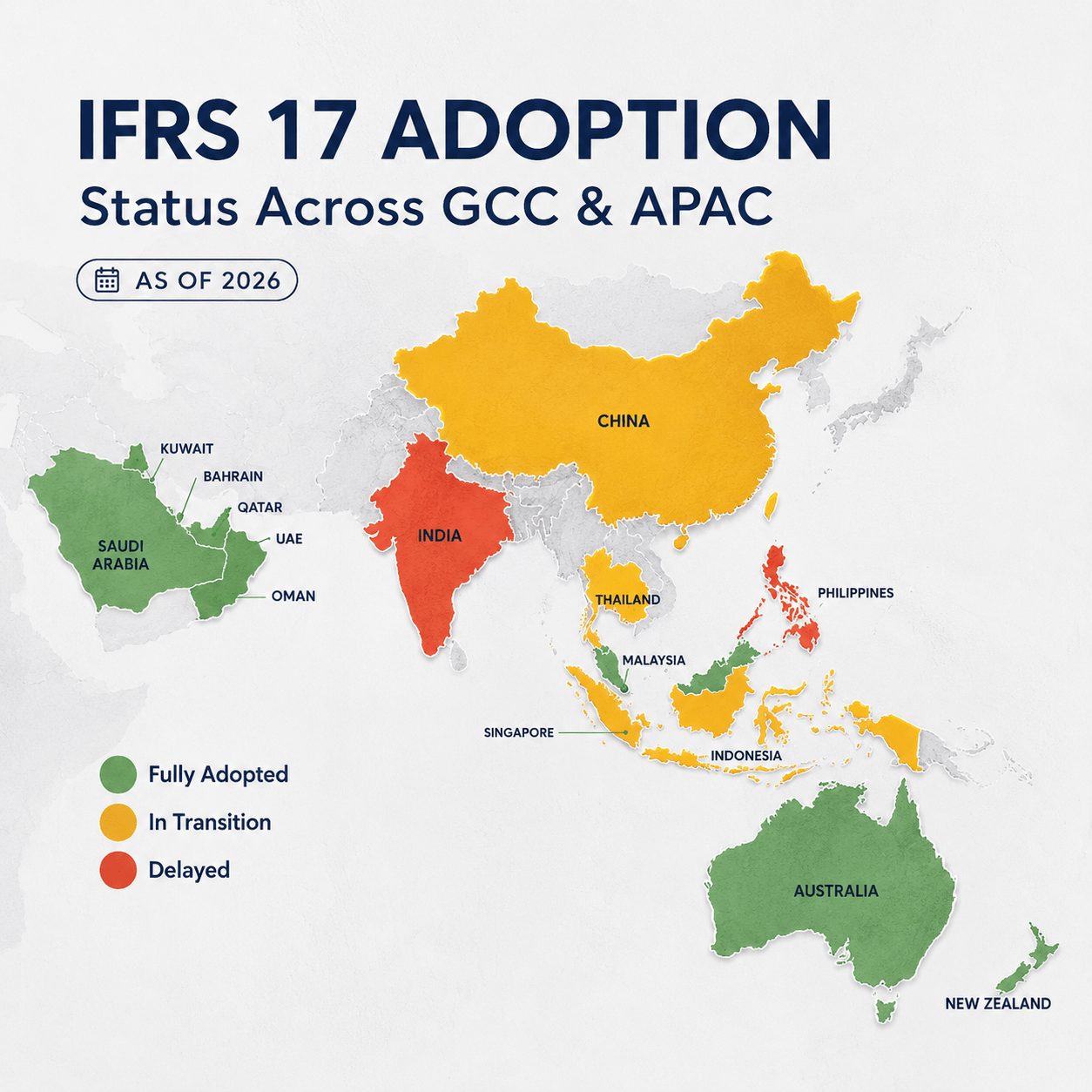
GCC insurers face a similar challenge. Saudi Arabia and UAE markets have moved faster than many peers, but mid-tier insurers in those markets are still running parallel reporting tracks — producing IFRS 4 reports for historical comparison while building IFRS 17 outputs from patched-together tools. That dual-track approach is expensive, error-prone, and not sustainable.
The right IFRS 17 non-life solutions for this market need to handle Arabic-language policy data, multi-currency portfolios, and local regulatory overlay — not just vanilla IFRS calculations. That’s a vendor selection criterion that gets overlooked until it’s a problem.
Not sure where your upgrade stands?
IFRS TECH’s team has guided insurers across Saudi Arabia, UAE, and APAC through compliant migrations. See how our IFRS 17 compliance solutions team approaches legacy data transformation and measurement model selection.
Download: IFRS 4 to IFRS 17 Migration Readiness Checklist →
What a Realistic Upgrade Path Looks Like
You might think the answer here is obvious: pick a platform, migrate the data, go live. And in theory, that’s right. In practice, the sequencing matters enormously, and most project failures come from getting the order wrong.
Phased Migration vs. Big-Bang Replacement
Big-bang replacement — replacing the entire legacy stack in one project — is almost always slower, more expensive, and riskier than a phased approach. Not because the technology is harder, but because the data readiness work can’t be parallelized the way project sponsors want it to be.
The approach that works: start with data. Profile it, clean it, map it. Understand where your cohort IDs are missing, where your cash flow structures are non-compliant, where your GL linkages break. Build the IFRS 17 data layer on clean inputs — then connect the calculation engine.
That sequence sounds slower at the front end. But it produces a go-live that actually closes accurately on day one. And per what a major insurer’s team told us directly: accuracy on day one is the real measure of a successful implementation. Not go-live date.
For non-life insurers specifically, the IFRS 17 end to end non-life solution architecture looks different from a life book. The Premium Allocation Approach dominates, IBNR tail calculations drive the liability estimates, and the reconciliation chain between claims systems and the IFRS engine is where most data quality issues appear. Plan for that specifically — don’t use a life-focused implementation playbook on a non-life portfolio.
Choosing the Right IFRS 17 Software Vendor
The market for IFRS 17 solutions for insurance has matured. There are now clear differences between vendors who built IFRS 17 functionality natively and those who retrofitted it onto existing platforms. That difference shows up directly in your implementation timeline and your total cost of ownership.
A few things worth checking when you’re evaluating the IFRS 17 software vendor shortlist:
- Does the platform handle all three measurement models — GMM, PAA, and VFA — or only two? For mixed portfolios, all three matter.
- How does the vendor handle the actuarial-to-finance handoff? IFRS 17 actuarial tools in insurance that don’t integrate cleanly with the accounting engine create a new reconciliation problem rather than solving the old one.
- Can the platform scale as portfolio volume grows? IFRS 17 vendors for scalable compliance handle regulatory reporting for high-volume GCC and APAC books without extended run times that delay your close cycle.
- What does the audit trail look like? Your auditors will want to trace every output back to source data. If the platform can’t provide that lineage natively, you’re back to manual documentation.
A strong IFRS 17 software platform handles the full chain: data ingestion, measurement model calculation, CSM tracking, risk adjustment, and disclosure reporting in one integrated flow. That’s not a luxury. For mid-to-large insurers, it’s the difference between a 30-day close and a 60-day one.
For insurers evaluating specific platform options, the IFRS 17 software solutions comparison available from IFRS TECH covers the key criteria in detail, including how leading vendors handle the GCC-specific regulatory overlay.
One more thing. The actuarial talent shortage is real and documented. If your upgrade plan depends on hiring three new actuaries to run the compliance model manually, you’ve built a staffing risk into your compliance roadmap. The right platform reduces that dependency. It doesn’t eliminate the need for actuarial judgment, but it means your actuaries are reviewing outputs and making decisions, not running spreadsheets at 11pm before a close deadline.
What You Now Know
- Transition delays in IFRS 4 phase 2 software upgrades are driven primarily by legacy system debt and data migration complexity — not by a shortage of available IFRS 17 platforms. The platforms exist. The clean data often doesn’t.
- Every quarter spent on manual workarounds increases audit exposure, extends close cycles, and compounds the retrospective correction risk. The cost of delay is real and measurable — it’s not just a future-state concern.
- A phased migration approach — data readiness first, platform integration second — consistently outperforms big-bang replacement. Get your data architecture right before you connect the calculation engine.
IFRS 4 was always a temporary fix. Most insurers knew that. The teams who got IFRS 17 compliance right were the ones who treated the software upgrade as a data transformation project first and an accounting project second. If your team hasn’t made that shift yet, that’s where to start.
Ready to move past the workarounds?
IFRS TECH’s advisory team has worked with insurers across GCC, Europe, and APAC on IFRS 4 to IFRS 17 transitions — from data architecture through to audit-ready disclosure reporting.
See how IFRS TECH’s IFRS 17 software team handles legacy migration and measurement model implementation →
Frequently Asked Questions
What are the main causes of transition delays in IFRS 4 phase 2 software upgrades?
Most delays come from legacy system incompatibility and poor data readiness — not platform selection. Insurers often underestimate how much data cleaning and cohort mapping is needed before IFRS 17 calculations can run accurately. Missing policy-level fields and siloed source systems are the two biggest blockers.
How does IFRS 17 compliance differ from what IFRS 4 required?
IFRS 4 allowed insurers to use their pre-existing accounting policies. IFRS 17 insurance compliance replaces that with a single principles-based model requiring contract-level measurement, explicit CSM tracking, and full disclosure traceability. The data and system requirements are fundamentally more demanding.
What happens if an insurer delays IFRS 4 phase 2 software adoption?
Delayed adoption increases audit risk, extends reporting close cycles, and creates manual reconciliation failures that compound over time. Regulators expect audit-ready disclosures. Insurers still running on patched legacy processes face material misstatement risk and potential regulatory scrutiny each reporting period.
What should insurers look for in IFRS 17 solutions for insurance?
Look for platforms that support all three measurement models natively — GMM, PAA, and VFA — and provide end-to-end audit traceability from source data to disclosure output. Clean actuarial-to-finance integration and scalable processing for large policy volumes are the two criteria that most often separate successful implementations from delayed ones.
How long does a typical IFRS 4 to IFRS 17 migration take?
It varies by portfolio size and legacy system complexity, but most mid-to-large insurer migrations run between 12 and 24 months. Data preparation typically takes as long as platform implementation. Teams that front-load the data readiness work consistently report faster, cleaner go-lives than those that start with platform selection.