TL;DR
Optimizing your ifrs 9 technology solutions in risk is vital for maintaining accurate expected credit loss estimates. This guide explores how technology integration and automation reduce manual errors while improving data governance. You will learn to evaluate build vs buy strategies and bridge the gap between finance and risk departments. These management optimizations ensure your credit risk management software remains compliant with evolving regulatory standards like those in UAE and Pakistan. Read on to discover how to refine your tech stack for better visibility and faster reporting.
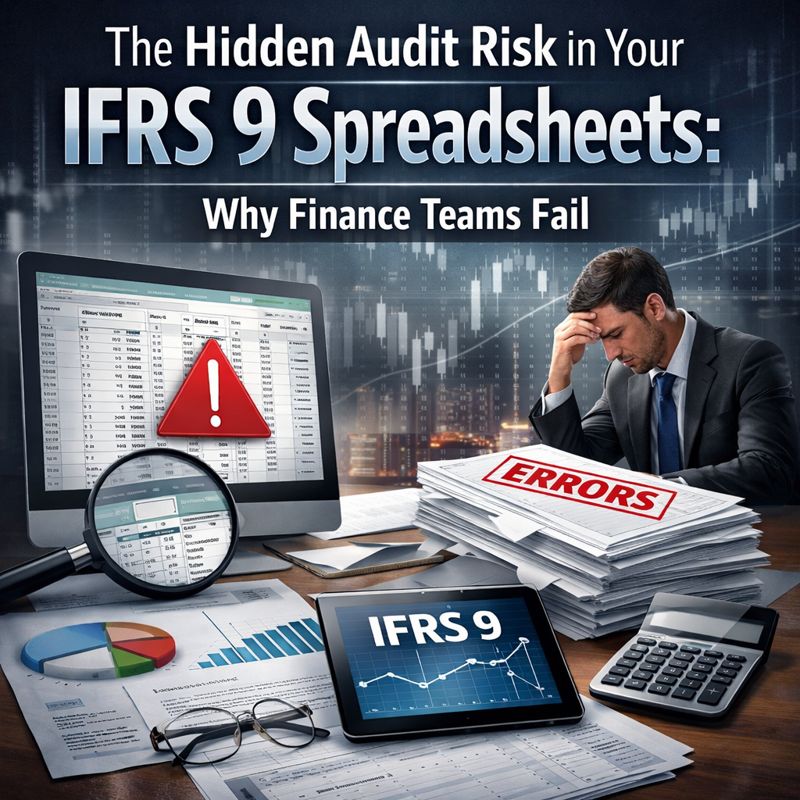
You’ve got IFRS 9 live. The models run, the reports go out, and your auditors sign off. Still, your ECL numbers shift too much between quarters. Your finance and risk teams are still reconciling data manually. Every regulatory change feels like starting over.
That’s not a compliance problem. That’s a technology problem.
IFRS 9 technology solutions in risk management have matured significantly over the past few years. The question now isn’t whether to invest. It’s how to optimize what you have. This article walks through the strategies that separate good implementations from great ones.
What are IFRS 9 technology solutions in risk?
IFRS 9 technology solutions are platforms built to automate and report credit risk requirements. They cover the full cycle from data ingestion to disclosure and audit support.
In risk management, these solutions do more than produce a number. They connect your credit risk function to your finance reporting, translate PD, LGD, and EAD parameters into auditable journal entries. Then do this across millions of accounts overnight.
The global IFRS 9 compliance software market reached $1.4 billion in 2024. It is projected to grow to $3.2 billion by 2033. This represents a CAGR of 9.7% [1]. This growth reflects one thing. Financial institutions are still working through how to get these systems right.
For a foundation level overview, see this guide to IFRS 9 Financial Instruments Explained.
How do IFRS 9 technology solutions improve risk management?

The short answer is they reduce manual error at scale. The longer answer matters more if you’re making a technology decision.
Automating expected credit loss calculations
ECL calculation is not a single formula. It’s a chain of interdependent parameters applied across every financial instrument. It must adjust for forward looking macroeconomic conditions.
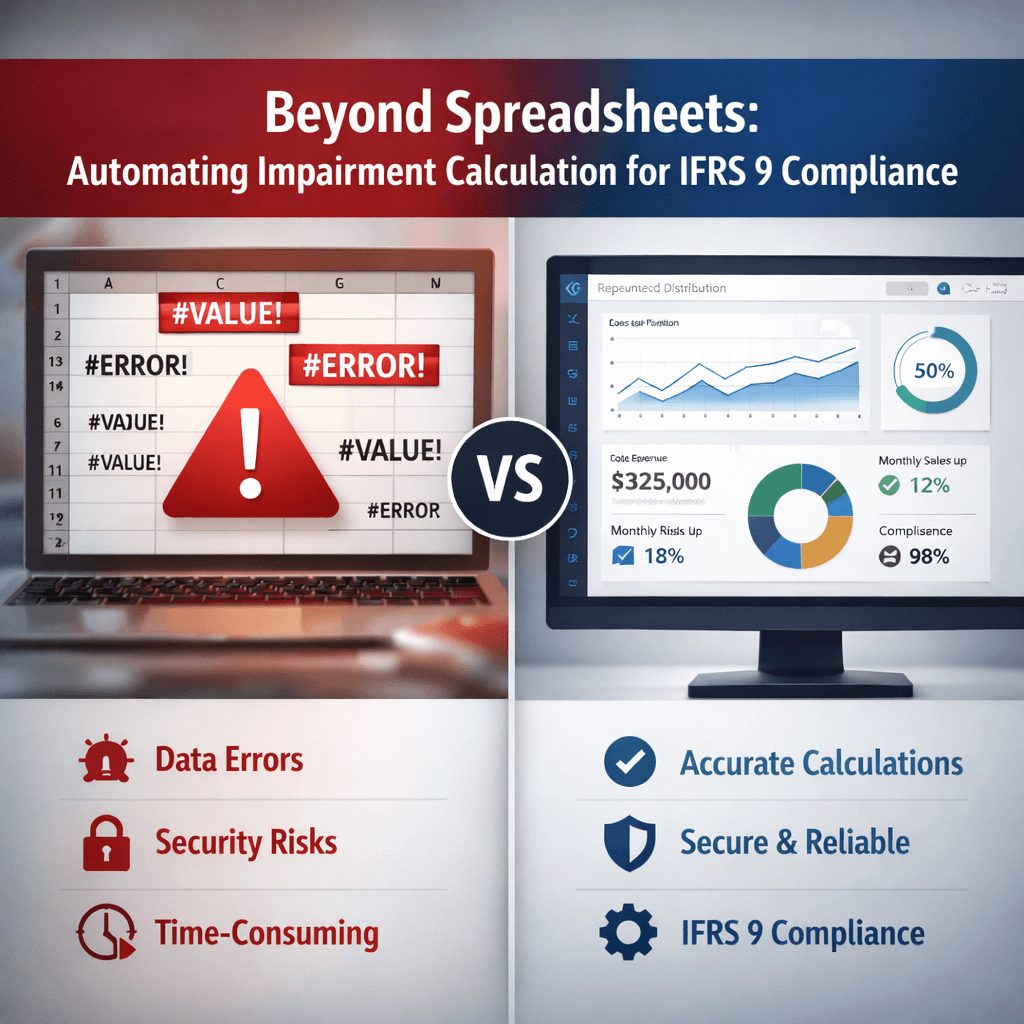
Manual approaches to this process carry real risk. One broken link in a formula chain and your provisioning is off. Automation removes that fragility.
Good IFRS 9 tools run the full calculation in a controlled environment. They apply PD, LGD, and EAD at the instrument level. They flag instruments approaching Stage 2 thresholds before your quarter closes.
For a closer look at these mechanics, the IFRS 9 impairment calculation resource walks through the logic.
Improving data accuracy and integration
Bad data is the most common reason ECL models underperform. Not bad models.
The problems are predictable. You see incomplete transaction histories and inconsistent identifiers. The right approach integrates data at the source.
That means connecting your core banking system to your macroeconomic data feeds. You need a single validated data layer. Using a dedicated ifrs 9 software solution helps ensure data integrity across these various inputs.
Enhancing model validation and governance
Model governance isn’t paperwork. It’s the difference between a trusted number and an auditor question.
IFRS 9 technology solutions with built-in validation workflows track model version history. They document assumption changes and log override decisions. This audit trail matters for regulators.
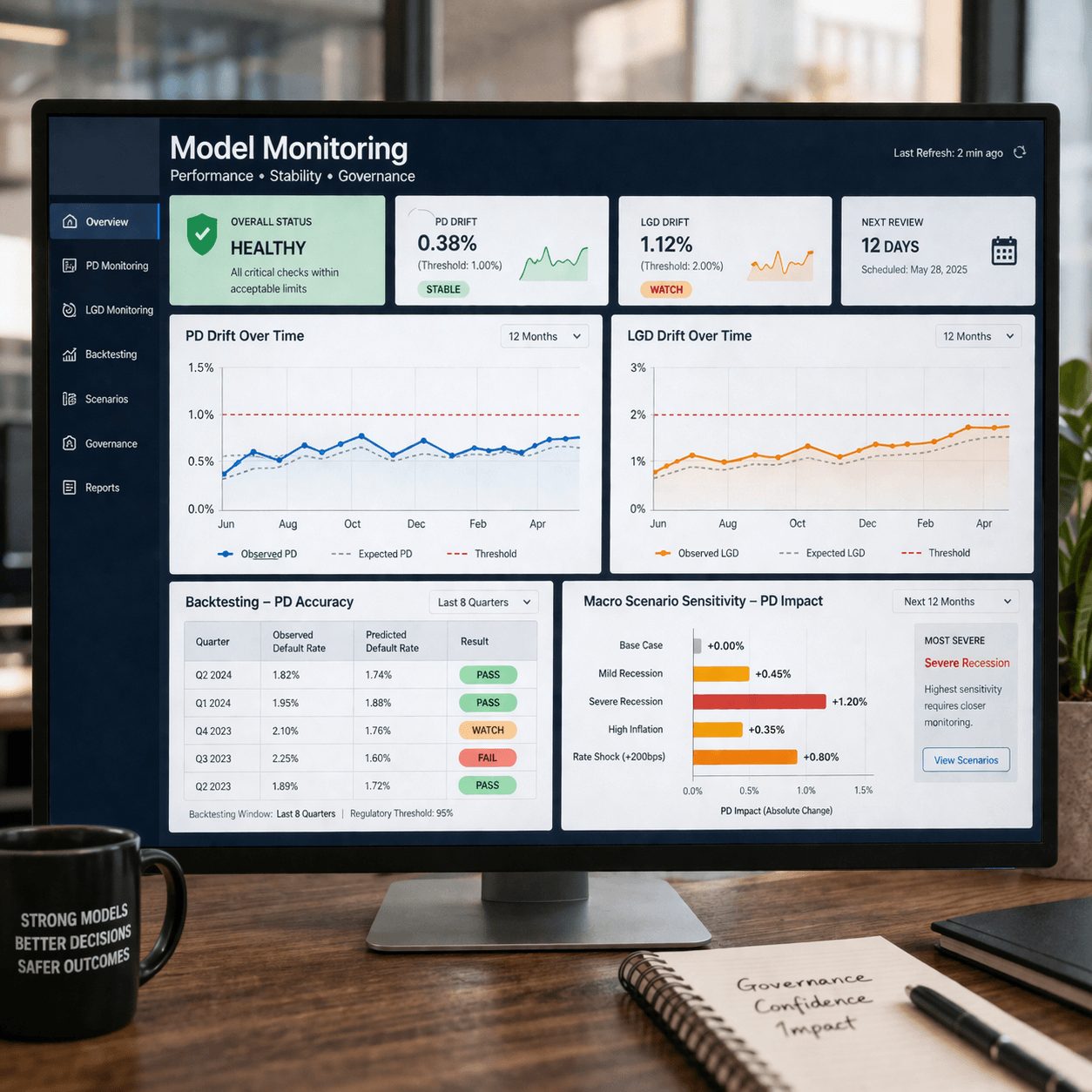
Backtesting capabilities matter here too. If your system compares predicted defaults against actual outcomes, you catch model drift early. This is a core part of any robust ifrs 9 software.
Key components of IFRS 9 risk technology frameworks
PD, LGD, and EAD modeling
These three parameters sit at the heart of every ECL calculation. PD measures the likelihood of default. LGD measures the loss proportion. EAD measures the exposure at that point.
Each needs to be calibrated to your specific portfolio. Retail mortgages have different loss characteristics than corporate credit. A good IFRS 9 platform lets you run segment specific models.
It is worth noting that IFRS 9 Financial Instruments Explained often requires point in time estimates. Many institutions mistakenly use through the cycle estimates from Basel models. This will bias your provisions.
Forward-looking macroeconomic overlays
IFRS 9 requires that ECL estimates incorporate forward looking information. Your models need to adjust for macroeconomic scenarios.
In practice, this means linking your engine to macro variables. You apply probability weights across multiple scenarios like base, upside, and downside.
In markets with economic volatility, this overlay carries more weight. A flat macro assumption isn’t conservative. It’s just inaccurate.
Significant increase in credit risk assessment
The SICR threshold is where most institutions find their greatest challenge. Moving an instrument from Stage 1 to Stage 2 requires calibration.
There’s no global consensus on exactly how to set that threshold. Some use a relative change in PD. Others use absolute levels or qualitative criteria.
What matters is that your ifrs 9 software solutions make this logic transparent. You need consistent and testable rules.
Common challenges in IFRS 9 implementation
Most implementations fail at the data and integration layers. They don’t fail at the modeling stage.
Data quality and availability issues
European banks saw this clearly during the COVID 19 period. Government support programs distorted default patterns. Credit bureaus showed artificially clean data.
Models trained on that period made poor predictions later. Institutions with rigid systems couldn’t adapt. Those with configurable tools and strong governance could.
Your technology needs to be configurable. It cannot just be automated. Following a proven ifrs 9 compliance process architecture helps mitigate these data gaps.
Model complexity and validation gaps
More complexity doesn’t mean more accuracy. A model you can’t explain to your audit committee is a liability.
The right standard is a model that’s responsive to portfolio changes. It must produce consistent outputs across reporting periods. Validation should test all three.
These aren’t exotic tests. They are the minimum bar. Using an ifrs 9 impairment spreadsheet risk analysis can help identify where manual errors often creep in.
Regulatory compliance and audit readiness
Regulators are focused on quality. They want to see granular documentation on staging criteria.
Your technology should produce that documentation automatically. It should be a byproduct of the calculation.
Best strategies to optimize IFRS 9 technology solutions in risk
Build vs buy: choosing the right solution
This is the decision that most institutions overthink. The real question is what you can maintain.
Custom built engines give you control. But they require dedicated quants and engineers. Every regulatory change becomes a development project.
Vendor solutions give you a supported roadmap. They require configuration work and data integration effort.
A well configured ifrs 9 ecl software for banks often outperforms a custom build. It usually offers a better total cost of ownership.
Integrating finance and risk systems
The biggest gap is between the risk team and the finance team. They often use different systems and different data.
A subledger integration layer closes that gap. It translates expected cash flow movements into journal entries.
Cloud based solutions accounted for 58% of new IFRS 9 deployments in 2024 [1]. Cloud architecture makes this cross system integration more practical. This leads to a more unified ifrs financial reporting solution.
Leveraging automation and AI in ECL models
Automation isn’t about replacing judgment. It’s about removing manual steps that slow you down.
Post model adjustments are a good example. Many institutions still use manual spreadsheet overlays.
Automating the PMA framework improves speed and auditability. You can still exercise judgment inside a controlled process. This is why many look for ifrs 9 regulatory reporting vendors with these features.
Strengthening data governance frameworks
Data governance is a risk management discipline. It is not an IT project.
Start with data lineage. You must trace every input back to a source system.
From there, build quality checks into your ingestion pipeline. Flag missing ratings before they reach the model. This is essential for IFRS 9 data integrity.
How to implement IFRS 9 technology solutions step by step
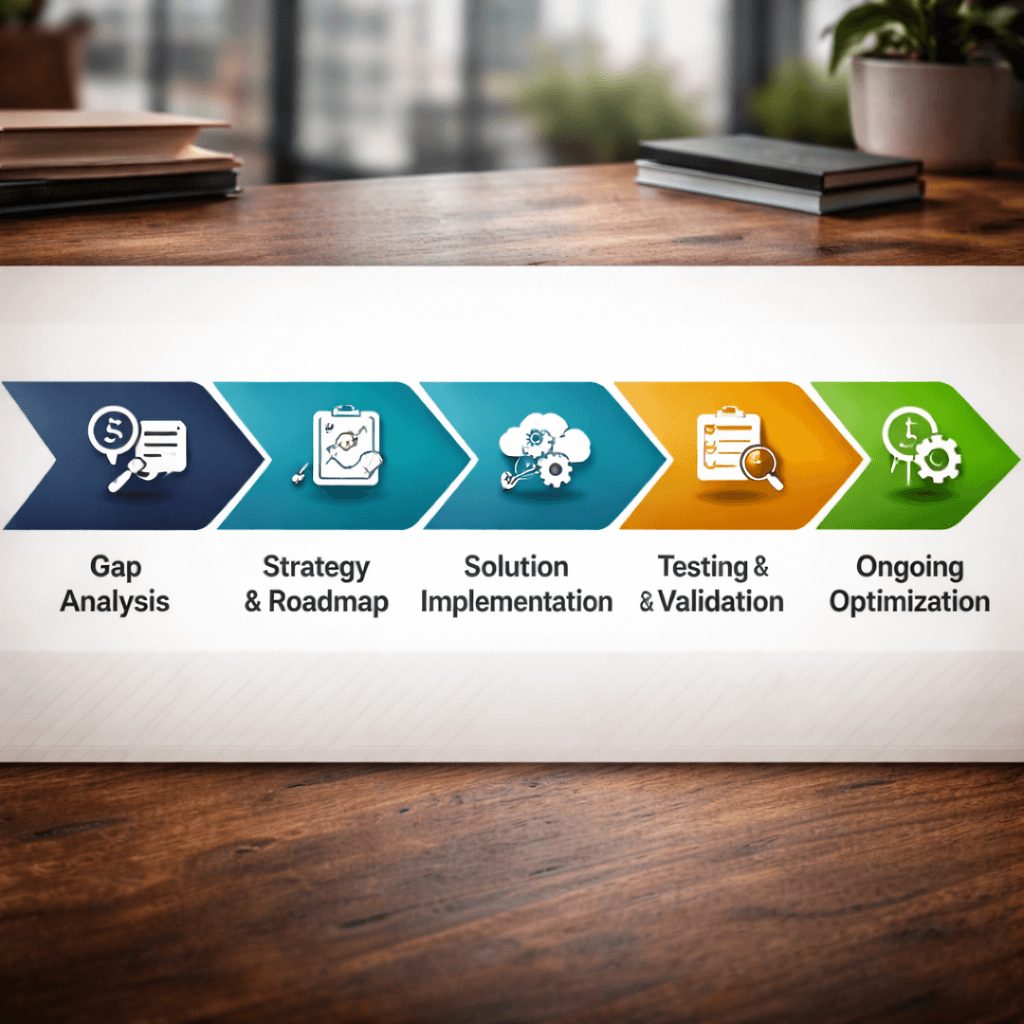
Initial assessment and gap analysis
Before selecting a tool, map what you have. What systems hold your credit data?
A gap analysis needs to be honest. Rush past this and you build on problems.
This is a critical part of the ifrs 9 compliance process architecture. It sets the stage for success.
Model development and testing
Model development starts with segmentation. How do you group your instruments?
Parameter estimation happens at the segment level. Each parameter gets validated through backtests.
Don’t skip sensitivity testing. If unemployment changes don’t move your provisions, the model isn’t working. This is why many seek help from IFRS 9 advisory firms.
Deployment and system integration
Deployment is where projects often stall. The integration hasn’t been tested at volume.
Run parallel calculations before go live. Run your new system alongside the old process.
Compare outputs at the account level. Fix discrepancies before the auditors arrive. This ensures a stable ifrs 9 software solution.
Ongoing monitoring and optimization
Go live is not the finish line. ECL models need regular monitoring.
Build a monitoring calendar. Assign ownership to specific teams.
This is part of being a IFRS 9 Financial Instruments Explained expert. You must maintain the system.
How do banks in UAE and Pakistan approach IFRS 9 optimization?
Regulatory expectations and compliance trends
The UAE Central Bank aligns with international best practice. It emphasizes scenario based ECL calculation.
In Pakistan, the State Bank has specific macro variable guidance. Banks face challenges with economic volatility.
Shorter data histories require careful vintage analysis. This makes the choice of ifrs 9 ecl software vital.
Lessons from leading financial institutions
The best institutions separate model development from operation. They invest in data before sophistication.
They treat IFRS 9 as a risk tool. It is not just a compliance output.
Banks that use ECL for pricing get more value. The business use makes the difference.
What are the benefits of optimizing IFRS 9 technology solutions?
Better risk visibility and decision-making
Clean data and validated models tell a real story. This information is valuable for the board.
Credit committees see where concentration risk builds. Treasury sees how macro scenarios affect liquidity.
This insight comes from a well optimized ifrs 9 software. It turns data into strategy.
Faster reporting and reduced manual work
An optimized process cuts reporting cycle time. Automation removes days of reconciliation work.
That time saving compounds. Faster close means more time for analysis.
More time for analysis means sharper decisions. This is the goal of a ifrs 9 software solution.
Improved compliance and audit outcomes
Auditors respond to consistency. When your technology produces logs automatically, costs go down.
You spend less time in preparation. You spend more time on risk work.
This is the real return on investment. It’s why IFRS 9 vs IAS 39 transitions were so critical.
IFRS 9 technology solutions checklist for 2026
Data and infrastructure readiness
Ask if your data is complete for five years. Do you have collateral positions?
Traceability is the foundation. Without it, your project will stall.
Ensure your ifrs 9 ecl software can handle these data loads. This is a 2026 priority.
Model governance and validation
Your checklist should cover written documentation. You need defined validation frequencies.
These aren’t optional for regulated banks. They are the floor.
If you are unsure, consult IFRS 9 advisory firms for a review. They provide independent oversight.
Reporting and disclosure alignment
IFRS 7 requirements sit alongside IFRS 9. Your technology must produce both.
Check if your system generates movement tables. It needs to show sensitivity disclosures.
If these require manual assembly, you have a gap. Fix it before your next audit.
Frequently Asked Questions
What technology is used in financial risk management?
Financial risk management relies on integrated data systems and automated engines to calculate risk metrics. These platforms process vast amounts of transactional data to generate credit scores and liquidity reports. Modern systems use cloud architecture to connect various data feeds for real time monitoring.
What technology is used in risk management?
Technology in this field includes risk modeling software and automated compliance tools that track regulatory changes. Most firms use specialized databases to store historical loss data and collateral values for analysis. These systems help managers identify potential threats before they impact the balance sheet.
What are the tools used in financial risk management?
Managers use expected credit loss engines, value at risk models, and subledger integration platforms to manage exposures. These tools help calculate capital requirements and ensure reporting stays consistent across different departments. Many organizations also use stress testing software to simulate various economic scenarios.
What are the 7 types of risk management?
Risk management covers credit, market, liquidity, and operational risks as the primary categories. It also includes legal, reputational, and strategic risks that can affect a firm’s long term stability. Each type requires specific monitoring tools and mitigation strategies to protect the organization.
What are the 5 examples of technology?
Common examples include cloud servers for data storage and automated software for accounting tasks. You also see mobile applications for banking and encryption tools for data security. Specialized modeling platforms for calculating financial impairments are another key example in the risk sector.
What is the biggest issue with IFRS 9?
The most significant challenge is the complexity of data requirements for calculating expected credit losses over a long horizon. Many firms struggle to gather high quality historical data that meets the strict auditing standards. This often leads to volatility in financial statements when economic conditions shift.
What are the challenges in implementing IFRS 9?
Implementation challenges involve integrating data from separate siloed systems into a single calculation engine. Calibrating the significant increase in credit risk thresholds also requires deep technical expertise and historical analysis. Many banks find it difficult to align their risk models with financial reporting cycles.
What is unusual about IFRS 9?
IFRS 9 is unique because it requires firms to recognize losses based on future expectations rather than past events. This forward looking approach means you must book a provision the moment you originate a loan. It forces a much closer relationship between credit risk teams and accounting departments.
What is the most difficult IFRS?
Many experts consider IFRS 9 and IFRS 17 the most difficult standards due to their heavy reliance on complex actuarial models. These standards require vast amounts of data and sophisticated technology to produce accurate financial disclosures. They often take years of preparation and system testing to implement correctly.
What are the 9 types of risk in banking?
Banking risks include credit, market, and liquidity risks alongside operational and interest rate risks. You also must manage legal, reputational, strategic, and compliance risks to stay stable. Effective ifrs 9 technology solutions in risk help track these various exposures across a global portfolio.
What is IFRS 9 in simple terms?
IFRS 9 is an accounting standard that tells businesses how to report their financial assets and liabilities. It focuses on predicting future credit losses early so firms can set aside enough money to cover them. This approach makes financial reporting more transparent and helps investors understand potential risks.
What is the difference between IFRS 9 ECL and the old model?
The old IAS 39 model only recognized losses after they occurred. IFRS 9 uses a forward looking approach. It recognizes losses based on probabilities before they happen. This shift is explained in IFRS 9 vs IAS 39.
Getting your IFRS 9 technology stack right
IFRS 9 technology solutions in risk management are an ongoing function. They sit at the intersection of risk and finance.
The institutions that get this right invest in data. They prioritize governance over model complexity. They build the capability to improve over time.
If you are planning an upgrade, your architecture decisions matter. They will shape your risk capability for years.
Prima Consulting works with banks across the Middle East and South Asia. We help with gap analysis and model development. We ensure you are ready for any regulator.
Visit primaconsulting.org to connect with our IFRS 9 advisory team.