TL;DR:
IFRS 17 non-life solutions only work when your contract grouping and onerosity assessment are done right. Get those wrong, and your entire compliance output breaks down. This article examines the real risks that come from improper grouping in end-to-end non-life solutions, including inconsistent assessments, audit exposure, and failures that scale as your portfolio grows. You will also see how manual IFRS 17 general insurance processes create vulnerabilities that automated tools alone cannot fix without the right configuration. Read this to understand what goes wrong, why it happens, and what your team needs to watch for in your IFRS 17 non-life adoption.
You’ve built your IFRS 17 reporting process. You’ve mapped your data, set up your actuarial inputs, and aligned your teams. But what happens when the contracts themselves are grouped incorrectly from the start?
For non-life insurers, contract grouping isn’t just an administrative step. It’s the structural foundation of everything that follows: how losses get recognized, how profits emerge over time, and whether your financial statements hold up under audit.
Errors in grouping don’t always show up immediately. They compound. By the time an auditor or regulator flags the issue, the cost of correcting it can far exceed what it would have cost to get it right the first time.
This article breaks down the specific grouping risks in IFRS 17 non life solutions, where those risks come from, and what a sound grouping process actually looks like.
IFRS 17 Non Life Solutions: Grouping Overview
What Is Contract Grouping Under IFRS 17?
Contract grouping is the process of organizing insurance contracts into units of account for measurement and reporting. IFRS 17 requires insurers to measure contracts at the group level, not individually and not across entire product lines.
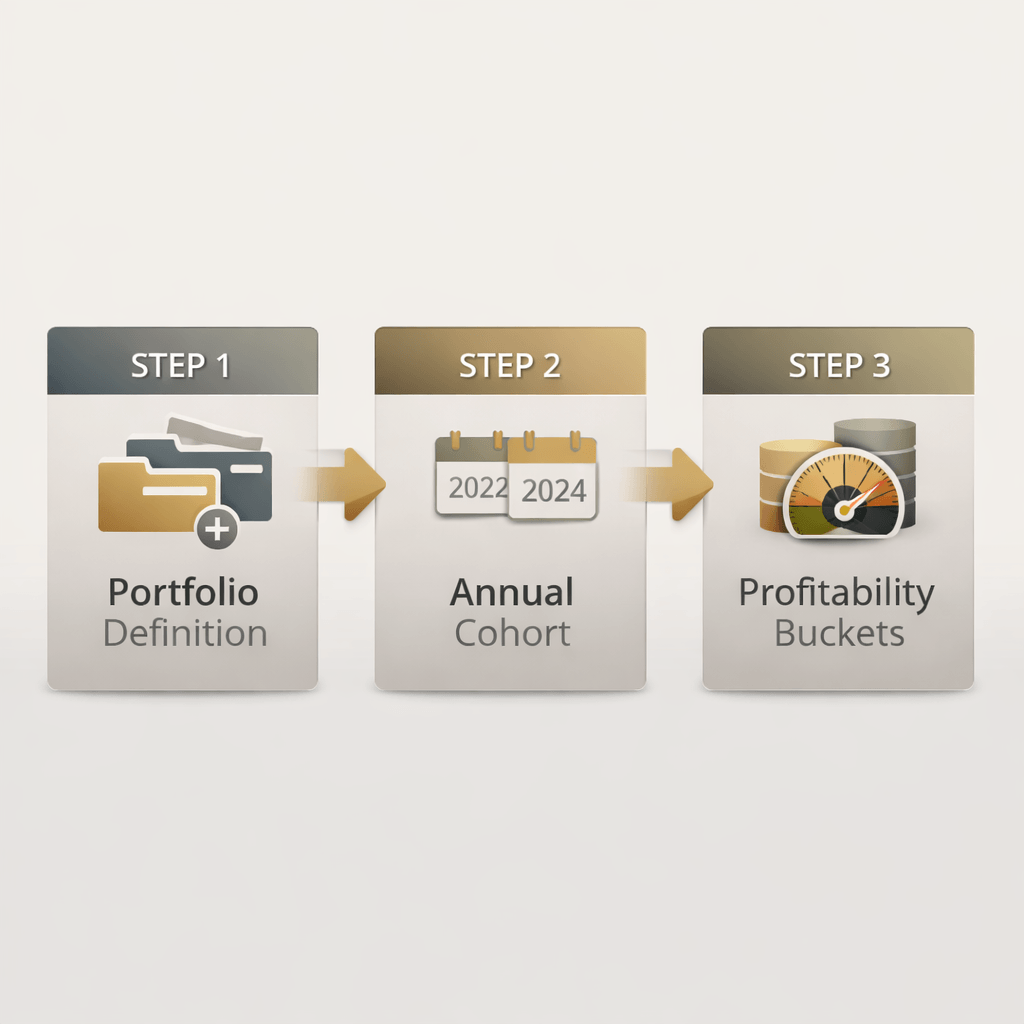
Each group is defined by 3 factors. First, the portfolio, which is a set of contracts covering similar risks managed together. Second, the annual cohort, meaning contracts issued within the same 12-month period. Third, the profitability classification, which sorts contracts into onerous, no significant possibility of becoming onerous, or remaining groups.
These three layers work together. Get any one wrong, and your entire measurement structure becomes unreliable.
Why Contract Grouping Matters for Insurers
The purpose of grouping is to prevent profitable contracts from masking loss-making ones. Without clear separation, an insurer could report misleading margins by averaging across contracts of very different risk profiles.
IFRS 17 was designed to end that practice. Onerous contracts must be recognized immediately. Profitable contracts earn their margin over time through the contractual service margin, or CSM. Grouping is what makes that distinction possible.
Sound grouping also affects which measurement model a group qualifies for. You can read more about how ifrs 17 software solutions are built to handle these group-level classification requirements for non-life portfolios.
Key Contract Grouping Risks in IFRS 17
Most grouping problems don’t come from misunderstanding the standard. They come from applying it inconsistently, or from systems and data structures that weren’t built to support it.
Misclassification of Profitability Groups
The most consequential risk is placing a contract in the wrong profitability bucket. An onerous contract assigned to the remaining group doesn’t trigger immediate loss recognition.
That delay distorts your income statement for multiple reporting periods. When auditors find it, reclassification is required, and prior-period adjustments can be significant.
In non-life lines like motor third-party liability or property near high-risk areas, claims behavior can change quickly. A group that looks profitable at inception may become onerous within months, especially if discount rate assumptions or claims trends weren’t stress-tested at initial recognition.
Errors in Annual Cohort Segmentation
The annual cohort rule requires that contracts issued more than 12 months apart cannot be grouped together. In a 2025 survey of IFRS 17 implementation participants, 22% cited the annual cohort requirement as the most significant challenge, particularly because of its downstream effects on grouping hierarchies, data extracts, and risk adjustment allocation.
For non-life insurers writing high volumes of short-term contracts, tracking inception dates precisely across legacy policy administration systems is a real operational burden. Small data errors in inception date recording can silently break cohort boundaries.
Inconsistent Portfolio Definitions
Portfolios must group contracts with similar risks managed together. That phrase, while clear on its face, leaves room for inconsistent interpretation across business units.
One team might define a motor portfolio broadly, combining fleet and personal auto. Another might treat them separately. Neither approach is automatically wrong, but inconsistency across the organization creates grouping mismatches that are hard to audit and harder to fix at scale.
Consistent portfolio definitions sit at the heart of ifrs 17 compliance solutions that are built to scale. Without that foundation, even well-structured systems produce unreliable outputs.
Data Quality and System Limitations
Grouping at the right level of granularity demands contract-level data that’s clean, complete, and consistently structured. In practice, many insurers still rely on systems designed for claims management or financial reporting, not for IFRS 17 measurement.
The result is data gaps that make it impossible to confirm whether contracts belong in the same cohort, or whether a portfolio boundary has been drawn correctly. That’s not just a compliance problem. It’s an audit risk.
You can read more about how ifrs 17 data management systems address contract-level granularity requirements and data validation controls for non-life portfolios.
How to Structure IFRS 17 Contract Groups
A sound grouping process follows three steps in strict order. Skipping or combining steps creates ambiguity that’s difficult to defend in an audit.
Step 1: Define Portfolios Correctly
Start by identifying sets of contracts that share similar risks and are managed together. In non-life insurance, this typically maps to product lines such as motor, property, liability, or marine.
The key test is whether contracts would respond similarly to the same risk drivers, such as weather events, interest rate movements, or claims frequency trends. If they would, they likely belong in the same portfolio.
Step 2: Apply Annual Cohort Rules
Within each portfolio, separate contracts into groups based on inception year. Contracts issued in 2023 cannot be grouped with contracts issued in 2024, even if they’re otherwise identical.
This rule is non-negotiable under IFRS 17. Your policy administration system needs to track inception dates precisely and pass that data cleanly to your measurement system.
Actuarial teams working on cohort onerosity assessments benefit from purpose-built ifrs 17 actuarial tools in insurance that automate stress-testing and document the judgment basis required at initial recognition.
Step 3: Assign Profitability Buckets
Within each cohort, classify each contract group into one of three profitability buckets based on expected cash flows at initial recognition.
Onerous Contracts (Loss-Making)
Groups where expected outflows exceed expected inflows. Losses must be recognized in full immediately at initial recognition, with no deferral allowed.
No Significant Risk of Becoming Onerous
Groups where the probability of becoming loss-making is low. These generate a CSM that spreads profit recognition over the coverage period.
Remaining Contracts Explained
Groups that don’t clearly fit either category. They may carry some risk of future loss and require closer monitoring and more frequent onerosity reassessment.
What Is “Significant Possibility” in IFRS 17?
How to Assess Risk of Becoming Onerous
“Significant possibility” is not defined numerically in the standard. It requires management judgment, supported by quantitative analysis, documented criteria, and a clear audit trail.
In practice, this means stress-testing the group-level cash flows under plausible adverse scenarios. If the scenario shows that the group could become loss-making, you need documented reasoning for why it was not classified as onerous.
For non-life portfolios in particular, those scenarios should include rising claims frequency, adverse weather events for property lines, and any sector-specific trends your pricing team has flagged.
Common Interpretation Challenges
Two teams looking at the same contract group may reach different conclusions about whether a significant possibility exists. Without a centralized policy that defines the criteria, your grouping will be inconsistent.
Auditors look for documented thresholds. They want to see what probability level or scenario was used, who approved it, and whether the same method was applied across all comparable groups.
For a deeper look at IFRS 17 advisory services, including onerosity assessment guidance and grouping framework design, Prima Consulting provides structured support for insurers navigating this standard.
Measurement Approaches and Grouping Impact
General Measurement Model (GMM)
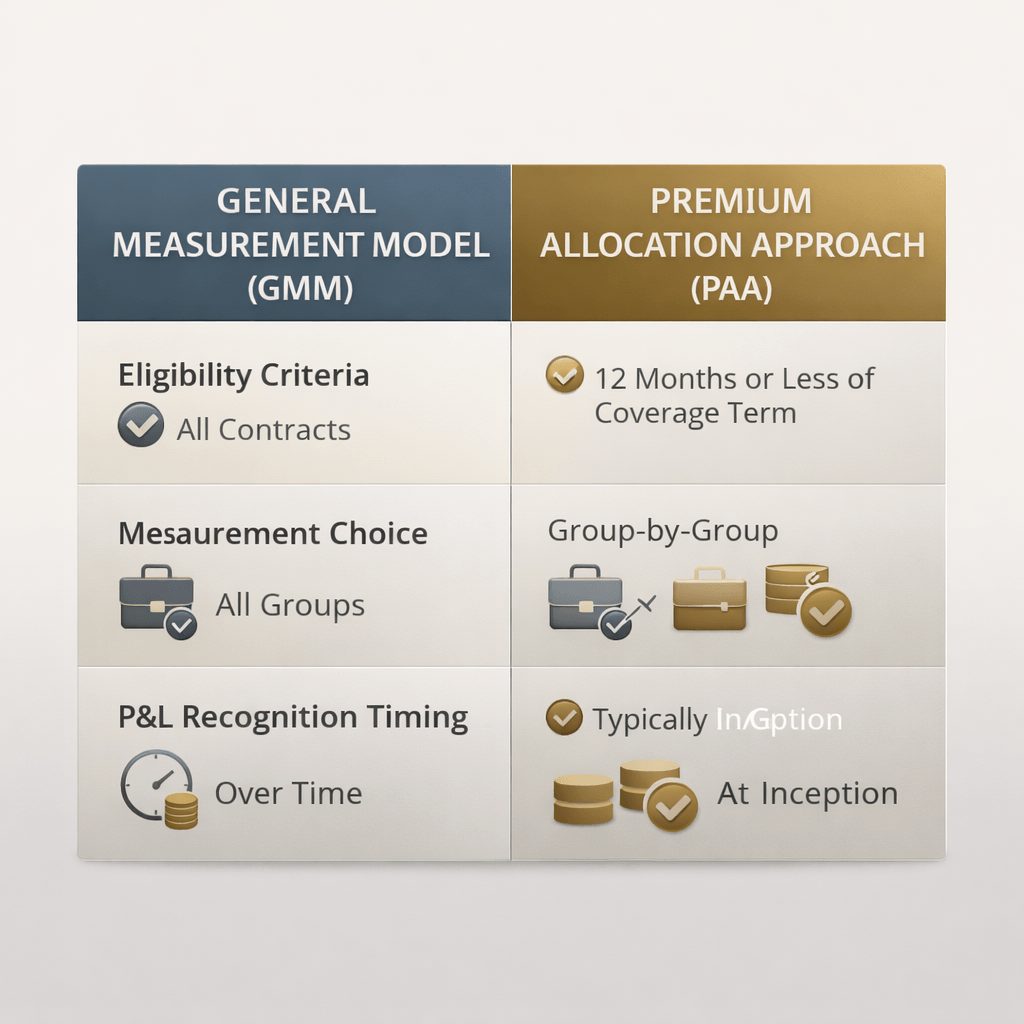
The General Measurement Model is the default under IFRS 17. It uses fulfillment cash flows, a risk adjustment, and the CSM to measure insurance contract liabilities at the group level.
Under GMM, grouping errors have the largest financial impact. An incorrect profitability classification directly affects CSM recognition and the timing of profit or loss in your income statement.
Accurate GMM outputs depend on clean group-level inputs. IFRS 17 insurance reporting tools that integrate directly with your actuarial and policy data reduce the manual reconciliation risk at this stage.
Premium Allocation Approach (PAA)
Most non-life insurers use the Premium Allocation Approach for short-duration contracts. In fact, 90% of non-life insurance liabilities were valued using the PAA in practice, according to a 2025 analysis. That reliance increases the importance of accurate group-level eligibility testing.
PAA eligibility is tested at the group level. If a group is incorrectly defined, a contract that doesn’t qualify for PAA may end up measured under it, creating a compliance gap that’s difficult to reverse.
When Grouping Affects Measurement Choice
Your choice of measurement model is made at the group level. A mixed group, one that contains both PAA-eligible and non-eligible contracts, forces you into GMM for the entire group.
That’s an operational burden that could have been avoided with cleaner portfolio definitions from the start. Grouping decisions made early have lasting effects on your measurement approach and your reporting workload.
For non-life insurers that rely on incurred-but-not-reported calculations alongside IFRS 17 group measurement, ibnr software that integrates with your grouping structure reduces the risk of misalignment between reserving and IFRS 17 outputs.
Operational Challenges in Non-Life IFRS 17
Data Integration and System Readiness
A 2025 KPMG analysis found that among 47 non-life insurers using the PAA, approaches to discounting differed significantly. Eight insurers discounted the liability for remaining coverage, while 33 discounted the liability for incurred claims. Limited disclosures on PAA eligibility assumptions tested at group level were also noted.
That variability suggests many insurers are still applying group-level rules manually or with limited system support. Manual processes create version control problems, inconsistent documentation, and scaling risks as portfolio volumes grow.
Governance and Audit Challenges
Auditors will ask for the documented basis of every significant judgment made in the grouping process. That includes the onerosity criteria, the cohort boundary decisions, and the portfolio definitions.
If your documentation lives in multiple spreadsheets across different teams, producing a clean audit trail is time-consuming and error-prone. Centralized governance over grouping policies is not optional at this stage. It’s a basic control requirement.
Reinsurance-Specific Considerations
Proportional reinsurance treaties are a particular risk area. When the underlying contracts being reinsured are misclassified, the reinsurance grouping inherits those errors.
For non-life general insurance lines, this affects how reinsurance recoveries are recognized and how net exposure is reported. It’s a secondary effect of primary grouping errors that’s often missed until the audit stage.
Learn how a purpose-built ifrs 17 end to end non life solution handles reinsurance grouping and contract-level data alignment in one integrated workflow.
Best Practices to Reduce Grouping Risks
Standardize Grouping Policies
Put a written grouping policy in place before your first reporting period. It should define how portfolios are drawn, how cohort boundaries are applied, and what criteria trigger an onerous classification.
That policy should be reviewed and approved by finance, actuarial, and risk leads. It also needs to be version-controlled so you can show auditors exactly what criteria were in effect at initial recognition for each group.
Automate Data Validation Controls
Manual grouping checks don’t scale. As your portfolio grows, the volume of contracts that need classification testing grows with it, and manual processes become a bottleneck and a compliance risk.
Automated validation controls that flag contracts with incomplete inception dates, ambiguous risk classifications, or boundary-crossing cohort assignments let your team focus on judgment calls rather than data hygiene.
When evaluating ifrs 17 vendors for scalable compliance, prioritize systems that include group-level validation rules and audit-trail documentation as standard features, not add-ons.
Align Finance, Actuarial, and IT Teams
Grouping errors often originate at the junction between teams. Actuarial may define risk categories one way. Finance may track them another. IT may code them a third.
A shared data dictionary and regular cross-functional reviews of grouping outputs can catch misalignments before they reach your financial statements. This isn’t a one-time exercise. It needs to be a standing process tied to each reporting cycle.
IFRS 17 Contract Grouping Checklist for 2026
Key Controls to Implement
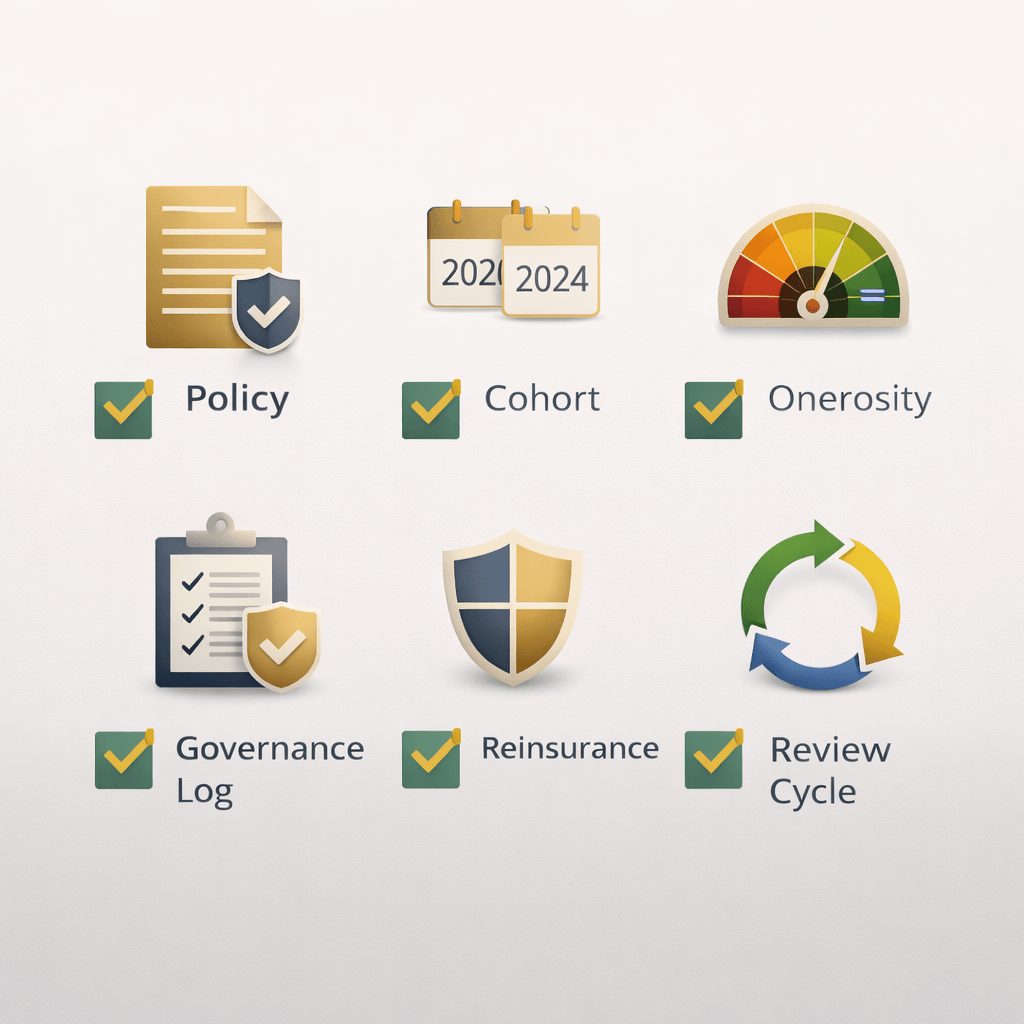
Written portfolio definition policy, approved cross-functionally.
System-enforced annual cohort boundaries with inception date validation.
Documented onerosity assessment criteria with quantitative stress test records.
Centralized grouping log with version control, tied to each reporting period.
Reinsurance treaty alignment check against underlying contract groupings.
Monthly or quarterly grouping review process, not just at annual close.
Common Mistakes to Avoid
Treating grouping as a one-time setup task rather than an ongoing process.
Allowing profitable and onerous contracts to share a group because the data wasn’t clean enough to separate them.
Using the same onerosity threshold across all product lines without accounting for line-specific risk behavior.
Relying on spreadsheet-based tracking that lacks audit trails or change history.
Failing to document the basis for ‘no significant possibility’ judgments at inception.
Frequently Asked Questions
What is contract grouping in IFRS 17 non-life solutions?
Contract grouping in IFRS 17 non-life solutions is the process of organizing insurance contracts into units of account for measurement and reporting. Insurers must group contracts by portfolio, annual cohort, and profitability classification. Each layer builds on the one before it. Getting any layer wrong makes the entire measurement structure unreliable.
What are the three layers of contract grouping under IFRS 17?
The three layers are portfolio, annual cohort, and profitability bucket. First, insurers group contracts that share similar risks and management strategies into a portfolio. Second, they separate contracts by the 12-month period in which they were issued. Third, they classify each group as onerous, no significant possibility of becoming onerous, or remaining contracts.
Why does contract grouping matter for non-life insurers?
Contract grouping prevents profitable contracts from masking loss-making ones. Without proper separation, insurers can report misleading margins by averaging across contracts with very different risk profiles. IFRS 17 requires immediate recognition of losses on onerous groups, and grouping is what makes that distinction enforceable at the reporting level.
What happens if IFRS 17 contract groups are incorrectly classified?
Incorrect classification delays loss recognition and distorts the income statement across multiple reporting periods. When auditors identify the error, reclassification becomes necessary and prior-period adjustments can be significant. The cost of correcting grouping errors after the fact almost always exceeds the cost of getting them right during initial setup.
Can IFRS 17 contract groups be reclassified after initial recognition?
IFRS 17 does not allow insurers to reclassify contract groups after initial recognition simply because assumptions change. Groups must reflect conditions at inception. This makes the initial grouping decision highly consequential and reinforces why documented criteria, stress testing, and cross-functional sign-off matter before the first reporting period begins.
What is the biggest contract grouping risk in IFRS 17 general insurance?
The biggest risk in IFRS 17 general insurance is misclassifying the profitability bucket at initial recognition. Placing an onerous contract in the wrong group prevents immediate loss recognition and overstates margins. For non-life lines like motor third-party liability or high-risk property, claims behavior can shift quickly and turn a profitable group onerous within months of inception.
What causes profitability misclassification in IFRS 17 non-life solutions?
Profitability misclassification in IFRS 17 non-life solutions usually comes from weak onerosity assessment criteria or insufficient stress testing at initial recognition. When actuarial teams do not test cash flows against adverse scenarios, or when no documented threshold defines “significant possibility,” groups get assigned to the wrong profitability bucket. Inconsistent methods across business units make the problem worse.
How do annual cohort errors affect IFRS 17 non-life compliance?
Annual cohort errors group contracts from different 12-month periods together, which IFRS 17 does not permit. This breaks cohort boundaries, distorts CSM recognition timing, and creates compliance gaps that are difficult to reverse. A 2025 survey found that 22% of IFRS 17 implementation participants identified the annual cohort requirement as their most significant grouping challenge.
Why do inconsistent portfolio definitions create audit risks in IFRS 17?
Inconsistent portfolio definitions produce grouping mismatches that auditors cannot easily reconcile. If one business unit combines fleet and personal auto while another treats them separately, with no written policy to justify either approach, auditors have no consistent basis to verify the grouping. That inconsistency becomes a control deficiency that takes significant time and documentation to resolve.
How does poor data quality affect contract grouping in IFRS 17?
Poor data quality makes it impossible to confirm cohort boundaries, validate portfolio assignments, or test profitability classifications reliably. Incomplete inception dates, missing risk classifications, or inconsistent contract identifiers across legacy systems all introduce grouping errors before any measurement takes place. Clean, contract-level data is a prerequisite for any compliant IFRS 17 non-life solution.
How do non-life insurers define portfolios correctly under IFRS 17?
Non-life insurers define portfolios by identifying contracts that share similar risks and a common management strategy. The key test is whether contracts respond similarly to the same risk drivers, such as weather events, claims frequency trends, or interest rate movements. Product lines like motor, property, liability, and marine each typically form a separate portfolio, but any definition needs a documented rationale that holds up under audit.
How does the annual cohort rule work for short-term general insurance contracts?
The annual cohort rule requires insurers to group contracts separately based on the 12-month period in which they were issued. Contracts written in 2023 cannot sit in the same group as contracts written in 2024, even if the terms are identical. For non-life insurers writing high volumes of short-term contracts, policy administration systems must record inception dates precisely and pass that data cleanly to the IFRS 17 measurement system.
How do non-life insurers assign profitability buckets under IFRS 17?
Non-life insurers assign profitability buckets by analyzing expected cash flows at initial recognition for each contract group. Groups where outflows exceed inflows go into the onerous bucket and trigger immediate loss recognition. Groups with a low probability of becoming loss-making generate a CSM. Fall between the two categories require closer monitoring and more frequent onerosity reassessment throughout the coverage period.
What does “significant possibility of becoming onerous” mean in IFRS 17?
“Significant possibility of becoming onerous” is not defined numerically in IFRS 17. It requires management judgment supported by quantitative stress testing, documented criteria, and a clear audit trail. In practice, it means testing group-level cash flows under plausible adverse scenarios, such as rising claims frequency or adverse weather events, and documenting why a group was not classified as onerous when those scenarios were plausible.
How do insurers assess whether a contract group is onerous at initial recognition?
Insurers assess onerosity at initial recognition by comparing expected outflows to expected inflows at the group level using current estimates. They then stress-test those cash flows under adverse scenarios. If any plausible scenario shows the group turning loss-making, the insurer must document its reasoning for the classification chosen. Auditors look for a consistent, approved method applied across all comparable groups, not just selective testing.
How does contract grouping affect the choice between GMM and PAA in IFRS 17?
Contract grouping directly determines whether a group qualifies for the Premium Allocation Approach or requires measurement under the General Measurement Model. PAA eligibility is tested at the group level, not the individual contract level. A group that contains both PAA-eligible and non-eligible contracts forces the insurer to apply GMM to the entire group, creating a larger reporting workload that clean portfolio definitions could have avoided.
Does contract grouping affect PAA eligibility for non-life insurance contracts?
Yes, contract grouping directly affects PAA eligibility. If insurers define their groups too broadly and mix contracts with different coverage durations or risk profiles, some contracts in the group may not meet the PAA eligibility criteria. In that case, the entire group moves to GMM. According to a 2025 analysis, 90% of non-life insurance liabilities used the PAA, which makes accurate group-level eligibility testing a high-stakes process.
What happens when a group contains both PAA-eligible and non-eligible contracts?
When a group contains both PAA-eligible and non-eligible contracts, the insurer must apply GMM to the entire group. The PAA option disappears at the group level once a single contract falls outside the eligibility criteria. This outcome usually results from portfolio definitions that were too broad at setup. It adds measurement complexity and increases the actuarial workload for every subsequent reporting period.
How do grouping errors affect CSM recognition in IFRS 17?
Grouping errors directly distort CSM recognition by placing contracts in the wrong profitability bucket or combining them across incorrect cohort boundaries. An onerous group misclassified as profitable generates a CSM that should not exist, deferring losses and overstating earnings. When auditors identify the error, the CSM must be reversed and losses recognized, often requiring prior-period restatements that affect multiple financial reporting cycles.
How does the annual cohort rule affect non-life insurers specifically?
Non-life insurers write high volumes of short-term contracts with annual renewals. Each renewal year creates a new cohort, meaning the number of active groups grows year over year. That increases data complexity and demands clean inception date tracking across all policy systems.
What systems do non-life insurers need for IFRS 17 grouping?
You need a system that can track contracts at inception date level, apply cohort boundaries automatically, and run onerosity tests at the group level. Many insurers also need Delta IFRS 17 Software that integrates actuarial, policy, and finance data in a single workflow to support audit-ready group-level documentation.
Getting IFRS 17 Non Life Solutions Right From the Start
Contract grouping isn’t a detail. It’s the foundation your entire IFRS 17 reporting structure sits on. Get it wrong at inception, and you’ll be dealing with the consequences across every reporting period that follows.
The risks are real: misclassified profitability groups, broken cohort boundaries, inconsistent portfolio definitions, and manual processes that can’t survive a serious audit.
The fix starts with the right policies, data controls, and cross-functional alignment in place before the company recognizes the first contract.
Prima Consulting’s IFRS 17 advisory team works directly with non-life insurers to build grouping frameworks, document onerosity criteria, and prepare reporting structures that hold up under regulatory and audit scrutiny. Reach out to discuss where your current process stands.