How manual processes and legacy systems are slowing closes, breaking audits, and exposing organizations to compliance risk.
TL;DR
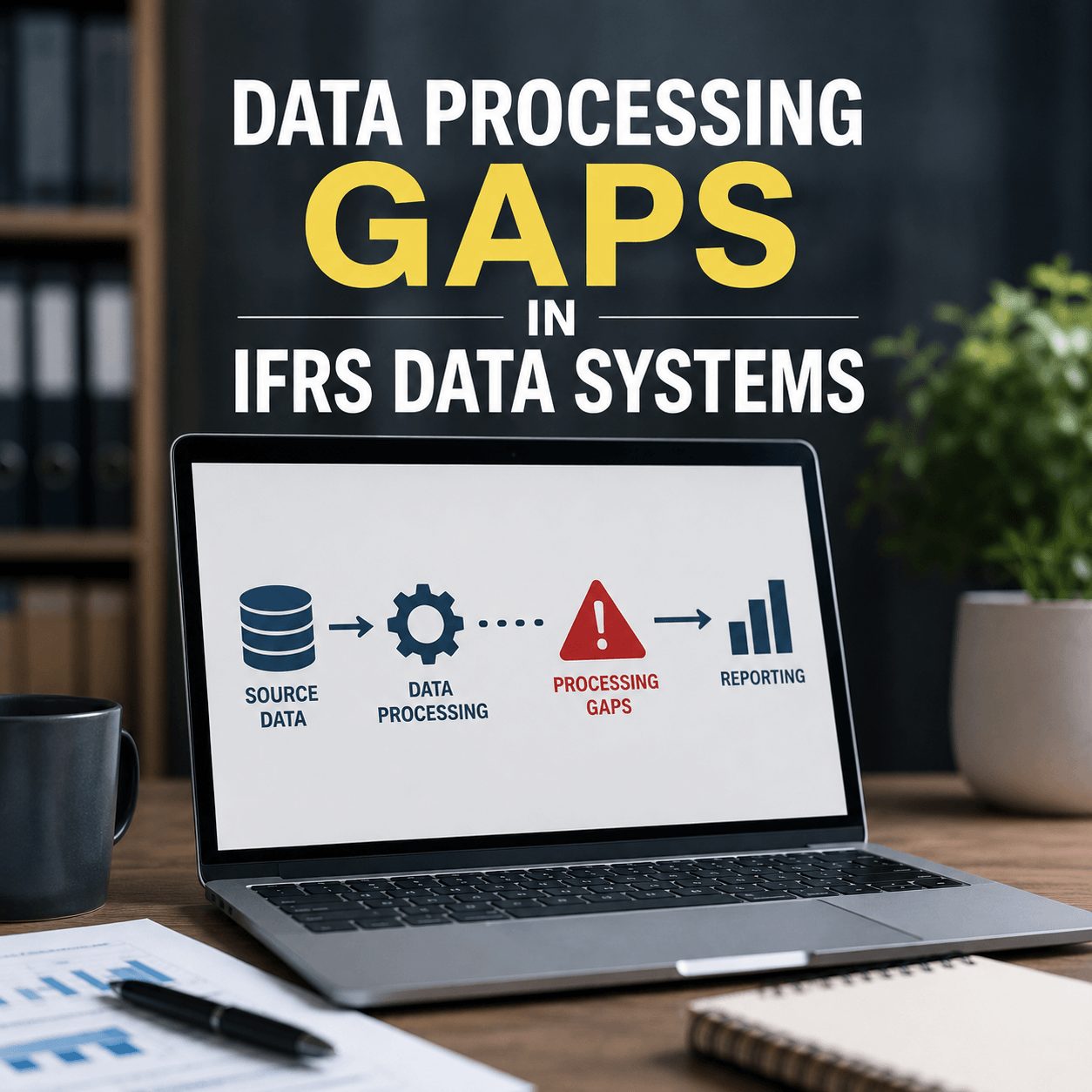
Data processing gaps in IFRS data systems for regulatory reporting are crippling most insurers. Organizations still rely on manual reconciliation and fragmented legacy systems that can’t keep pace with IFRS 17’s demand for real-time, auditable data. This article shows you where these processing gaps in IFRS data systems for regulatory reporting emerge, what they cost, and how to eliminate them. Read on to rebuild data foundations that actually work.
Why IFRS Data Systems Are Failing Compliance
You know the problem. Month-end close runs late. Audit finds discrepancies you didn’t expect. Finance pulls data from five different places and hopes it reconciles. This isn’t accident—it’s what happens when data processing gaps in IFRS data systems for regulatory reporting go unaddressed.
Nearly 95% of organizations say their financial reporting, administrative, or actuarial systems needed upgrading to meet IFRS 17’s requirements. That’s not a number. That’s a crisis pretending to be normal.
The core issue: your data processing infrastructure was built for the old world. IFRS 4. Annual reporting. Quarterly closes. Now you’re running IFRS 17—which demands real-time granularity, contract-level detail, and zero tolerance for error.
Data processing gaps in IFRS data systems for regulatory reporting happen because most organizations never redesigned their infrastructure for the new standard. The gap between what IFRS demands and what your systems deliver? That’s your problem.
[IMAGE PLACEHOLDER: Diagram showing legacy system silos (policy systems, claims, actuarial, GL) with red X’s where they don’t connect, and modern centralized IFRS data hub with green checkmarks]
The Gap Between Manual Systems and Real-Time Demands
Manual work slows reporting. Slowed reporting breaks compliance. Here’s why.
Before automation, monthly closes took 3+ weeks and quarterly reporting over a month. That timeline worked in 2020. It doesn’t work now. When data processing gaps in IFRS data systems for regulatory reporting exist, timelines get worse.
Why does it take so long? Because your team is doing detective work. They pull data from actuarial systems. Cross-check against the general ledger. Reconcile contract counts. Find gaps. Repair them manually. Fix mismatches in definitions. Start again.
All by hand, prone to error. All delaying your close.
Regulators don’t wait. Auditors don’t forgive. Your CFO certainly doesn’t accept “we’re still reconciling” on the 25th of the month.
That said: this isn’t your fault. It’s your architecture’s fault. Identifying data processing gaps in IFRS data systems for regulatory reporting is the first step toward fixing it.
Spreadsheets Don’t Scale
Many insurers resorted to thousands of spreadsheets and ad-hoc databases to bridge data gaps, which is neither scalable nor sustainable.
You know what I mean. Hundreds of Excel files. Hidden formulas. Version control that doesn’t exist. One person leaves and nobody knows how three pivot tables actually work.
Scale that to IFRS 17’s data volume—millions of contracts, portfolio breakdowns, cohort tracking, cash flow detail—and spreadsheets become a liability. This is where data processing gaps in IFRS data systems for regulatory reporting explode hardest.
One formula breaks. Cascades fail silently. Audit finds it three months later.
It’s not sustainable. It’s actually not even compliant—regulators demand end-to-end data lineage and change tracking. Excel spreadsheets give you neither.
Regulators demand complete traceability of results, requiring data architectures that support end-to-end data lineage from source systems to IFRS outputs.
Where Processing Breaks Down Most
Data processing gaps in IFRS data systems for regulatory reporting have patterns. They happen in the same places across organizations. Know where they break and you can fix them systematically.
Data Validation Failures Drive Delays
Data gets to your processing system. But is it right? You don’t know until you validate it. And that’s where most teams fail when managing data processing gaps in IFRS data systems for regulatory reporting.
KPMG observes that sourcing, integrating, and cleansing high-quality data is still an unresolved hurdle for many insurers.
No validation rules, automated checks, reconciliation layer. So you catch bad data after processing, not before. By then you’re rerunning reports and burning days.
The fix is mechanical but critical: implement strict data validation and reconciliation processes in the IFRS data pipeline. Use checksums to ensure total premiums from policy systems match your IFRS engine. Flag incomplete records and incorporate a reconciliation layer to compare results against source data.
That’s not fancy. It’s just foundational to addressing data processing gaps in IFRS data systems for regulatory reporting.
Integration Gaps Between Actuarial and Finance Systems
Your actuarial team uses one system. Finance uses another. They speak different languages about what “contract” means, how “premium” gets calculated, where “discounts” sit.
Finance teams need to reconcile data across actuarial models, general ledgers, and reporting systems with absolute accuracy. This is core to eliminating data processing gaps in IFRS data systems for regulatory reporting.
That reconciliation doesn’t happen by itself. It requires either: (a) middleware that translates between systems, or (b) a centralized staging layer where both systems deposit clean data in a standard format.
Most organizations do neither. So reconciliation is manual. And manual reconciliation, by definition, is slow and fragile—exactly the problem that creates data processing gaps in IFRS data systems for regulatory reporting.
[IMAGE PLACEHOLDER: Before/after diagram. Left: three silos with arrows and exclamation marks showing manual handoff. Right: single hub with automated feeds and green checkmarks]
Reconciliation Errors Compound Fast
The average insurer reconciles data monthly. Sometimes weekly. Sometimes (if you’re running IFRS 17) even more. Left unmanaged, these create massive data processing gaps in IFRS data systems for regulatory reporting.
Each reconciliation finds discrepancies. Most are minor. But you still have to investigate, repair, and revalidate. That’s hours. Multiply that by a month of reconciliations and you’ve lost weeks of close time.
Then compounding starts. A mistake in January reconciliation cascades to February. February’s error doesn’t surface until March. By April you’re unwinding three months of numbers.
That’s not efficient. It’s not auditable. And it’s not rare. This is what happens when data processing gaps in IFRS data systems for regulatory reporting go unchecked.
The root cause is always the same: you’re validating data after the fact, not during capture.
What Bad IFRS Data Management Costs You
This isn’t theoretical. Bad data processing has concrete costs. Financial, regulatory, and operational. Data processing gaps in IFRS data systems for regulatory reporting directly translate to real money lost.
Regulatory Penalties and Audit Findings
Incomplete or inaccurate data can lead to non-compliance, financial misstatements, and potential regulatory penalties. Data processing gaps in IFRS data systems for regulatory reporting are often the root cause.
One audit finding becomes a pattern. A pattern becomes a control deficiency. A control deficiency triggers an enforcement action from your regulator.
The cost? Sometimes it’s a fine or consent order requiring system overhaul on regulators’ timeline, not yours. Sometimes it’s both.
But the real cost is hidden: management distraction. Your CFO spending weeks with external counsel instead of managing the business.
Missed Close Deadlines
When data processing drags, close drags. When close drags, everything downstream breaks: earnings calls get delayed, investor calls slip, strategic decisions wait.
Deloitte warns that IFRS 17’s added complexity and granularity put additional pressure on “fast close” processes, requiring new levels of efficiency. Data processing gaps in IFRS data systems for regulatory reporting are the primary culprit.
You’re not missing deadlines by accident. You’re missing them because the system architecture makes it impossible to process that much data that fast.
Full stop.
Our IFRS data management in enterprise guide shows the specific steps teams use to eliminate data processing gaps and cut close cycles from weeks to days. Download it free.
How to Fix Data Processing Gaps
Fixing data processing gaps in IFRS data systems for regulatory reporting isn’t magic. It’s architecture. Get the architecture right and everything else follows.
Centralize Your Data Foundation
Centralized data ensures consistency, reduces errors, and enables more accurate forecasting and reporting by eliminating fragmented systems and manual reconciliations. This is the core solution to data processing gaps in IFRS data systems for regulatory reporting.
This means: build a single repository where all IFRS-relevant data lands. Policy data. Claims data. Actuarial assumptions. Investment returns. Everything.
That repository isn’t just a database. It’s a “system of record.” Once data enters it, that’s the truth. Every downstream report, calculation, and disclosure pulls from that one place.
What does this solve?
- No more “whose number is correct?” questions. There’s only one version.
- Audit traceability becomes automatic. You have a complete record of every change.
- Reconciliation stops being manual. You validate on ingestion, not after processing.
The technical approach: use middleware or integration layers to bridge format gaps. Employ ETL tools to transform legacy data into the correct format and consider a phased integration approach.
That’s not free. But the cost of doing it once is half the cost of manual reconciliation for one year. It’s the fastest way to eliminate data processing gaps in IFRS data systems for regulatory reporting.
Automate Validation and Reconciliation
Stop asking people to validate data. Build rules instead. Automation is how you escape data processing gaps in IFRS data systems for regulatory reporting.
Example rules:
- Total premiums from policy system must match total premiums in actuarial system (within a tolerance you define).
- All contracts must have a portfolio assignment before processing.
- No cash flows can be negative (unless explicitly marked as a refund).
- Discount rates must fall within regulatory guidelines.
When data violates a rule, it stops. It doesn’t proceed to calculation, confuse downstream reports. Flagged for repair, repaired, and resubmitted.
This sounds mechanical. It is. And it’s exactly what eliminates the 80% of your close time spent on error-hunting caused by data processing gaps in IFRS data systems for regulatory reporting.
Build for Audit Traceability
Auditors don’t care how your system works. They care about proof. Proof that data is complete, unchanged and correct. Data processing gaps in IFRS data systems for regulatory reporting make audit trails impossible.
That proof comes from metadata, not processes. Every data element needs:
- Source origin (which system it came from)
- Ingestion timestamp (when it entered the IFRS hub)
- Validation status (passed / failed / exception)
- Change history (who changed it, when, why)
- Final usage (which report used this data)
This isn’t optional compliance theater. It’s the difference between an audit that takes four weeks and one that takes eight.
And it’s only possible if your data processing system was designed for it from the start—specifically designed to prevent data processing gaps in IFRS data systems for regulatory reporting.
[IMAGE PLACEHOLDER: Audit trail flowchart showing data flowing through validation → transformation → reporting, with metadata captured at each stage, ending in an audit report with green checkmarks]
Answer 5 quick questions about your current data system. We’ll show you exactly where your data processing gaps exist and what fixing them costs. IFRS consulting services for data teams use this assessment to identify processing gaps in IFRS data systems for regulatory reporting.
What You Now Know
- Data processing gaps in IFRS data systems for regulatory reporting occur because infrastructure was built for the old reporting model, not IFRS 17’s real-time, auditable requirements.
- Processing gaps happen in three places: validation (checking data quality), integration (connecting actuarial and finance systems), and reconciliation (proving numbers are correct).
- Bad data processing costs you in audit findings, missed close deadlines, and hidden management overhead. The fix is centralization, automation, and audit-first design.
IFRS data processing isn’t complicated. It’s repetitive. It’s mechanical. And it’s usually broken because nobody designed the system with data integrity as the first requirement.
You know where the gaps are now. The question is whether your next system addresses these data processing gaps in IFRS data systems for regulatory reporting, or whether you’ll spend another year reconciling spreadsheets.
IFRS 17 calculations are computationally intensive and can delay financial reporting if data pipelines aren’t optimized. But optimized pipelines aren’t magic—they’re the result of deliberate design: centralization first, automation second, audit-readiness third. That’s how you eliminate data processing gaps in IFRS data systems for regulatory reporting permanently.
Start there. Your close schedule will thank you.
FAQ
What’s the fastest way to identify data processing gaps in IFRS data systems?
Run a data lineage test. Pick one number from your latest IFRS report and trace it backward to its source system. If it takes more than 30 minutes or requires multiple people, you have processing gaps. Most teams fail this test immediately.
Can we fix processing gaps without replacing our entire system?
Partially. You can add a validation layer on top of your existing systems. But true remediation requires a centralized hub where IFRS data lives, not a patchwork of disconnected fixes. Temporary workarounds for data processing gaps in IFRS data systems cost the same as the permanent solution but deliver half the benefit.
How long does it take to centralize IFRS data and eliminate processing gaps?
Depends on your starting point. A team with two systems and clean legacy data can eliminate data processing gaps in IFRS data systems for regulatory reporting in 90 days. A team with eight systems, dirty data, and no governance will take 9 months. Plan for the worst. You’ll be pleasantly surprised if it’s faster.
Who owns fixing data processing gaps if finance and actuarial teams have different priorities?
That’s your structural problem. IFRS data isn’t finance data or actuarial data—it’s corporate data. Responsibility for eliminating data processing gaps in IFRS data systems for regulatory reporting needs a single owner (usually the CFO or Head of Financial Reporting) with authority over both teams. Shared ownership fails 100% of the time.
What should we prioritize first: better data or better systems?
Both, but data first. Bad data in a good system is still bad. Good data in a bad system is at least usable. Clean your data foundation before investing in technology. That prevents many data processing gaps in IFRS data systems for regulatory reporting before they occur. It’s boring work but it’s foundational.