TL;DR
Selecting the right IFRS 17 data management systems vendor is one of the most consequential decisions your finance and actuarial teams will make. This checklist walks you through exactly what to verify before signing: data security certifications, measurement model coverage across GMM, PAA, and VFA, integration architecture, and how your vendor handles regulatory updates after go-live. You’ll also find a proof-of-concept framework, red flags to watch for, and a build vs buy breakdown with pricing guidance. Use this guide to shortlist with confidence and avoid costly implementation mistakes.
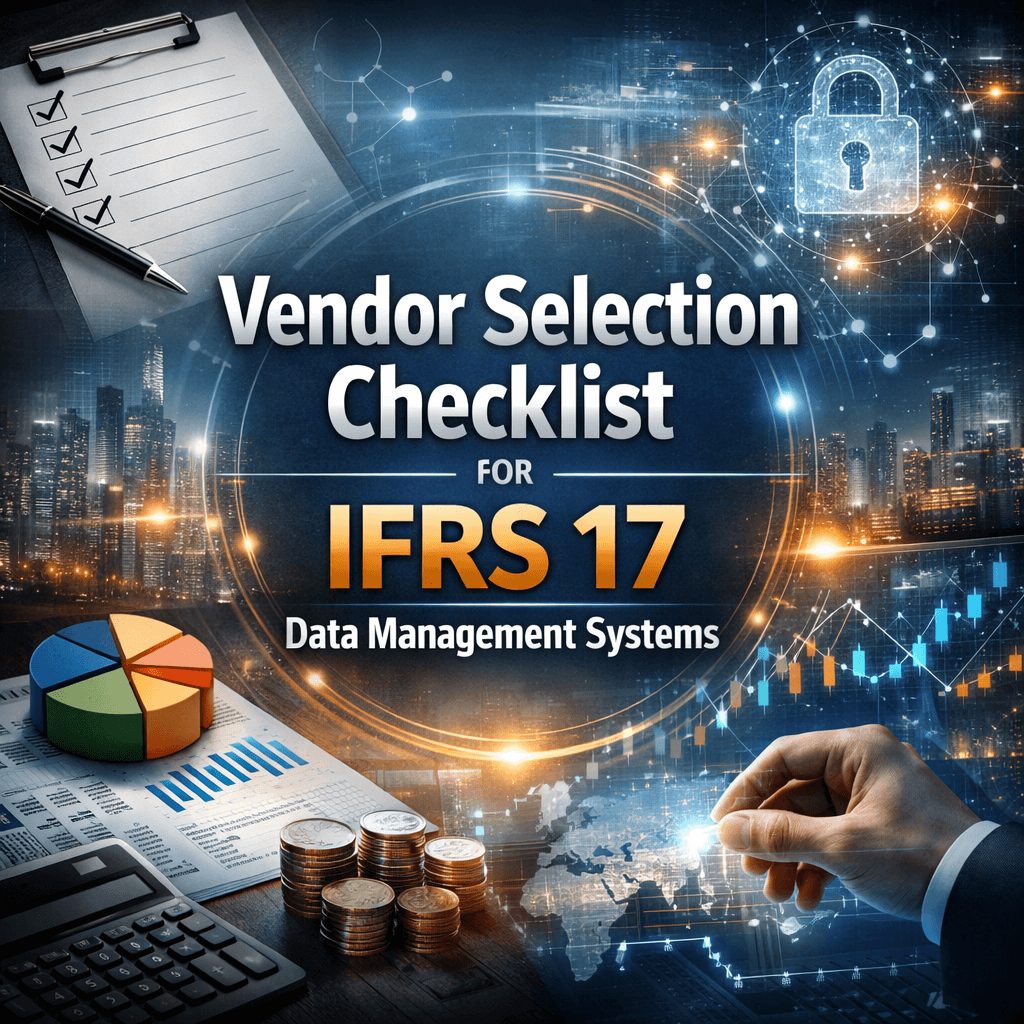
Vendor Selection Checklist for IFRS 17 Data Management Systems
Fewer than 3 out of 22 insurers have a fully automated IFRS 17 solution, according to a post-implementation survey by the Actuaries Institute. Nearly half still rely on significant manual intervention across data inputs, disclosures, and bespoke calculations.
That gap isn’t just a process problem. It points directly to the vendor you chose, or didn’t yet choose, for your IFRS 17 data management systems.
This checklist covers what you need to verify before signing a contract: data security standards, model flexibility, integration architecture, and how a vendor handles regulatory updates over time.
What Are IFRS 17 Data Management Systems?
IFRS 17 data management systems are software platforms built to collect, validate, calculate, and report on insurance contract data under the IFRS 17 standard.
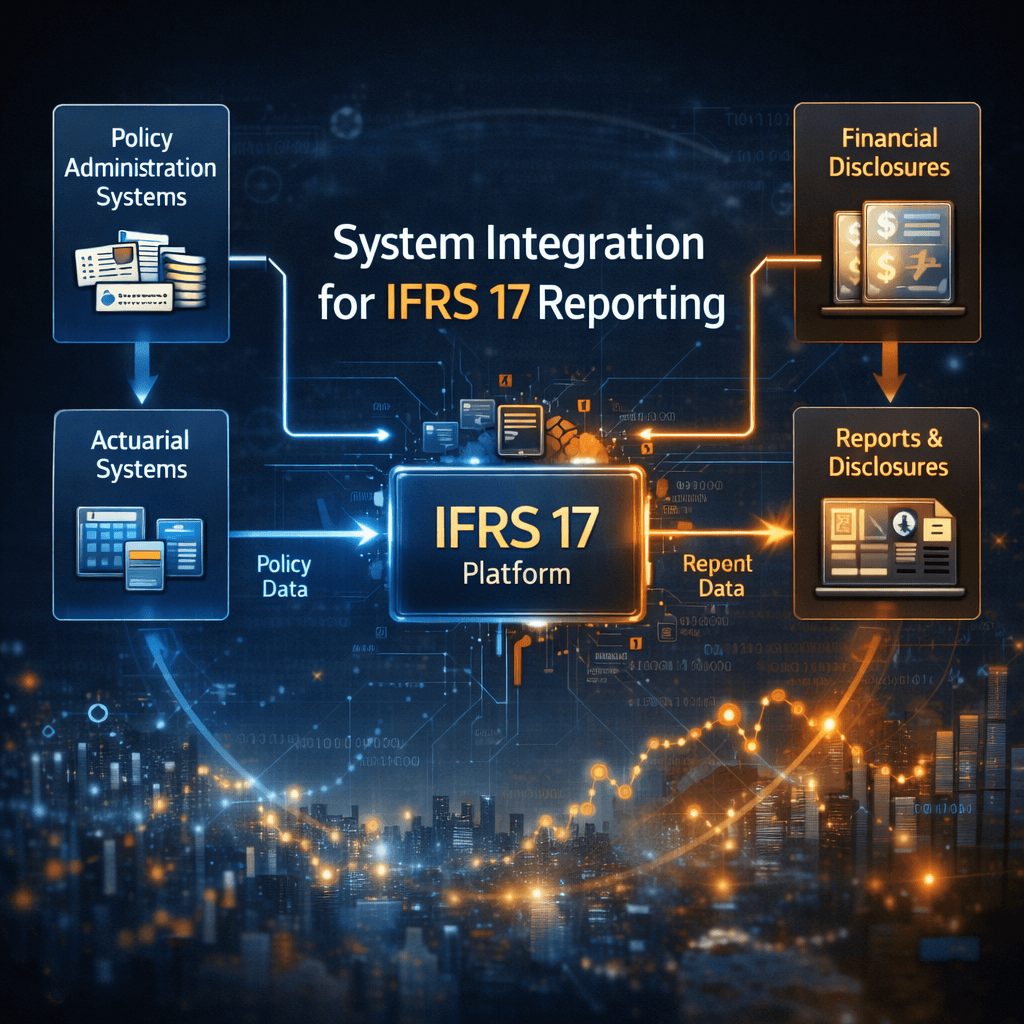
They connect actuarial engines, policy administration platforms, and general ledgers into one unified data environment.
A robust platform handles far more than data storage. It runs contractual service margin calculations, manages cohort groupings, and produces audit-ready disclosures. You can learn more about IFRS 17 compliance requirements on Prima Consulting.
The best platforms do this at policy-level granularity, which is what the standard requires.
Key Principles and Models Covered by IFRS 17 Systems
Any platform you evaluate must handle all three IFRS 17 measurement models: the General Measurement Model, the Premium Allocation Approach, and the Variable Fee Approach.
Each model carries different data requirements, calculation logic, and disclosure outputs.
The General Measurement Model applies to most long-duration contracts. It requires projecting fulfillment cash flows, applying a risk adjustment, and tracking a contractual service margin that amortizes over the coverage period. According to a PwC survey [src], more than 70% of insurers still make manual adjustments to IFRS 17 results, with cash flow estimation cited most often.
PAA applies to short-duration contracts where the simplified approach is permitted. VFA applies to contracts with direct participation features.
Your system needs to select and apply the right model at inception based on contract attributes, not require your team to configure it manually each time.
Essential Features of Enterprise-Grade IFRS 17 Platforms
Support for BBA, PAA, and VFA Measurement Models
A vendor that only supports one or two models will limit your compliance coverage as your business changes.
Ask specifically whether their platform handles VFA for participating contracts, and whether model selection is automated or manual.
Delta IFRS 17 software supports all three models in a single platform, including full building block approach logic and PAA eligibility checks at contract inception.
End-to-End Auditability and Integration Capabilities
IFRS 17 demands complete data lineage from source policy through financial statement. If your auditors can’t trace a number back to its origin, you have a problem.
Look for platforms that log every data transformation, calculation step, and user action with timestamps and user IDs.
Delta’s comprehensive audit trail system creates full documentation for every calculation step, a feature that has reduced external audit hours by 40% for its clients. For additional context on IFRS data processing requirements, review this resource.
Integration depth also matters. Your platform should connect to your actuarial tools, ERP, and policy administration system via APIs, not file exports.
Data Validation, Governance, and Workflow Automation
Data transformation and GIC tagging rank among the top three operational challenges, affecting 59% of respondents in the 2025 post-implementation survey [src], and that figure rises to 71% for reinsurers.
Your vendor needs to show you exactly how their system catches errors before they reach calculations, not after.
Delta’s AI-powered validation catches policy-level data issues at ingestion, which prevents 95% of errors that typically trigger audit queries.
Evaluating IFRS 17 Vendors: Questions to Ask
Functional Coverage vs Configuration Flexibility
Ask whether measurement model logic is hardcoded or configurable. Hardcoded systems break when your product mix changes or when IASB issues amendments.
You also want to know how many clicks it takes to run a new scenario, and whether you can adjust discount rate assumptions or cash flow patterns without vendor involvement.
- Does the platform support GMM, PAA, and VFA in production, not just in demos?
- Can your finance team configure new cohort groupings without developer support?
- How are CSM coverage units defined and adjusted across contract types?
- What happens to existing calculations when you update an assumption mid-period?
Scalability Across Entities, Products, and Regions
If you operate across multiple legal entities or geographies, your ifrs data systems need to handle multi-GAAP reporting, currency translation, and entity-level segregation without custom development.
Ask the vendor for reference clients with comparable scale to yours, not just named logos.
- Can the system process contract-level data for 10 million policies within your close window?
- Does it support multi-currency and multi-entity consolidation natively?
- What’s the observed performance under peak load, not just the spec sheet?
Security, Compliance, and Regulatory Readiness
Insurance data is sensitive. Your vendor must demonstrate certified security practices, not just describe them.
- Does the platform hold ISO 27001 certification and SOC 2 Type II compliance?
- Is data encrypted at rest and in transit using AES-256 or equivalent?
- Are role-based access controls granular enough to restrict data by entity, product, or region?
- Does the vendor support multi-factor authentication and IP-based access restrictions?
Delta is hosted on Amazon AWS and carries AES-256 encryption across all data layers, with IP restrictions, role-based access controls, and multi-factor authentication built in.
Implementation Considerations for IFRS 17 Systems
System Architecture and Data Requirements
Your platform needs to store contract-level data with all attributes needed for cohort formation, model selection, and CSM tracking across the full policy lifecycle.
This means your existing data architecture may require cleanup before go-live, which is a cost and timeline factor most vendors understate.
The ifrs data processing capabilities you need include real-time or near-real-time calculation runs, not nightly batch jobs that delay your close cycle.
Delta’s cloud-based architecture, hosted on AWS, runs calculations on demand and compresses close cycles from 15-20 days to 5-7 days.
Timelines, Dependencies, and Vendor Support
Most insurers implementing IFRS 17 software today are either replacing an earlier system or closing a compliance gap in a partially automated environment.
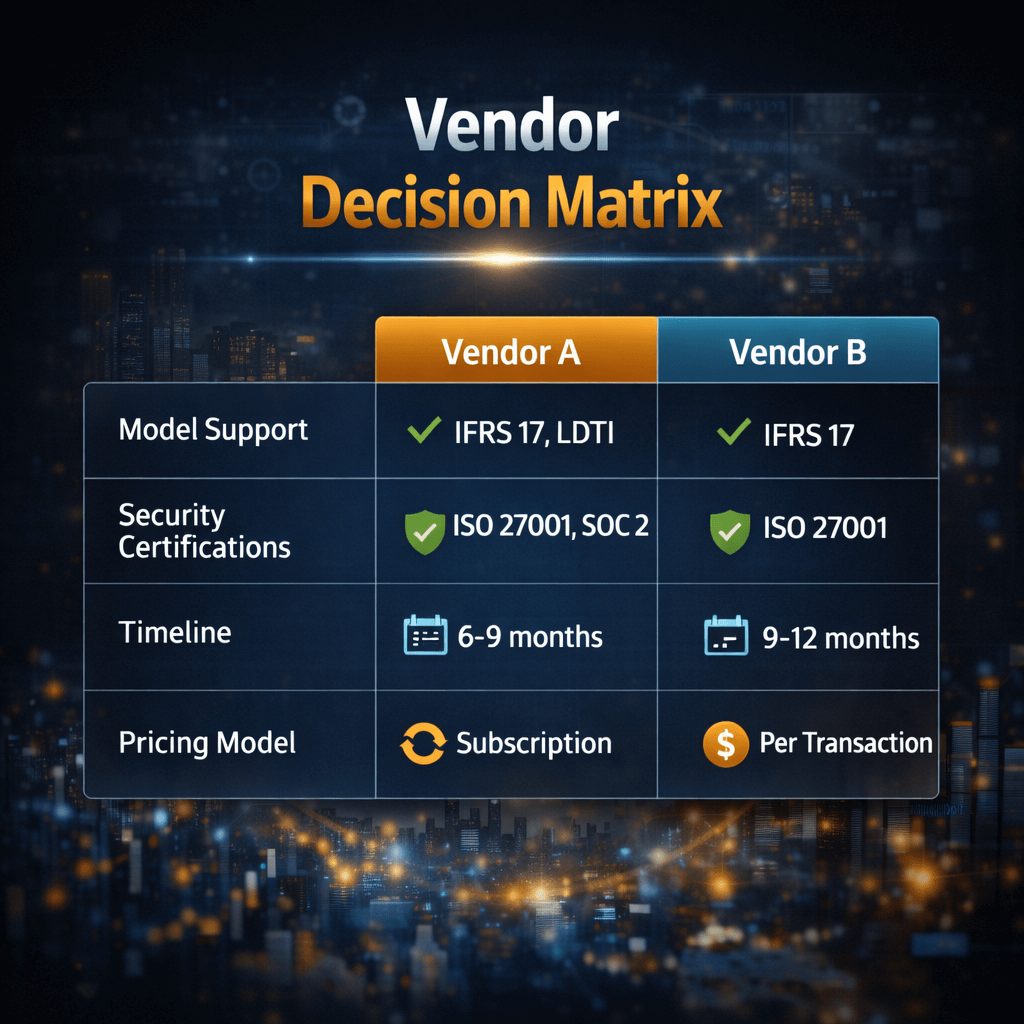
Realistic implementation timelines run 3-6 months for straightforward deployments and up to 9 months for complex multi-entity rollouts with data migration challenges.
Delta implementations typically reach full production in 3-6 months, including API integration with ERP systems like SAP, Oracle, and Microsoft Dynamics.
Post-implementation, you need a vendor with 24/7 support and certified actuarial and accounting staff, not just a helpdesk ticketing team.
Build vs Buy: Choosing Your IFRS 17 Software Strategy
Some insurers still ask whether building an internal IFRS 17 solution is viable. The short answer is: it’s rarely cost-effective for ifrs data management at scale.
In-house builds carry significant risks: regulatory update dependency on internal developers, no external validation of calculation logic, and total cost of ownership that typically exceeds vendor solutions within three years.
A vendor solution like Delta provides tested calculation engines, pre-built disclosure templates, and cloud infrastructure you don’t have to maintain.
On the flip side, vendor dependency is a real concern. That’s why contract terms matter: make sure you own your data and can export it in open formats. You can also review IFRS 17 insurance reporting tools for additional context on what leading platforms offer.
Pricing models for vendor solutions typically follow either subscription-based SaaS pricing or perpetual license structures. Cloud SaaS, like Delta’s model, usually offers lower upfront cost with predictable ongoing expenses that scale with policy volume.
Common Red Flags When Shortlisting IFRS 17 Vendors
Pay attention to these warning signs during vendor evaluation. They’re often more informative than a polished demo.
- The vendor can’t name a reference client with your line of business or policy volume.
- Implementation timelines are quoted as 12-18 months with vague scope definitions.
- Data security documentation is provided only after multiple requests.
- The system requires custom development to support VFA or to accommodate new cohort structures.
- Regulatory update processes depend on manual vendor patches with no defined SLA.
- The vendor can’t show you how CSM roll-forward disclosures are generated end-to-end.
- Pricing is unclear about what’s included in the base license vs. add-on modules.
Any vendor that struggles to answer your ifrs data processing questions during evaluation will be harder to work with during implementation and audit season.
Running a Proof of Concept Before Final Selection
A proof of concept (POC) is your most reliable evaluation tool. Don’t skip it.
A well-structured POC should run your actual data through the vendor’s system and produce outputs you can verify against your own numbers.
- Provide a sample of real policy data from at least two product lines.
- Ask the system to assign measurement models, form cohorts, and run a CSM calculation cycle.
- Verify that audit trail outputs match the inputs you provided.
- Test integration with your ERP or actuarial platform, even a simplified version.
- Check how long a calculation run takes with your data volume.
Delta offers a demo environment configured to your specific insurance lines, so you see actual outputs rather than a staged walkthrough.
Final Steps to Confidently Select Your IFRS 17 Data Management System Vendor
Once your POC is complete, run a structured scoring process across your shortlist using the criteria in this checklist.
Weight security, model flexibility, and regulatory update support equally, not just integration speed or price.
Request a full RFP response covering: measurement model coverage, security certifications, integration methods, implementation timeline, pricing structure, post-go-live support terms, and data export rights.
Then check references. Call clients in your segment with your policy volume and ask specific questions about their close cycle before and after implementation.
If you’re not sure where to start, the team at Prima Consulting can run an independent vendor assessment alongside your selection process.
Frequently Asked Questions About IFRS 17 Software
What Should Be Included in an IFRS 17 RFP?
Your RFP should cover measurement model support (GMM, PAA, VFA), integration methods (API vs. file-based), security certifications, implementation timeline, pricing structure, audit trail capabilities, disclosure template availability, and post-implementation support terms.
Ask specifically how the vendor handles regulatory amendments and what the process is for updating calculation logic when the IASB issues guidance.
Typical Implementation Timelines and Costs
Most IFRS 17 implementations run between 3 and 9 months, depending on data quality, number of entities, and integration complexity.
Delta implementations typically complete in 3-6 months. Cloud SaaS pricing generally offers lower upfront costs than perpetual licenses, with total cost of ownership that includes implementation, training, and ongoing support fees.
How to Integrate IFRS 17 Systems With Existing Platforms
The best IFRS 17 data management systems use API-based integration for bidirectional data flow between your actuarial models, policy administration system, and ERP.
Delta integrates with SAP, Oracle, Microsoft Dynamics, and actuarial platforms like Prophet and AXIS in 3-6 weeks using pre-built API connectors, avoiding the manual export-import cycles that introduce data errors.
Post-Implementation Support and Updates
Ask your vendor how regulatory changes are deployed: are they automatic, do they require a maintenance window, and how much notice do you get?
Delta deploys software updates automatically through its cloud infrastructure, and its support team includes actuaries and accountants available across multiple time zones.
Ready to Select Your IFRS 17 Data Management System?
Choosing the right IFRS 17 data management system comes down to three things: whether the platform handles your measurement models without workarounds, whether your data stays secure throughout the full calculation cycle, and whether the vendor can support you when the standard changes.
Delta IFRS 17 software from IFRS Tech meets all three criteria, with AES-256 encryption, full GMM and PAA support, and a proven 3-6 month implementation timeline.
Schedule a personalized demo with the Prima Consulting team today. See exactly how Delta works with your insurance lines, your data architecture, and your reporting requirements, at no obligation.
Schedule Your Delta IFRS 17 Demo >> Visit ifrstech.com