TL;DR
Your IFRS 17 software vendor shortlist makes or breaks implementation. This guide teaches you the specific technical questions that expose weak vendors and narrow 15+ options to 3–5 realistic candidates. Learn what to ask about measurement models, scalability, audit trails, and integrations. Enterprise solutions reduce close cycles from 20+ days to 5–7 days and automate CSM calculations. Use this checklist and proof-of-concept approach to select confidently.
Your IFRS 17 software vendor choice determines whether month-end close takes 5 days or 20 days. It determines whether your team spends weeks on spreadsheets or focuses on analysis. Most vendors claim enterprise-grade capabilities. Few actually deliver them.
This guide cuts through marketing language and focuses on the specific, difficult questions that expose weak solutions. You’ll learn exactly what to ask during RFP evaluation to eliminate non-enterprise IFRS 17 software vendor options before they waste your implementation timeline. The global IFRS 17 insurance software market reached USD 1.41 billion in 2024, yet most insurance companies still struggle with vendor selection.
What Is an IFRS 17 Software Vendor Shortlist?
An IFRS 17 software vendor shortlist is your filtered list of viable solutions meeting your specific requirements. The goal isn’t to evaluate every available option. The goal is to identify vendors capable of handling your insurance lines, data volumes, and measurement models within your timeline and budget.
Most insurance companies start with 15-20 potential vendors. A proper shortlist narrows this to 3-5 candidates worthy of detailed evaluation. This approach saves months during selection and reduces implementation risk by focusing resources on realistic options. The shortlist process identifies which vendors can actually support your IFRS 17 software requirements versus which ones market vague capabilities without proof.
Why Enterprise-Grade IFRS 17 Solutions Matter
Non-enterprise IFRS 17 software vendors create implementation problems that emerge months into projects. You discover calculation errors, integration failures, or reporting gaps after committing budget and internal resources.
Enterprise-grade solutions built for complex insurance groups handle multi-entity operations, high-volume data processing, and sophisticated measurement model requirements. They integrate seamlessly with your ERP and actuarial platforms. They generate audit-ready disclosures automatically. They support all IFRS 17 measurement models in a unified platform.
Mid-market or basic solutions often specialize in specific segments. They might handle Premium Allocation Approach well but lack sophisticated General Measurement Model support. They might integrate with one ERP system but not yours. They might require manual intervention for tasks enterprise solutions automate.
Solutions like Delta demonstrate what true enterprise IFRS 17 software vendor capabilities look like. Automated CSM calculations, complete integration with actuarial systems, and reporting that cuts close cycles from 20 days to 5 days shows the real difference. The cost difference between non-enterprise and enterprise solutions is minimal compared to implementation overruns, extended close cycles, or post-go-live remediation work. You can explore IFRS 17 software comparisons to see the measurable differences between vendors.
Key Questions to Eliminate Non-Enterprise IFRS 17 Vendors
Ask these specific questions during RFP evaluation. Weak vendors will struggle with answers or provide vague responses. Enterprise solutions will detail technical capabilities and implementation approaches.
Does the solution support all IFRS 17 measurement models?
Ask vendors: “How does your solution handle General Measurement Model, Premium Allocation Approach, and Variable Fee Approach?”
Many vendors claim “full IFRS 17 support” but specialize in one model. Some handle GMM well and offer stripped-down PAA. Others support PAA efficiently but treat GMM as an afterthought. Enterprise solutions support all three models in a unified system. Contract characteristics determine measurement model assignment automatically.
Request technical documentation showing how the system handles measurement model selection, cash flow generation, risk adjustment calculations, and CSM amortization. Weak vendors provide marketing materials. Enterprise vendors deliver technical specifications. Understanding top IFRS 17 solutions and their measurement model approaches becomes critical at this stage.
Can the platform scale across entities, products, and regions?
Ask: “How many policies can your system process monthly? What’s your largest client by policy volume? How does the platform handle multi-entity reporting with different legal entities and regulatory jurisdictions?”
Non-enterprise solutions often reach processing limits at specific policy volumes. A solution built for 500,000 annual policies may struggle at 5 million. Some systems bottleneck during month-end close when processing volumes peak. Enterprise platforms scale horizontally through cloud infrastructure. They handle millions of policies with consistent performance.
Processing speed doesn’t degrade as volumes increase. Ask about their largest client implementations and policy volumes. Request performance benchmarks showing processing times at your anticipated data volumes. Vendors unable to name specific clients at your scale might not have experience with your requirements. When evaluating IFRS 17 software evaluation criteria, scalability ranks among the most critical factors—poor scalability only becomes apparent after go-live when it’s too late to fix.
Is end-to-end auditability and traceability built in?
Ask: “Walk me through how your system documents every calculation step from source data through financial statement balances. How does an auditor verify specific journal entries trace back to underlying policies?”
This question eliminates solutions built around spreadsheets or basic general ledger interfaces. These systems cannot provide complete calculation documentation and often require external tools to prove audit compliance. Enterprise solutions maintain complete audit trails at policy level. Every calculation step gets documented with timestamps, user information, and data lineage.
Auditors can drill down from a CSM balance to the specific policies creating that balance. Ask vendors to demonstrate audit trail functionality. Request sample reports showing complete traceability. Ask how their system proves calculation accuracy to external auditors. Weak solutions will struggle with technical details.
How strong is integration with finance, actuarial, and risk systems?
Ask: “How do policies flow from actuarial systems into your platform? How are calculated results posted to the general ledger? What systems does your platform integrate with, and how are integrations built?”
Many IFRS 17 solutions require manual data transfer between systems. Actuaries export policy files. Finance teams import CSV files. Risk systems operate separately from calculations. These manual handoffs create data quality issues and require reconciliation time. Enterprise solutions use API-based integration for bidirectional data flow.
Policies flow directly from actuarial platforms through encrypted connections. Calculations automatically generate journal entries posting to the general ledger. Risk systems integrate for complete data governance. Ask about specific integration technologies. API-based approaches offer better scalability and reliability than file-based integration. Request implementation timelines for system integrations. Many vendors quote 3-6 months. Weak solutions take 9-12 months.
Does the vendor handle high-volume, complex insurance data?
Ask: “Can you handle policies with complex cash flows, multiple assumptions, and embedded options? How do you manage data quality for millions of policies?”
Complex insurance products contain embedded options, surrender features, and policyholder dividend provisions. Basic IFRS 17 solutions oversimplify these features. Enterprise solutions model complexity accurately. Data quality becomes critical with high volumes. Enterprise solutions include validation rules preventing bad data from entering calculations. Ask vendors about their data validation approach and examples of complex products they’ve modeled successfully.
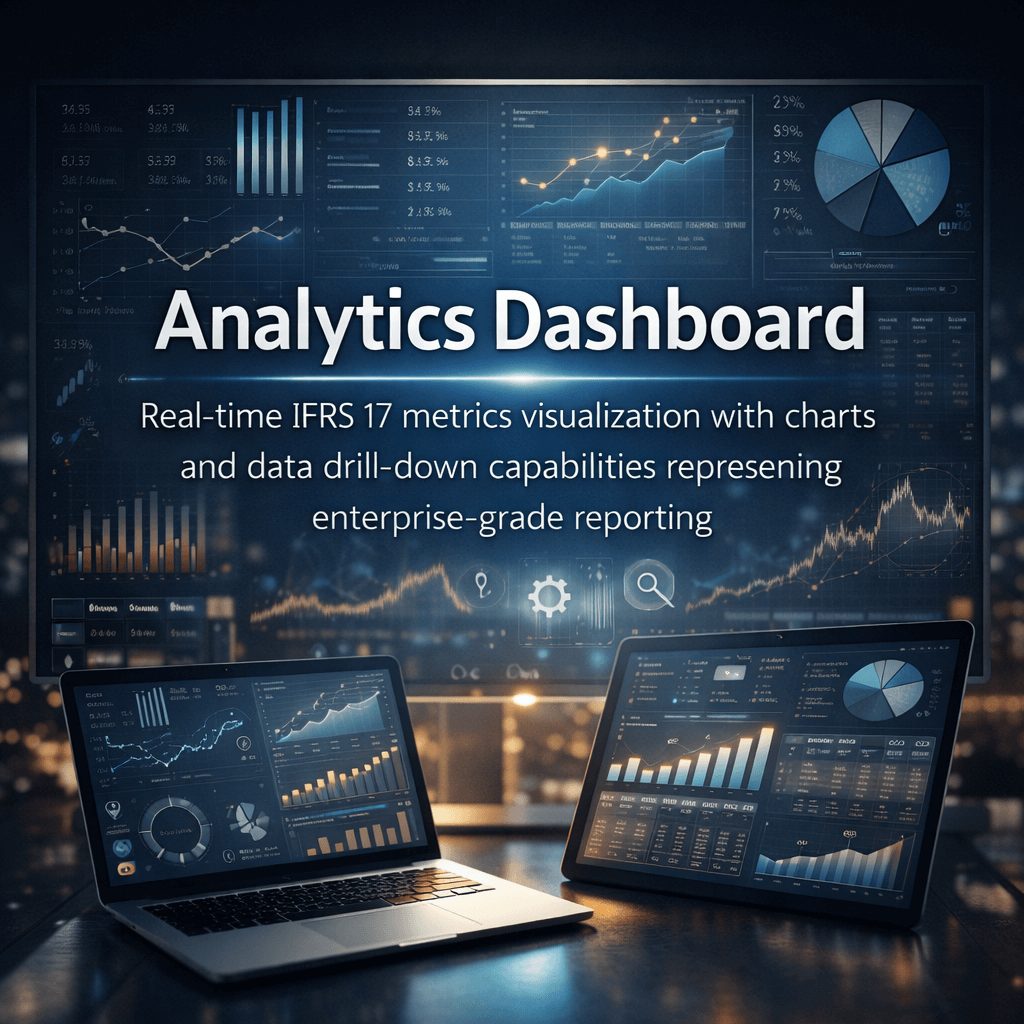
Must-Have Capabilities in an IFRS 17 Enterprise Platform
Beyond basic functionality, enterprise IFRS 17 software vendors offer capabilities that accelerate implementation and reduce ongoing operational costs.
Actuarial calculations for cash flows and risk adjustment
Enterprise solutions automate cash flow generation from policy data and assumptions. Ask vendors: “Does your system generate cash flows automatically or require manual input? Can you adjust assumptions and regenerate cash flows instantly?”
CSM, disclosures, and IFRS 17 financial reporting
Contractual Service Margin tracking requires accurate coverage unit determination and amortization patterns. Pre-built disclosure templates accelerate reporting. Ask vendors: “Do you provide pre-built disclosure templates meeting audit standards?”
Data management, validation, and governance controls
Enterprise solutions implement comprehensive data governance. Master data management aggregates policy information from source systems. Validation rules catch errors before calculations run. Ask vendors: “What validation occurs during data ingestion?”
Workflow automation and process transparency
Enterprise solutions automate month-end close workflows completely. Data flows automatically from source systems. Calculations run on schedule. Results post automatically to general ledger. Ask vendors: “What steps require manual intervention?”
IFRS 17 Vendor Evaluation Checklist for Decision Makers
This checklist helps you evaluate vendors systematically and compare options objectively.
Functional coverage vs configuration flexibility
Enterprise solutions balance pre-built functionality with customization capability. Out-of-the-box functionality accelerates implementation. Configuration flexibility adapts to your specific insurance lines and processes. Rate vendors on their ability to deploy standard functionality quickly while adapting to unique requirements.
Implementation effort, timelines, and dependencies
Vendor claims of “3-month implementation” should include specific details. What does implementation include? What dependencies exist? Enterprise vendors can detail typical implementation phases, timelines by scope, and risk factors affecting schedules.
Ongoing regulatory updates and vendor roadmap
IFRS 17 continues evolving. Your IFRS 17 software vendor must update solutions for regulatory changes. Ask vendors: “How frequently do you release software updates? What’s your process for implementing IASB guidance?”
Security, controls, and compliance readiness
Enterprise solutions implement security standards exceeding typical software requirements. End-to-end encryption protects data in transit and at rest. Ask vendors: “Are you SOC 2 Type II certified? What’s your disaster recovery approach?”

Build vs Buy: Choosing the Right IFRS 17 Software Strategy
Some companies consider building internal IFRS 17 solutions rather than purchasing from vendors.
Building internal solutions requires substantial IT and actuarial resources. Your team spends 18-24 months developing core functionality. During this time, they’re unavailable for strategic initiatives. Maintenance and regulatory updates create ongoing resource demands. Purchasing from enterprise IFRS 17 software vendors lets your team focus on business requirements instead of software development.
The economic calculation strongly favors purchasing. Build approaches typically consume 15+ full-time equivalent years of staff effort. Enterprise software purchases cost significantly less. Build approaches make sense only if your requirements fall far outside vendor standard offerings.
Common Red Flags When Shortlisting IFRS 17 Vendors
Certain characteristics indicate vendors won’t deliver enterprise results.
Inability to provide client references at your scale suggests limited experience. Ask for specific client examples. Vendors should readily provide contact information for recent implementations.
Vague technical explanations about calculation approaches indicate weak expertise. Enterprise vendors explain IFRS 17 concepts with precision. Non-enterprise vendors use marketing language when pressed for technical details.
Long implementation timelines (9+ months) for standard deployments raise red flags. Enterprise solutions should implement in 3-6 months. Extended timelines suggest implementation complexity or resource constraints. Customization requirements for basic functionality indicate poor product design. Limited integration capabilities with standard ERP systems suggest integration challenges ahead.
How to Run a Proof of Concept Before Final Selection
Proof of concept testing validates vendor claims before full commitment. Request a limited POC using your actual policy data. Provide a subset of policies—typically 1,000-5,000 examples representing your product mix.
Compare vendor results to your actuarial team’s independent calculations. Results should match exactly or show acceptable differences explained by assumption variations. Material discrepancies indicate calculation errors. Evaluate user experience during POC. Does the interface match how your teams work? Can actuaries easily explain calculation assumptions to finance teams?
Assess integration during POC. Do policies flow smoothly from your actuarial system? Do journal entries post automatically to your general ledger? Are reconciliations seamless? Ask vendors to explain any differences or unexpected results. Enterprise vendors will provide detailed technical explanations.
[IMAGE PLACEHOLDER 3 – Integration Flow: Diagram showing seamless data flow from actuarial systems through calculations to general ledger demonstrating enterprise integration capabilities.]
Final Steps to Confidently Select an IFRS 17 Software Vendor
Your vendor choice determines IFRS 17 implementation success. Before final selection, verify that your chosen vendor checks every critical box. Run through the vendor evaluation checklist one final time. Confirm the vendor supports all your measurement models, integrates with your systems, and can implement within your timeline. Verify their security practices meet your standards.
Request references from recent clients in your insurance segment. Contact them directly. Ask about implementation experience, ongoing support quality, and whether they’d select this vendor again. Negotiate implementation timeline guarantees and milestone payments tied to achievement. This approach aligns incentives and protects your investment. Confirm licensing flexibility accommodating your future growth.
As policy volumes increase, you need IFRS 17 software vendor pricing that scales reasonably. Get everything in writing. Implementation scope, timeline, licensing terms, and ongoing support should be documented clearly. This protects both parties. For comprehensive guidance on IFRS 17 standards and implementation approaches, explore the IFRS 17 platform resource center.
FAQ
What should be included in an IFRS 17 software RFP?
Your RFP should cover measurement model support, data integration requirements, timeline expectations, and security requirements. Request detailed responses to specific technical questions about CSM calculations, cash flow generation, and audit trail functionality.
How long does IFRS 17 software implementation typically take?
Enterprise IFRS 17 software vendors implement standard deployments in 3-6 months. Simple implementations with good data quality complete in 3 months. Complex multi-entity deployments may take 6 months.
What measurement models must my IFRS 17 software support?
Your vendor must support General Measurement Model for long-duration contracts and Premium Allocation Approach for short-duration contracts. Variable Fee Approach support matters for participating contracts.
How much does IFRS 17 software cost?
Pricing varies based on policy volume, user count, and deployment model. Cloud-based subscription approaches offer lower upfront costs. Budget $500,000-$3,000,000+ annually depending on organization size.
Can vendors integrate IFRS 17 software with existing systems?
Enterprise vendors offer API-based integration with major ERP systems and actuarial platforms. Integration typically completes in 3-6 weeks for standard implementations.
What happens after implementation completes?
Ongoing vendor support includes quarterly software updates, technical helpdesk support, and annual training refreshers. Discuss ongoing support model before selecting your vendor.

Selecting your IFRS 17 software vendor determines whether you’ll achieve compliance efficiently or struggle through extended implementations and ongoing operational challenges. Enterprise solutions deliver complete functionality, seamless integration, and rapid implementation. The specific questions in this guide expose which vendors can actually meet your requirements.
Next Steps: Selecting Your IFRS 17 Vendor Partner
Delta IFRS 17 software demonstrates what enterprise-grade solutions deliver in practice. Customers reduce month-end close from 20 days to 5-7 days through automated CSM calculations, AI-powered data validation, and unified reporting. Delta supports all measurement models—GMM, PAA, and VFA—in one cloud-based platform with complete audit trail documentation.
What differentiates Delta from non-enterprise alternatives? Complete automation from policy ingestion through final disclosures. API-based integration with major ERP systems and actuarial platforms. Real-time analytics showing CSM movements, profit emergence, and risk adjustments. Implementation in 3-6 months for most deployments rather than 9-12 months competitors require.
Contact Prima Consulting to discuss how Delta IFRS 17 software aligns with your requirements and business timeline. Our team guides insurance companies through detailed vendor evaluation, proof of concept testing, and successful implementation. We can help you assess whether Delta fits your insurance lines, data volumes, and measurement models. Understand the difference between IFRS 17 versus IFRS 4 treatment of insurance contracts before making your final software selection. Review the IFRS 17 standards explanation to strengthen your evaluation framework.
[IMAGE PLACEHOLDER 4 – Implementation Success: Team collaboration showing successful IFRS 17 go-live with visible system deployment and stakeholder engagement.]
Schedule a consultation with Prima Consulting today. Our specialists will review your current IFRS 17 implementation approach and demonstrate how Delta transforms your compliance process. We’ll show you exactly how Delta reduces your month-end close timeline, automates CSM calculations, and generates audit-ready disclosures automatically.
Ready to transform your IFRS 17 process? Contact Prima Consulting for your Delta IFRS 17 software demonstration. See how the best IFRS 17 solution for enterprise insurance companies delivers rapid implementation, complete automation, and measurable efficiency gains.