TL;DR
Choosing the right IFRS reporting solution starts with understanding where manual methods break down. Spreadsheet-based IFRS reporting creates silent formula errors, version control gaps, and audit trail failures that regulators flag during examinations. Automated IFRS reporting software applies consistent methodology across every portfolio, generates timestamped audit logs, and cuts close times by up to 95%. This guide compares both approaches across accuracy, scalability, cost, and compliance, covering IFRS 9, IFRS 16, IFRS 17, and IAS 19. Read on to see which method fits your organization and when it’s time to make the switch.
IFRS Reporting Solution vs Manual Methods: A Complete Comparison Guide
Your finance team is spending more time fixing errors than analyzing data. If that sounds familiar, you’re not dealing with a skills gap. You’re dealing with a process gap.
Manual IFRS reporting solutions was built for a simpler era. Today, the volume of contracts, the complexity of standards like IFRS 9, IFRS 16, and IFRS 17, and the pace of regulatory change have all grown past what spreadsheets can handle reliably.
This guide gives you a clear, practical comparison of manual methods versus automated IFRS reporting solutions. You’ll see exactly where manual processes break down, what efficiency gains automation delivers, and how to decide when it’s time to make the switch.
IFRS Reporting Solution vs Manual Reporting: Key Differences
Let’s break it down simply. Manual IFRS reporting means your team builds and maintains spreadsheets to handle calculations, disclosures, and compliance checks.
An IFRS reporting solution is purpose-built software that automates those same tasks, connects to your financial systems, and enforces compliance rules without human intervention at every step.
The difference isn’t just about speed. It’s about consistency, auditability, and the ability to scale without adding headcount.
At a glance:
| Factor | Automated IFRS Solution | Manual Methods |
| Calculation speed | Seconds, system-driven | Hours, human-driven |
| Error risk | Low, rule-enforced | High, formula-dependent |
| Audit trail | Automatic and timestamped | Manual logs, often incomplete |
| Scalability | Handles volume increases | Requires more staff |
| Standard updates | Vendor-managed patches | Manual reconfiguration |
| Compliance consistency | Uniform across portfolios | Varies by analyst |
What Is an IFRS Reporting Solution?
An IFRS reporting solution is software designed specifically to support compliance with International Financial Reporting Standards. These tools automate calculations, generate audit trails, and produce regulatory-ready reports across IFRS 9, IFRS 15, IFRS 16, IFRS 17, IAS 19, and related frameworks.
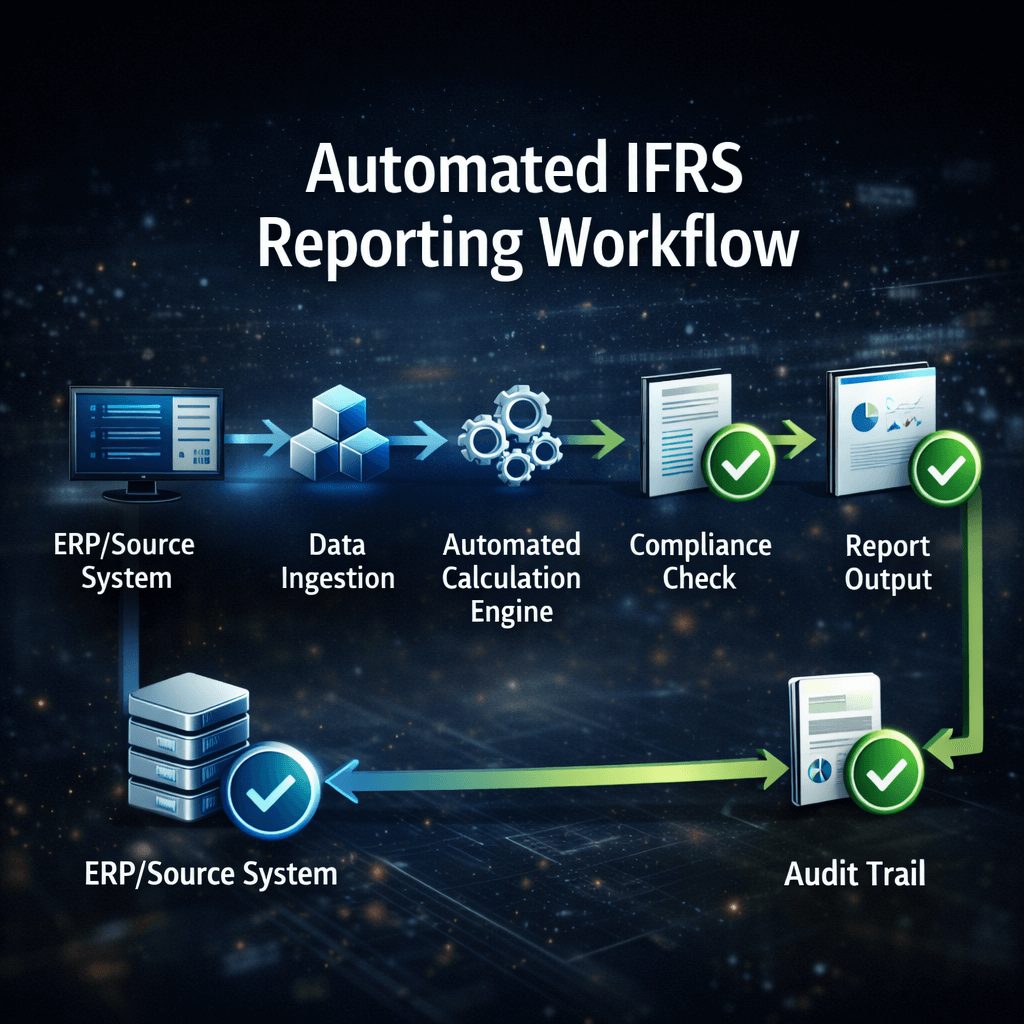
They connect directly to your ERP or general ledger. They pull data, apply the relevant IFRS methodology, and output results you can submit to regulators or present to auditors.
What matters most is that these systems apply the same logic every time, across every portfolio, with no manual intervention between data input and report output.
You can see the full range of ifrs software solutions that cover specific standards and use cases.
Why Manual IFRS Reporting Falls Short
Spreadsheets aren’t broken. They’re just not built for what IFRS compliance now requires.
Here’s where the cracks appear.
Common Spreadsheet Errors and Risks
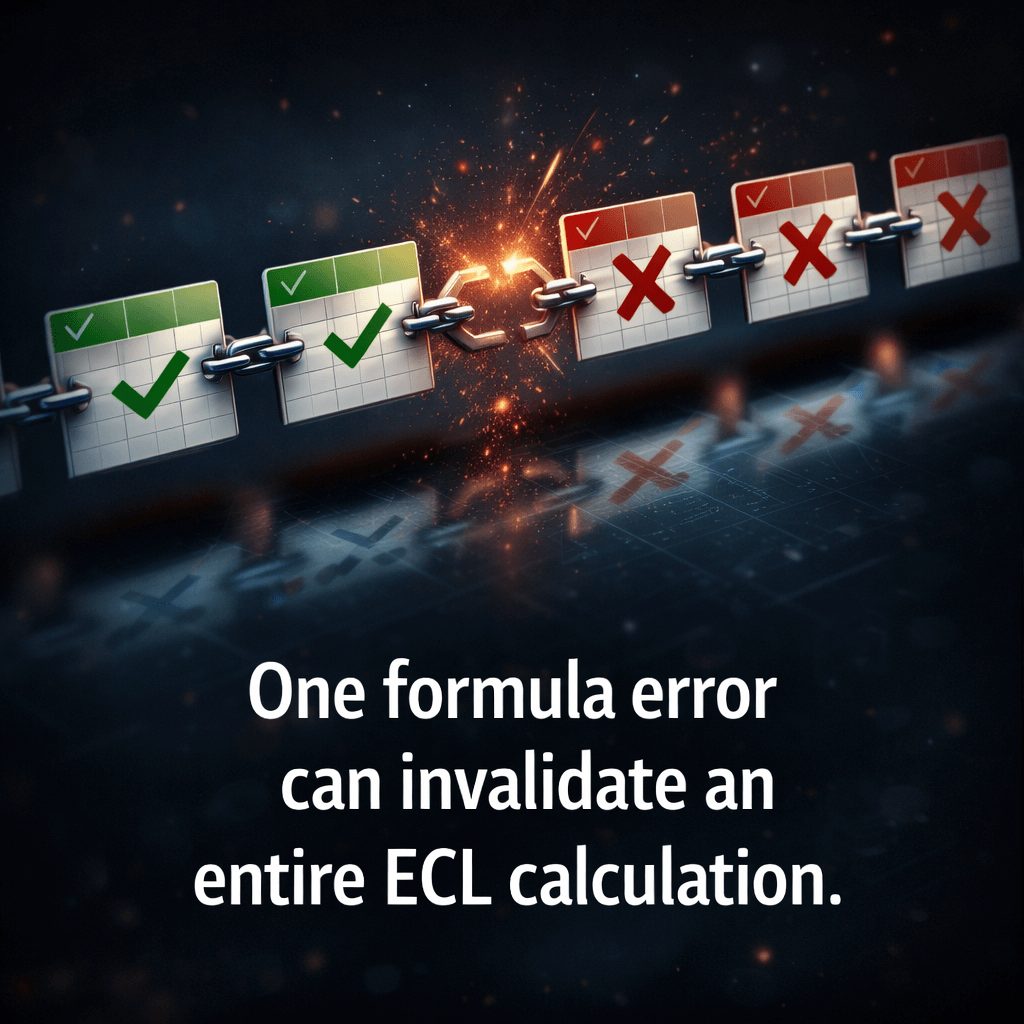
Manual IFRS models rely on formula chains. One updated cell in a linked workbook can break a calculation silently, with no visible error message.
According to HR, automated financial reporting reduces report preparation time by up to 95% compared to manual methods. That gap exists because manual processes carry compounding error risk at every step.
Consider what IFRS 9 requires. Your team builds probability of default (PD) tables, loss given default (LGD) curves, and exposure at default (EAD) inputs. Then they link them across tabs and run them through scenario weighting.
A renamed worksheet or a copied formula range breaks those links. The model outputs wrong numbers. Nobody sees it until the audit.
Audit Trail and Version Control Issues
Version control is where manual processes fail most consistently.
When multiple analysts update the same file through email or a shared drive, there’s no way to prove which version was active at month-end close. Regulators examining ECL models want to see transparency of assumptions, reproducibility of calculations, and consistent application across all portfolios.
A shared Excel file stored in a folder named ‘Q4 Final v3 REVISED’ doesn’t meet that standard.
Manual logs and change documentation help, but they depend entirely on human discipline during the most time-pressured period in your reporting cycle.
Data Integrity and Compliance Gaps
IFRS 16 alone requires your team to maintain a full lease register, calculate right-of-use (ROU) assets, update present value calculations at every lease modification, and generate journal entries. Doing this manually across hundreds of leases creates material misstatement risk.
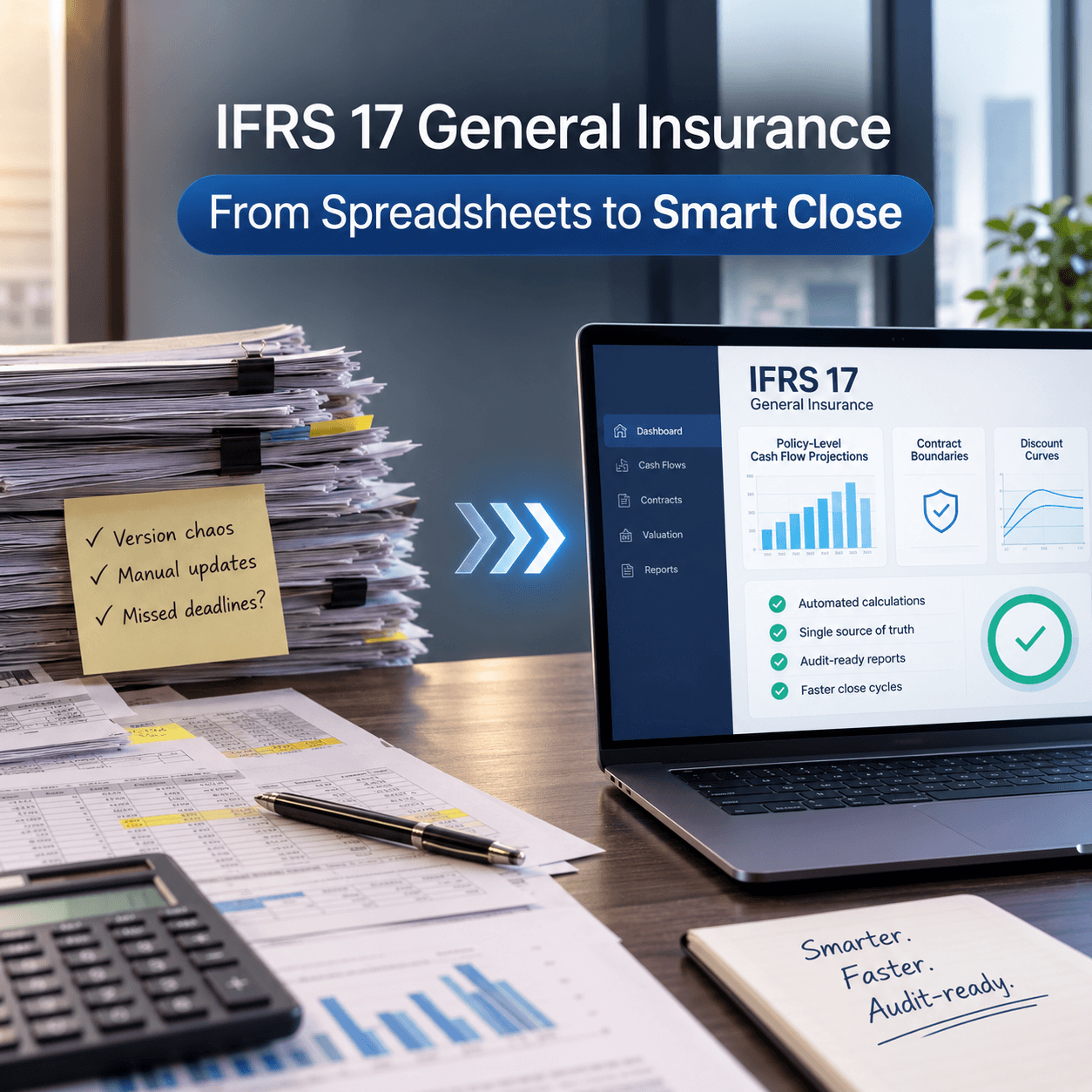
IFRS 17 adds actuarial complexity. Calculating contractual service margins (CSMs), risk adjustments, and liability for remaining coverage across millions of insurance contracts simply isn’t sustainable in a spreadsheet environment. You can learn more about specific compliance technology for these standards through ifrs compliance technology resources designed for practitioners.
Benefits of Automated IFRS Reporting Solutions
Real-Time Data and Reporting Accuracy
Automated IFRS reporting solutions connect directly to your source systems. Data flows from your ERP into the reporting engine without manual export, reformatting, or copy-paste steps.
That connection removes the single biggest source of manual reporting errors: human data transfer. ID reports that AI-powered tools reduce review time by 75% compared to manual IFRS disclosure processes.
What’s interesting is that same source documents nine out of ten top UK accounting firms transforming 8-hour manual disclosure reviews into 2-hour strategic sessions using automation for IFRS compliance.
Your team stops spending the day checking formulas. They start spending it interpreting results.
Built-In Controls and Compliance Assurance
Every calculation in a purpose-built IFRS reporting platform runs through predefined, auditor-tested methodology. The system applies the same ECL model to every loan in your portfolio, every time, with no analyst variation.
Audit trails are generated automatically. Every input, assumption change, and output is timestamped and logged. When regulators ask about a staging decision made six months ago, you pull the record in seconds.
That’s what regulators mean when they ask for reproducibility.
Efficiency Gains and Cost Reduction
The financial case for automation is clear. OK, automating finance processes reduces costs by 35 to 46% compared to manual reporting.
AI-powered automation also cuts time-to-variance analysis by 90% while minimizing manual errors and supporting IFRS compliance, according to HR.
Those aren’t marginal gains. They’re the difference between a team that closes in three days versus three weeks.
Manual vs Automated IFRS Reporting: Pros and Cons
Advantages and Limitations of Manual Reporting
Manual reporting isn’t without merit for smaller organizations. Here’s an honest look.
Advantages:
- Low upfront cost. No software license or implementation project required.
- Full control over model structure and assumptions at the analyst level.
- Familiar tools that most finance professionals already know.
Limitations:
- Error rate scales with complexity and volume. More contracts mean more risk.
- Audit trail gaps create compliance exposure at regulatory review time.
- Analyst dependency means losing a team member can halt reporting entirely.
- Manual processes can’t keep pace with standard updates without significant rework.
Advantages and Risks of Automation
Advantages:
- Consistent methodology applied across all portfolios without exception.
- Timestamped audit trails that satisfy regulatory examination requirements.
- Scales with your business without adding headcount.
- Standard updates managed by the vendor, not your team.
Risks to manage:
- Implementation requires upfront investment in time and resources.
- Data migration from legacy systems needs careful planning.
- Staff need training to trust and use the system correctly.
How Automation Improves IFRS Compliance
Standardization Across IFRS Frameworks
One of the core problems with manual IFRS processes is that different analysts apply the same standard differently. Two team members reading the same IFRS 15 contract might identify different performance obligations.
An automated IFRS reporting platform removes that variation. The same logic applies to every contract type, every portfolio segment, and every reporting period. That consistency is what makes your disclosures defensible.
On top of that, when a standard changes, the update is applied systematically across all calculations. There’s no risk of one analyst using the old methodology while another uses the new one.
Enhanced Governance and Internal Controls
Governance is a practical concern, not just a compliance checkbox. Role-based access controls in automated systems mean only authorized users can change assumptions or approve outputs.
That structure creates a clear segregation of duties without adding process steps. Reviewers approve outputs without being able to alter inputs. That’s a control your auditors will appreciate.
From there, the automated audit log captures every action taken within the system. You have a complete governance record without any manual documentation effort.
Key Features to Look for in an IFRS Reporting Solution
Automation and Calculation Engines
The calculation engine is the core of any IFRS reporting platform. It should handle ECL modeling for IFRS 9, lease liability calculations for IFRS 16, CSM and risk adjustment calculations for IFRS 17, and actuarial valuations for IAS 19.
What separates a strong engine from a basic one is predefined, audited methodology. You shouldn’t be building the model. You should be configuring it with your specific data.
Integration with Financial Systems
Your IFRS reporting solution needs to connect directly to your ERP, general ledger, and core banking system. Manual data exports introduce the same risks you’re trying to remove.
API connectivity and native ERP integration eliminate the gap between source data and report output. That connection also supports real-time reporting when your management team needs current figures outside the standard close cycle.
Audit, Security, and Reporting Capabilities
Audit trail automation should be non-negotiable. Every input change, assumption update, and approval action needs a timestamped log that you can retrieve on demand.
Role-based access controls, data validation checks, and pre-configured IFRS disclosure templates round out the feature set you need for regulatory-grade reporting.
When Should You Switch to an IFRS Reporting Solution?
Signs Your Current Process Is Inefficient
You might be wondering when manual reporting stops being manageable. These are the clearest signals.
- Your month-end close regularly extends beyond two weeks.
- Your team spends more than 30% of close time correcting formula errors.
- You can’t reconstruct the assumptions behind a prior-period provision during audit.
- You’ve had a material misstatement, even a small one, traced back to a spreadsheet error.
- New team members take months to become fully functional in your reporting model.
Any one of those signals is worth taking seriously. Two or more means the cost of staying manual now exceeds the cost of switching.
Scalability and Regulatory Pressure
Regulatory pressure is increasing across IFRS jurisdictions. IFRS 17 introduced actuarial precision requirements that most manual processes can’t meet at scale.
As of December 31, 2023, 57% of IFAC member jurisdictions had fully adopted IFRS, representing 79 jurisdictions worldwide. That adoption rate means regulatory scrutiny of IFRS compliance processes is growing globally.
If your organization is growing through acquisitions, entering new markets, or adding loan or lease portfolios, manual processes will hit a ceiling before your business does.
Cost vs Value: Is Automation Worth It?
ROI of IFRS Reporting Automation
The return on investment from IFRS reporting automation comes from three places: time savings, error prevention, and audit efficiency.
Time savings alone are significant. A finance team that cuts its close cycle from ten days to three days gains seven days of productive capacity per period. That capacity goes toward analysis, forecasting, and strategic input rather than data cleaning.
Error prevention is harder to put a precise number on until something goes wrong. A single material misstatement can trigger a restatement, a regulator inquiry, or an audit qualification. The cost of that one event frequently exceeds an entire year’s software licensing cost.
Hidden Costs of Manual Processes
Manual reporting costs don’t appear on an invoice. They show up as overtime during close periods, consultant fees for audit remediation, and the opportunity cost of skilled finance professionals doing data entry.
Then again, there’s the cost of regulatory non-compliance. Penalties, reputational exposure, and the resource burden of regulatory response are all downstream consequences of a manual process that fails at the wrong moment.
When you account for those hidden costs, the gap between manual and automated IFRS reporting narrows faster than most finance teams expect.
Best Practices for Transitioning to Automated Reporting
Data Migration and System Integration
Start with a full data audit before selecting a platform. You need to know what you have, where it lives, and how clean it is before migrating it into a new system.
A phased approach works better than a full cutover. Start with one standard or one portfolio segment. Validate the automated output against your manual model before expanding.
That validation step is critical. It builds internal confidence in the new system and gives your auditors a clear record of the parallel testing period.
Change Management and Training
Technology adoption fails when people aren’t brought along. Your team needs to understand not just how to use the system, but why the methodology it applies is correct.
Training should cover both the software interface and the underlying IFRS standards it supports. A team member who understands why the system stages a loan as Stage 2 is better positioned to explain it to an auditor than one who just reads the output.
After that, set clear ownership. Assign a system administrator, a methodology owner, and a validation owner for each standard you’re automating.
IFRS Reporting Solution for IAS 19 Valuation Needs
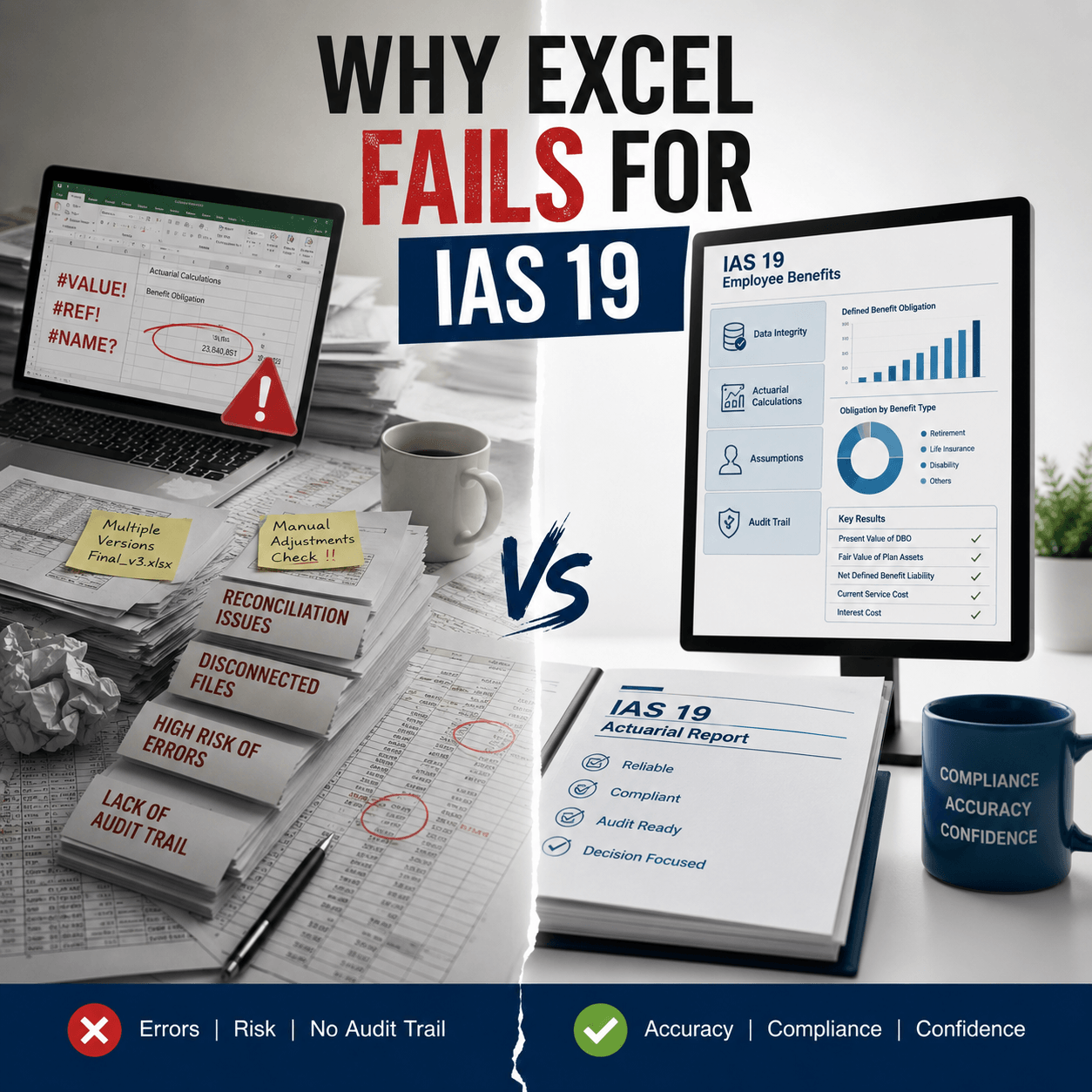
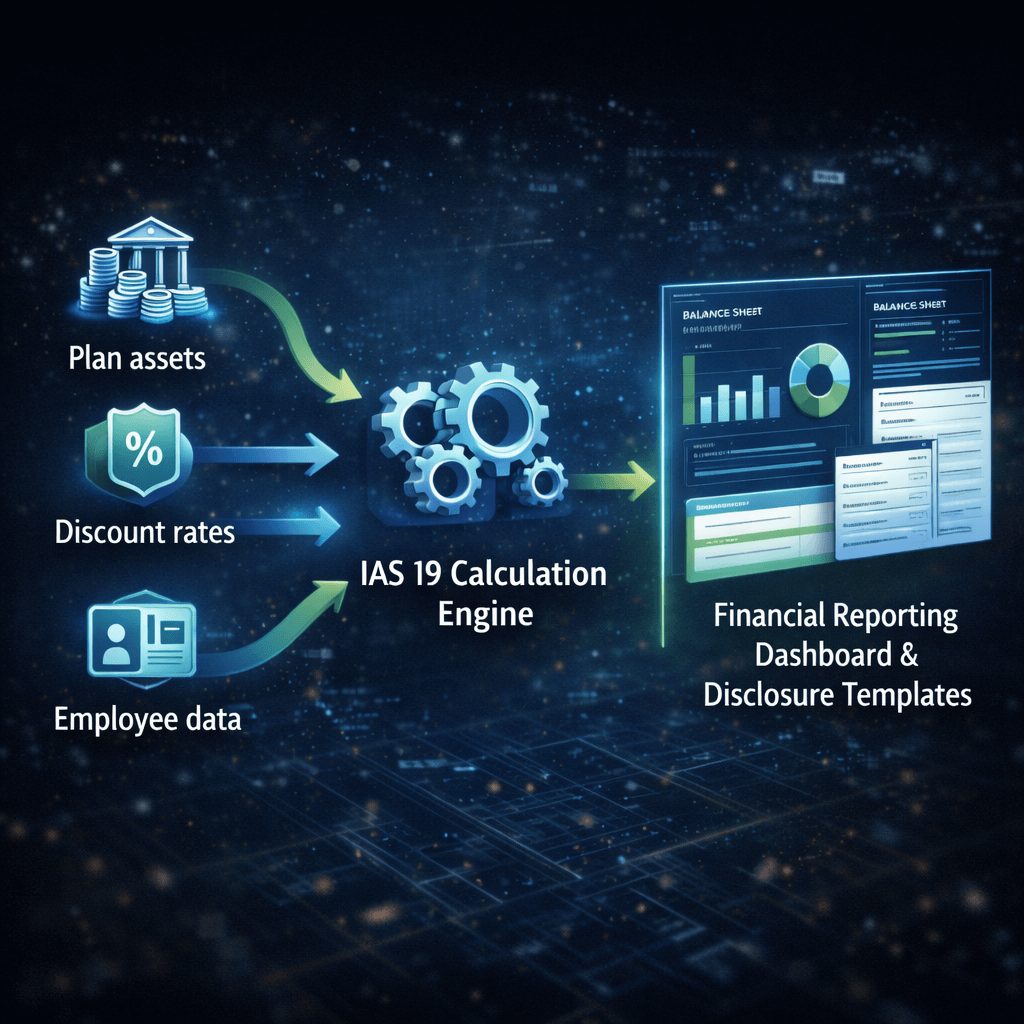
IAS 19 adds a layer of actuarial complexity that sits outside what most general IFRS reporting platforms handle well. Employee benefit obligations, defined benefit plan valuations, and actuarial gains and losses all require specialized modeling.
A purpose-built IFRS reporting solution for IAS 19 connects actuarial inputs directly to financial statement outputs. That connection removes the manual handoff between your actuarial team and your finance team, which is where IAS 19 errors most commonly occur.
Prima Consulting’s actuarial and advisory expertise supports IAS 19 compliance for organizations that need both the technical valuation capability and the reporting infrastructure to meet disclosure requirements. You can find out more at primaconsulting.org.
FAQs on IFRS Reporting Solution
What are the risks of manual IFRS reporting?
Manual IFRS reporting carries four main risks: formula errors that break silently in complex spreadsheets, version control failures that make it impossible to reconstruct prior-period assumptions, inconsistent application of methodology across portfolios, and audit trail gaps that regulators flag during examinations.
A 10% error in probability of default assumptions can shift loan loss provisions by millions. Manual processes create that exposure at every reporting cycle.
Can automation ensure full IFRS compliance?
Automated IFRS reporting solutions apply predefined, auditor-tested methodology consistently across all calculations and portfolios. They generate automatic audit trails and apply standard updates systematically when standards change.
That said, the system needs to be configured correctly with accurate input data. Automation removes the human error risk from calculations and reporting, but it doesn’t replace the judgment your team applies to complex accounting decisions.
How do IFRS reporting tools improve accuracy?
IFRS reporting tools improve accuracy by removing the manual data transfer steps between your source systems and your reports. They apply calculation logic without formula chains or copy-paste dependencies.
They run validation checks automatically and flag anomalies before they reach the final output. ID shows that AI-powered tools reduce review time by 75% compared to manual IFRS disclosure processes, which reflects both the speed gain and the accuracy improvement that comes with removing manual review steps.
How much time does IFRS automation save?
The time savings vary by organization size and complexity. A financial services company that cuts its month-end close from two weeks to three days is a documented example.
Across the broader finance function, automated reporting reduces report preparation time by up to 95% compared to manual methods. AI-powered variance analysis cuts review time by an additional 90%.
What’s the difference between manual and automated IFRS 9 compliance?
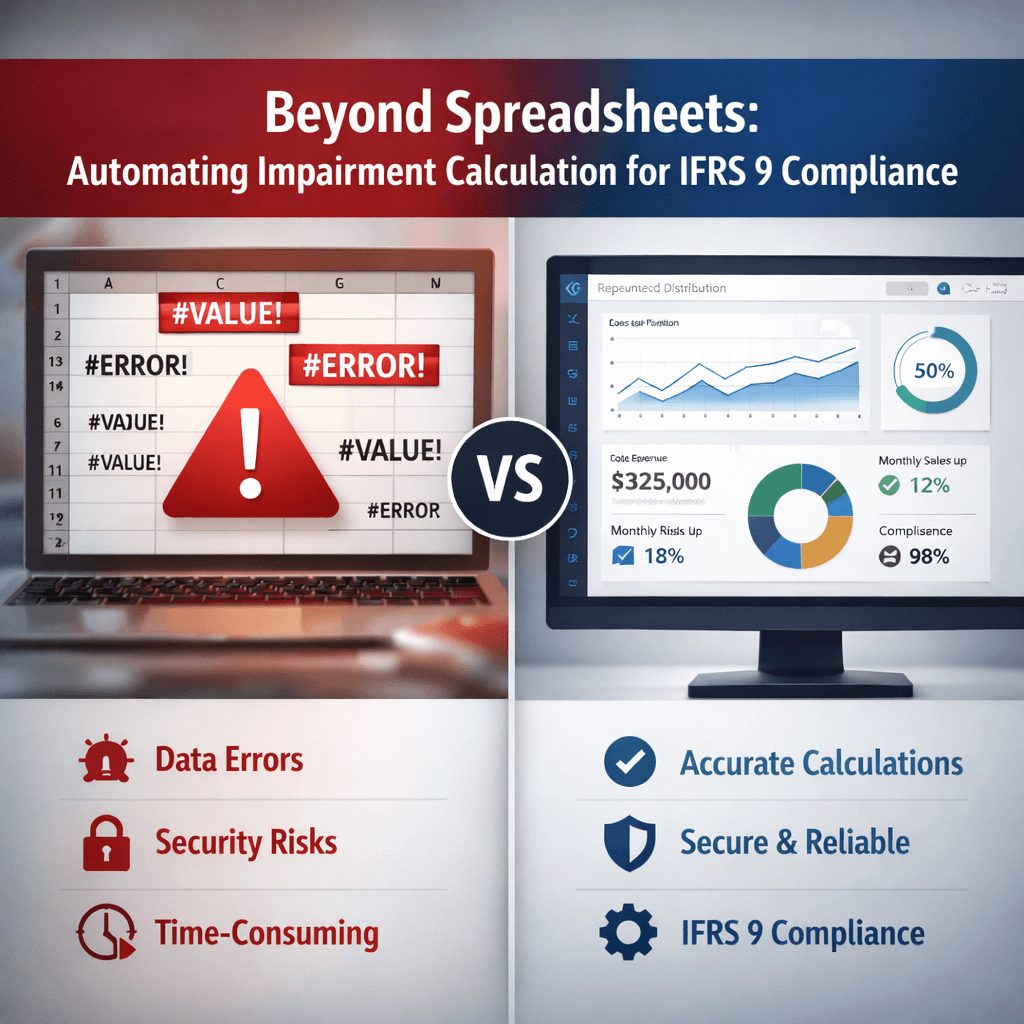
Manual IFRS 9 compliance uses spreadsheet-based ECL models with PD, LGD, and EAD formula chains. Those chains break under manual updates, and version control across shared files makes it impossible to prove which assumptions were active at a given point in time.
Automated IFRS 9 compliance runs the same ECL methodology across all loan portfolios simultaneously, generates a complete timestamped audit trail, and flags staging anomalies in real time. The consistency and audit readiness of automated systems is the defining difference.
Is Your IFRS Reporting Process Ready for What’s Next?
Manual IFRS reporting has a ceiling. At some point, the volume of contracts, the complexity of standards, and the pace of regulatory change outgrow what spreadsheets can reliably handle.
The efficiency gains from automated IFRS reporting solutions are real. Faster closes, fewer errors, stronger audit trails, and consistent methodology across every portfolio are the practical results.
The question isn’t whether automation improves IFRS compliance. It does. The question is where your organization is in that decision.
If you’re seeing the warning signs of an overstretched manual process, or if you’re preparing for a regulatory examination that will scrutinize your ECL models, your lease accounting, or your IAS 19 disclosures, it’s worth having a conversation.
Prima Consulting works with finance and actuarial teams across financial services, insurance, and corporate sectors to assess IFRS compliance readiness and support the transition to automated reporting. Talk to their team about where your current process stands and what a structured move to an IFRS reporting solution looks like for your organization.