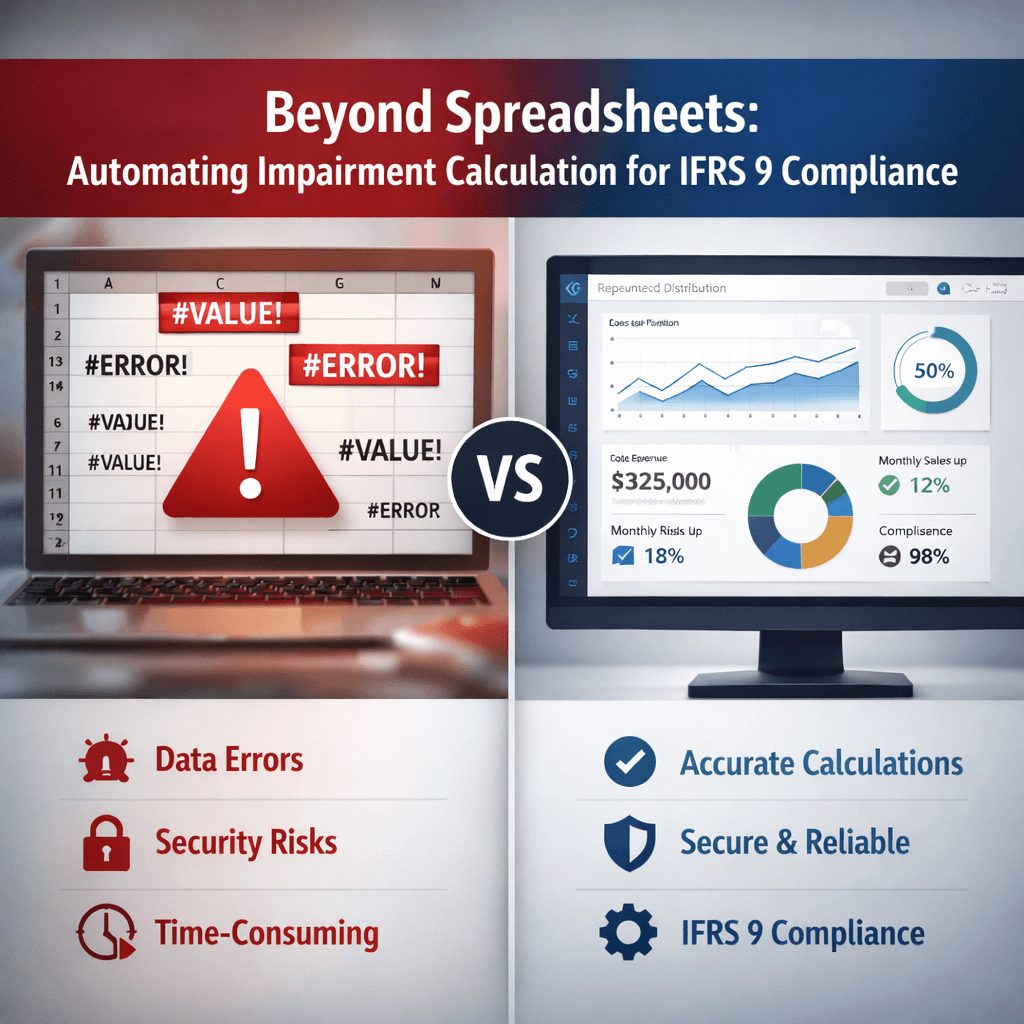
Banks implementing IFRS 9 face a choice. They can buy standalone tools for each step or build a complete system architecture. The global IFRS 9 Compliance Software market reached USD 2.15 billion in 2024. That number tells only part of the story. What matters more is how these systems connect across your risk, finance, and IT functions.
Most banks discover IFRS 9 compliance process architecture requirements after their first reporting cycle fails. Data sits in silos. Models run in isolation. Reports require manual reconciliation. The problem isn’t the tools themselves but how they work together across the expected credit loss lifecycle.
What Is IFRS 9 Compliance Process Architecture?
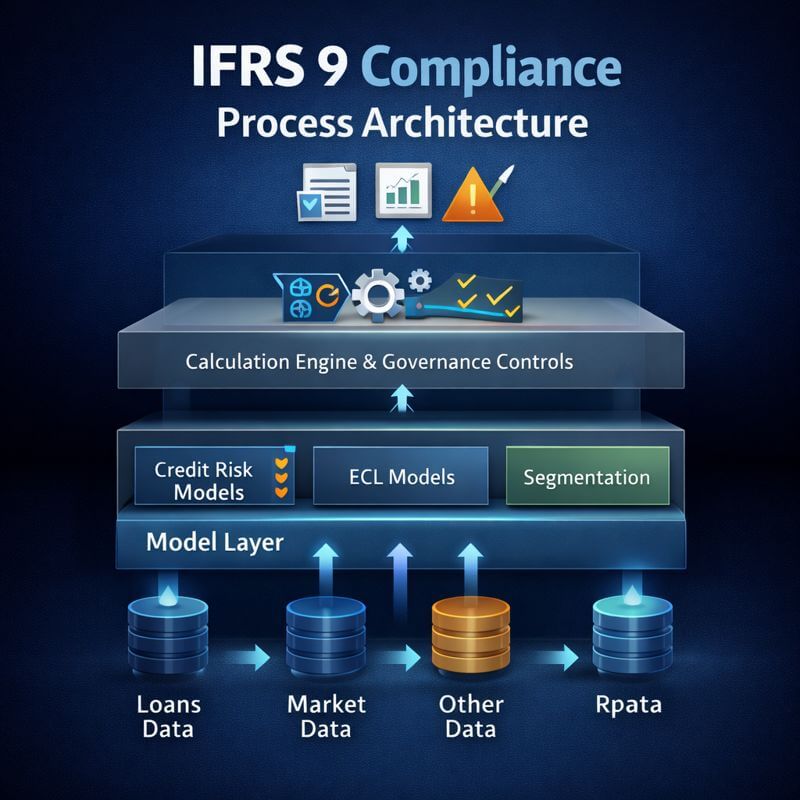
IFRS 9 compliance process architecture describes how data, models, governance, and reporting connect across every stage of ECL calculation. It’s not one platform. It’s the framework linking your core banking systems to credit risk models to financial reporting outputs.
Think of it as plumbing for your ECL process. Water flows from source to tap because pipes connect properly. ECL flows from loan origination to financial statements when your architecture connects data extraction, model execution, calculation engines, and disclosure generation without manual intervention.
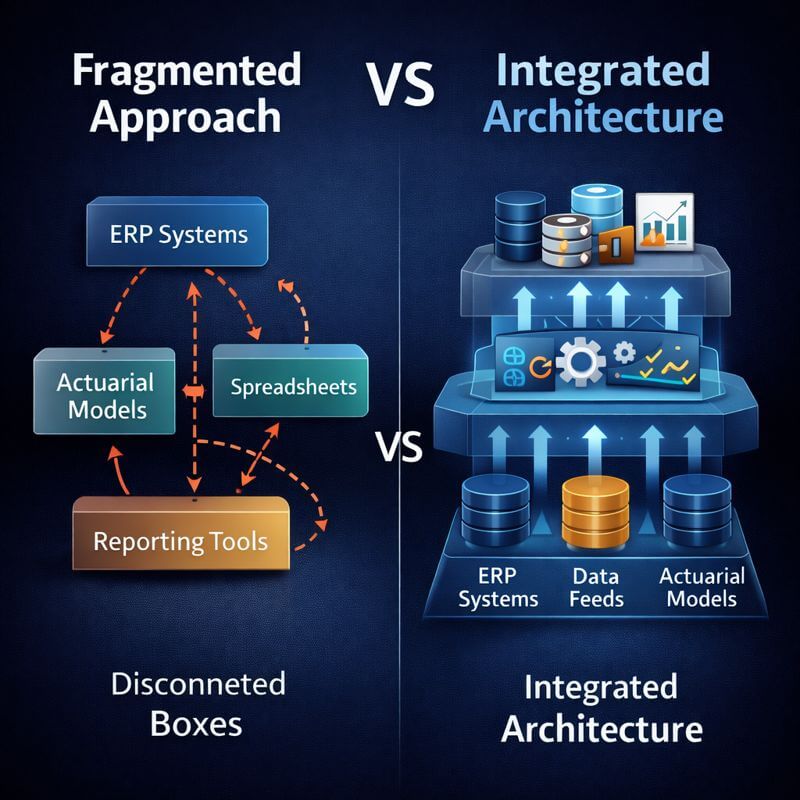
Your architecture defines whether you spend three days or three weeks closing each quarter. Banks with fragmented architectures move data through Excel between systems. Around 80% of EU institutions backtest staging allocation to catch errors from disconnected processes. Banks with integrated architectures run calculations automatically and audit results instantly.
Why Standalone Tools Fail IFRS 9 Compliance
Single-function tools solve one problem well. A PD model builder creates term structures. A staging calculator assigns exposures to stages. A disclosure generator formats IFRS 7 tables. What happens between these tools? Manual work.
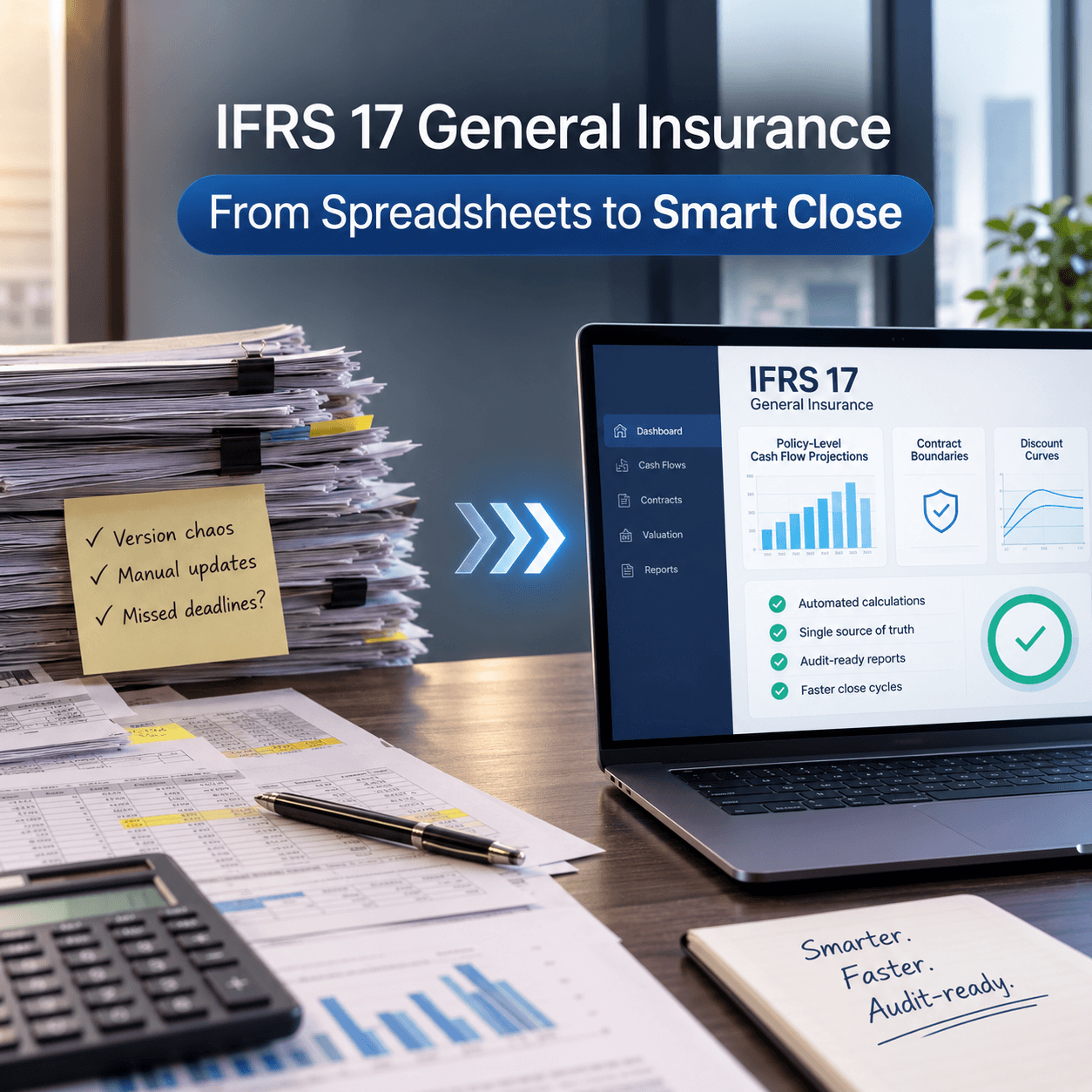
You export data from your core banking system. Transform it for the PD model. Export results. Transform again for the staging tool. Export those results. Transform again for ECL calculation. Export again for disclosure formatting. At each step, errors enter. Timing misaligns. Audit trails break.
Data emanates from multiple source systems in different formats and structures. Different systems address different parts of the same problem differently. When you need scenario analysis, you regenerate outputs through the entire chain. Each scenario requires massive data movement between systems.
That’s why approximately 40% of EU institutions use 12-month PD as a proxy for lifetime PD. Not because it’s correct but because their architecture makes proper calculations too cumbersome. Workarounds emerge when your tools don’t connect cleanly.
Core Components of an IFRS 9 System Architecture
Data Architecture for ECL and Credit Risk
Your data layer feeds everything downstream. IFRS 9 requires loan-level detail including exposure amounts, payment history, collateral values, customer financials, and macroeconomic indicators. That data lives across core banking, collateral management, customer relationship systems, and external economic databases.
A proper data architecture creates a single source of truth. Extract once. Transform once. Load into a central repository where all downstream processes access identical data. Version control tracks every change. Lineage shows where each data point originated.
Without this foundation, you face what regulators call “data fragmentation.” Your PD model uses March exposure data. Your LGD model uses February collateral values. Your EAD model uses January commitment levels. Results never reconcile because source data never aligned.
Model Layer for PD, LGD, and EAD
Credit risk models sit between raw data and ECL calculations. PD models generate default probabilities from historical loss experience and forward-looking economic scenarios. LGD models estimate recovery rates by collateral type. EAD models project commitment drawdowns.
These models need parameter governance, version control, and execution history. When auditors ask why provisions changed, you show which model version ran, which parameters applied, and which scenarios weighted into the final number.
Strong architecture separates model development from model execution. Your quants build and validate models in a controlled environment. Production systems execute approved models on schedule. No mixing development work with quarter-end reporting.
Governance, Controls, and Audit Trails
Regulators expect you to explain every assumption. Why did this loan move to Stage 2? Which SICR trigger applied? How did macroeconomic forecasts affect this portfolio’s PD curve? Your architecture must capture these answers automatically.
Audit trails record who changed what and when. Parameter overrides require approval workflows. Model updates trigger validation protocols. Calculation results store with full supporting detail down to individual cash flow schedules.
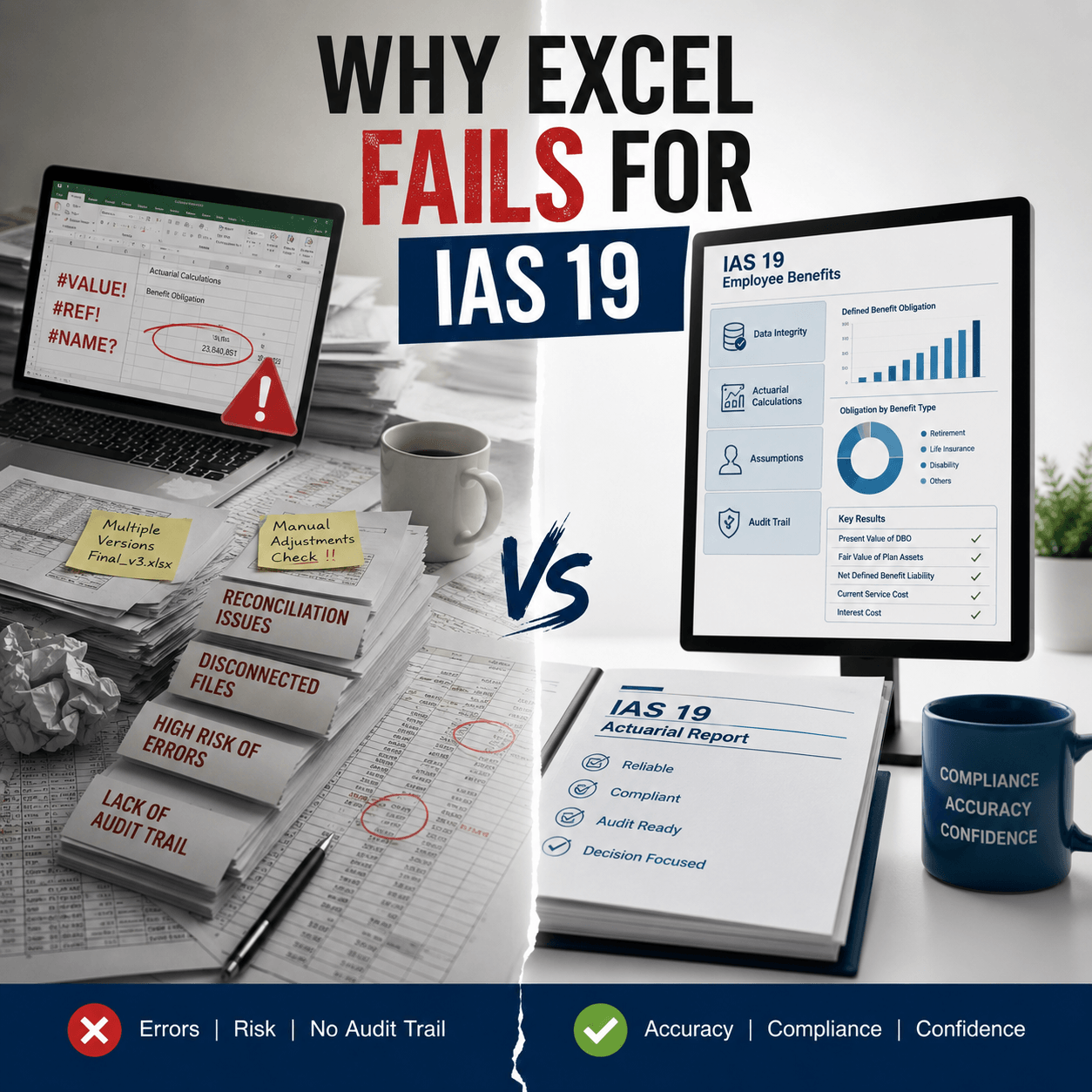
Banks using hidden audit risks in IFRS 9 spreadsheets lose this traceability. Formulas change without documentation. Results lack supporting calculations. Auditors spend weeks reconstructing what happened.
How Tools Support the End-to-End IFRS 9 Process
Planning and Scoping the IFRS 9 Framework
Implementation starts with understanding your current state. Map existing systems. Identify data gaps. Document model inventory. Define governance requirements. Your architecture blueprint emerges from this analysis.
Banks implementing IFRS 9 typically face 18 to 36-month timelines. The planning phase determines whether you hit that target or extend indefinitely. Clear architecture design prevents rework when data sources change or regulatory guidance updates.
Data Assessment and Quality Management
IFRS 9 demands five to seven years of historical loss data, macroeconomic time series, and granular exposure details. Many banks discover their core banking systems don’t track what IFRS 9 requires. Collateral valuations exist on paper, not in databases. Customer financials sit in loan files, not structured tables.
Data quality frameworks test completeness, accuracy, consistency, and timeliness. Automated validation runs before each calculation cycle. Issues surface early when fixes take minutes, not after quarter-end when fixes cause delays.
Model Development, Validation, and Monitoring
PD, LGD, and EAD models form your ECL calculation engine. Development requires historical data, statistical expertise, and regulatory knowledge. Validation tests predictive accuracy through backtesting. Monitoring tracks ongoing performance against actual outcomes.
Your architecture must support this lifecycle. Models move from development to staging to production through controlled promotion. Historical results remain accessible for comparison. Performance metrics update automatically after each reporting cycle.
Around 75% of EU institutions select macroeconomic variables through statistical tests. That requires architecture supporting model experimentation, sensitivity analysis, and performance comparison before final deployment.
Build vs Buy in IFRS 9 System Design
When Building In-House Makes Sense
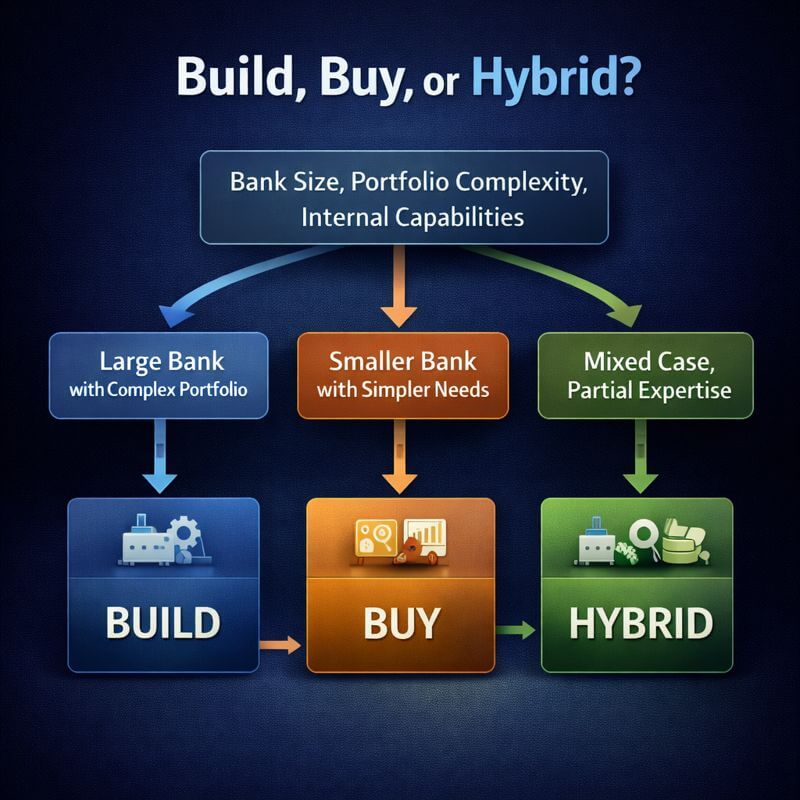
Large banks with unique portfolios sometimes build proprietary solutions. They need specific model approaches not available in vendor platforms. They have internal development teams and long-term maintenance budgets.
Building gives complete control over methodology, data structures, and reporting formats. You customize everything to internal processes. No vendor dependencies for changes or updates.
That control comes with cost. Development takes 18 to 24 months. Maintenance requires permanent staff. Regulatory changes demand immediate development work. Small banks rarely have resources for custom builds.
Limits of Vendor-Only IFRS 9 Tools
Vendor platforms offer fast deployment and proven functionality. But one vendor rarely provides everything you need. You might buy staging logic from one vendor, PD models from another, and disclosure formatting from a third.
Integration becomes your problem. Vendors provide APIs, but you write the connection code. Data transformation between systems requires your resources. When something breaks across vendor boundaries, support becomes complicated.
That’s the gap between tools and architecture. Tools provide features. Architecture provides flow. You need both.
The Hybrid Architecture Approach Explained
Most mid-market banks adopt hybrid approaches. Buy core ECL calculation engines from vendors. Build custom data integration matching your specific core banking system. Use vendor disclosure templates but customize for internal reporting needs.
This balances speed with flexibility. Vendor platforms handle complex calculations you don’t want to build. Your team focuses on connecting systems and adapting workflows to your specific requirements.
When evaluating build vs buy ifrs 9 software tco, consider not just software cost but integration effort, ongoing maintenance, and regulatory update responsibility.
Key Design Factors for IFRS 9 Architecture
Bank Size and Portfolio Complexity
A community bank with simple loan portfolios needs different architecture than a regional bank with trade finance, syndicated lending, and structured products. Complexity drives architecture decisions.
Simple portfolios might run on enhanced spreadsheets with light automation. Complex portfolios demand industrial-strength calculation engines, sophisticated model management, and detailed audit trails.
Scale matters too. Processing 10,000 loans versus 1,000,000 loans changes performance requirements. Architecture must scale without degrading calculation speed or compromising auditability.
Regulatory Change Readiness
IFRS 9 evolves. The IASB received 79 comment letters by September 2023 about impairment requirements during the post-implementation review. Amendments emerge. Supervisory guidance updates. Your architecture must adapt without complete rebuilds.
Flexible architectures separate business logic from technical implementation. When staging criteria change, you update rules without rewriting code. When disclosure formats expand, you modify templates without touching calculation engines.
Banks locked into rigid systems face expensive vendor upgrades or emergency development work whenever regulations shift. Flexible architecture treats change as routine, not crisis.
Cost, Timeline, and Internal Capability
Your team’s skills constrain architecture choices. Do you have database administrators? API developers? Model validators? Risk analysts who understand credit modeling? If not, you need vendor platforms providing more complete solutions.
Budget and timeline also matter. Building custom architecture costs more upfront but might save over five years. Buying platforms costs less initially but creates ongoing license fees. Neither approach is universally better. It depends on your specific situation and what existing ifrs 9 software solution options fit your needs.
Common IFRS 9 Architecture Questions Banks Ask
Can one tool cover the full IFRS 9 lifecycle?
Rarely. Comprehensive platforms exist but often over-serve smaller banks or under-serve complex portfolios. Most banks use three to five tools covering data integration, credit risk modeling, ECL calculation, and financial reporting.
The question isn’t whether one tool can do everything. It’s whether your tools connect cleanly enough to eliminate manual work and maintain complete audit trails across the process.
How do banks scale IFRS 9 systems over time?
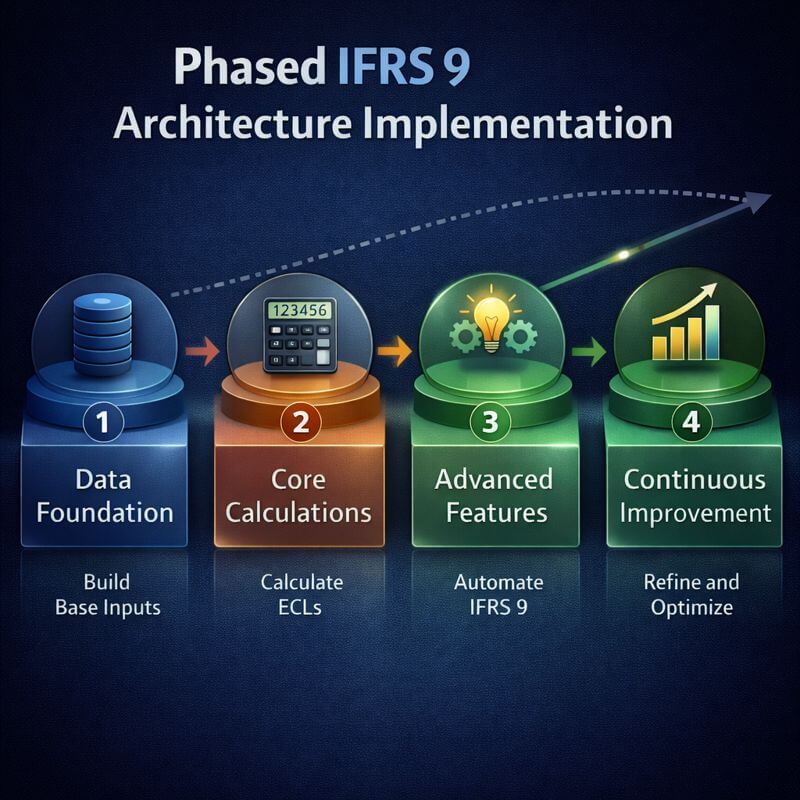
Start with core functionality. Get basic ECL calculations working. Add scenario analysis next. Expand to attribution reporting. Implement advanced governance features last.
Architecture designed for phased expansion costs more initially but prevents expensive replacements later. Build data foundations supporting future needs even if current processes don’t use all capabilities yet.
What regulators expect beyond ECL numbers?
Supervisors want to understand your methodology. How did you determine SICR triggers? Why did you choose specific macroeconomic variables? What validation testing supports your models?
Your architecture must produce this documentation automatically. Not as afterthought spreadsheets but as integral reporting generated alongside ECL calculations. Banks scrambling to explain results after submission invite supervisory scrutiny.
Steps to Implement a Sustainable IFRS 9 Architecture
Define ownership and governance early
Assign clear roles. Who owns data quality? Who approves model changes? Who signs off on parameter overrides? Who validates calculation results before financial statement submission?
IFRS 9 crosses risk, finance, and IT boundaries. Without clear governance, each group blames others when problems surface. Steering committees and working groups need authority to make decisions and resources to implement them.
Align data, models, and reporting layers
Your ECL calculation depends on data quality feeding validated models producing auditable reports. Break any link and the entire chain fails. Design these layers together, not sequentially.
Data schema must support model inputs. Model outputs must feed reporting requirements. Reporting formats must satisfy both financial statement disclosure and internal management needs. Thinking through these connections before building prevents expensive rework.
Design for audit, validation, and updates
Your architecture serves auditors as much as reporting teams. Can they independently verify calculations? Can they trace results to source data? Can they review parameter changes and approval history?
Build these capabilities from the start. Adding audit features to existing systems proves far harder than including them in initial design. Future regulatory changes come with less disruption when your architecture expects evolution rather than treating it as exception.
When selecting enterprise ifrs 9 ecl software selection, evaluate not just current functionality but architectural flexibility supporting long-term needs.
Moving from Tools to Architecture
IFRS 9 compliance demands more than purchasing software. It requires rethinking how data flows, models execute, and results reach stakeholders. Banks treating this as tool selection discover gaps when quarter-end arrives and manual work prevents timely close.
Your architecture determines whether IFRS 9 becomes routine process or ongoing struggle. Fragmented systems create recurring crises. Integrated architecture makes compliance sustainable without expanding headcount or extending deadlines.
The market growing to USD 5.48 billion by 2033 reflects demand for better solutions. But technology alone doesn’t solve architectural problems. Banks need strategic thinking about how systems connect, data flows, and governance operates across the ECL lifecycle.
Start with your current state. Map data sources, model inventory, and reporting requirements. Identify integration gaps and manual workarounds. That analysis reveals whether you need better tools, better architecture, or both. Most banks need both but get better results focusing on architecture first and selecting tools that fit that framework.
Prima Consulting helps banks design IFRS 9 compliance process architectures matching their specific risk profile, portfolio complexity, and regulatory environment. Our team combines actuarial expertise, accounting knowledge, and technology implementation experience to build solutions that work quarter after quarter without constant firefighting. Visit Prima Consulting to discuss your specific architecture challenges and explore how integrated thinking delivers better results than tool-by-tool selection.