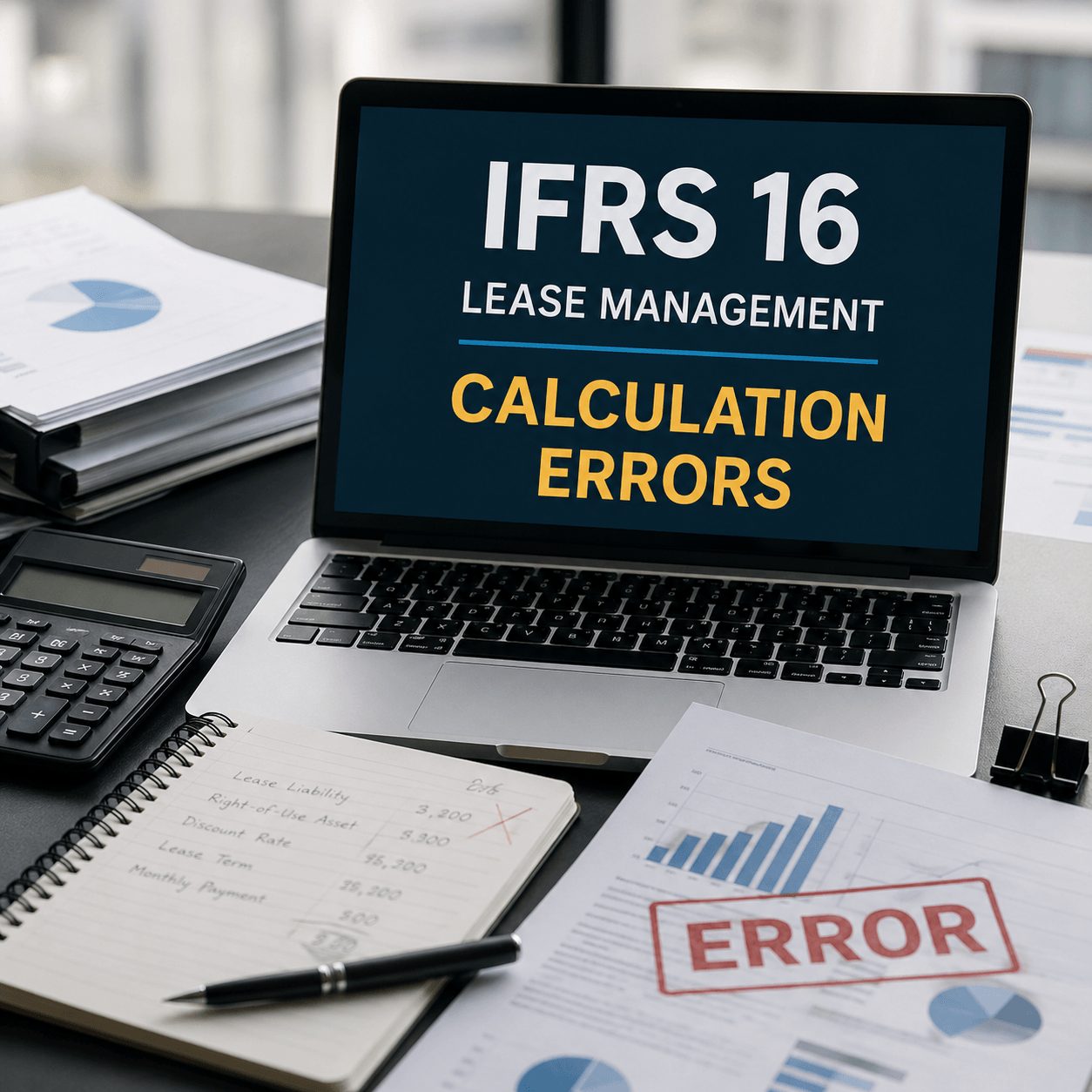
IFRS 16 Lease Management Software: Calculation Errors
How finance teams using manual IFRS 16 tools expose their organizations to misreporting, audit risk, and compliance failure, and what to do about it.
✓ Written by IFRS TECH’s advisory team · ✓ Serving GCC, Europe & APAC · ✓ Actuaries + CPAs + CFAs
TL;DR
Errors in IFRS 16 lease management software, even when proper software is absent, are one of the most underreported sources of financial misstatement in reporting today. This article explains why manual calculations fail, which six specific errors appear most often in non-automated IFRS 16 compliance processes, and how audit exposure builds quietly until it doesn’t. You’ll also learn what the transition to IFRS 16 lease accounting software providers actually looks like and why waiting isn’t a safe option. Read this before your next reporting cycle, not after it.
Most finance teams using IFRS 16 lease management software, or trying to get by without it, know IFRS 16 is complex. What they don’t always realize is how fast that complexity compounds when leases are tracked manually. A single missed lease modification, one stale discount rate, one overlooked embedded lease, each one is small on its own. But they don’t arrive one at a time. They stack.
By the time an auditor flags them, you’re not dealing with a calculation problem. You’re dealing with a restatement conversation.
This isn’t hypothetical. According to practice data from House of Control, IFRS 16 compliance challenges, especially those rooted in manual processes, are among the most time-consuming issues finance professionals encounter when onboarding new clients. The pattern repeats across industries: spreadsheet-based tools, fragmented data, and no audit trail for judgment calls.
What this article covers:
- The most common IFRS 16 calculation errors in manual and non-automated tools
- The real audit and misreporting risks of staying on spreadsheets
- How to identify if your current process is already a compliance liability
Why Manual Calculations Are Breaking IFRS 16 Compliance
Here’s the thing most discussions about IFRS 16 get wrong: the standard itself isn’t the hard part. The calculations behind it are.
Right-of-use asset recognition. Lease liability measurement. Present value of future payments. Incremental borrowing rates applied per lease, per currency, per term. Remeasurement triggers when contract terms change. These are not one-time tasks, they happen across every lease, every reporting period, every time a contract is modified or extended.
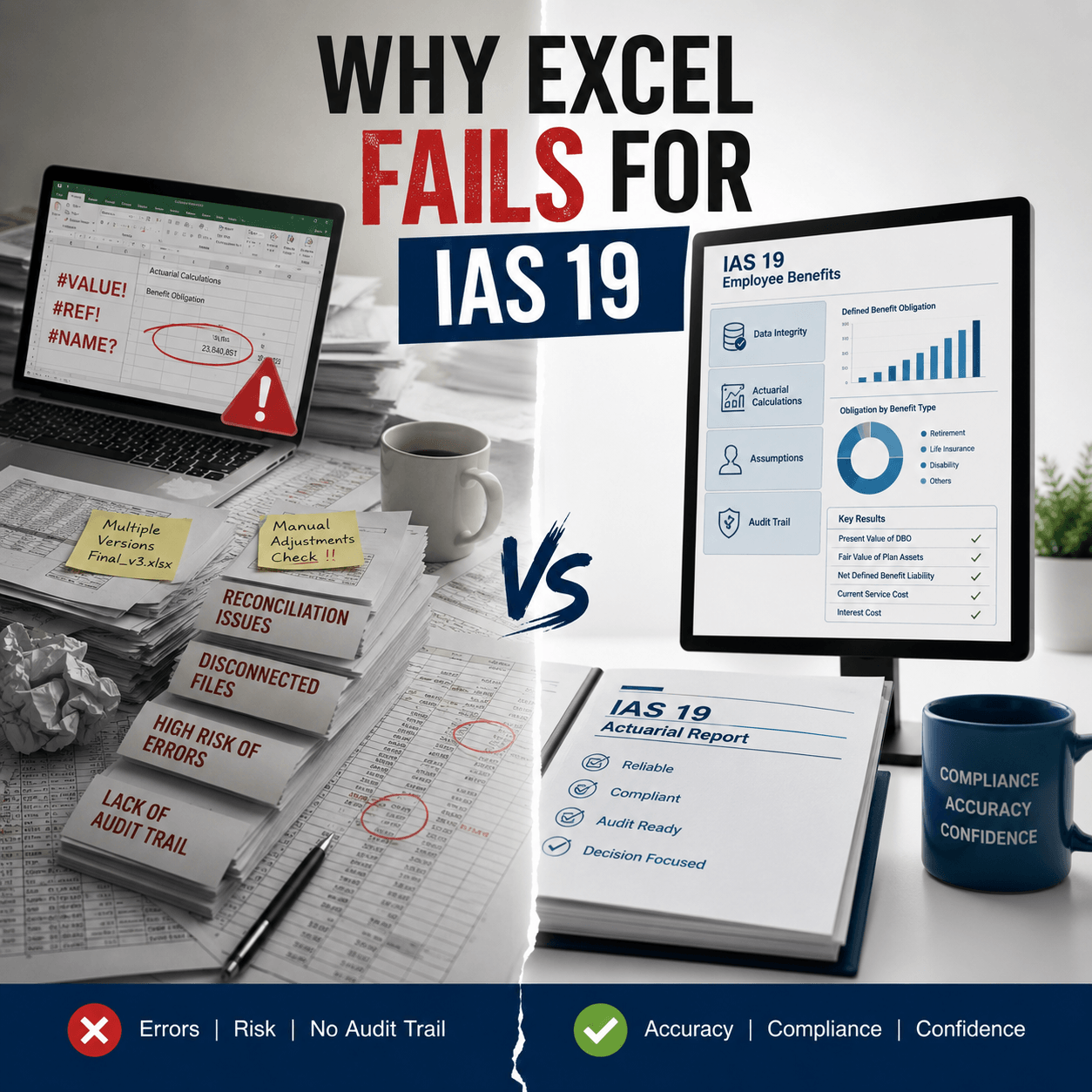
Excel handles a small portfolio. It breaks under scale.
What makes manual IFRS 16 compliance issues particularly dangerous is that errors don’t announce themselves. A miscalculated present value doesn’t produce a warning message. A missed remeasurement just creates a quietly growing variance. And when that variance surfaces at year-end, or worse, during an audit, it’s already been sitting in your financial statements.
Quick diagnostic: Can your team trace every IFRS 16 judgment, discount rate selection, lease term assessment, component separation, to a documented, timestamped record? If that question took more than three seconds to answer confidently, keep reading.
The Discount Rate Problem Nobody Talks About
The discount rate issue is where I see the most consistent failures across IFRS 16 lease management software implementations, whether manual or basic. IFRS 16 requires the lessee’s incremental borrowing rate, specific to lease term, currency, and credit risk, when the rate implicit in the lease can’t be determined. Most organizations know this in theory. But applying it consistently across a portfolio of 50, 100, or 400+ leases is a different matter entirely.
The shortcut most teams take is using the company’s WACC. That’s wrong. WACC blends equity and debt components. It isn’t the IBR. Using it consistently across leases produces systematically incorrect liability balances.
This isn’t an obscure edge case. It’s one of the most commonly flagged errors when new clients move onto dedicated IFRS 16 compliance software tools.
Lease Modifications: Where Spreadsheets Fall Apart
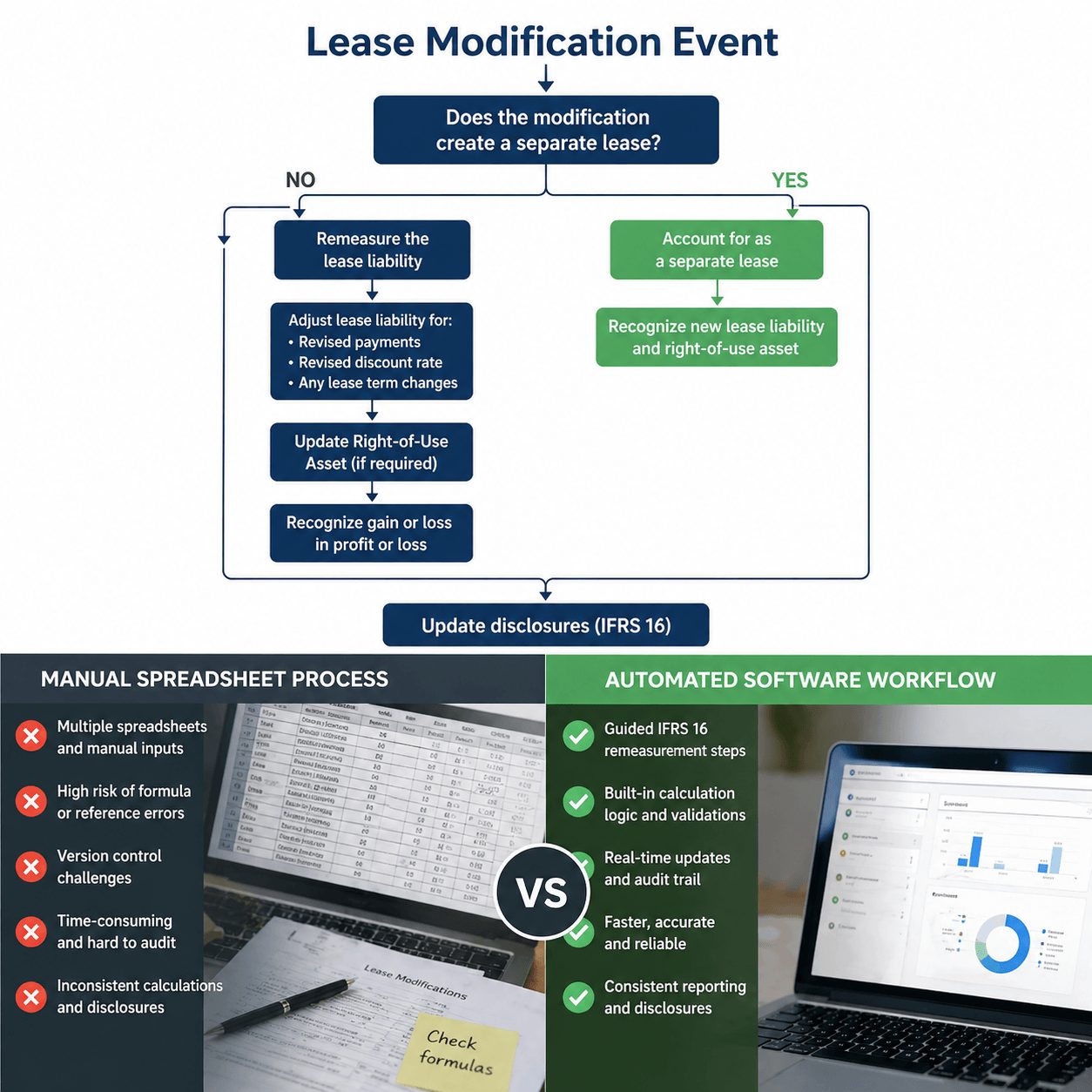
Leases change, and IFRS 16 lease management software needs to handle that automatically. Rents get renegotiated. Terms get extended. Scope gets adjusted. IFRS 16 requires remeasurement at each of these events, applying the correct discount rate at the modification date and adjusting both the right-of-use asset and the liability.
In a spreadsheet model, this requires someone to notice the change, update multiple linked cells, and ensure no other calculations break as a result. In practice, this step either gets missed entirely or gets done inconsistently across the portfolio. Multiply that across an organization with leases in multiple countries and you have systematic misreporting risk in manual IFRS 16 lease tools.
What Does an IFRS 16 Calculation Error Actually Cost?
When IFRS 16 lease management software fails, or isn’t used at all, the cost depends on how long the error runs undetected.
A single miscalculated lease liability over three reporting periods creates a cascading restatement problem. Your balance sheet has been misstated. Your EBITDA figures are affected, and covenant calculations tied to apply ratios may be wrong. And if your organization is publicly listed, you’re in a very uncomfortable conversation with regulators.
The IFRS 16 compliance software risks of staying on manual processes go beyond the obvious accounting errors. The secondary damage, audit delays, restatement costs, investor confidence, can dwarf the cost of implementing a proper solution.
The global lease accounting software market reached USD 1.85 billion in 2024 and is projected to hit USD 5.31 billion by 2033. That isn’t speculative demand. It’s organizations that have worked out what non-compliance costs and moved so.
Audit Exposure You May Not See Coming
Auditors are getting better at IFRS 16 scrutiny, and they specifically look for weaknesses in IFRS 16 lease management software controls. They know the judgment areas, look for documented rationale on lease term decisions. And they test discount rates, check whether modifications triggered remeasurement. And when the answers aren’t in a centralized, auditable system, the review process gets expensive and slow.
In 2024, the PCAOB found significant deficiencies in 26% of inspected audit engagements, not because companies were dishonest, but because documentation and controls weren’t there. Lease accounting is a known high-risk area in these reviews. If your audit trail lives in Excel, you’re starting every audit from a disadvantaged position.
Misreporting Risks in Manual IFRS 16 Lease Tools
You might think IFRS 16 lease management software misreporting risk only applies to large multinationals with sprawling lease portfolios. That assumption is wrong.
Organizations with 15 to 50 leases are just as vulnerable. The complexity threshold where spreadsheets become unreliable is lower than most finance teams expect. Once you’re tracking index-linked rent adjustments, currency exposures, and lease modifications across multiple entities, manual processes introduce more risk than they manage.
Is your IFRS 16 process audit-ready?
Take IFRS TECH’s 5-question Lease Compliance Readiness Assessment and find out exactly where your exposure sits before your auditor does.
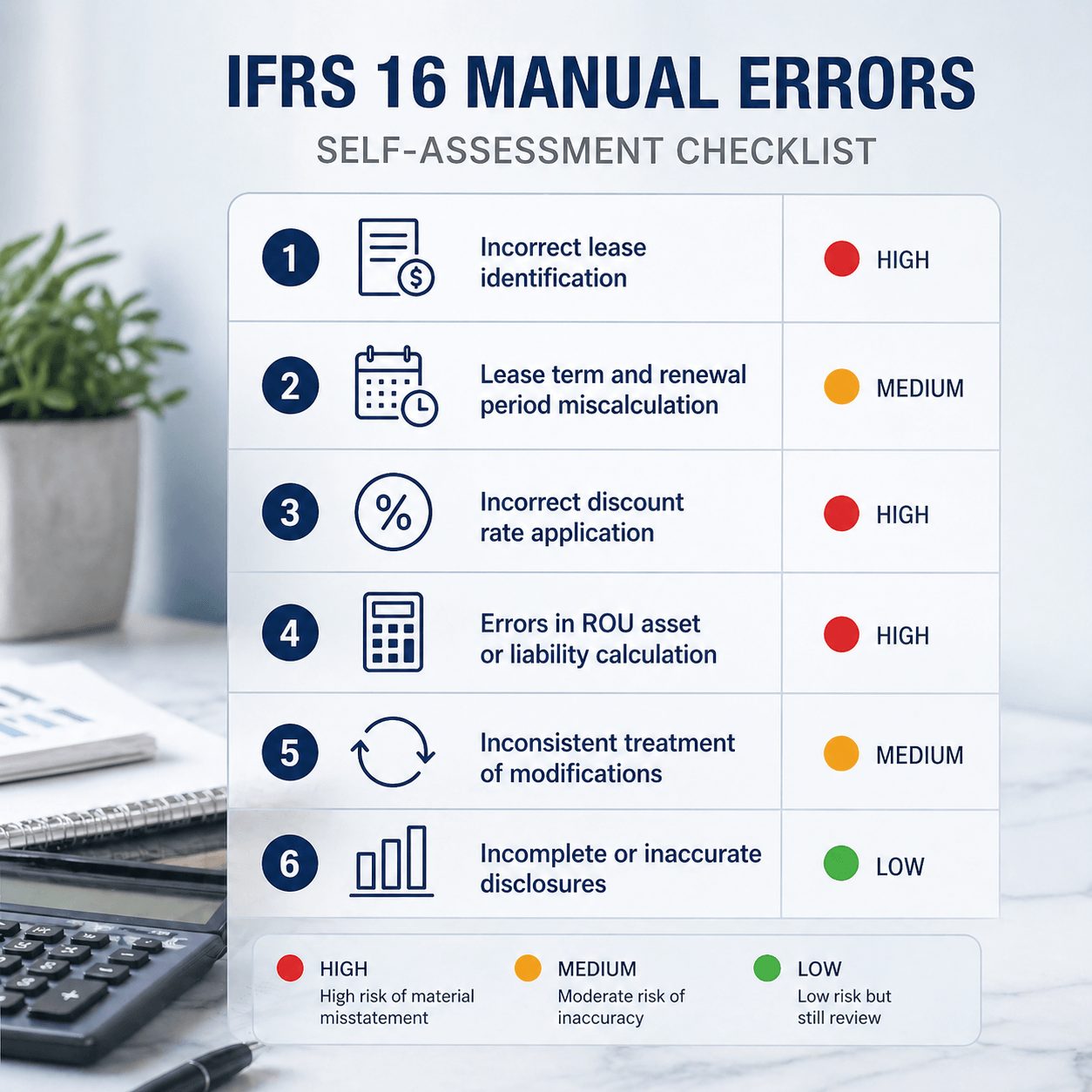
Six Errors Finance Teams Make in Non-Automated IFRS 16 Compliance
These aren’t theoretical. They come up consistently when organizations transition from manual processes to proper IFRS 16 lease management software. Every one of them has appeared in client portfolios that looked clean on the surface.
Missed Embedded Leases
This is a common gap in basic IFRS 16 lease management software setups. An embedded lease exists when a service or supply contract gives your organization control over a specific identified asset. These can be buried inside IT services agreements, logistics contracts, or outsourcing arrangements. If no one in your organization is systematically reviewing contracts for embedded leases, some will get missed. Missed leases mean missing liabilities on the balance sheet. Full stop.
Wrong Lease Term Assumptions
The lease term under IFRS 16 isn’t just the contractual period. It includes extension options the lessee is reasonably certain to exercise. Most manual models use the contractual term because it’s the number that’s in the contract. “Reasonably certain” requires judgment, and that judgment needs to be documented, applied consistently, and reassessed when facts change. Spreadsheets don’t enforce that discipline.
Incorrect Component Separation
When a lease contract includes service charges, maintenance, or insurance alongside the lease element, IFRS 16 requires separation unless the practical expedient is elected. Treating the whole contract as a lease overstates both the right-of-use asset and the liability. This is one of the most common data errors in manual lease compliance processes, particularly for real estate leases where service charges are substantial.
Stale Discount Rates
This is the WACC problem described earlier, but it goes further. Even when organizations start with correct IBRs, those rates get stale. A lease entered three years ago at a rate of 4.2% may have a very different applicable IBR today, and remeasurement events require applying the current rate. Manual rate tables are rarely updated consistently.
Failing to Trigger Remeasurement
Remeasurement is required whenever lease terms change, when the lessee exercises an option that wasn’t included in the original assessment, or when rent changes due to an index or rate. The trigger recognition problem is perhaps the most insidious scaling error in IFRS 16 management tools, because in a spreadsheet, nothing automatically flags that a remeasurement event has occurred. Someone has to know, and act.
No Audit Trail for Judgments
I don’t have long-term audit outcome data specifically on this point, but every experienced IFRS auditor will tell you the same thing: undocumented judgments are the ones that generate queries. Discount rate selection, lease term assessment, low-value exemption application, each one requires a documented rationale. Spreadsheets don’t enforce this. Purpose-built IFRS 16 software does.
IFRS TECH’s advisory team has worked with organizations across GCC, Europe, and APAC through IFRS 16 transitions, including teams that discovered embedded leases accounting for millions in unrecognized liability during their first structured portfolio review. See how IFRS TECH approaches IFRS 16 reporting.
Are You Still Scaling IFRS 16 Compliance on Spreadsheets?
You might be. More organizations than you’d expect are still running their IFRS 16 lease management software process through Excel.
The lease accounting software market’s trajectory tells the story clearly: the global market is growing at 12.4% annually, according to market research from Growth Market Reports. Organizations aren’t moving to automated tools because it’s convenient. They’re moving because the manual alternative has stopped working at scale.
What does “not working” look like in practice? Finance teams spending days on month-end IFRS 16 close. Auditors sending back queries on IBR documentation. CFOs discovering liabilities that weren’t on the balance sheet. Year-end restatement conversations that should never happen.
Signs Your Current Process Is a Liability
Ask your team honestly:
- Can you produce a complete, timestamped audit trail for every IFRS 16 judgment made in the last 12 months?
- Are remeasurement events being consistently triggered and documented across all leases?
- Has anyone reviewed service contracts in the last year for embedded leases?
- Is your discount rate table current, and can you prove it?
If those questions produce hesitation, the process is already a liability. The question isn’t whether to fix it, but how quickly.
Transition Issues to Automated IFRS 16 Software: What to Expect
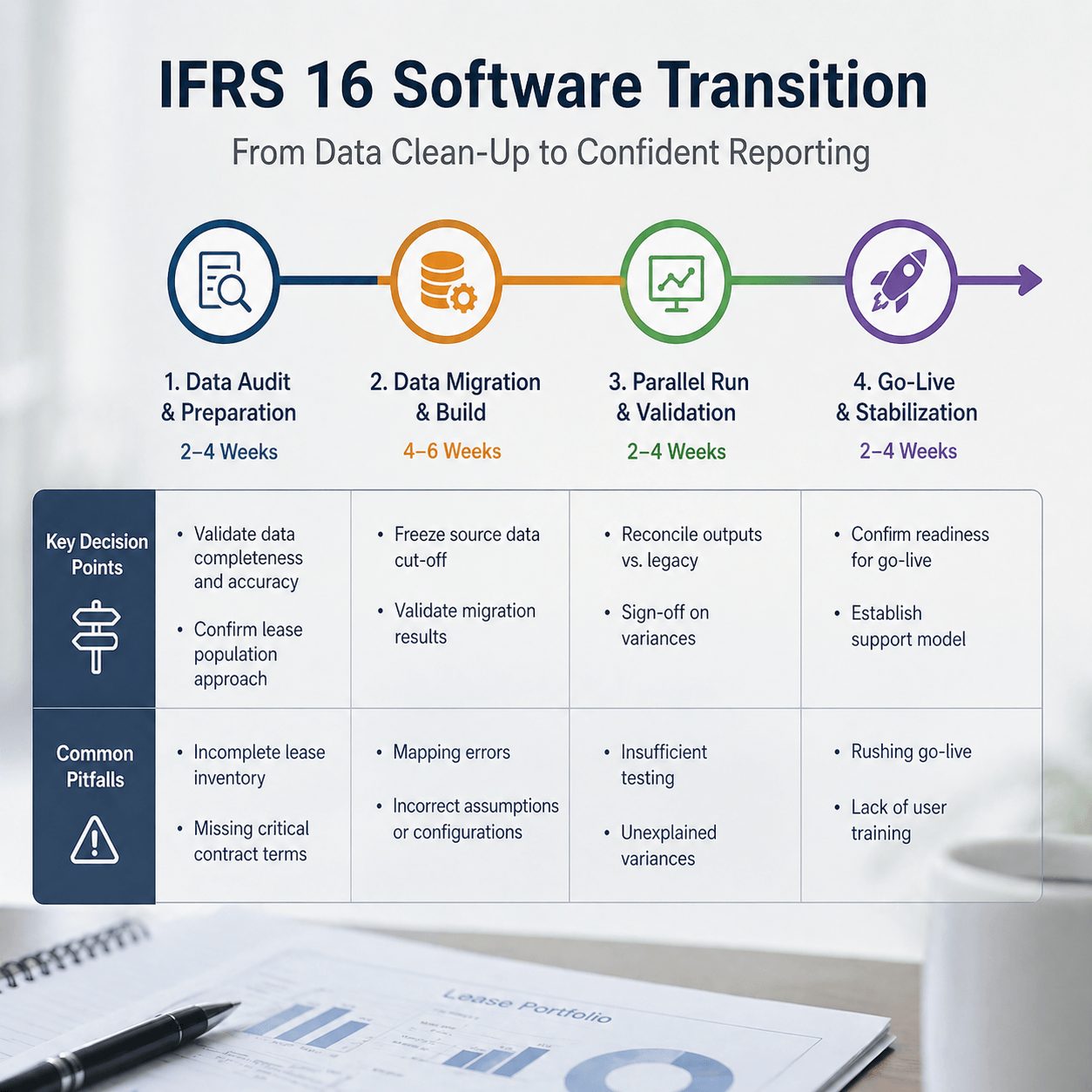
Here’s a counterintuitive point: the transition to proper IFRS 16 lease management software is often less painful than teams fear, but only when approached properly. The organizations that struggle with implementation almost always make the same mistake: they underinvest in the data migration phase and overinvest in software features they don’t need yet.
The right sequencing matters. Clean up your lease data first. Establish what’s in the portfolio, what the terms are, what judgments have been made, and what the current IBRs are. Then migrate. Trying to clean data inside a new system while simultaneously learning how it works is the formula for a painful transition.
Data Migration and Legacy System Gaps
Most legacy models used as IFRS 16 lease management software weren’t built for export. They were built for the person who built them. When migrating, expect to find inconsistencies in how lease terms were recorded, missing documentation for judgment calls, and IBRs that were applied without a clear trail of how they were derived.
None of that is unusual. But it does mean allocating proper time for the discovery phase. Enterprise-level deployments in this space typically require USD 500,000+ for full integration and training. That figure sounds large until you price what a restatement costs, in time, in audit fees, and in management bandwidth.
The regulatory issues in basic IFRS 16 tools compound quickly once portfolio size grows. There’s a tipping point, usually somewhere between 20 and 40 leases, where the manual approach creates more work than it saves. Most organizations pass that point and keep managing manually anyway, because change is friction. But friction isn’t free.
How Automated IFRS 16 Lease Accounting Software Removes These Risks
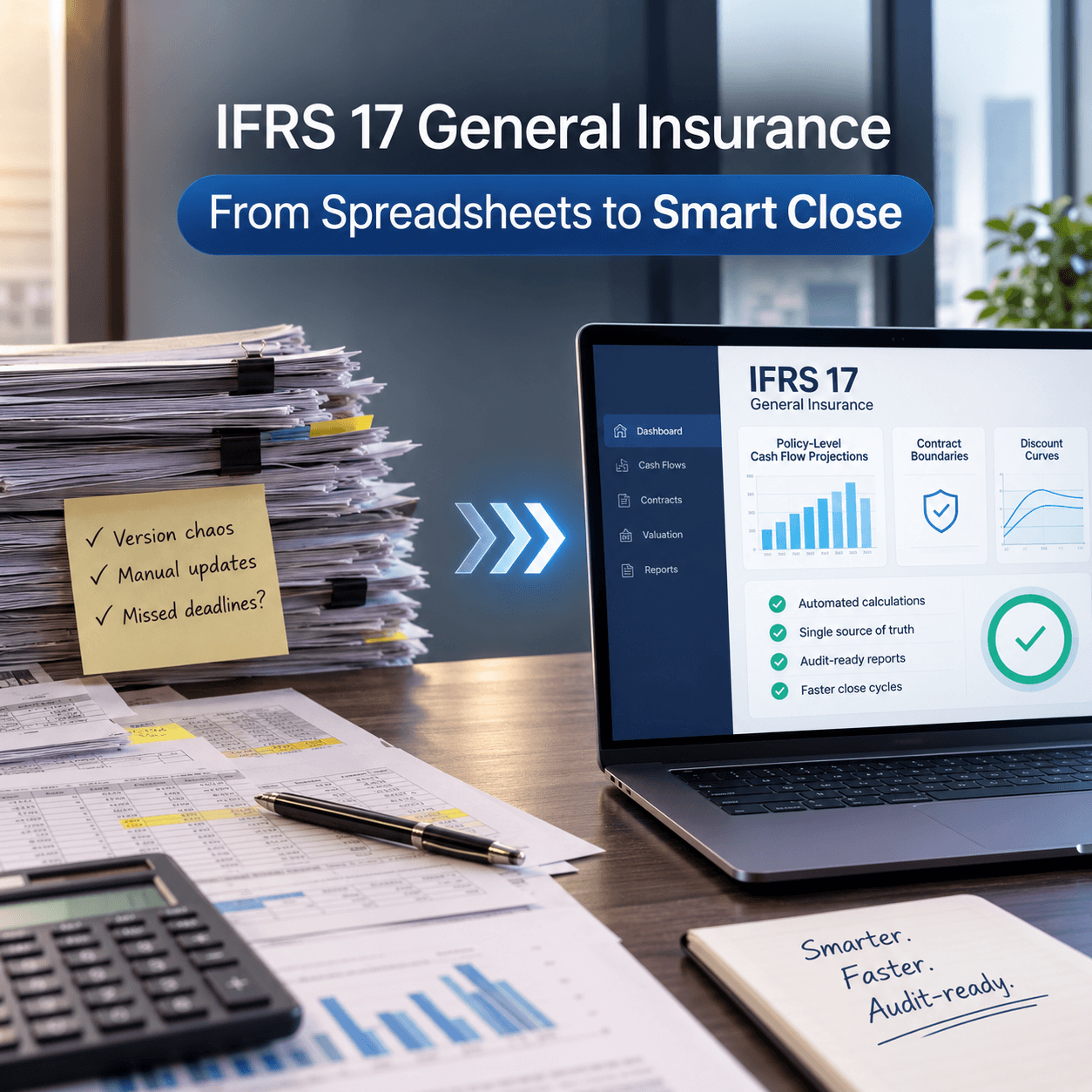
Purpose-built IFRS 16 lease management software doesn’t make IFRS 16 judgment calls disappear. The lease term decisions, the IBR assessments, the component separations, those still require professional expertise. What automation removes is the risk that a judgment, once made, gets applied inconsistently, forgets to trigger a remeasurement, or leaves no audit trail.
Purpose-built platforms calculate present values and amortization schedules automatically. They flag remeasurement events when contract terms change, store IBR rationale centrally and generate audit-ready disclosures in the format IFRS 16 paragraph 53 requires. That last point matters more than most teams realize, disclosure preparation in a manual model is often the last thing done and the first thing that gets cut when time is short.
Over 140 countries now operate under IFRS 16 or equivalent frameworks, and more than 70% of new software adopters are moving to cloud-based SaaS deployments, according to market analysis. The compliance errors from calculation failures in IFRS 16 that drive these decisions aren’t abstract risks, they’re the lived experience of finance teams that ran manual processes too long.
The right approach is automated calculation, centralized documentation, and embedded remeasurement triggers. That’s not aspirational. That’s table stakes for IFRS 16 compliance in 2026.
What You Now Know
- Manual IFRS 16 processes introduce systematic calculation errors, wrong discount rates, missed remeasurement events, and undocumented judgments, that build quietly into material misstatement risk.
- The six most common failures in non-automated IFRS 16 compliance are missed embedded leases, wrong lease term assumptions, incorrect component separation, stale IBRs, missed remeasurement triggers, and absent audit trails for judgments.
- Transitioning to automated IFRS 16 lease accounting software is not primarily a technology decision, it’s a risk management decision. The data migration phase determines whether it goes smoothly.
Stop finding errors in the audit, find them first.
IFRS TECH’s lease compliance team specializes in identifying calculation gaps in existing IFRS 16 processes across GCC, European, and APAC portfolios. See exactly where your exposure sits before your next reporting cycle.
See how IFRS TECH’s lease advisory team fixes IFRS 16 calculation risk →
Every organization managing leases under IFRS 16 faces the same underlying tension around its IFRS 16 lease management software: the standard demands precision, and precision demands systems that enforce it. Finance teams still running IFRS 16 lease management software decisions through manual models aren’t just accepting inconvenience, they’re accepting risk. And unlike many compliance risks, this one surfaces under exactly the conditions when it causes the most damage: during an audit, at year-end, when capacity is lowest and the cost of fixing problems is highest.
The answer isn’t to work harder on the spreadsheet. It’s to remove the spreadsheet from the equation.
Frequently Asked Questions
What are the most common errors in IFRS 16 lease management software?
The most common errors include using incorrect or outdated discount rates (such as applying WACC instead of the lessee’s incremental borrowing rate), missing lease modification remeasurement triggers, failing to identify embedded leases in service contracts, and incorrectly separating lease from non-lease components. Non-automated tools make every one of these errors more likely.
Why do manual IFRS 16 processes create misreporting risks?
Manual processes rely on individuals to remember when remeasurements are due, apply consistent judgments, and maintain documentation, without system-level enforcement. When contract terms change or IBRs need updating, there’s no automatic trigger. Errors accumulate silently until they become material misstatements at audit time.
How does non-automated IFRS 16 compliance affect audit readiness?
Auditors assess IFRS 16 judgment areas closely, discount rate rationale, lease term decisions, component separation. Without a centralized audit trail, finance teams can’t efficiently prove how numbers were derived. This extends audit timelines, increases queries, and in some cases triggers restatement conversations that could have been avoided with a proper audit trail.
When should an organization migrate from spreadsheets to IFRS 16 lease accounting software?
The practical threshold is around 20 to 40 leases, or whenever the portfolio includes cross-currency exposures, index-linked rent adjustments, or frequent modifications. At that scale, spreadsheet models create more compliance risk than they manage. The cost of migration is consistently lower than the cost of a single material misstatement.
What transition issues should teams expect when moving to automated IFRS 16 software?
The primary challenge is data migration quality. Legacy spreadsheet models rarely export cleanly, IBR rationale is often undocumented, judgment calls aren’t timestamped, and lease data may be inconsistently structured. Allocating proper time for data discovery before migration, not during it, is the single factor that most determines whether the transition goes smoothly.