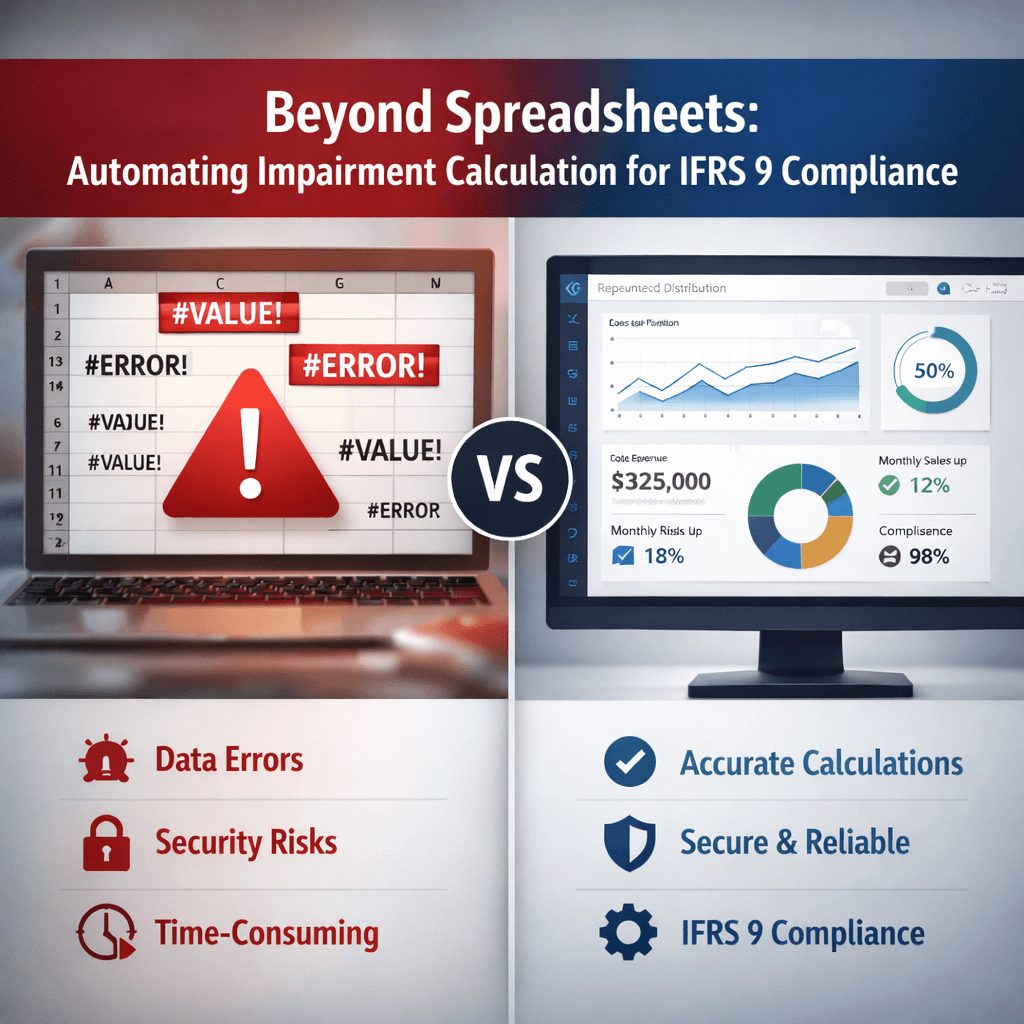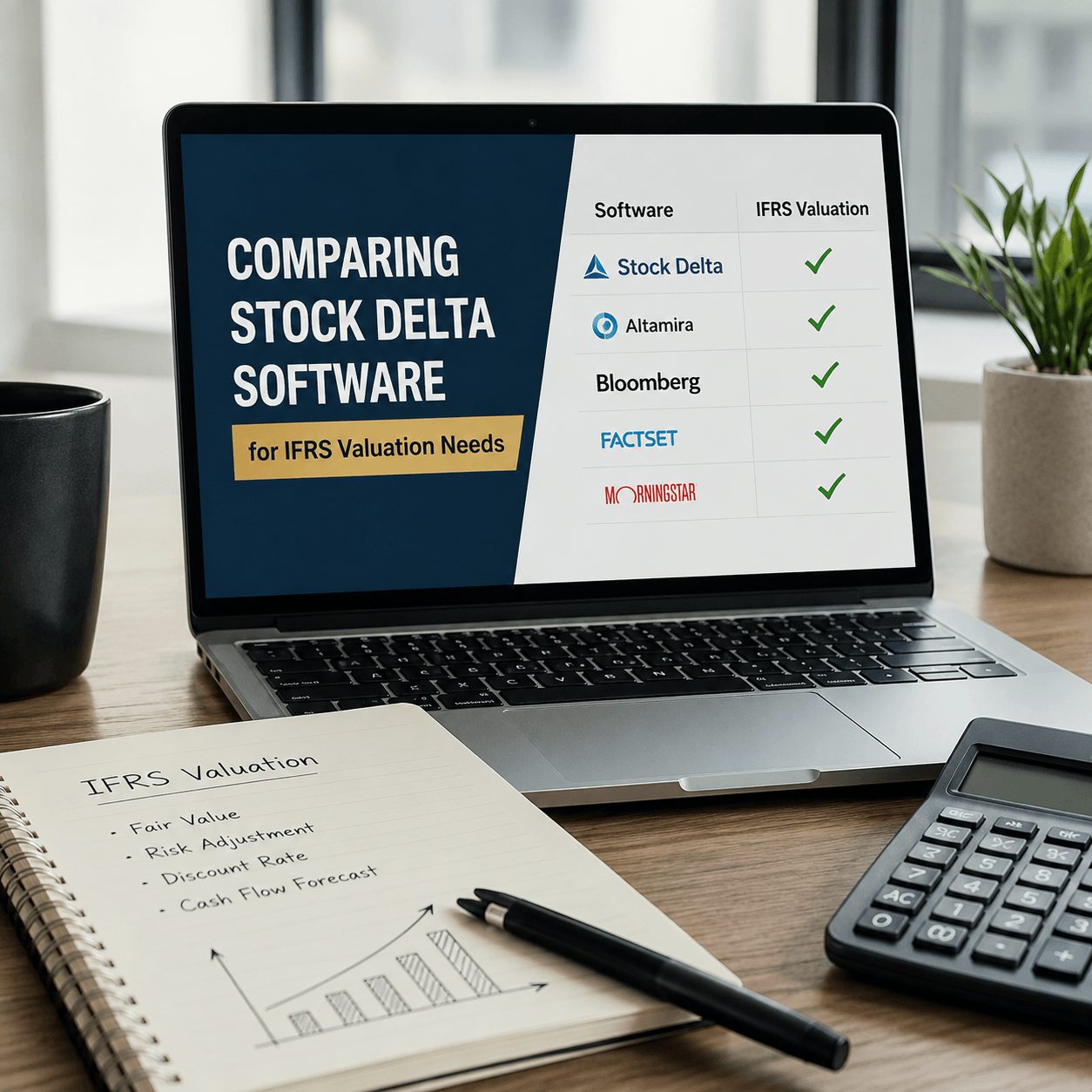
Finance and accounting teams evaluating delta accounting software for IFRS compliance in 2025 need more than a vendor feature list. Here is what to actually test.
✓ Written by IFRS TECH’s advisory team · ✓ Serving GCC, Europe & APAC · ✓ Actuaries + CPAs + CFAs
TL;DR
Choosing the right IFRS stock valuation software comes down to delta accuracy under IFRS 2, IFRS 9, and IFRS 13. This article compares stock delta software approaches, examines where delta accounting software fails in real audits, and shows what purpose-built delta software solutions do differently. You’ll also find cost comparisons, integration criteria, and the build-vs-buy answer given directly. Read this before you sign any vendor contract.
Your IFRS Stock Valuation Software Is Only as Good as Its Delta
In 2024, one in four companies failed to provide sufficient disclosures on the valuation assumptions behind their share-based payment fair values. That’s not a documentation problem. That’s a software and process failure.
The Financial Reporting Council reviewed 20 listed companies with significant share-based payment expenses, covering year-ends from September 2024 to February 2025. What it found wasn’t surprising to anyone who has seen how most teams actually run these valuations. The issues were basic: unsubstantiated volatility inputs, missing risk-free rate justifications, no opening-to-closing equity reserve reconciliations.
Most companies weren’t using the wrong valuation model. They were using the right model badly, with inputs that couldn’t be traced and systems that couldn’t produce a clean audit trail. That’s exactly where IFRS stock valuation software either earns its place in your reporting stack or exposes your team to regulatory scrutiny.
Here’s what this article covers:
- How to compare stock delta software on criteria that actually matter for IFRS compliance
- Where delta accounting software breaks down under real audit conditions
- Build vs. buy for IFRS delta solutions, with real cost considerations included
Quick Diagnostic: Does your current IFRS stock valuation software produce a full, traceable audit trail for delta inputs across IFRS 2, IFRS 9, and IFRS 13? Can your team re-run the same valuation a week later and get the same result?
If you’re uncertain about either question, that uncertainty is the answer. And it’s worth addressing before your next reporting cycle, not after.
What “Delta” Really Means in an IFRS Valuation Context
Most people hear “delta” and think of the Greek letter from options pricing. That’s right, but incomplete when you’re selecting IFRS stock valuation software.
In options pricing, delta measures how much an option’s value changes per unit move in the underlying stock price. That sensitivity number sits at the center of IFRS 2 fair value calculations for employee stock options. Get it wrong and your share-based compensation expense is wrong. Your deferred tax is wrong. Your diluted EPS is wrong.
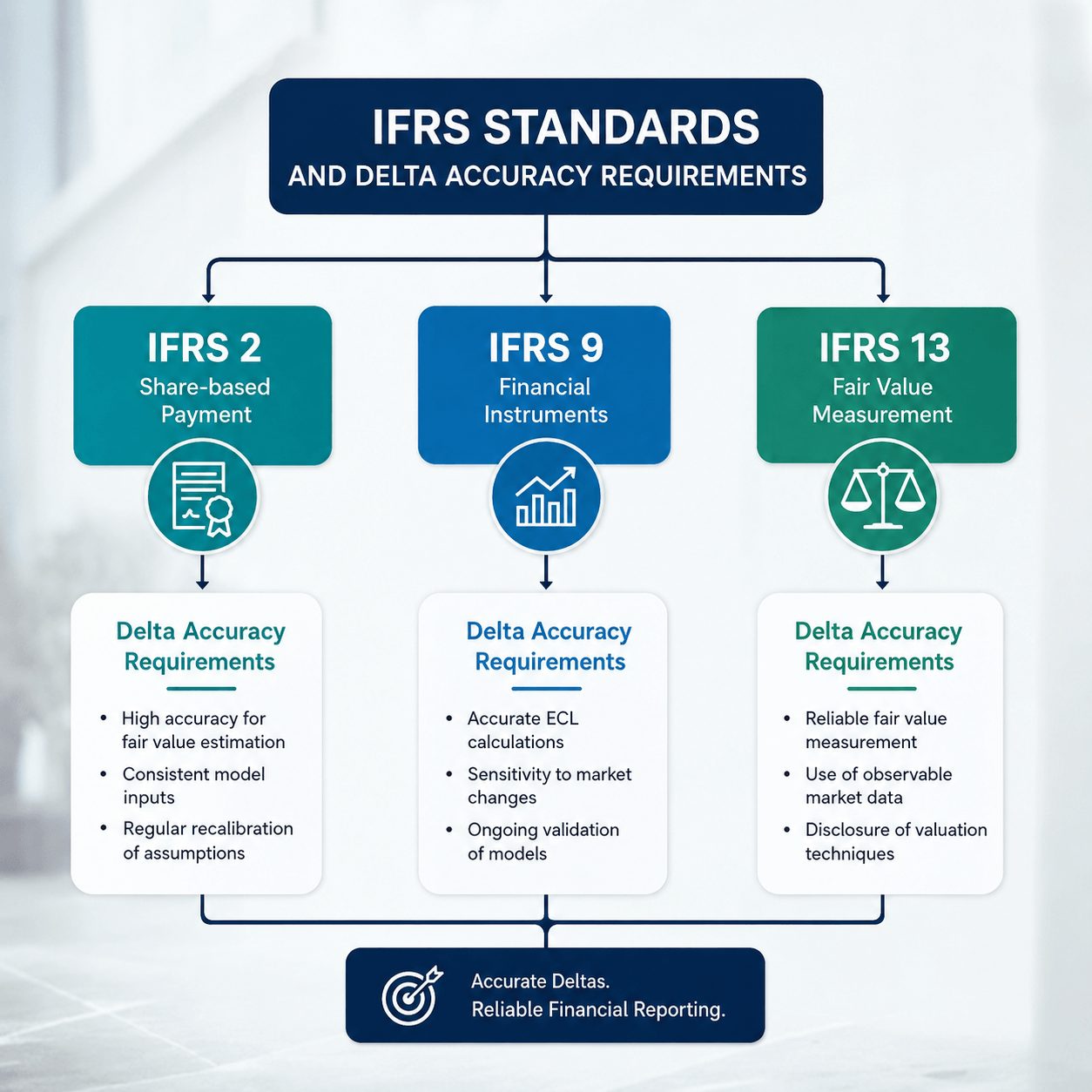
Delta also appears in IFRS 9 hedge effectiveness testing, where you track changes in fair value between the hedging instrument and the hedged item. Under IFRS 13, the disclosure requirements for Level 2 and Level 3 fair value inputs mean delta data has to be traceable, documented, and reproducible across reporting periods.
That’s three standards. Most stock delta software is built to handle one of them well.
And that’s the problem most teams discover too late.
IFRS 2 and IFRS 13: Where Delta Accuracy Fails Most
IFRS 2 requires entities to measure the fair value of equity-settled awards at grant date. That calculation typically runs through Black-Scholes, a binomial lattice model, or Monte Carlo simulation. Which model your IFRS stock valuation software supports, and how well it implements each one, determines whether your IFRS 2 disclosures hold up.
Black-Scholes assumes constant volatility. Monte Carlo lets you simulate thousands of price paths. The binomial lattice handles early exercise features that Black-Scholes can’t model. These aren’t interchangeable. A tool that only offers Black-Scholes is not adequate for performance share plans with market conditions.
IFRS 13 adds another layer. Fair value measurement requires sensitivity disclosures for Level 3 inputs, which are effectively delta-based calculations showing how the fair value changes under different assumptions. If your delta accounting software can’t generate those sensitivity tables automatically, someone on your team is building them in a spreadsheet.
That’s where things go wrong. Full stop.
See how IFRS TECH’s Enterprise Reporting Solutions team handles multi-standard IFRS valuation workflows for clients across GCC, Europe, and APAC.
How to Compare Stock Delta Software for IFRS Needs
There is no single “best” delta accounting software. That’s not a hedge. It’s an honest starting point, because the right tool depends on which IFRS standards you report under, how complex your equity plan structures are, and whether you need integrated document capture and audit trail features.
That said, there are four things that separate credible IFRS stock valuation software from tools that will eventually cost you more than their license fees.
Valuation Model Coverage: Not All Delta Tools Are Equal
The minimum for any stock delta software doing IFRS 2 work is this: Black-Scholes with dividend adjustments, a binomial lattice for options with early exercise provisions, and Monte Carlo for performance-based awards with market conditions.
Most delta software solutions you evaluate will support Black-Scholes. Fewer than half will support binomial models with proper early exercise calibration. Monte Carlo with correlated underlying inputs is rarer still. Ask vendors for technical model documentation, not a sales deck. If they can’t produce model specifications in writing, they’re not ready for IFRS 13 Level 3 disclosure requirements.
KPMG’s IFRS share-based payments handbook, updated in 2024, dedicates a full section to valuation model selection and the documentation requirements around inputs. If your delta accounting software doesn’t produce outputs that match what KPMG’s handbook identifies as disclosure-ready, you have a gap that your auditor will find before you do.
What the FRC’s 2025 Thematic Review Found
You might think that large listed companies with dedicated finance teams would have IFRS 2 delta accuracy handled. The FRC’s 2025 thematic review suggests otherwise.
The review flagged a consistent pattern: companies using generic or spreadsheet-based stock delta software consistently failed on disclosure completeness. Not because they ran the wrong model. Because they couldn’t document why they chose the inputs they did, or show how those inputs would change the output if adjusted.
That’s the core of an IFRS 13 sensitivity disclosure. And it’s the core of what purpose-built IFRS stock valuation software handles automatically, but what generic tools leave to manual effort and individual judgment.
The business valuation service market reached $12.8 billion globally in 2025. IFRS standards are required in more than 140 jurisdictions. The market for compliant, accurate valuation software is real, growing, and being served by tools at very different quality levels.
Take IFRS TECH’s 5-question Valuation Readiness Assessment
Find out whether your current IFRS stock valuation software covers the delta accuracy and audit trail requirements that the FRC’s 2025 review flagged as high-risk. Takes under five minutes.
Build vs. Buy for IFRS Delta Solutions: Which Path Wins?
You might think building your own IFRS delta solution gives you more control. In my experience, it mostly gives you more maintenance and a system only two people understand when one of them leaves the business.
When Spreadsheets and Generic Tools Become a Liability
Spreadsheet-based stock delta software has one real advantage: the first version costs almost nothing. Everything after that is the problem.
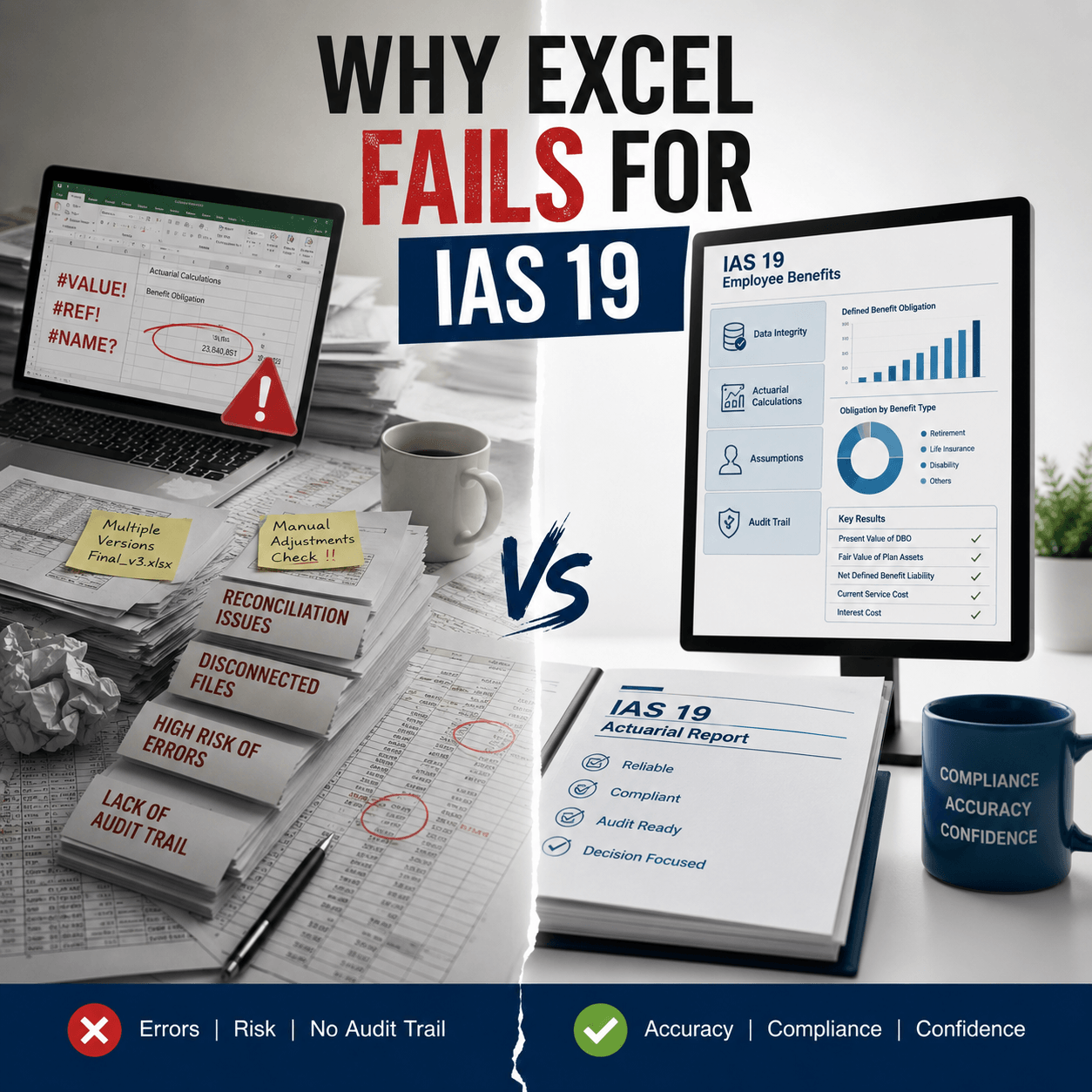
When a Black-Scholes model lives in Excel, the audit trail is a comment in a cell. Version control is a filename like “Options_Valuation_v4_FINAL_useThisOne.xlsx”. Documentation is the memory of whoever built the model, and that person may no longer work for you.
Generic ERP modules have a different problem. They’re built for transaction processing, not valuation science. They record the output of a calculation, but they don’t help you justify the inputs, run sensitivity analysis, or produce the disclosure tables that IFRS 13 requires.
This is the most common thing teams tell us when they switch to purpose-built IFRS stock valuation software. The delta accounting software they cobbled together worked, until it didn’t, and no one could explain how it worked to the auditor. That’s a painful conversation to have after the fact.
What Purpose-Built Delta Software Solutions Actually Deliver
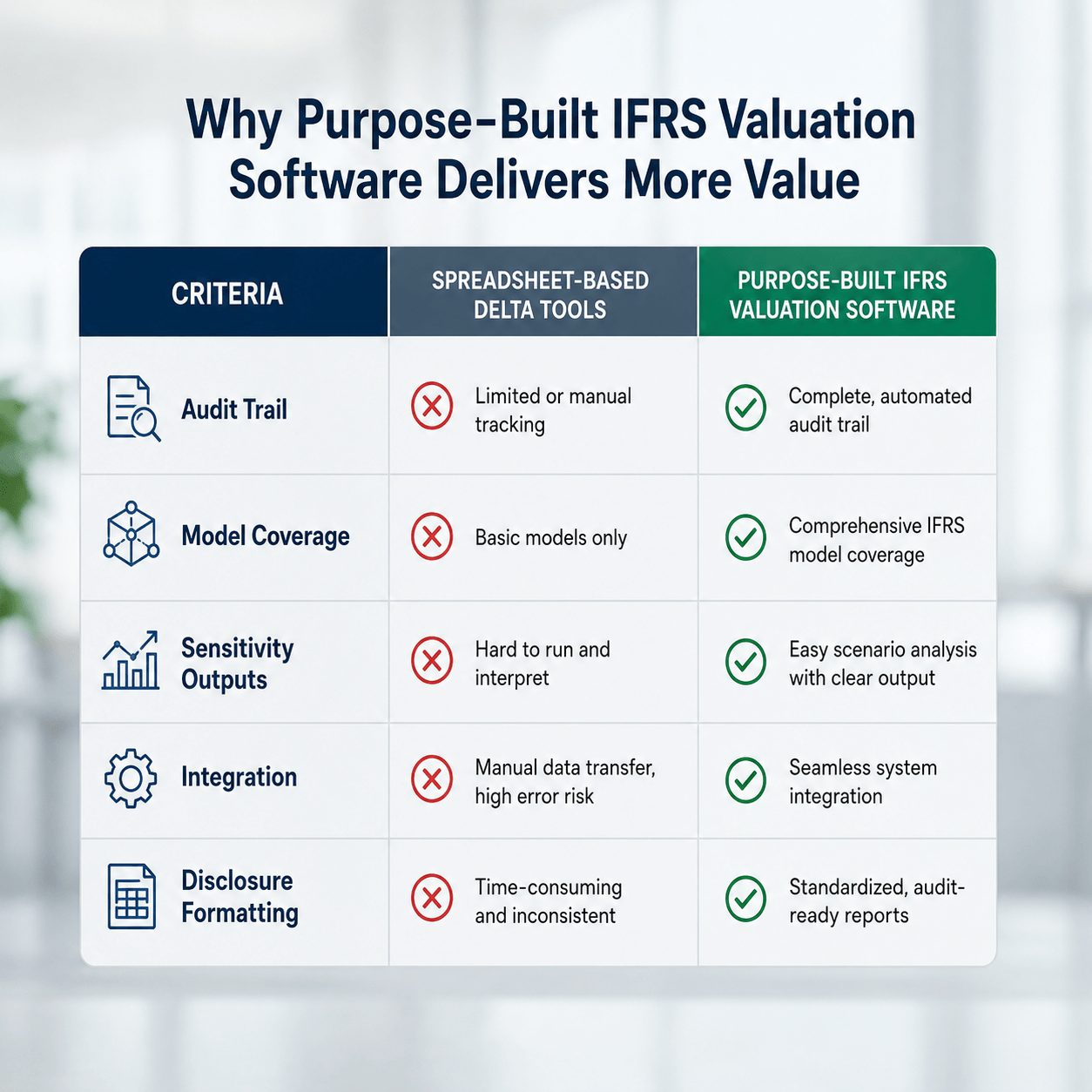
Good delta software solutions handle four things that generic tools don’t:
- Model transparency: every assumption documented, versioned, and linked to its disclosure output, not buried in a cell reference
- Multi-standard coverage: IFRS 2 valuation, IFRS 9 hedge effectiveness, and IFRS 13 sensitivity tables from a single data set, not three separate tools
- Audit-ready outputs: reports formatted to match what regulators and auditors expect, not what a developer thought was logical
- Integration capability: direct feeds into your GL, your consolidation platform, and your financial reporting platform without manual re-entry at any step
That last point matters more than most teams realize until they’re reconciling two systems at 11pm the night before a reporting deadline.
Beyond the License: Real Cost Approaches for Delta IFRS Tools
The license fee is the smallest cost you’ll pay when switching to new delta accounting software. The real cost is implementation time, staff retraining, integration work, and the time your team spends maintaining something the vendor should be maintaining for you.
The global financial reporting software market grew from USD 14.60 billion in 2024 to USD 16.54 billion in 2025, at a CAGR of 13.71%. That growth reflects a real shift away from fragmented, single-standard tools toward integrated platforms that handle compliance across multiple IFRS standards from one environment.
Budget for that shift properly. A mid-sized company running IFRS 2 valuations for a 500-person equity plan, IFRS 9 hedge accounting, and quarterly IFRS 13 fair value disclosures should expect six to twelve weeks of implementation work for a proper IFRS stock valuation software rollout. Underestimate this and you’ll end up with a powerful platform your team doesn’t trust because it was configured wrong.
Integration and Audit Trails Under IFRS
Most software evaluations skip integration. That’s a mistake.
Your IFRS stock valuation software doesn’t sit alone. It receives input data from HR systems, equity management platforms, or cap table tools. It sends output data to your consolidation tool and general ledger. Any manual step in that data flow is a control gap and a potential audit finding.
For IASB hedge accounting specifically, integration requirements are tighter still. Hedge designation documentation, effectiveness testing results, and reclassification entries all have to be linked and traceable across periods. See how IFRS TECH’s IASB hedge accounting software handles these integration requirements in practice.
Ask any vendor you evaluate this directly: what does the full data flow look like from source system to disclosure output? If the answer involves a manual export at any point, that’s the answer you needed.
Document Scanning Software Delta: Data Capture in Practice
Most delta accounting software evaluations focus entirely on calculation engines and model coverage. Far fewer teams think about document scanning until a year into implementation, when they realize half their input data still lives in PDFs.
Grant agreements, vesting schedules, plan modifications, and board resolutions all feed directly into IFRS 2 valuations. If your document scanning software delta workflow requires manual data entry, every input is a risk. Purpose-built IFRS stock valuation software either integrates with document capture tools or includes its own structured intake layer for plan document data.
Any company running more than one equity plan type, or operating across more than one jurisdiction, has a document management problem embedded inside its delta software solutions. That problem doesn’t disappear with a better calculation engine. It requires a complete data capture approach, not just a smarter model.
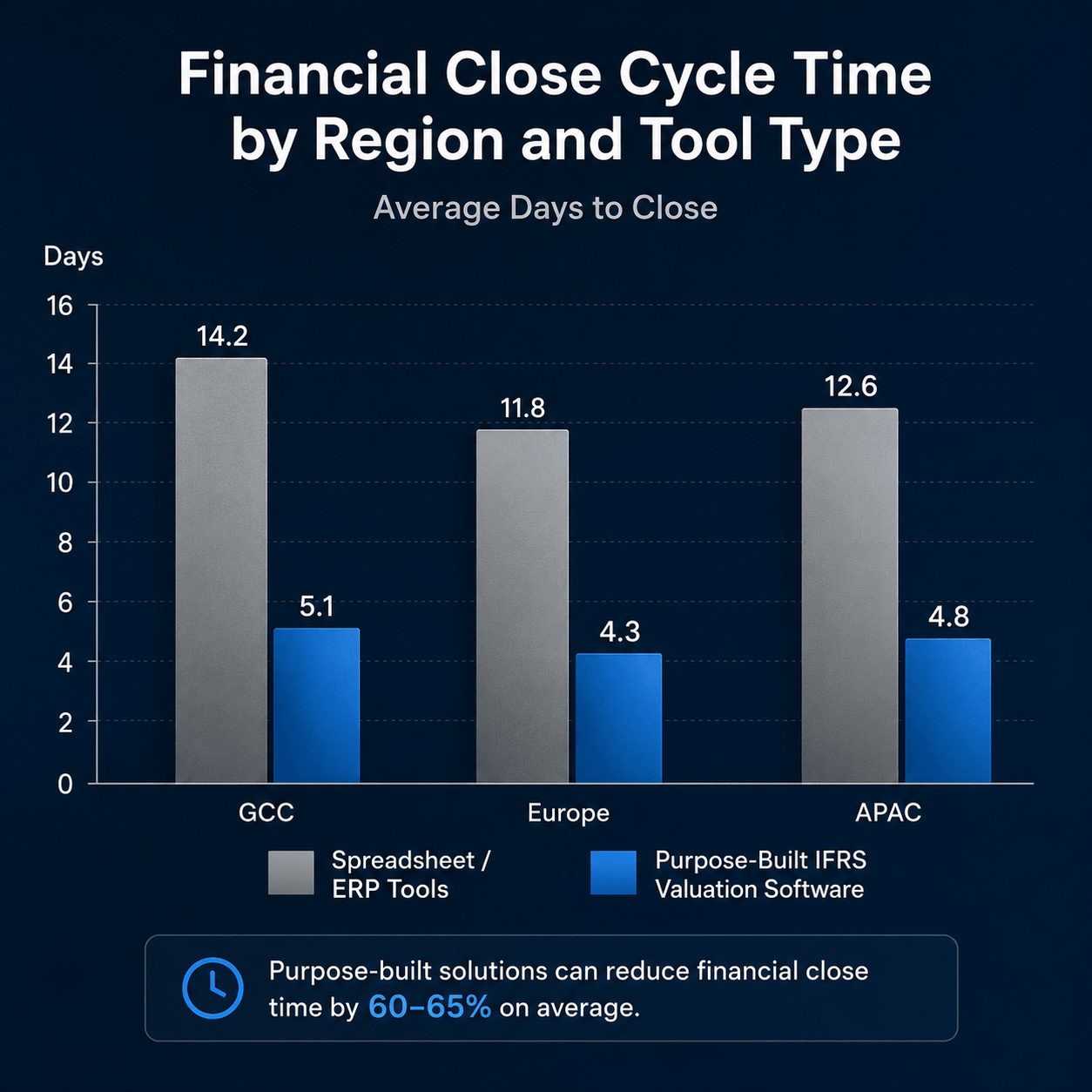
IFRS TECH clients using the platform’s integrated valuation and reporting tools report a 70% reduction in financial close cycle time for IFRS 17 obligations, with comparable time savings documented for IFRS 2 equity plan reporting workflows.
Efficiency Comparisons in Stock Software Valuation
Speed matters, but not the way vendors usually pitch it. The real gain from good stock delta software isn’t faster calculations. It’s fewer review cycles.
The most expensive part of a stock valuation workflow isn’t running the model. It’s the back-and-forth that follows: the CFO who questions an input, the auditor who wants sensitivity analysis in a different format, the finance team member who has to re-run everything because one grant date was entered incorrectly three steps upstream.
Good IFRS stock valuation software cuts those cycles, not just processing time. That means fewer auditor questions, faster sign-off, and less time defending numbers that should be self-evidently correct because the documentation is right there.
The difference between a two-day close and a six-day close usually isn’t computing power. It’s traceability. And that’s a software selection decision, not a headcount one.
Getting IFRS Stock Valuation Software Right Before the FRC Looks
I’ll be direct about one limit: there’s no long-term comparative dataset that benchmarks every IFRS stock valuation software product on the market against each other across all three relevant standards simultaneously. Anyone telling you otherwise is selling something, not reporting research.
What I can point to are the indicators that distinguish well-designed delta software solutions from ones that will let you down in a review. Model transparency. Multi-standard output coverage. Audit-ready formatting. Clean integration architecture. Those four criteria are not aspirational, they’re the baseline.
IFRS TECH’s share plan valuations and accounting capability handles IFRS 2 valuation from grant date through modification through expiry, with every assumption logged and disclosure-ready output generated automatically. The platform’s delta software solutions cover the full valuation cycle without manual re-entry between systems.
The Big Four firms collectively hold 41.2% of the global business valuation market. IFRS standards are mandatory in more than 140 jurisdictions worldwide. The regulatory pressure on getting IFRS stock valuation software right is not decreasing. The FRC review covering 2024-2025 year-ends was not the last one.
The question isn’t whether you need proper software. It’s whether what you have right now will hold up when your regulator looks. And that question is best answered before they do.
What You Now Know
- Delta accuracy under IFRS 2, IFRS 9, and IFRS 13 requires software built for valuation science, not general transaction processing or spreadsheet workarounds
- The FRC’s 2025 thematic review found systemic share-based payment disclosure failures, most of them traceable to inadequate stock delta software and manual input processes
- The real cost of deploying IFRS stock valuation software is implementation and integration, not the license fee
The conversation about delta accounting software has shifted. It’s no longer “do we need something better?” The FRC review answered that. Now it’s which IFRS stock valuation software actually meets the standard, and whether the delta software solutions you’re evaluating have been tested against IFRS 2, IFRS 9, and IFRS 13 requirements, not just named after them in a brochure.
If you’re comparing tools right now, test two things first: audit trail completeness and multi-standard output formatting. Everything else is a secondary decision. Get those two right and the rest of the software comparison becomes straightforward.
See how IFRS TECH’s valuation team handles delta accuracy across IFRS 2, IFRS 9, and IFRS 13
We work with finance teams in the GCC, Europe, and APAC to implement IFRS stock valuation software that passes audit review and closes on time. Our advisory team includes actuaries, CPAs, and CFAs who have built and audited the systems you’re evaluating.
Frequently Asked Questions
What is the difference between stock delta software and standard IFRS valuation tools?
Stock delta software specifically handles delta sensitivity calculations for options and financial instruments under IFRS. Standard valuation tools may cover fair value generally but often lack the model-level transparency required for IFRS 2 share-based payment disclosures and the IFRS 13 Level 3 sensitivity reporting that regulators now expect as a baseline.
How do I compare delta accounting software for IFRS 2 compliance?
Compare on four criteria: valuation model coverage (Black-Scholes, binomial lattice, Monte Carlo), audit trail completeness, disclosure output formatting, and integration with your reporting stack. Any vendor unwilling to provide technical model documentation in writing is not ready for IFRS 13 requirements.
Is document scanning software delta capability important in IFRS valuation workflows?
Yes. Grant agreements, plan modifications, and vesting schedules feed directly into IFRS 2 valuations. Without structured document capture built into your delta software solutions, you’re keying data manually, which creates accuracy risk and breaks the audit trail that regulators expect to see.
Which valuation approaches work best when comparing delta IFRS tools against each other?
Test each tool against a real equity plan with a modification event and a market condition. That scenario exposes the weakest point of most stock delta software: the ability to handle non-standard vesting features while maintaining a clean, traceable output for IFRS 2 and IFRS 13 disclosures simultaneously.
How does IFRS 13 affect the selection of IFRS stock valuation software?
IFRS 13 requires sensitivity disclosures for Level 3 fair value measurements. Those disclosures are delta-based calculations showing how the fair value changes under different input assumptions. Your IFRS stock valuation software must generate those tables automatically in disclosure-ready format. If it doesn’t, your team is producing them manually, which is both slow and prone to error.