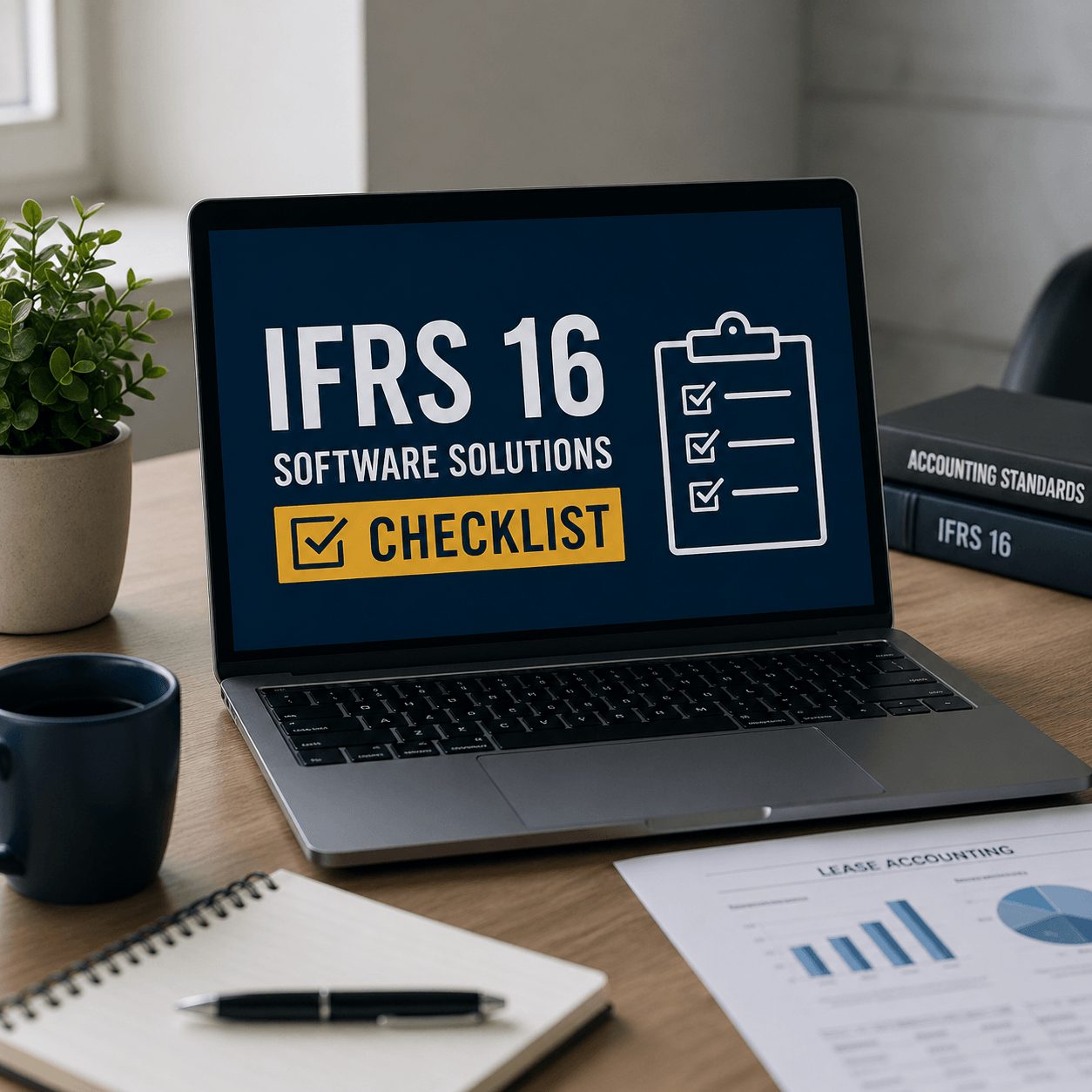
Ifrs 16 software solutions: Provider Checklist 2026
Finance teams selecting Ifrs 16 software solutions in 2026 face a narrower margin for error than ever, with integration gaps and missed update cycles costing companies audit cycles and restatements.
✓ Written by IFRS Tech’s advisory team · ✓ Serving GCC, Europe & APAC · ✓ Actuaries + CPAs + CFAs
TL;DR
Selecting the right Ifrs 16 software solutions comes down to three things most shortlists miss: lease-specific calculations, real ERP integration, and a vendor who updates the platform when the standard shifts. This checklist covers the lease features you must verify, integration questions you should ask before signing, and red flags that signal a vendor isn’t ready for your portfolio. Use the checklist at the end to score providers side by side. Don’t finalize your selection without running it.
Why Most IFRS 16 Software Decisions Go Wrong From the Start
Here’s what actually happens. A finance team shortlists three vendors based on demo impressions and pricing. They check compliance badges, review a feature list, and pick the one with the best interface. Six months later, they’re manually reconciling ERP postings because the integration was third-party middleware that broke during an SAP upgrade.
It’s a pattern. And it’s not rare.
The global lease accounting software market was valued at roughly USD 1.85 billion in 2024, with projections to reach USD 5.31 billion by 2033. Vendors proliferate faster than evaluation frameworks. Most buying decisions still rely on generic checklists not built for the specific demands of ifrs 16 software solutions.
What this article covers:
- The lease-specific features your software must handle natively, not through workarounds
- Integration and ERP connectivity criteria , including what to ask when systems upgrade
- A scored checklist you can use directly in your vendor evaluation
One admission upfront: I don’t have long-term comparative data on every vendor in this market. What I do have is a clear picture of the technical requirements that separate compliant implementations from expensive ones. That’s what this checklist is built on.
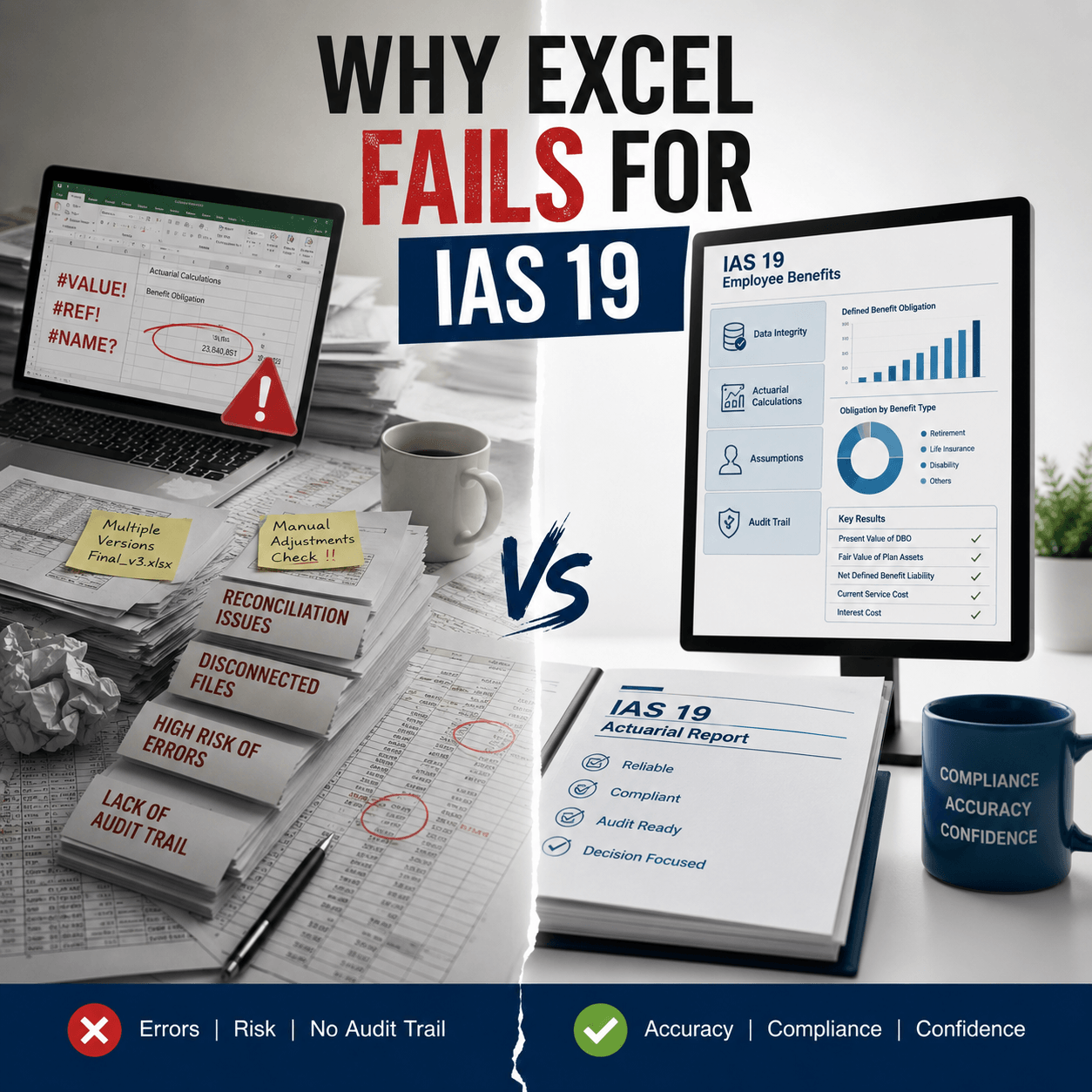
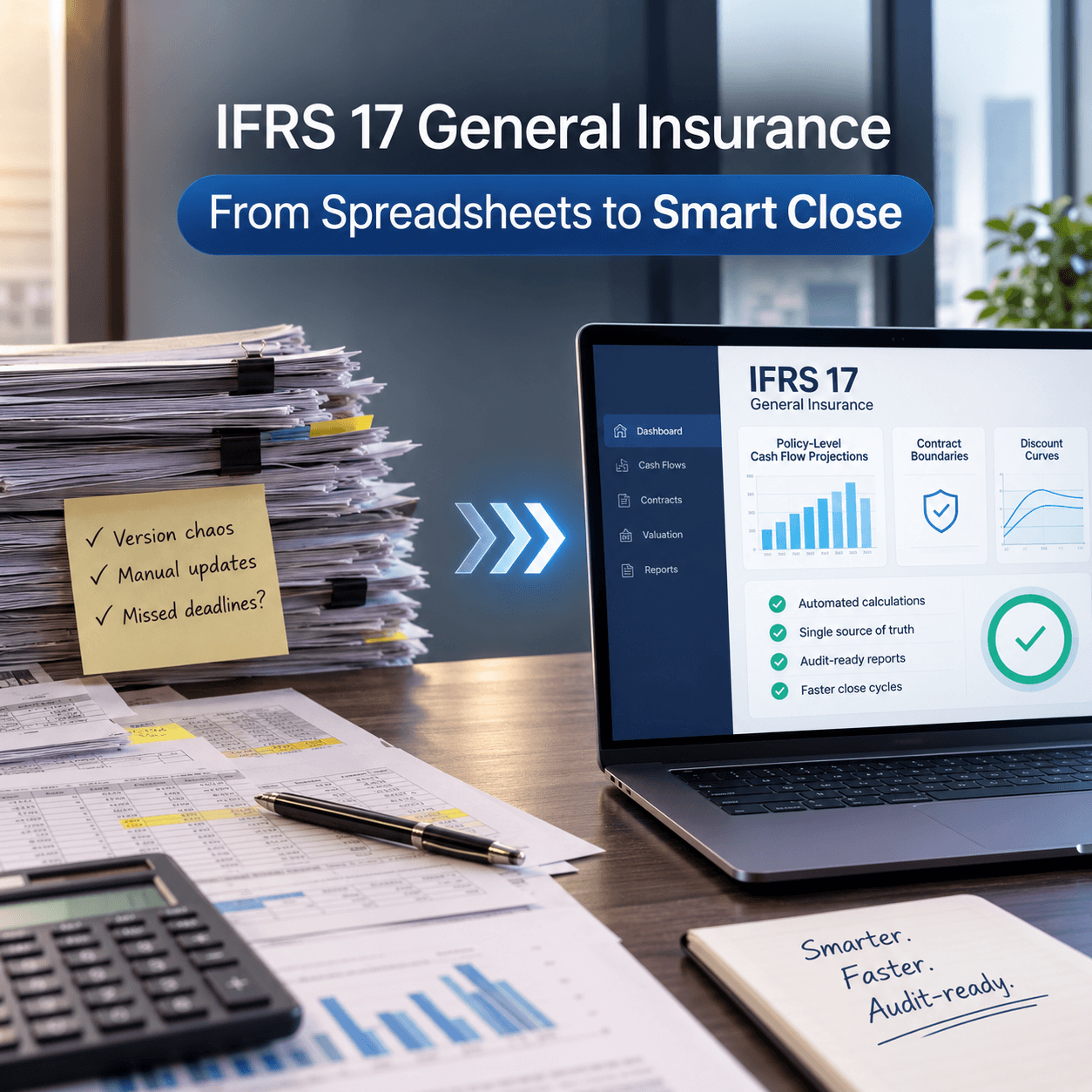
Can your current system handle a lease extension, partial termination, or rate change and produce a traceable auditor-ready output without manual steps? If the answer involves running the adjustment in Excel first, you’re working around a software gap, not with a software solution.
What Does Your Ifrs 16 software solutions Actually Need to Do?
IFRS 16 requires lessees to recognize a right-of-use (ROU) asset and a corresponding lease liability at commencement. It requires remeasurement when lease terms change, when index or rate adjustments occur, and when modification events trigger new calculations. Any Ifrs 16 software solutions claiming compliance must handle all of this automatically. Not through a workaround. Not with a spreadsheet export.
You might assume every shortlisted vendor covers these basics. Most don’t, not fully. Modification accounting is where gaps appear most often, and it’s exactly where auditors look first.
Lease-Specific Features That Cannot Be Negotiated Away
There are five capabilities that must exist natively. Not through a plugin. Not through an integration with a secondary tool. In the core platform.
- Initial recognition at present value — automatic lease liability calculation using the IBR, with a full audit trail back to the inputs used.
- ROU asset depreciation schedules — generated automatically at commencement, updated on modification, tied to the liability schedule without manual syncing.
- Modification event handling — the platform must distinguish between modifications that create a new lease and those that adjust the existing one, and apply the right treatment automatically. Not leave it to the user.
- Multi-currency and multi-entity support — for any business operating across more than one jurisdiction. See how IFRS 16 lease accounting applies differently across GCC, European, and APAC reporting structures.
- Short-term and low-value exemptions — applied automatically based on contract parameters, not via a manual flag for each lease.
Ask vendors to demonstrate each one of these in a live environment with real data, not a curated demo dataset. The quality of the demonstration tells you more than the feature list does.
Modification and Remeasurement Handling: The Stress Test
This is where most platforms fall short. Full stop.
When a lease is extended, partially terminated, or renegotiated, IFRS 16 requires remeasurement of the lease liability using a revised IBR at the modification date. Every change must be logged: effective date, old and new terms, revised calculation outputs. Your auditors will want that trail. If the vendor can’t demonstrate it clearly, stop the conversation there.
For a technical walkthrough of modification accounting treatment, the IFRS 16 lease modification accounting guide from Prima Consulting is worth reviewing before vendor demos.
See how IFRS Tech’s IFRS 16 compliance software tools advisory team approaches vendor scoring , including the modification accounting stress test we use with clients across GCC and Europe. Request the evaluation framework →
Integration Features That Separate Viable Tools From Expensive Headaches
About 78% of organizations list ERP connectivity as a top purchase criterion when selecting lease accounting software. That number makes sense. What doesn’t make sense is how rarely teams ask the right integration questions during vendor demos.
“Integrates with SAP” is not enough. You need to know how.
ERP Connectivity: SAP, Oracle, NetSuite, and Dynamics 365
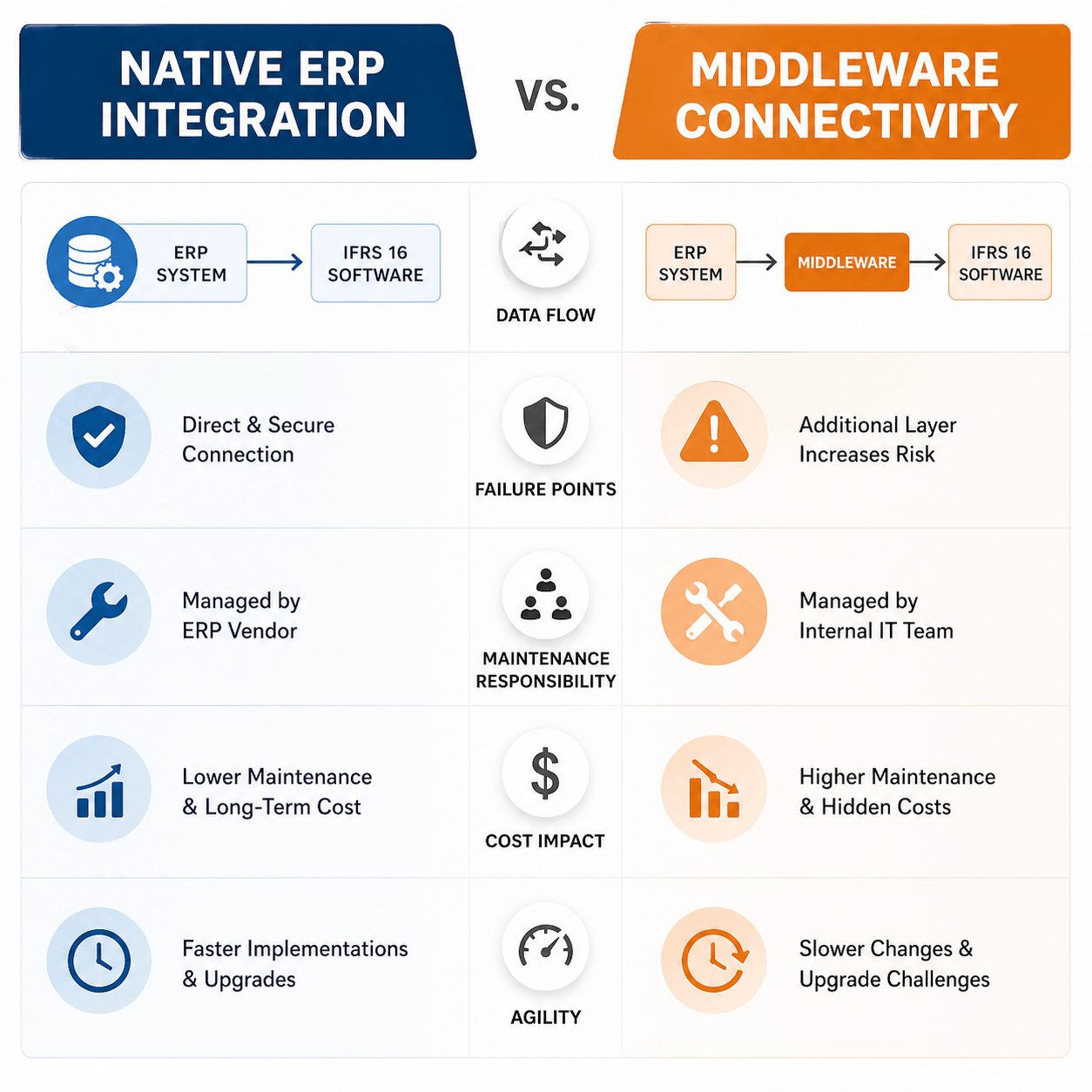
There are two types of ERP integration. Native and third-party middleware. Native means the lease accounting platform writes directly to your general ledger and posts journal entries automatically. Middleware means there’s a connector , usually a product the vendor doesn’t control , passing data between the two systems on a schedule.
Middleware creates three recurring problems: data latency, reconciliation mismatches, and single points of failure. When the connector goes down, your lease data stops posting. Month-end close gets extended. Your team patches the gap manually while someone files a support ticket.
For finance teams using SAP S/4HANA, Oracle Fusion, NetSuite, or Microsoft Dynamics 365, native bidirectional integration is a hard requirement. Ask vendors to show a live journal posting from a lease modification event through to the general ledger with no intermediate steps.
The IFRS 16 reporting platform selection process should include this specific demonstration before you progress to final negotiation.
What Happens When the ERP Gets Upgraded?
Ask directly: “If we upgrade our ERP in 12 months, who maintains the integration, and what is the typical downtime?” If the answer redirects to a third-party vendor, document that as a risk in your evaluation scorecard.
How to Assess Software Update Policies Before You Sign
IFRS 16 is not static. The IASB has amended it multiple times since its January 2019 effective date. The 2022 amendment on lease liability in sale-and-leaseback transactions is one example. Your vendor needs a documented process for pushing those updates to production without disrupting live lease data.
Standard Updates vs. Discretionary Fixes: Know the Difference
Standard updates address IASB-driven changes to IFRS 16 itself. These must be non-negotiable, pushed to all clients before the relevant effective date. Discretionary fixes are bugs and features the vendor develops independently. Secondary, but they matter too.
Ask vendors for a log of the last three standard updates: IASB announcement date, platform update date, and what changed. If they can’t produce this, there’s no formal process. That means the next amendment could leave your platform non-compliant with no warning.
Understanding the IFRS 16 impact on financial statements doesn’t end at implementation. Update management is where compliance is maintained or quietly eroded.
In cloud-based environments, which account for roughly 68% of deployments globally, updates are typically automatic. On-premise deployments put the timeline on you. That’s a responsibility, not a benefit.
Red Flags to Watch in Any IFRS 16 Provider Evaluation
Most sales processes are designed to minimize your ability to find problems before signing. These signals should slow you down.
The demo uses clean, simple lease data. Ask them to demonstrate with a portfolio that includes extensions, partial terminations, and a sale-and-leaseback. See what breaks.
Support staff can’t answer accounting questions. There’s a real difference between software support and lease accounting expertise. If the support team can only tell you which button to press, you’ll spend your own time on IFRS 16 judgment calls that should be within vendor scope.
The implementation timeline is under four weeks. Proper data migration and testing takes time. A suspiciously short go-live promise signals corners are being cut on data integrity.
Pricing is based solely on lease count. Twenty complex multi-currency leases with frequent modifications demand more from a platform than 200 identical fixed-term office leases. Flat per-lease pricing signals a tool built for simple portfolios.
For a deeper look at where IFRS 16 compliance software risks concentrate, that analysis covers the technical failure points most teams miss during selection.
And one more thing: ask vendors for a list of clients who left, not just references who stayed. The reasons clients switch platforms reveal more about product limits than any demo will.
A Practical IFRS 16 Software Selection Checklist
Use this in structured vendor comparisons. Score each item 1 to 5. Weight lease-specific calculations and integration most heavily , those two categories drive the majority of post-implementation problems.
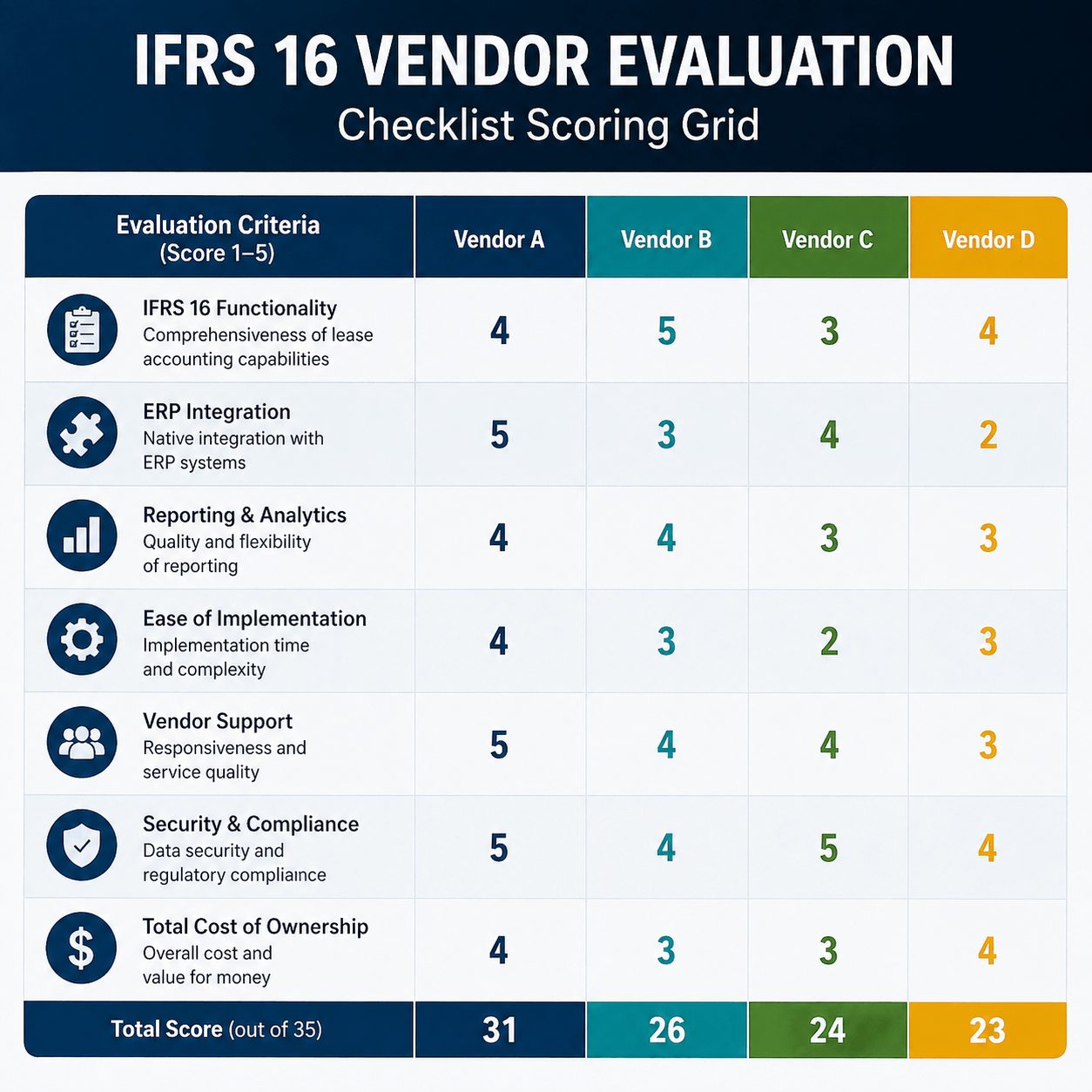
Lease-Specific Calculations
- Automatic present value calculation at inception using the IBR, with full input audit trail
- ROU asset depreciation schedules generated and updated without manual input
- Lease modifications handled with the correct treatment applied automatically , not left to user judgment
- Short-term and low-value exemptions applied based on contract parameters, not manual flags
- Multi-currency FX remeasurement at each reporting date
ERP Integration
- Native integration confirmed , not third-party middleware
- Live journal posting from lease event to general ledger demonstrated with no intermediate steps
- Vendor owns integration maintenance through ERP upgrades, not a third party
Update Policy
- Vendor can produce a log of last three IASB-driven platform updates with effective dates
- IFRS 16 standard updates pushed automatically in cloud deployments
- Contract includes explicit compliance currency commitment for future amendments
Support and Pricing
- Support staff hold accounting qualifications, not only product certifications
- Pricing reflects portfolio complexity, not just lease count
- Annual price escalation terms are documented and capped
The IFRS 16 checklist from Prima Consulting covers the standard’s technical requirements in parallel , useful to run alongside this vendor evaluation checklist.
For teams still establishing their baseline understanding before evaluating software, the IFRS 16 lease accounting basics guide is worth reviewing first.
The right IFRS 16 software doesn’t just maintain compliance today. It needs to hold through the next amendment cycle, the next ERP upgrade, and the next expansion of your portfolio. A platform handling your current 30 leases well but with no documented pathway for 300, or for the IASB’s next revision , is a temporary fix. It will cost more to replace than it saved upfront.
That’s the real question before you sign.
What You Now Know
- The most common IFRS 16 software failures trace back to two things: incomplete modification accounting and broken ERP integration , not the compliance checklist items most teams focus on during selection.
- Native ERP connectivity, documented update policies tied to IASB amendments, and support staff with actual lease accounting expertise are the three vendor criteria most likely to determine whether your implementation succeeds long-term.
- The selection checklist in this article can be used directly in scored vendor comparisons , weight lease calculations and ERP integration most heavily, and always ask vendors to demonstrate modification handling with a live, complex dataset.
Your next step is specific.
If your team is finalizing a shortlist or preparing for vendor demos, IFRS Tech’s advisory team can run a structured evaluation session, including the modification accounting stress test , with your actual lease data. No curated demo environments.
Or if you want to benchmark your current platform against the standard’s technical requirements before switching, the IFRS 16 advisory services team can run that assessment independently.