TL;DR
If you’re comparing IFRS financial reporting platforms and need to know which one is actually built for your organization’s complexity, this guide is for you. It covers the benchmarks that separate strong providers from weak ones, including consolidation depth, multi-standard support, ERP integration, security controls, and IAS 19 compliance handling. You’ll also find a pre-contract checklist, a scalability assessment framework, and FAQs built around real questions finance leaders ask before signing. Read it before your final vendor decision.
You’re at the final stage. Your team has shortlisted two or three IFRS financial reporting platforms, and now you need to know which one is actually built for the complexity your business carries.
The wrong pick costs more than a bad invoice. It costs restatements, failed audits, and months of rework. That’s why this guide focuses entirely on the benchmarks that matter at the decision stage, not the feature lists vendors hand you in demos.
According to the IFRS Foundation, IFRS Accounting Standards are required in more than 140 jurisdictions as of 2024 [src]. And over 90% of listed companies by global market capitalization are required to carry out digital financial reporting to some extent [src]. The pressure to get your platform right has never been higher.
IFRS Financial Reporting Platforms: Quick Overview
IFRS financial reporting platforms handle the full cycle of standards-based reporting, from data collection and consolidation to statutory output and audit evidence. They’re built for organizations that report under one or more IFRS standards, often across multiple entities, currencies, and jurisdictions.
At the decision stage, you’re not asking “what does this platform do?” You’re asking “can this platform do exactly what we need, at the scale we operate, with the controls our auditors expect?” That’s a harder question, and the answer lives in the benchmarks.
What Are IFRS Financial Reporting Platforms?
These are specialized software systems designed to manage financial reporting under International Financial Reporting Standards. They go beyond standard accounting tools by including consolidation engines, currency translation modules, intercompany elimination workflows, and regulatory output generation.
Core Capabilities and Key Features
A proper IFRS financial reporting platform handles multi-entity consolidation, disclosure management, iXBRL tagging, audit trail generation, and period-end close management. These aren’t optional extras. They’re the baseline for any organization reporting under IFRS.
What separates strong platforms from average ones is how they handle edge cases: intercompany mismatches, complex ownership structures, partial-period consolidations, and currency volatility. Weak platforms break under those conditions. Strong ones stay accurate.
Role of Automation in IFRS Compliance
Automation in IFRS reporting isn’t about replacing judgment. It’s about removing the manual steps that introduce error. That includes auto-posting eliminations, triggering reconciliation workflows on data mismatches, and flagging disclosure inconsistencies before they reach sign-off.
Platforms that rely on heavy manual intervention in the close process tend to produce inconsistent outputs across reporting periods. That inconsistency is exactly what auditors flag. For more on how software-level automation affects compliance outcomes, see the IFRS Tech guide on ifrs accounting software integration.
Key Benefits of Modern IFRS Reporting Platforms
Improved Accuracy and Faster Financial Close
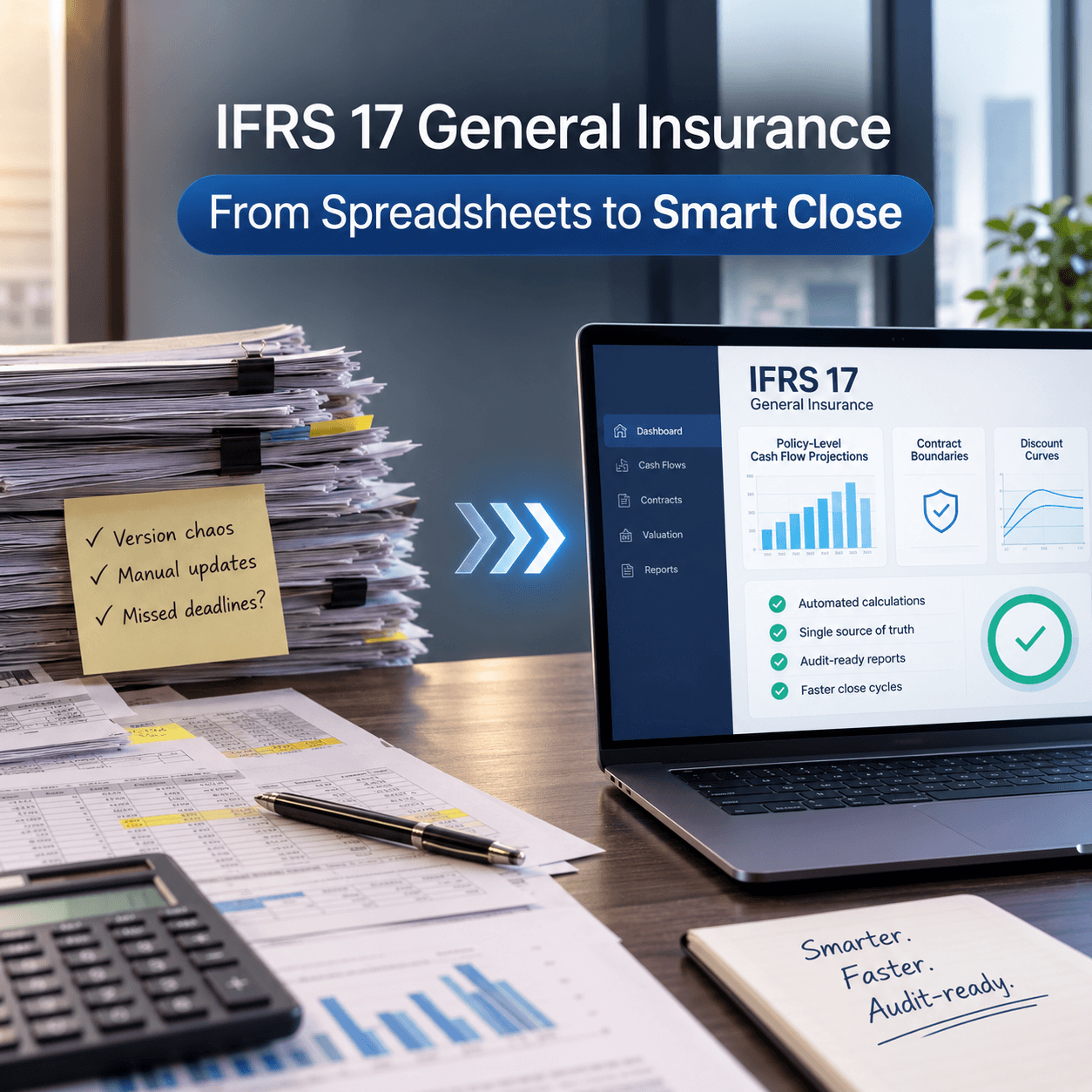
Manual consolidation processes are slow and error-prone. A well-built IFRS platform reduces the financial close cycle by automating reconciliations, intercompany eliminations, and journal postings that finance teams previously ran by hand across spreadsheets.
That time saving isn’t just an operational win. Faster close cycles mean earlier sign-off, earlier board visibility, and fewer last-minute corrections that require re-approval.
Stronger Compliance, Audit Trails, and Governance
Auditors want to see who changed what and when. A platform that maintains a complete, timestamped audit trail for every journal, adjustment, and disclosure gives your finance team something concrete to hand over. That matters during statutory audits and internal governance reviews.
Platforms without granular audit trails put the burden back on your team to reconstruct change history manually. That’s a risk you can’t afford when reporting deadlines are firm.
Real-Time Insights for Finance Leaders
Finance leaders need live visibility across entities, not period-end snapshots delivered after the fact. Strong IFRS platforms provide real-time dashboards that surface data by entity, currency, and reporting line without requiring a separate BI tool to interpret it.
That real-time access changes how finance teams manage the close. Instead of reacting to problems after the books close, they can spot mismatches and resolve them during the period.
Scalable Reporting for Multi-Entity Organizations
A platform that works well for five entities should work just as well for fifty. Scalability in IFRS reporting means the system handles additional entities, new currencies, and expanded ownership structures without requiring significant reconfiguration or custom development.
This matters especially for organizations growing through acquisition. Post-merger integration puts immediate pressure on consolidation workflows, and platforms that can’t scale become bottlenecks within months of the deal closing.
Essential Features to Evaluate in IFRS Platforms
Consolidation and Financial Reporting Automation
Ask every vendor how their system handles full, proportional, and equity-method consolidations. Ask them to show you how intercompany eliminations work across currencies. If they can’t walk you through it in a live demo with real data, that’s a red flag.
Also check how the platform manages ownership changes mid-period. Acquisitions and disposals happen during the year, and the system needs to handle partial-period reporting without manual overrides.
Close and Reconciliation Management
The financial close process needs structure. That means workflow tools that assign tasks, track completion, and block downstream steps until prerequisites are signed off. Platforms that rely on email chains or shared spreadsheets to manage close tasks aren’t really managing anything.
Reconciliation management should flag open items, aging variances, and unmatched intercompany balances automatically. Manual reconciliation review at scale is where the biggest errors tend to hide.
Data Integration and System Connectivity
Your IFRS platform needs to pull clean data from your ERP, HR systems, and subsidiary ledgers. That integration should be automated, not reliant on file exports and manual imports that introduce timing errors and version mismatches.
Check what connectors the platform supports out of the box and what requires custom API work. Custom integrations add cost, delay go-live, and create dependencies that break when source systems update.
Internal Controls and Audit Readiness
SOC 2 compliance, role-based access control, and segregation of duties aren’t just IT concerns. They’re part of the control environment your auditors assess. A platform without these controls built in will require you to compensate with manual processes outside the system.
Ask vendors for their SOC 2 reports. How they handle data residency for global organizations. What happens when a user needs to be removed mid-period. These questions reveal the maturity of the platform’s security architecture.
IAS 19 Valuation and Compliance Support
Managing Employee Benefit Obligations
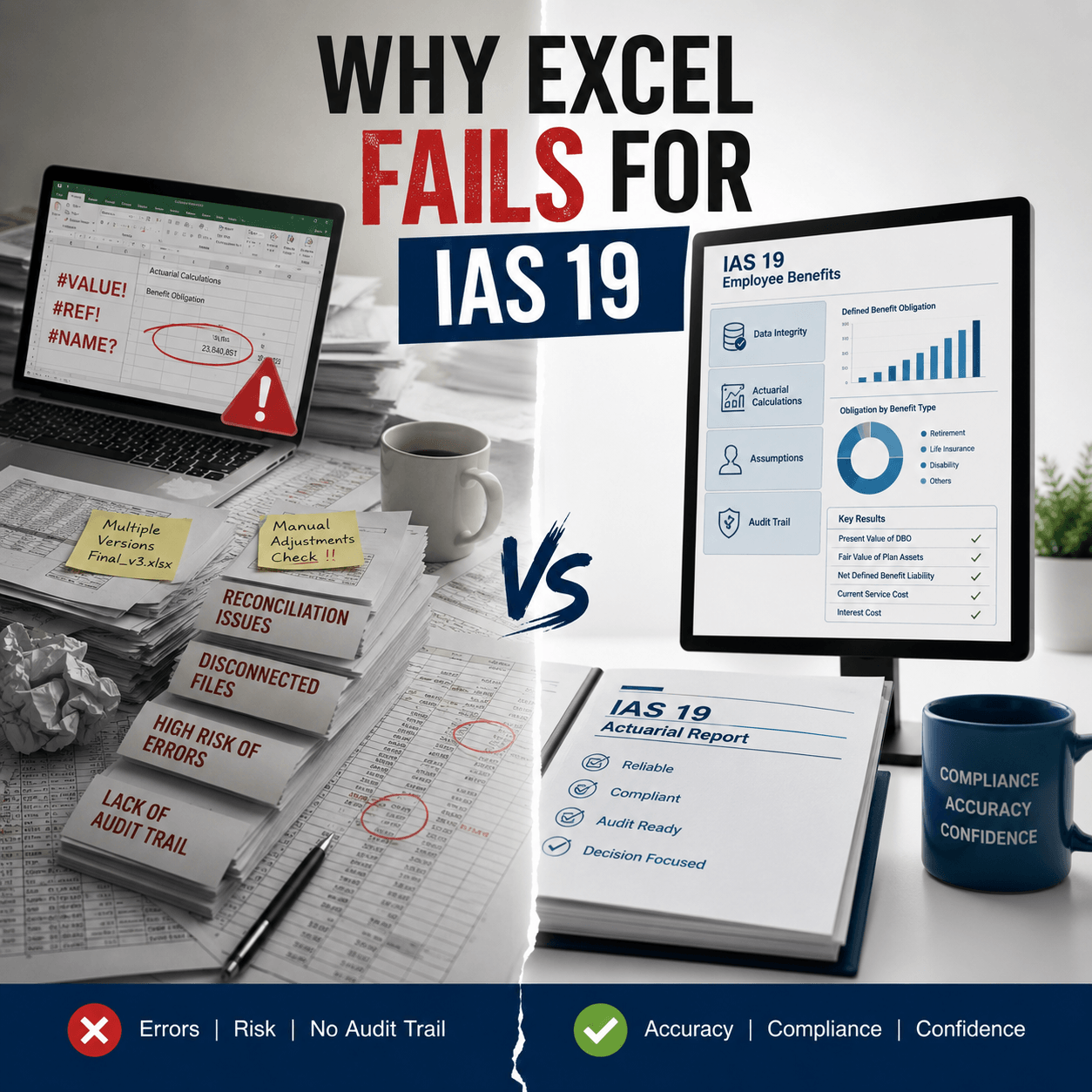
IAS 19 governs how organizations recognize and report employee benefit obligations, including defined benefit plans, end-of-service benefits, and other long-term liabilities. For organizations operating across multiple jurisdictions, managing these calculations consistently is a real operational challenge.
Platforms that support IAS 19 reporting need to handle actuarial inputs cleanly, apply the correct discount rates by jurisdiction, and roll forward prior-period figures in a way that auditors can follow.
Automating Actuarial Data and Reporting
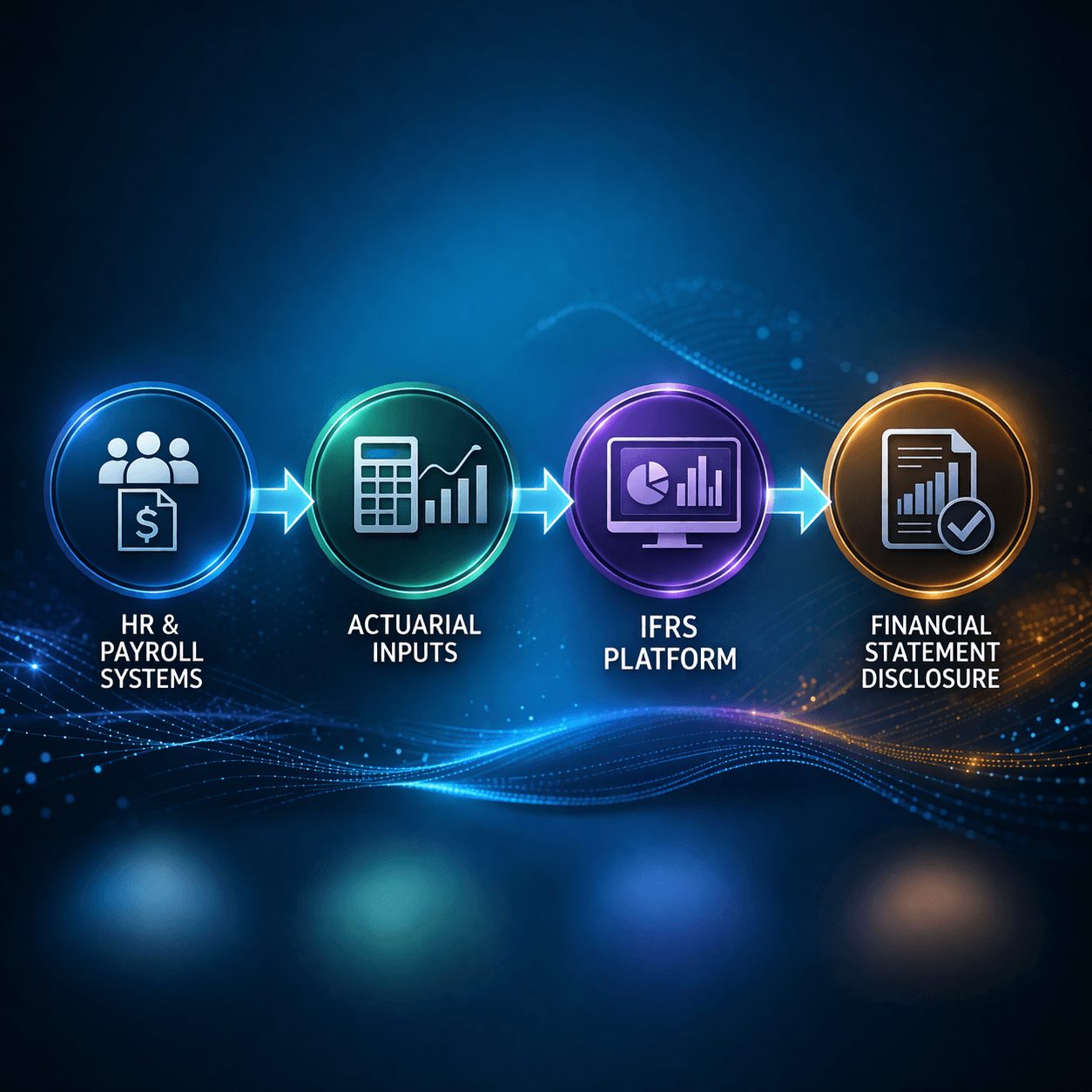
The integration between actuarial data sources and financial reporting platforms is one of the most common failure points in IFRS compliance. When HR payroll data and actuarial valuation outputs aren’t synchronized, the resulting liability figures carry inconsistencies that auditors flag immediately.
Strong platforms either include native IAS 19 modules or support structured data imports from actuarial valuation tools. Either way, the audit trail from actuarial assumption to disclosed liability needs to be clear and traceable.
How to Benchmark IFRS Financial Reporting Platforms
Evaluation Framework and Selection Criteria
Start with your organization’s specific IFRS obligations. Not every organization reports under the same set of standards, and not every platform supports them all with equal depth. A platform that handles IFRS 15 and IFRS 16 well may have gaps in IFRS 17 or IAS 19 automation.
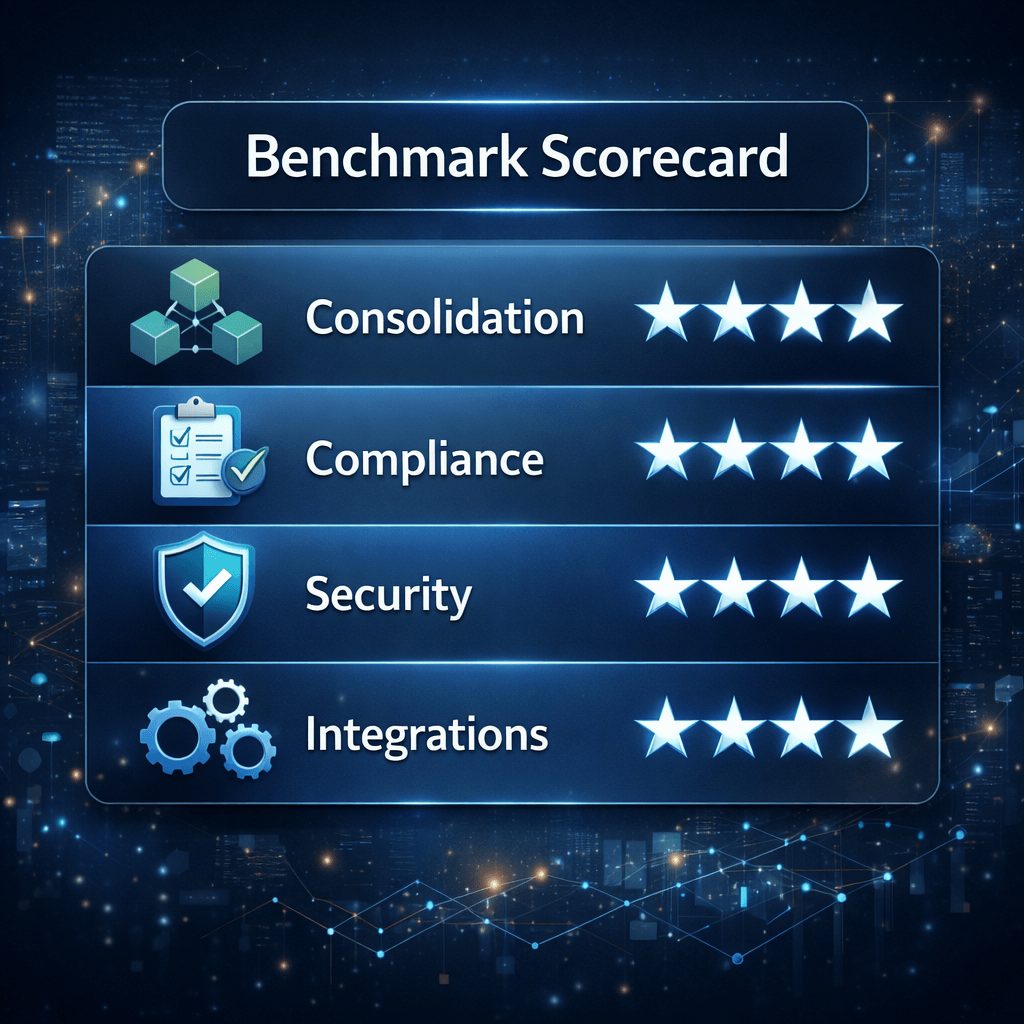
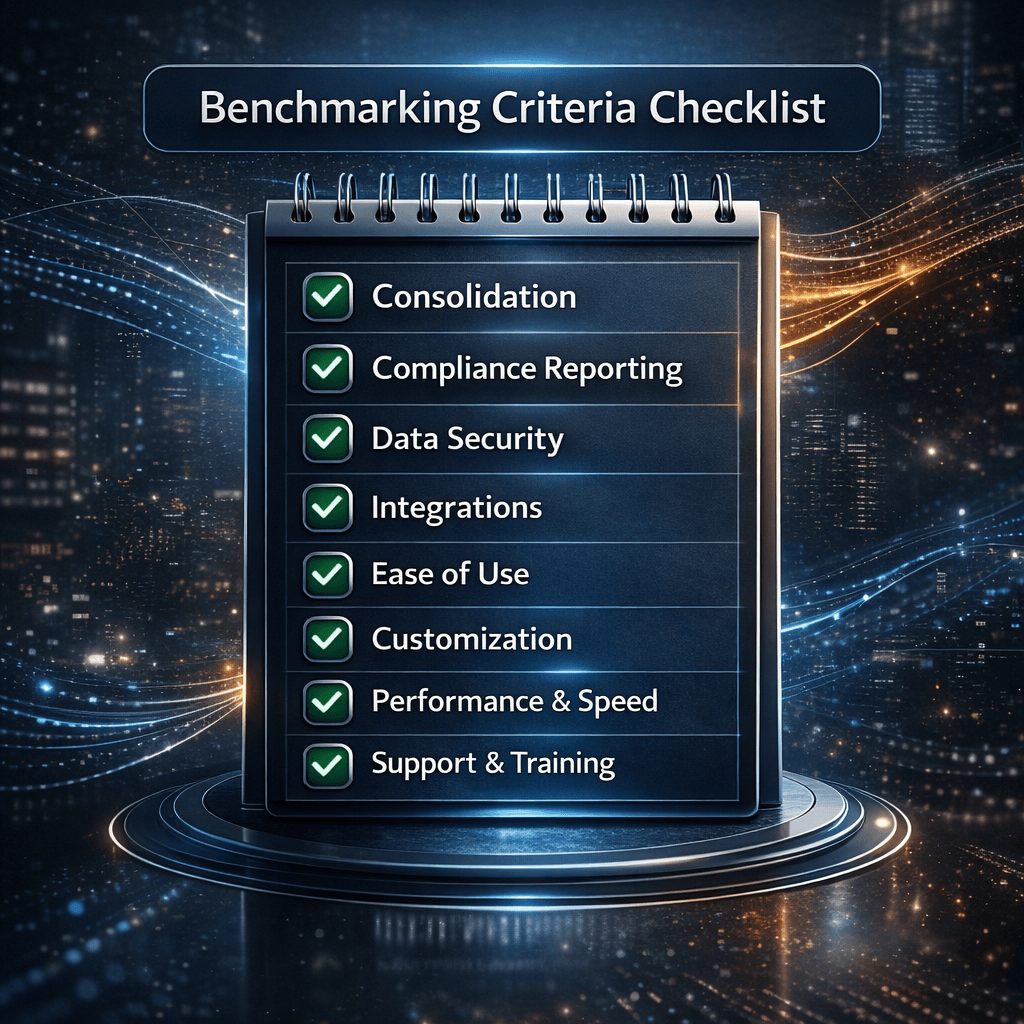
Build your evaluation scorecard around the standards you actually report under. Then score each vendor on depth of support, not just presence of the feature. A checkbox on a feature list tells you nothing about how the feature performs under real conditions.
For a structured view of what these benchmarks look like in practice, the IFRS Tech resource on ifrs compliant accounting platforms covers the criteria in more detail.
Performance, Scalability, and Security Checks
Ask vendors to run a performance test with data volumes close to your own. A platform that takes four hours to run consolidation for twenty entities won’t work for an organization that needs to close in two days. Performance under load is a technical requirement, not a marketing point.
Security checks should include penetration testing history, data encryption standards, and incident response procedures. For multinational organizations, data sovereignty requirements add another layer. Know where your data is stored and what legal jurisdiction it falls under.
Integration With ERP and Financial Systems
The strongest IFRS platforms connect directly to major ERP systems through native connectors, not middleware workarounds. Ask the vendor how long a typical ERP integration takes and what their track record looks like for organizations using the same ERP you’re on.
Integration failures are the single biggest cause of delayed go-live dates. Get references from customers on the same ERP stack before you sign anything.
How to Choose the Right IFRS Reporting Platform
Key Questions to Ask Before Implementation
Before you sign a contract, get answers to these questions in writing:
- What is the standard implementation timeline for an organization of our size?
- What does the migration path look like from our current system?
- How does the vendor handle IFRS standard updates, and what’s the turnaround time for compliance changes?
- What are the SLAs for support, and what counts as a critical issue?
- Is pricing per entity, per user, or by volume? And what triggers additional costs?
These questions surface the operational reality behind the sales pitch. If a vendor can’t answer them directly, that tells you something.
Aligning Platform Capabilities With Finance Strategy
Your IFRS platform choice isn’t just a technology decision. It’s a finance strategy decision. A platform that can’t scale with planned acquisitions will need replacement within three years. A platform that doesn’t support your regulatory requirements will generate audit findings from day one.
Map your three-year finance roadmap against what the platform can deliver before you commit. The right platform grows with your strategy instead of constraining it.
FAQs About IFRS Financial Reporting Platforms
What are the benefits of IFRS reporting platforms?
IFRS reporting platforms reduce manual work in consolidation and close, improve audit trail quality, and support multi-standard compliance across jurisdictions. They give finance teams a single source of truth for reported figures, which reduces the risk of inconsistencies across periods.
How do consolidation and financial close differ?
Consolidation is the process of combining financial data from multiple entities into a single group view, including intercompany eliminations and currency translations. Financial close is the broader period-end process that includes reconciliations, journal sign-offs, and management review before books are finalized.
What should companies assess before selecting a platform?
Organizations should assess IFRS standard coverage, ERP integration depth, audit trail capabilities, security certifications, pricing structure, and vendor support SLAs. Scalability for future entity growth and post-merger integration capacity are also critical factors at the decision stage.
How do IFRS platforms improve financial data accuracy?
They replace manual data entry and spreadsheet-based processes with automated data flows, built-in validation rules, and reconciliation workflows. This removes the human error that typically enters during manual consolidation and intercompany matching steps.
Can IFRS reporting platforms scale with business growth?
Yes, but not all platforms scale equally. The best ones handle additional entities, currencies, and ownership structures without requiring custom development. Ask vendors specifically how they’ve supported organizations through acquisitions or rapid entity expansion.
Ready to Benchmark IFRS Financial Reporting Platforms for Your Organization?
Choosing the right IFRS financial reporting platform comes down to more than features. You need a provider with deep standards coverage, clean ERP integration, and a security posture your auditors will accept. You need pricing that won’t surprise you as you grow, and a support model that holds up when you’re mid-close and something breaks.
The benchmarks in this guide give you a framework to pressure-test every vendor on your shortlist. Use them. Don’t let a polished demo substitute for the hard questions.
Prima Consulting combines advisory expertise with technology-led implementation to help finance teams select, deploy, and optimize IFRS reporting platforms. If you’re at the decision stage and want a structured provider evaluation, reach out to Prima Consulting to start the conversation.