TL;DR
Choosing the right IFRS 17 insurance reporting tools is one of the biggest system decisions your finance and actuarial teams will make. Building in-house gives you control and exact-fit customization, but it comes with higher upfront costs of $200,000 to $700,000, timelines of 8 to 15 months, and ongoing maintenance demands. Buying a pre-built IFRS 17 software solution is faster, lower-risk, and more cost-predictable, especially for teams without deep internal development capabilities. For most insurers, IFRS 17 vendors offer the smarter path. Read the full article to compare your options and make the right call.
Build vs Buy IFRS 17 Insurance Reporting Tools: A Cost and Timeline Analysis
IFRS 17 Insurance Reporting Tools: Build or Buy?
You’re past the ‘what is IFRS 17’ stage. Now you’re making real decisions about systems, budgets, and timelines.
The choice between building custom software and buying a pre-built solution is one of the most consequential ones your team will face. Get it wrong, and you’re looking at blown budgets, audit failures, or a system that can’t scale.
That said, there’s no universal right answer. The best path depends on your organization’s data complexity, internal capabilities, and long-term reporting needs.
What Are IFRS 17 Reporting Requirements?
IFRS 17 requires insurers to measure insurance contracts using models like the General Measurement Model, the Premium Allocation Approach, or the Variable Fee Approach.
Each model demands granular data management. You need cohort-level groupings by issue year, onerous status, and product type. Your system must produce the Contractual Service Margin, risk adjustment, and best-estimate liability figures with full audit trails.
On top of that, IFRS 17 disclosures are extensive. Liability reconciliations, revenue analysis, and onerous group tracking all require consistent, traceable data from policy systems through to financial statements.
Why Tool Selection Impacts Compliance and Cost
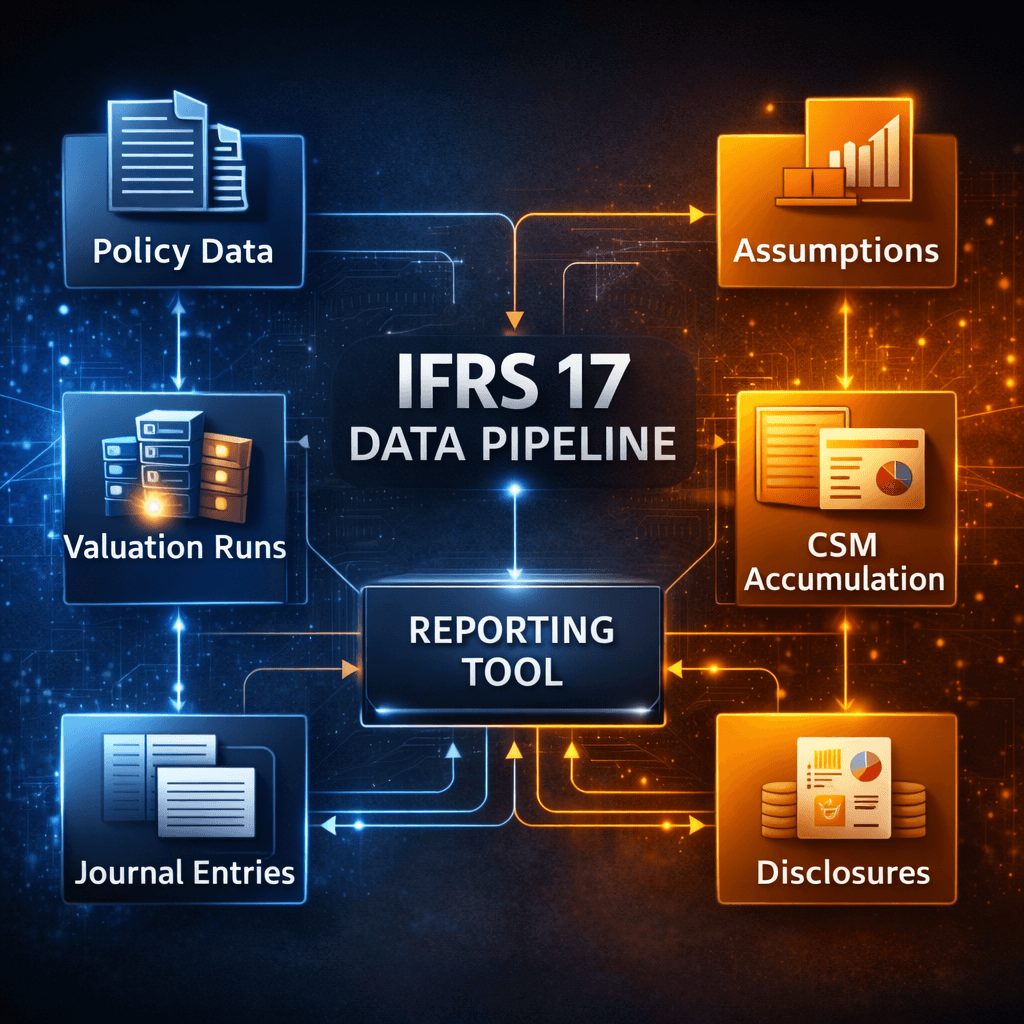
Your reporting tool isn’t just a calculation engine. It’s the backbone of your actuarial-to-finance workflow.
If your system can’t handle the required 14 or more valuation runs per period (base, sensitivities, projections), you slow down the finance close. If your CSM accumulation engine isn’t set up correctly from the start, you’ll face reconciliation problems that are expensive to fix mid-flight.
The global IFRS 17 Reporting Platforms Market was valued at USD 1.42 billion in 2024 and is projected to reach USD 4.19 billion by 2033, growing at a CAGR of 13.7% [1]. That growth reflects just how seriously insurers are taking this tool decision.
Key Differences Between Building and Buying
The build vs buy debate for IFRS 17 insurance reporting tools comes down to four areas: cost, time, control, and risk.
Upfront and Ongoing Costs
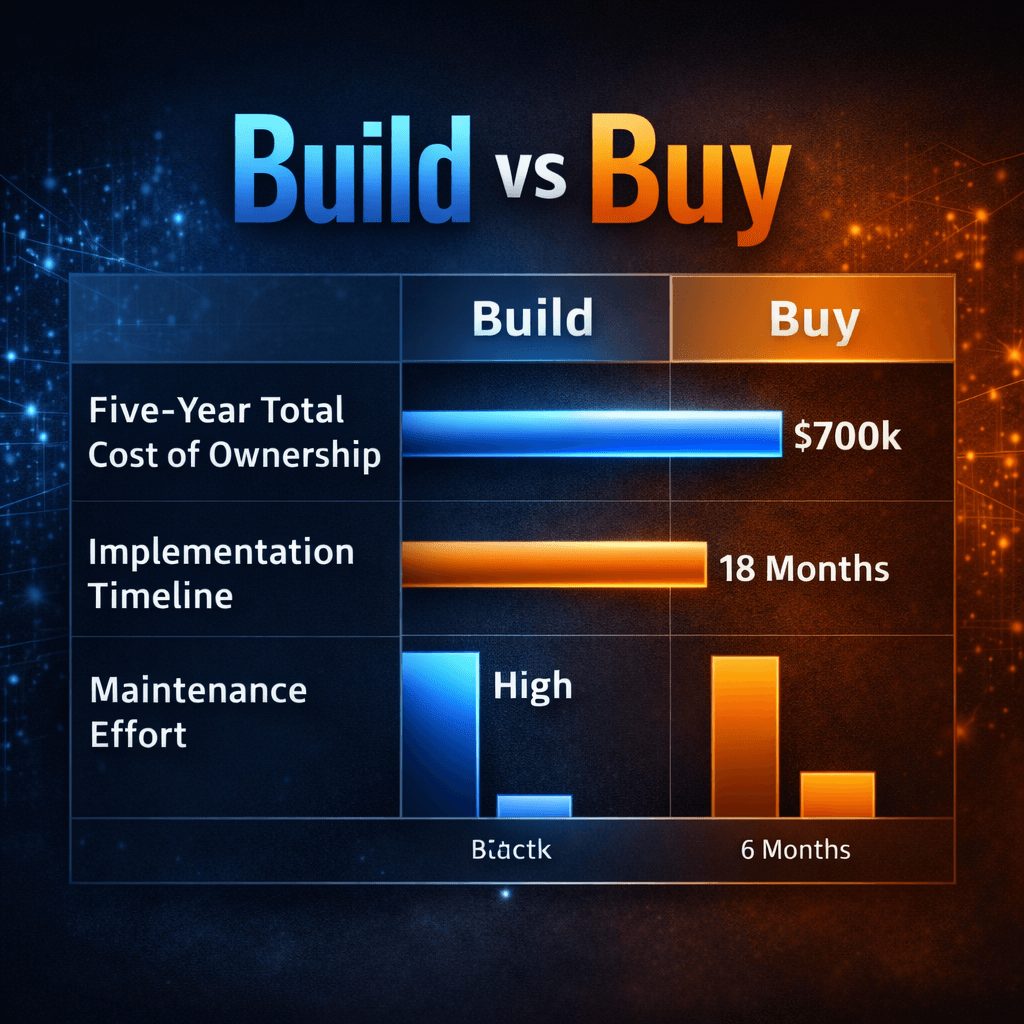
Building a custom solution carries a high initial investment. Development, testing, and actuarial integration can run from $200,000 to $700,000 depending on complexity [2].
Pre-built vendor solutions lower the upfront spend significantly, though recurring license fees apply. The tradeoff is predictable ongoing costs versus a large one-time capital commitment.
What many teams underestimate is the post-launch cost. Custom builds require internal resources to maintain calculations, apply rule changes, and manage system updates. That ongoing burden adds to total cost of ownership in ways that don’t always appear in the original business case.
Implementation Timeline and Risk
Custom builds typically take 8 to 15 months from scoping to go-live [2]. Pre-built IFRS 17 vendors can compress that timeline significantly, with some implementations completing in three to six months depending on data readiness.
That gap matters. Finance teams can’t close books on an incomplete system. Actuaries can’t run sensitivities on a tool that’s still in development. The longer your build takes, the more parallel workstreams you run manually, which increases error risk.
Customization and Integration with Core Systems
Custom builds give you full control over how the system connects to your policy administration, actuarial valuation software, and general ledger. You design the journal integration, cohort-splitting logic, and disclosure output exactly as your finance team needs it.
Vendor solutions offer pre-built connectors and standard workflows, but they may not align perfectly with your data architecture. Configuring a vendor tool to fit non-standard product structures, riders, or multinational consolidation requirements takes time and can surface compatibility issues.
For a broader look at compliance planning, Prima Consulting’s IFRS advisory team at primaconsulting.org supports insurers across all stages of IFRS 17 implementation.
Data Governance and Audit Readiness
Both approaches must produce traceable, auditable outputs. Your external auditors will examine CSM roll-forward tables, discount rate sourcing, and cohort membership logic.
Custom builds can be designed with your specific audit documentation requirements in mind, but they require your team to build those controls from scratch. Pre-built tools from established vendors typically include built-in audit trails and are tested against regulatory review standards before release.
When Should Insurers Build In-House?
Building makes sense in specific scenarios, not as a general default. Here’s when it’s worth considering.
Complex Product Structures
If your product portfolio includes non-standard features such as participating contracts, embedded derivatives, or heavily customized riders, off-the-shelf tools may not handle the calculation logic cleanly.
A custom build lets your actuarial team define exact measurement rules for each product type. That’s a real advantage when your contracts don’t fit standard vendor templates.
Internal IT and Actuarial Capabilities
Building in-house requires a capable internal team. You need actuarial developers who understand IFRS 17 measurement, IT engineers who can manage ongoing maintenance, and finance staff who can test outputs against disclosure requirements.
If you don’t have that team in place, you’re not really ‘building.’ You’re contracting out the work at higher cost and lower accountability.
Long-Term Control and Flexibility
Custom systems give you full ownership. You’re not dependent on a vendor’s release schedule to roll out regulatory updates. You can respond faster to local rule changes, especially in markets where IFRS 17 intersects with local GAAP requirements.
Still, that flexibility comes with a maintenance obligation. Every update you control is also one you have to plan, resource, and test.
When Is Buying an IFRS 17 Solution Smarter?
For most insurers, buying a pre-built solution is the lower-risk path. Here’s why.
Faster Deployment
Vendor solutions are built to deploy. The core IFRS 17 calculation logic, cohort management, and disclosure templates are already coded and tested. Your implementation effort focuses on data mapping, configuration, and user training rather than system development.
That’s why 65% of respondents to a May 2024 PwC survey of 17 global insurers are considering changing their finance or actuarial software within the next five years [3]. Faster, more reliable tools are the goal.
Pre-Built IFRS 17 Calculations and Disclosures
Pre-built IFRS 17 vendors include standard measurement models, CSM accumulation logic, and disclosure templates out of the box. You configure inputs rather than writing calculation code from scratch.
This is especially valuable for the CSM sub-ledger. Tracking hundreds of cohorts forward, applying experience adjustments, and feeding correct entries to the general ledger is a complex process. Vendor tools that specialize in this area have already solved the hard problems.
To see how purpose-built tools handle IFRS 17 reporting, learn more about IFRS 17 compliance solutions available on IFRSTech.com.
Vendor Support and Regulatory Updates
IFRS 17 is still evolving. The IASB continues to issue clarifications, and local regulators add their own layer of requirements. When rules change, vendor solutions update their calculation engines and disclosure templates as part of the service.
Custom builds leave that work to you. Each update requires internal development, testing, and rollout, which adds to ongoing cost and delays your reporting cycle.
ROI Comparison: Build vs Buy in 2026
Total Cost of Ownership Over 5 Years
The real cost comparison isn’t just upfront investment. You need to factor in maintenance, regulatory updates, internal labor, and opportunity cost.
Custom builds may show a 290% ROI over time if you account for long-term scalability and exact-fit functionality [2]. That said, those figures assume your system stays fit for purpose as regulations change and your portfolio grows. If ongoing maintenance is underestimated, the ROI case weakens quickly.
Vendor solutions offer more predictable cost curves. Recurring fees are known, update cycles are managed, and your internal team isn’t responsible for keeping the calculation engine current. For most mid-size insurers, that predictability is worth paying for.
Insurers globally are prepared to invest significantly in modernization. A May 2024 PwC survey showed anticipated collective expenditure of approximately EUR 1.1 billion from 15 participating insurers over the next five years [3].
Scalability and Future Regulatory Changes
Scalability is where many custom builds fall short over time. As your portfolio grows, valuation run times increase. Saving cash flows by cohort and dimension for hundreds of groups creates memory and processing constraints that weren’t anticipated during initial design.
Vendor solutions built on cloud infrastructure handle scale more reliably. You pay for capacity as you need it rather than engineering it yourself. On another note, cloud-hosted vendor tools typically offer better disaster recovery and uptime than on-premise custom builds.
Common Risks and How to Mitigate Them
Data Quality and Migration Issues
Data quality problems are the most common reason IFRS 17 implementations fail or delay. Whether you build or buy, the system is only as good as the data feeding it.
Historical discount rates going back to the 1950s, reinsurance data gaps, and incomplete cohort history all create problems at the valuation stage. Before committing to either path, run a data readiness assessment. Map your available data against IFRS 17 input requirements and identify gaps early.
Model Validation and Audit Challenges
Model validation is a risk for both approaches, but it hits custom builds harder. When your actuarial team writes the calculation logic, your auditors need to test it. That means documenting assumptions, testing edge cases, and maintaining change logs.
Vendor solutions carry vendor audit documentation and typically receive external scrutiny through client implementations. That doesn’t replace your own validation obligation, but it gives your auditors a starting point.
You can also read more about IFRS 17 insurance reporting tools to compare specific tool capabilities on IFRSTech.com.
How to Choose the Right IFRS 17 Reporting Tool
Evaluation Checklist for Finance and IT Teams
Use these criteria when comparing your options:
- Does the tool handle all three IFRS 17 measurement models?
- Can it manage cohort-level cash flows across hundreds of groups?
- Does it produce audit-ready CSM roll-forward and disclosure outputs?
- What is the implementation timeline and what does readiness require?
- How does the vendor handle regulatory updates and model changes?
- What integration support exists for your policy and actuarial systems?
- What are the total five-year costs, including licensing, maintenance, and internal labor?
Questions to Ask Vendors or Internal Teams
You might be wondering what separates a strong vendor from a weak one. Here are direct questions that cut through the marketing:
- How many insurers are using your tool in production today?
- What was the average implementation time for those clients?
- How do you handle local GAAP overlays or multinational consolidation?
- What does your regulatory update process look like, and how fast do changes reach clients?
- Can we see a live demo with our own data structure?
For internal teams, ask the same questions about your own capabilities. If you can’t answer confidently, that’s a signal that buying is the right path.
FAQs
Is it cheaper to build or buy IFRS 17 software?
Building can cost between $200,000 and $700,000 upfront with ongoing maintenance costs on top. Buying a vendor solution has a lower upfront cost with recurring license fees. Over five years, vendor solutions tend to offer more predictable and often lower total costs for insurers without specialized internal development teams.
How long does IFRS 17 system implementation take?
Custom builds typically take 8 to 15 months. Pre-built vendor solutions can be implemented in as little as three to six months depending on data readiness and configuration complexity. Your actual timeline depends heavily on data quality and internal resource availability.
What features should IFRS 17 insurance reporting tools include?
Your tool needs to support all three IFRS 17 measurement models, cohort-level data management, CSM accumulation, discount rate handling, risk adjustment calculations, and disclosure-ready outputs. It should produce auditable journal entries and connect to your actuarial and policy systems. Scalability for multi-entity or multinational reporting is also a key requirement.
Which Path Is Right for Your IFRS 17 Insurance Reporting Tools Needs?
The build vs buy decision for IFRS 17 insurance reporting tools comes down to your organization’s reality. If you have a complex, non-standard portfolio and a capable internal team, building gives you control. For most insurers, buying a purpose-built vendor solution offers faster deployment, lower risk, and a more predictable cost structure.
What matters is making the decision with full information, not defaulting to either path out of habit or pressure.
If you’d like expert guidance on this decision, Prima Consulting’s advisory team works with insurers across every stage of IFRS 17 implementation, from tool selection through to disclosure reporting. Learn more at primaconsulting.org.
Sources
[1] DataIntelo – IFRS 17 Reporting Platforms Market Report (2024): https://dataintelo.com/report/ifrs-17-reporting-platforms-market
[2] PhoenixStrategy.group – Custom vs Off-the-Shelf Accounting Software ROI Guide: https://www.phoenixstrategy.group/blog/custom-vs-off-the-shelf-accounting-software-roi-guide
[3] PwC Cyprus – IFRS 17 Post-Implementation and Finance Transformation Survey (May 2024): https://www.pwc.com.cy/en/services/assets/ifrs-17-post-implementation-and-finance-transformation-survey.pdf