TL;DR
Finding the right IFRS reporting software means more than checking boxes on a feature list. CFOs need platforms that handle multi-entity consolidation, automate compliance calculations, and adapt to changing standards without expensive customization. Manual spreadsheets can’t scale with global operations or meet audit requirements. Purpose-built IFRS reporting software gives finance teams a single source of truth while cutting close cycles and reducing error risk. This guide walks you through the critical selection criteria from integration architecture to vendor support so you can choose a system that grows with your organization.
Choosing IFRS Reporting Software: A CFO’s System Selection Guide
What Is IFRS Reporting Software and Why CFO’s Need It
IFRS reporting software is a specialized platform that automates the preparation of financial statements under International Financial Reporting Standards. These systems handle complex accounting calculations, consolidate multi-entity data, and generate compliant disclosures. The software sits between your general ledger and your final reporting outputs.
CFOs need this technology because 79 jurisdictions have fully adopted IFRS as of December 2023. Organizations operating across these markets must comply with multiple standards at once. Traditional ERP systems weren’t built for this level of reporting complexity.
Finance teams spend weeks manually mapping GL accounts to disclosure requirements. They build brittle spreadsheet models that break when standards change. The risk of errors increases with every consolidation cycle. What’s interesting is, purpose-built IFRS reporting software eliminates these bottlenecks by codifying standard requirements into the system itself.
Key Criteria for Selecting IFRS Reporting Software
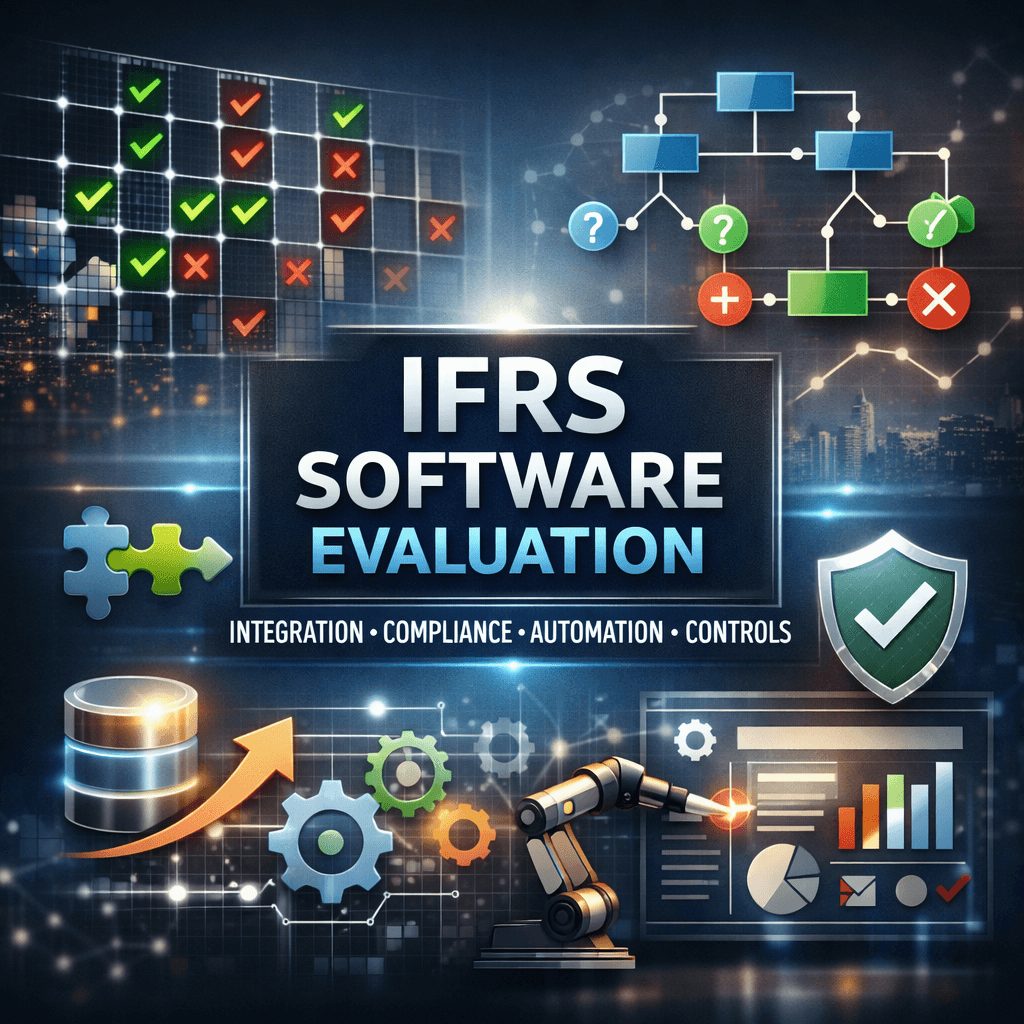
Selecting the right IFRS reporting software requires evaluating several critical dimensions. Each criterion directly impacts your finance team’s ability to deliver accurate reporting under tight deadlines.
Business requirements and reporting complexity
Start by documenting your organization’s specific reporting needs. How many legal entities do you consolidate? Which IFRS standards apply to your industry? Do you need to support multiple accounting frameworks simultaneously?
Companies with complex group structures need software that handles intercompany eliminations automatically. Others might prioritize disclosure management for specific standards. To put it simply, your business requirements should drive the evaluation process, not vendor feature lists.
IFRS compliance coverage across standards
Not all IFRS reporting software supports every standard equally. Some platforms focus on IFRS 9 financial instruments while others specialize in IFRS 16 lease accounting. CFOs should verify that the system covers their current standard requirements and planned future needs.
In turn, this means checking whether the software handles emerging standards like IFRS 17 insurance contracts or IFRS S1 and S2 sustainability disclosures, which 16 jurisdictions adopted between January and July 2025. The platform should update automatically when standards evolve. Otherwise, you’ll need expensive customization every time a new requirement emerges.
Data accuracy and controls
Financial reporting demands zero-tolerance for errors. The software must include validation rules, audit trails, and approval workflows. CFOs need confidence that numbers roll up correctly from subsidiaries to the consolidated group.
Look for systems with built-in reconciliation capabilities. The platform should flag inconsistencies between source data and reported figures. Strong data governance features help prevent unauthorized changes and maintain complete change logs.
Automation and workflow efficiency
Manual data entry creates unnecessary risk and delays. IFRS reporting software should pull data directly from source systems through automated integrations. Workflows should route tasks to the right people at the right time.
Finance teams benefit when the software handles recurring journal entries, standardized calculations, and period-end close procedures automatically. This frees up time for analysis instead of data manipulation. As a result, your team can focus on insights rather than mechanical tasks.
Reporting, analytics, and disclosures
Beyond compliance, CFOs need systems that support decision-making. The platform should offer flexible reporting tools that let you slice data by entity, geography, or product line. Pre-built IFRS disclosure templates save time during close periods.
Analytics capabilities matter too. You want to compare actual results against budget or forecast. Drill-down functionality helps you investigate variances quickly. The software should generate both statutory reports and management dashboards from the same underlying data.
Integration with ERP and HR systems
Your IFRS reporting software doesn’t operate in isolation. It needs clean, reliable connections to your ERP for financial transactions. For standards like IAS 19 employee benefits, integration with HR systems becomes important for accessing headcount and compensation data.
APIs and pre-built connectors reduce implementation complexity. The software should support both real-time and batch data transfers. Strong integration architecture prevents data silos and eliminates redundant data entry.
User access, roles, and governance
Different team members need different levels of system access. Controllers might prepare workpapers while CFOs review final outputs. The software should support role-based permissions that match your organizational structure.
Governance features become important as teams grow. You need controls around who can approve journal entries or release reports to external stakeholders. Segregation of duties prevents conflicts of interest and strengthens internal controls.
Vendor support and implementation model
Implementation approaches vary significantly across vendors. Some offer turnkey cloud solutions with rapid deployment. Others require extensive configuration and customization. CFOs should understand the total implementation timeline and resource requirements upfront.
Post-implementation support matters just as much. Will the vendor provide training for your finance team? How quickly do they respond to technical issues? What happens when new IFRS standards are issued? These questions reveal whether the vendor relationship will be sustainable over time.
Long-term compliance confidence
IFRS standards change regularly through amendments and new pronouncements. Your software needs a clear roadmap for staying current. Vendors should have a track record of timely standard updates without requiring system upgrades or costly professional services.
That’s why understanding the vendor’s development process becomes important. Do they have in-house accounting experts? How do they test standard changes before releasing updates? These factors determine whether the software will protect you from future compliance risk.
IFRS Reporting Software for IAS 19 Valuation and Complex Standards
Certain IFRS standards require specialized calculation engines that go beyond basic general ledger functionality. IAS 19 employee benefits stands out as particularly complex because it involves actuarial assumptions, discount rate selection, and demographic projections.
CFOs at organizations with defined benefit pension plans need IFRS reporting software that can handle these calculations accurately. The system should support sensitivity analysis around key assumptions. It needs to generate the detailed disclosures that IAS 19 requires for financial statement footnotes.
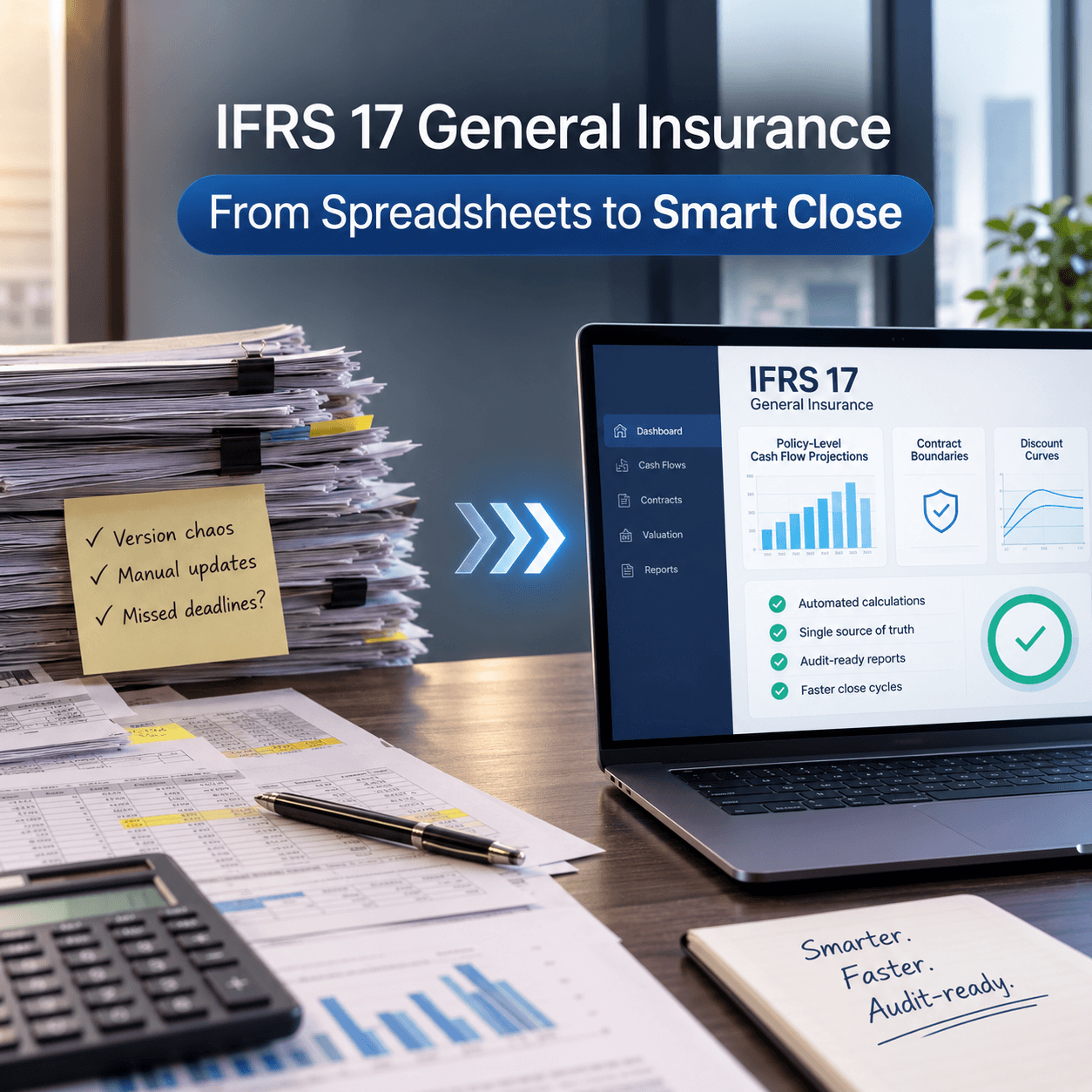
Similarly, IFRS 17 insurance contracts demands sophisticated modeling capabilities. The general measurement model requires probability-weighted cash flow projections. The premium allocation approach involves different eligibility tests. Generic reporting software won’t cut it for these specialized requirements.
When evaluating software for complex standards, verify that the vendor has domain expertise in your industry. Ask for references from companies with similar accounting challenges. The platform should handle both the calculations and the disclosure requirements without requiring extensive customization.
For companies needing actuarial services alongside their IFRS reporting software, integration between valuation work and financial reporting becomes important. The software should accept actuarial inputs and map them correctly to the required disclosures.
Challenges of Manual IFRS Reporting at Enterprise Scale
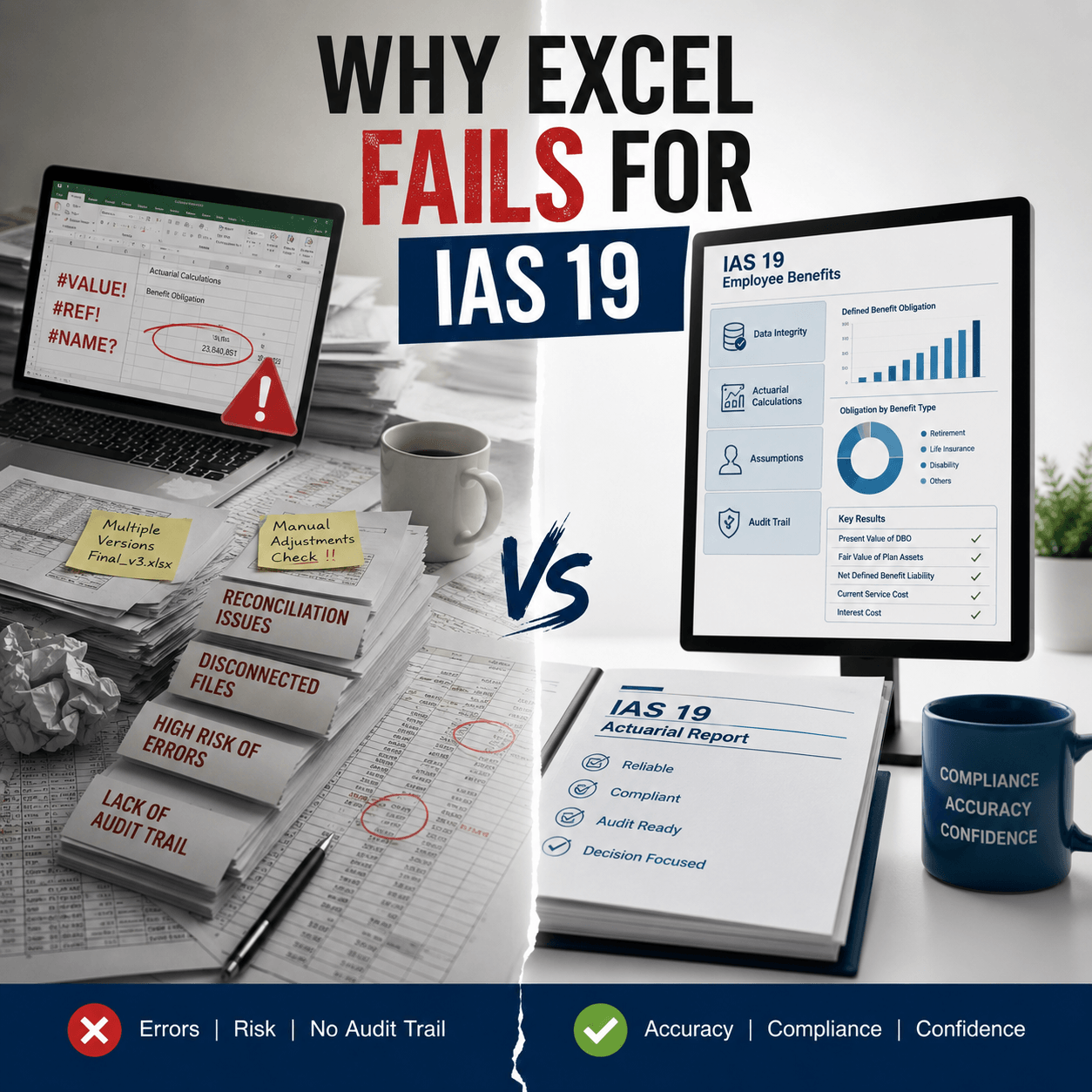
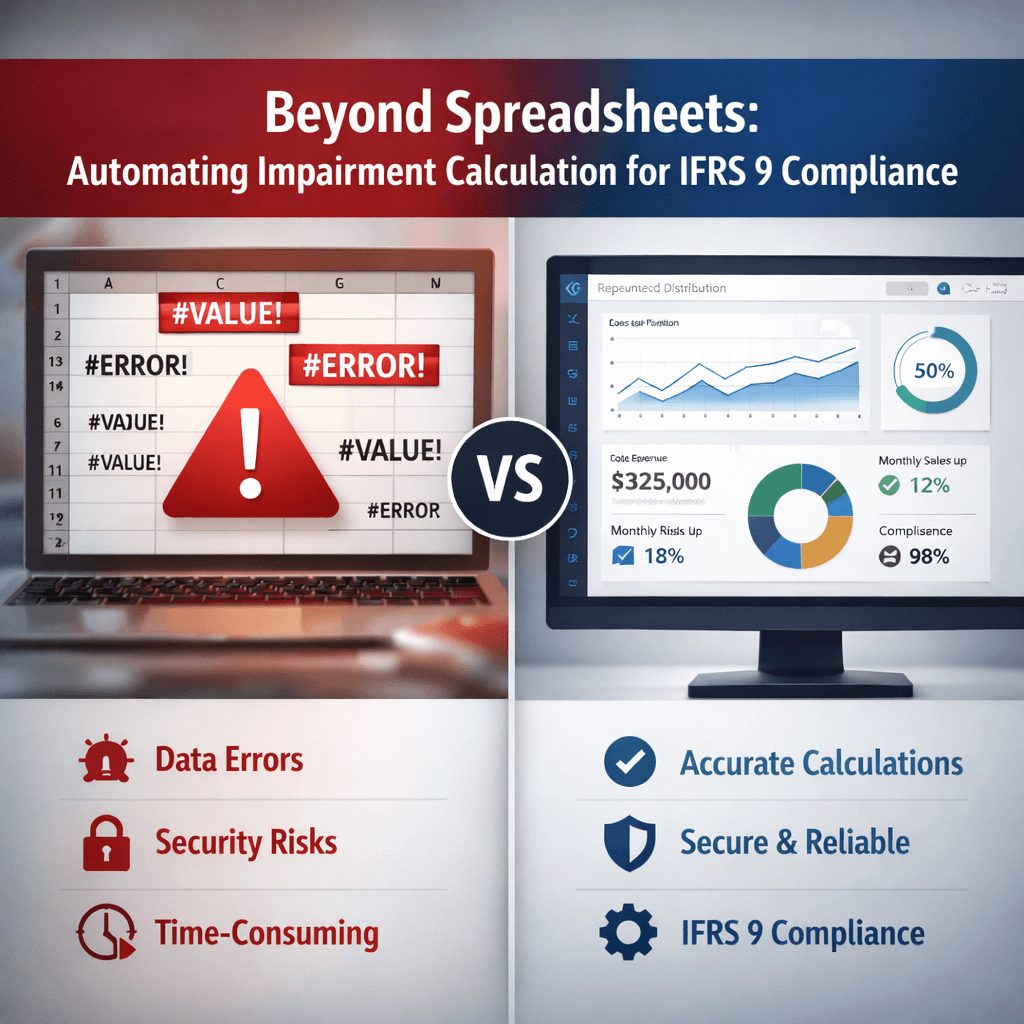
Many finance teams still rely on Excel-based processes for IFRS reporting. While spreadsheets offer flexibility, they create significant operational and compliance risks as organizations grow.
Version control becomes unmanageable when multiple people edit the same workbook. You can’t track who changed what or when they changed it. Formula errors propagate across linked worksheets without any warning. A single incorrect cell reference can understate revenue or misclassify expenses.
Then again, spreadsheets don’t scale well for multi-entity consolidation. Each subsidiary maintains its own files with different templates and formats. The consolidation team spends days collecting, cleaning, and reconciling data before they can even start analyzing results. The manual effort increases linearly with each new entity.
Audit readiness suffers under manual processes too. Auditors request detailed support for calculations and disclosures. With spreadsheets, you need to reconstruct the entire calculation path for every balance. There’s no systematic audit trail showing who approved what and why.
Regulatory changes create additional strain. When a new IFRS standard takes effect, finance teams must rebuild their entire spreadsheet infrastructure. They update formulas, redesign templates, and retrain users. This consumes months of effort that could be spent on value-added analysis.
Organizations transitioning from manual processes to automated solutions should evaluate comprehensive IFRS system financial reporting software that addresses these operational challenges. The right platform eliminates version control issues, provides systematic audit trails, and adapts to standard changes without requiring spreadsheet rebuilds. This shift from manual to automated reporting represents a fundamental change in how finance teams operate.
What really matters is that manual processes limit your finance team’s strategic contribution. If controllers spend weeks manipulating data, they can’t focus on explaining variances to business leaders. The CFO role shifts from financial stewardship to spreadsheet quality control.
Key Features CFOs Should Expect From IFRS Reporting Software
Modern IFRS reporting software should deliver specific capabilities that address the challenges outlined above. These features represent the minimum standard for enterprise-grade solutions.
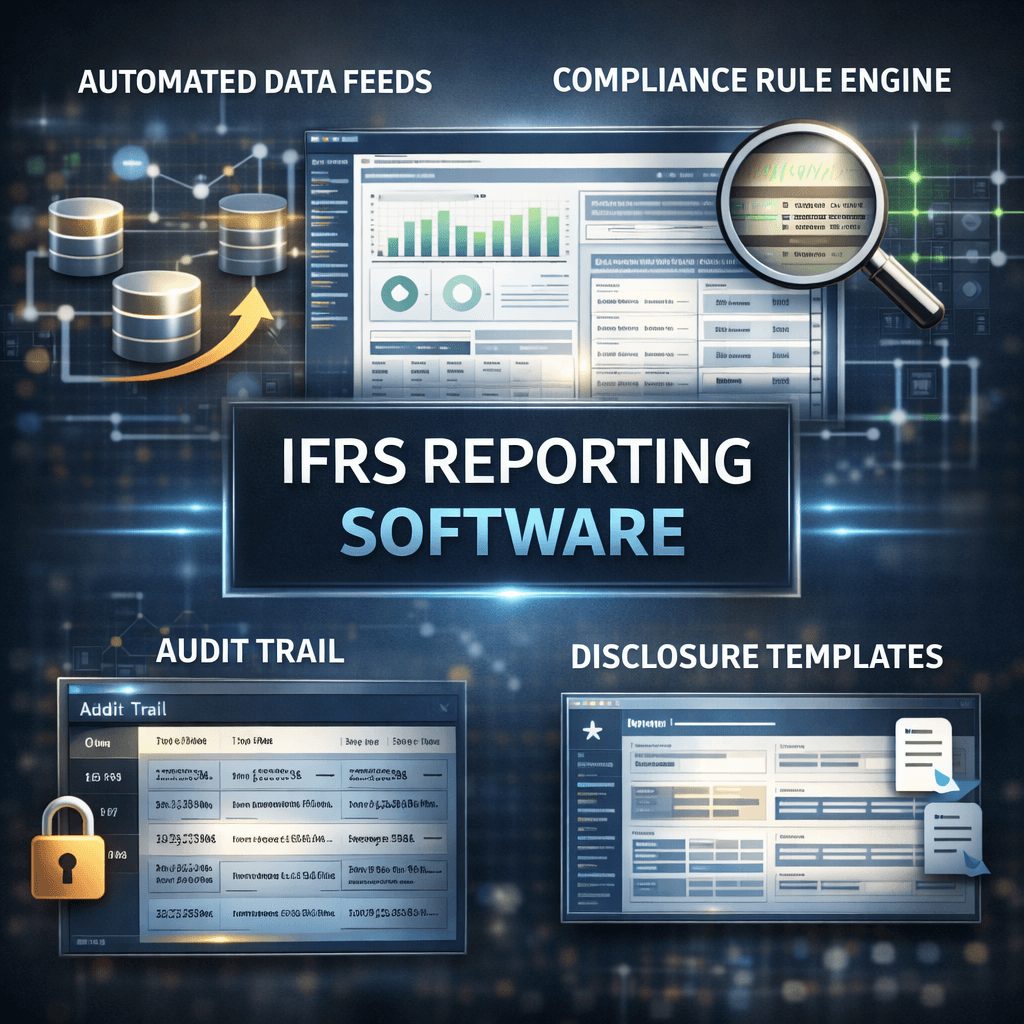
First, look for automated data collection from source systems. The software should connect to your ERP, subledgers, and other financial systems without manual file uploads. Scheduled data refreshes keep reporting databases current throughout the month.
Second, expect built-in IFRS accounting rules and calculations. The platform should include templates for common journal entries, standard-specific adjustments, and consolidation eliminations. These should be configurable to match your specific accounting policies while maintaining standard compliance.
Third, demand comprehensive audit trails and version control. Every change to data or configuration should be logged with user ID, timestamp, and reason. You should be able to reproduce any prior period’s reports exactly as they were issued.
Fourth, require flexible disclosure management capabilities. The software should let you author footnotes, build cross-references, and format statements for different audiences. Templates should update automatically when standards change.
Fifth, insist on proper data security and access controls. Financial data is sensitive. The system needs encryption, role-based permissions, and integration with your corporate identity management. Cloud deployments should meet relevant security certifications for your industry.
Sixth, look for built-in workflow automation. Period-end close involves coordinated tasks across multiple teams. The software should assign tasks, send reminders, and track completion status. Workflow tools reduce close cycle times by eliminating coordination bottlenecks.
Finally, expect regular updates for new and amended standards. The vendor should maintain the software proactively. You shouldn’t need to initiate upgrade projects every time IASB issues a new pronouncement.
How to Evaluate IFRS Reporting Software Vendors
The software selection process requires structured evaluation to avoid costly mistakes. CFOs should approach vendor assessment systematically rather than relying on sales demonstrations alone.
Functional fit versus customization
Start by mapping your requirements to vendor capabilities. Can the system handle your specific use cases out of the box? Or will you need extensive customization to achieve basic functionality?
Customization introduces long-term technical debt. Each custom modification must be tested and maintained after every software update. More importantly, heavy customization often indicates poor product-market fit. Look for solutions that align naturally with your needs.
Cloud versus on-premise deployment
Cloud-based IFRS reporting software offers faster deployment and lower upfront costs. The vendor manages infrastructure, security patches, and system availability. Updates roll out automatically without requiring IT involvement.
On-premise deployments give you more control over data residency and system configuration. This matters for highly regulated industries or organizations with strict data sovereignty requirements. While that’s true, on-premise solutions require dedicated IT resources for ongoing maintenance.
From there, consider hybrid architectures that keep sensitive data on-premise while using cloud services for computation and collaboration. The right deployment model depends on your specific security, compliance, and operational constraints.
Change management and user adoption
New software only delivers value if people actually use it. Evaluate vendors based on their implementation methodology and training approach. Do they offer hands-on workshops or just documentation?
The best implementations include change management support beyond technical configuration. Look for vendors who help you design new workflows, communicate benefits to users, and measure adoption metrics. User resistance kills more software projects than technical failures.
Post-implementation support and upgrades
Your relationship with the vendor extends far beyond go-live. Ask about support tiers, response time commitments, and escalation procedures. How do they handle critical issues during close periods?
Understand the upgrade cycle and associated costs. Will new features require additional licenses? Do major version upgrades force you into expensive professional services engagements? These factors significantly impact total cost of ownership.
Implementation Approach and Integration Considerations
IFRS reporting software implementations vary from weeks to months depending on organizational complexity. CFOs should plan for realistic timelines that account for data migration, testing, and training.
Start with a detailed data assessment. Which source systems feed the reporting platform? What data quality issues exist today? You can’t build reliable reporting on unreliable data. Budget time for cleaning and standardizing inputs before the software goes live.
Next, define your integration architecture. Will you use real-time APIs or scheduled batch processes? Real-time integration provides up-to-date data but requires more complex technical implementation. Batch processes are simpler but introduce latency between transactions and reporting.
User acceptance testing should involve actual finance team members, not just IT staff. Controllers need to verify that workflows match their business processes. They should test edge cases and unusual transactions that might not appear in standard demonstration data.
Document your configuration decisions and accounting policy elections. Future team members will need to understand why you made specific choices. This documentation also helps during external audits when questions arise about methodology.
Cost, ROI, and Total Cost of Ownership
IFRS reporting software represents a significant investment. CFOs need clear frameworks for evaluating costs and quantifying benefits.
Total cost of ownership includes software licenses, implementation services, ongoing support fees, and internal resource allocation. Cloud subscriptions typically bundle these elements into monthly or annual fees. On-premise deployments separate software licenses from implementation and maintenance costs.
Calculate implementation costs carefully. Beyond vendor professional services, you’ll need internal project management, business analysis, and testing resources. Training costs add up when you have large finance teams across multiple locations.
Quantify benefits through specific metrics. How much time does your team currently spend on manual consolidation? What’s the cost of errors that require restatements? How many hours go into preparing for audits because you can’t easily produce supporting documentation?
Faster close cycles deliver measurable value. If you can shave three days off your monthly close, that’s 36 days per year that senior finance staff can redirect to strategic activities. Put a dollar value on that redeployed capacity.
Improved data quality reduces audit fees. When auditors can efficiently test controls and trace calculations, they spend less time on your engagement. The software pays for itself partly through lower professional services costs.
Risk mitigation has value too, even if it’s harder to quantify. What would a material error cost your organization in market credibility? How much management time would a restatement consume? The right software reduces these tail risks.
Security, Controls, and Audit Readiness
Financial reporting data requires enterprise-grade security and control frameworks. IFRS reporting software should meet or exceed your organization’s security standards.
Data encryption should protect information both in transit and at rest. Look for systems that use industry-standard encryption protocols. Cloud vendors should provide certifications like SOC 2, ISO 27001, or industry-specific compliance frameworks.
Access controls need granular configuration. Different users require different permissions based on their role and geographic responsibility. The system should enforce segregation of duties automatically. For example, the person who prepares journal entries shouldn’t be able to approve their own work.
Audit trails must capture all financially significant activities. Who created or modified transactions? When were reports generated or approved? What data changed between reporting periods? Complete logging supports both internal controls testing and external audits.
The software should facilitate audit procedures rather than complicate them. External auditors need to sample transactions, test controls, and validate calculations. Systems that provide clear documentation and easy data export reduce audit friction.
Think about disaster recovery and business continuity. What happens if the system becomes unavailable during close periods? Cloud providers typically offer better disaster recovery than on-premise deployments. Still, verify recovery time objectives and backup procedures match your requirements.

Scalability and Future-Readiness for Growing Enterprises
The IFRS reporting software you select today needs to support your organization five years from now. Scalability considerations go beyond just handling more transaction volume.
Can the system accommodate additional legal entities as you acquire companies or expand geographically? Adding entities shouldn’t require system redesigns or expensive customization. The platform should scale horizontally by adding capacity as needed.
Consider currency and language requirements for multinational operations. The software should handle multiple functional currencies, support currency translation under IAS 21, and offer localized interfaces for international users.
Technology architecture matters for long-term viability. Modern platforms built on cloud-native architectures adapt more easily to changing requirements. Legacy systems with monolithic designs become technical debt over time.
Vendor financial stability affects your investment too. Is the software provider well-funded and growing? Or are they struggling with customer retention? You’re making a multi-year commitment. The vendor needs to be around to support you.
Product roadmap alignment helps ensure future compatibility. Does the vendor plan to support emerging requirements like ESG reporting or advanced analytics? Their development priorities should align with where accounting standards are heading.
How CFOs Can Shortlist and Select the Right System
With dozens of IFRS reporting software vendors in the market, narrowing options to a manageable shortlist requires discipline. CFOs should follow a structured selection process.
Begin with an internal stakeholder workshop. Bring together controllers, treasury, tax, and IT leaders. Document your current pain points and future requirements. Prioritize needs into must-haves versus nice-to-haves. This creates shared understanding and prevents scope creep later.
Issue a formal request for information to 8-10 potential vendors. Include specific questions about standard coverage, integration capabilities, and implementation methodology. Vendor responses reveal how well they understand your industry and use case.
Narrow to 3-4 finalists for detailed demonstrations. Provide your own data and scenarios instead of watching generic presentations. Ask vendors to show how they’d handle your specific reporting requirements. This surfaces capability gaps early.
How to run demos and proof-of-concepts
Effective demonstrations focus on your requirements, not vendor marketing slides. Prepare realistic test scenarios based on actual reporting challenges you face. Ask vendors to walk through end-to-end workflows using your chart of accounts.
Proof-of-concept engagements reduce implementation risk for complex deployments. A limited POC might involve implementing one legal entity or one IFRS standard. You learn how the software handles your data before committing to enterprise rollout.
POCs should include clear success criteria defined upfront. What specific outputs must the system produce? How will you measure data quality and performance? Document evaluation criteria in advance to prevent subjective decision-making.
Key questions CFOs should ask vendors
Beyond standard RFI responses, probe vendors on topics that matter for long-term success. How many customers have they implemented in your industry? Can they provide references from companies with similar complexity?
Ask about implementation failure rates and common pitfalls. Honest vendors will share lessons learned from challenging projects. Their willingness to discuss difficulties tells you more than polished case studies.
Understand the vendor’s support model in detail. What happens when you encounter issues during close periods? How quickly can they escalate problems? Who owns the relationship after implementation?
Investigate the vendor’s financial health and customer retention metrics. High customer turnover signals product or service problems. Growing annual recurring revenue indicates market validation and long-term viability.
Finally, ask how they stay current with IFRS standards. Do they have partnerships with accounting firms? How do they test standard changes before releasing to customers? Their development process determines whether the software will protect you from compliance risk.
Frequently Asked Questions
How long does it take to implement IFRS reporting software?
Implementation timelines range from 8 weeks for simple deployments to 9 months for complex, multi-entity rollouts. Factors affecting duration include number of legal entities, data quality, integration complexity, and internal resource availability. Cloud solutions typically deploy faster than on-premise systems.
Can IFRS reporting software handle multiple accounting standards simultaneously?
Yes, most enterprise platforms support parallel accounting frameworks. Organizations can maintain books under IFRS, US GAAP, and local statutory standards simultaneously. The software manages differences through configurable accounting rules and separate reporting hierarchies.
What’s the difference between ERP financial reporting and dedicated IFRS reporting software?
ERP systems focus on transaction processing and basic financial statements. IFRS reporting software adds specialized capabilities for complex standard calculations, multi-entity consolidation, detailed disclosures, and audit-ready documentation. The two systems integrate but serve different purposes.
How much does IFRS reporting software cost?
Pricing varies widely based on deployment model, entity count, and feature requirements. Cloud subscriptions for mid-size companies start around $50,000 annually. Enterprise deployments with extensive customization can exceed $500,000 in first-year costs. Total cost of ownership includes implementation, training, and ongoing support.
Do I need separate software for different IFRS standards like IFRS 16 and IFRS 17?
Not necessarily. Comprehensive platforms handle multiple standards within a single system. Still, some organizations use specialized software for complex standards like IFRS 17 insurance contracts while managing other standards in their primary reporting platform. Integration between specialized and general-purpose systems becomes important in these hybrid architectures.
How does IFRS reporting software handle foreign currency translation?
Modern platforms automate IAS 21 currency translation calculations. They maintain historical exchange rates, apply appropriate translation methods for different balance sheet accounts, and calculate translation adjustments automatically. The software should handle both functional currency accounting and presentation currency reporting.
Can the software integrate with our existing actuarial systems for IAS 19 calculations?
Most IFRS reporting software provides APIs or file import capabilities for actuarial data. The integration allows pension and post-employment benefit calculations to flow directly into financial statements. Look for vendors with experience connecting to common actuarial platforms.
What happens when IFRS standards change?
Reputable vendors update their software to reflect new and amended standards. Updates should include revised calculation logic, updated disclosure templates, and documentation of changes. The best vendors provide advance notice and implementation guidance before effective dates.
Making Your Software Selection Decision
Selecting IFRS reporting software requires balancing multiple considerations. You need a system that meets today’s compliance requirements while adapting to future standard changes. The platform must integrate cleanly with existing systems without creating new operational risks.
CFOs should prioritize vendors with deep IFRS expertise and proven implementation methodologies. Technology capabilities matter, but domain knowledge separates average solutions from exceptional ones. The vendor should understand your accounting challenges, not just sell you software.
Remember that implementation success depends as much on organizational change management as technical configuration. Invest in user training and process redesign. The software enables better reporting, but your people deliver it.
Start your evaluation by documenting specific requirements rather than reviewing vendor marketing materials. Use realistic scenarios during demonstrations. Validate claims through reference checks with existing customers.
The right IFRS reporting software transforms your finance function from a reporting factory into a strategic business partner. Controllers spend less time manipulating data and more time analyzing results. CFOs get reliable numbers faster, with stronger controls and complete audit trails.
That said, software alone doesn’t guarantee success. You need the right combination of technology, process, and expertise. Organizations looking for comprehensive financial reporting support should consider partners who can provide both software implementation and advisory services for complex standards.
The investment in purpose-built IFRS reporting software pays dividends through reduced close cycle times, lower error rates, and improved audit readiness. As regulatory requirements continue expanding, manual processes become increasingly unsustainable. The question isn’t whether to automate, but how quickly you can implement the right solution.