TL;DR
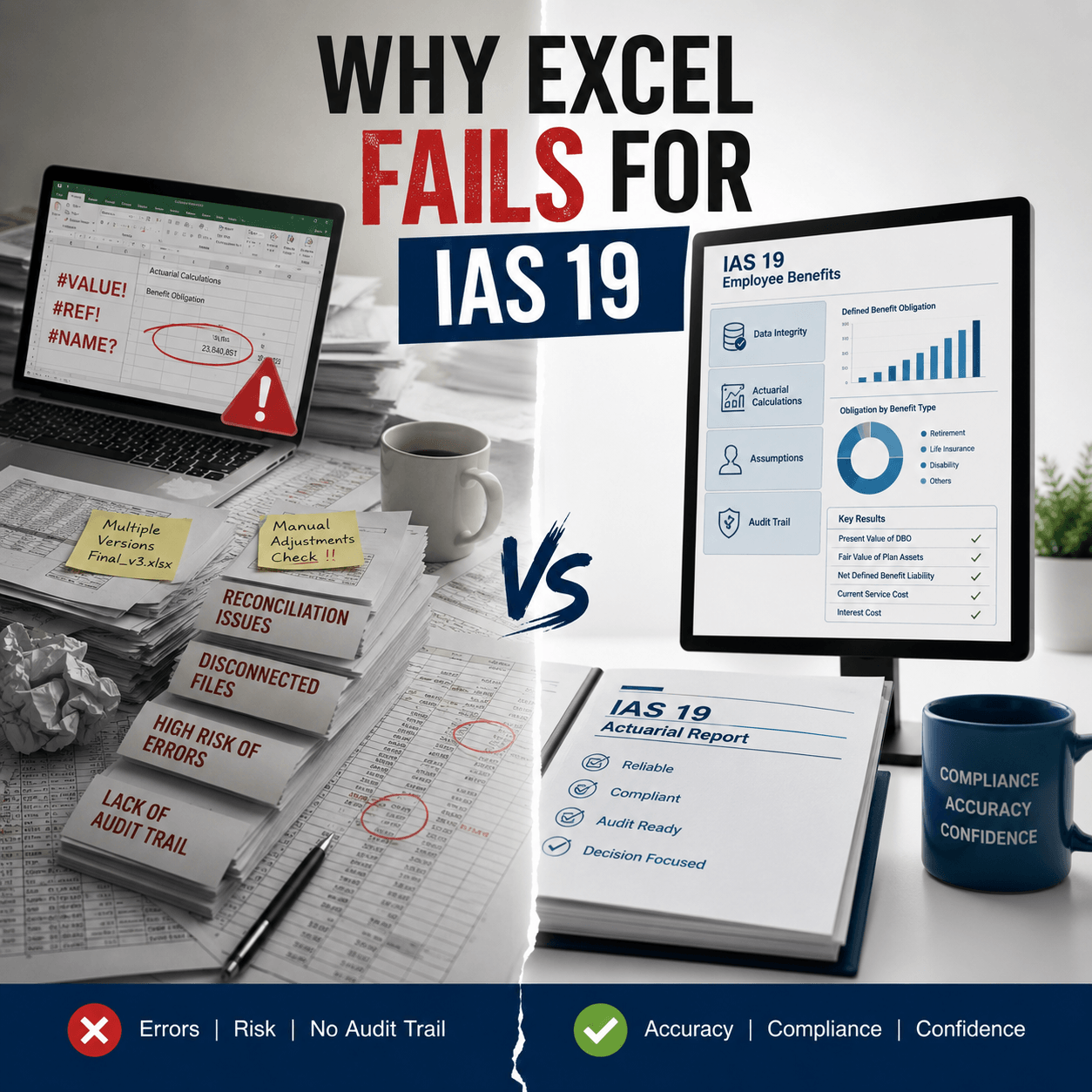
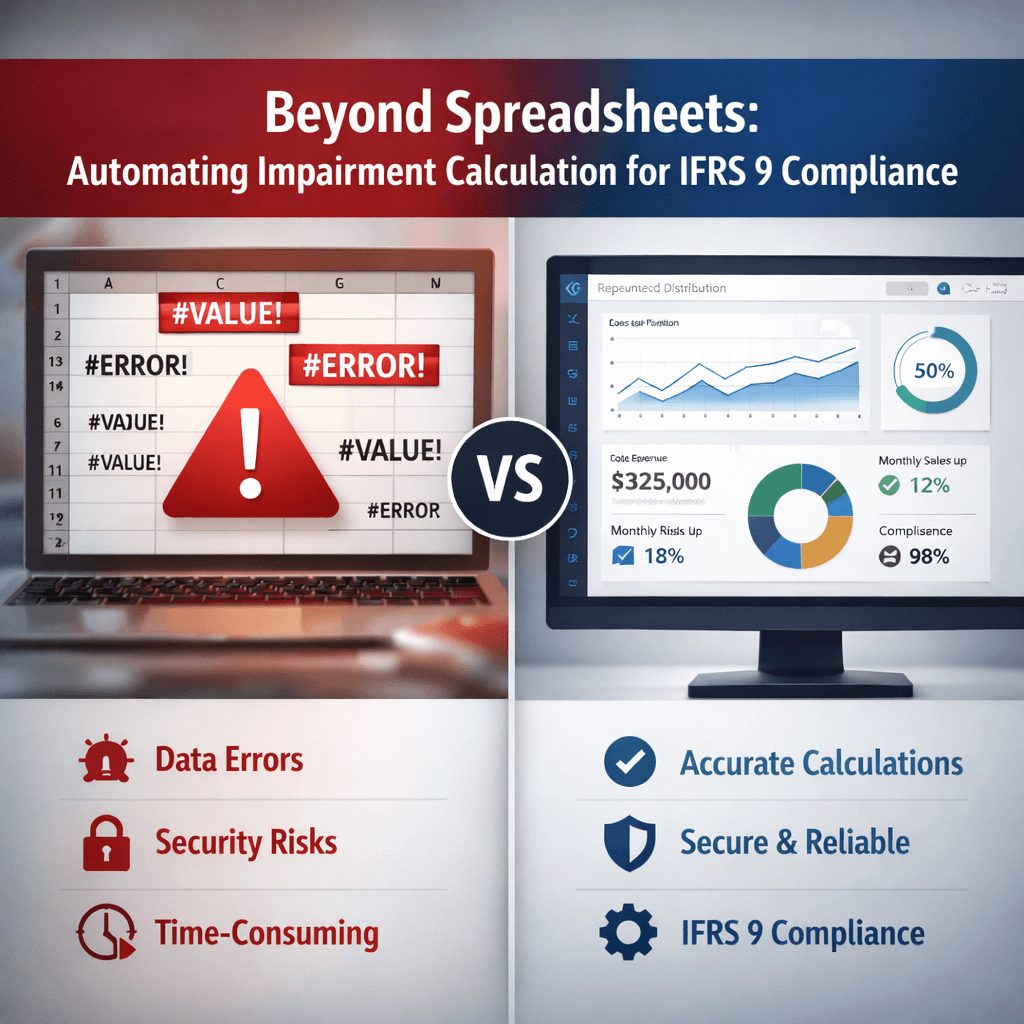
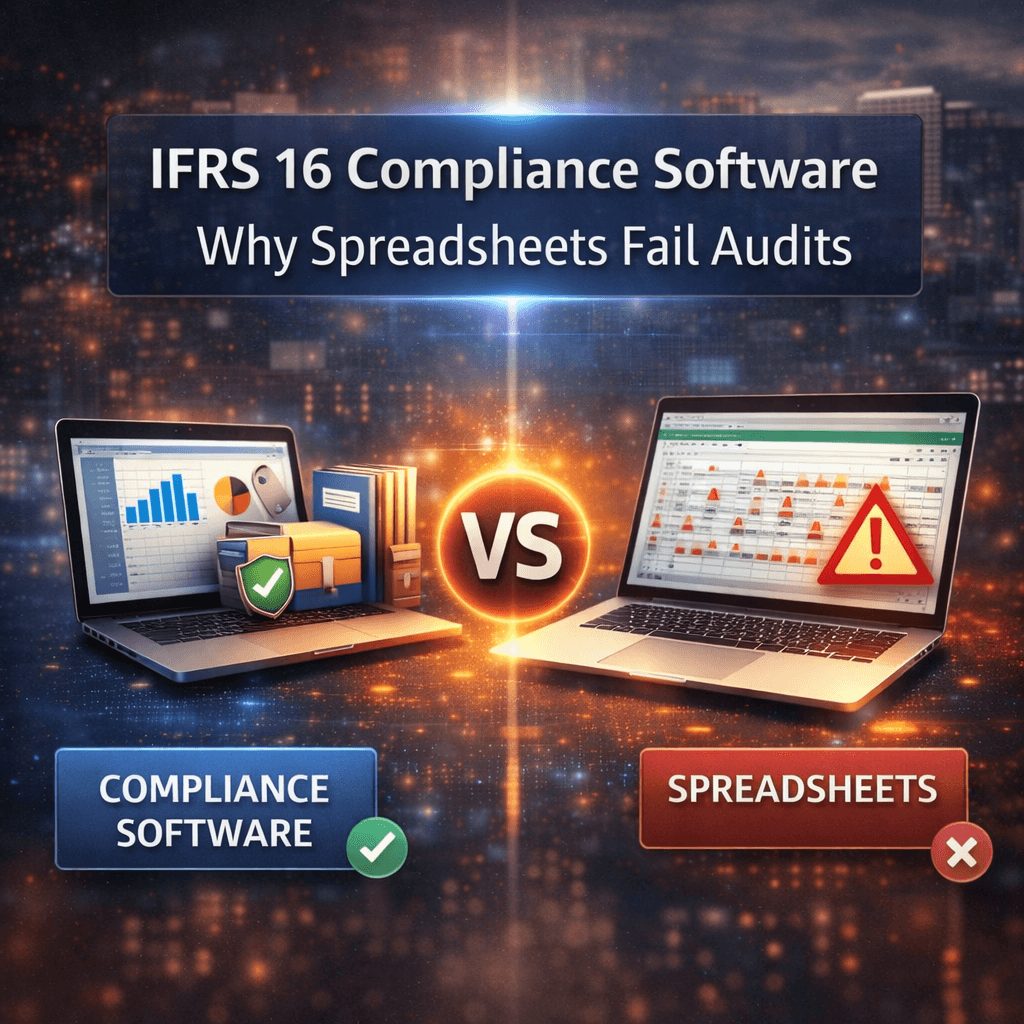
Spreadsheet-based IFRS 16 compliance software management creates systematic audit risk. Eighty-eight percent of spreadsheets contain errors, and manual ROU calculations for lease modifications, discount rates, and reassessments fail to maintain consistency across periods. Consequently, your finance team faces cascading calculation errors, parallel model maintenance nightmares, and documentation gaps that auditors immediately spot. Understanding why spreadsheet limitations exist helps you recognize that the problem isn’t your team’s capability but the tool’s fundamental constraints. Therefore, moving beyond spreadsheets to purpose-built IFRS 16 compliance software isn’t optional for scaled, auditable compliance.
IFRS 16 Compliance Software: Why Manual ROU Calculations Are Audit-Finding Waiting to Happen
Every quarter, your finance team faces the same challenge. First, they pull lease contracts from different sources. Next, they gather payment terms from scattered emails and agreements. Then, they wrestle with discount rate calculations. Finally, they try to manually compute right-of-use assets and lease liabilities in spreadsheets, all without proper IFRS 16 compliance software.
One misplaced formula, one misunderstood modification, one forgotten lease buried in a drawer, and suddenly you’re facing audit findings that could derail your financial reporting.
This isn’t a worst-case scenario. Rather, it’s the reality for many organizations still managing lease accounting manually without proper IFRS 16 compliance software.
Understanding the Real Cost of Manual IFRS 16 Compliance Software
In a spreadsheet environment, manual processes create cascading risks. For instance, one error in a modification calculation propagates to all downstream financial statements. Similarly, one missed lease affects reported liabilities across multiple periods. Additionally, one discount rate assumption applied inconsistently undermines comparability.
To understand the fundamentals of lease accounting under IFRS 16, IFRS 16 Lease Accounting Basics provides comprehensive foundational guidance.
Manual processes simply can’t scale with these demands.
The Statistical Reality of Spreadsheet Errors
According to research cited in 2025, 88% of spreadsheets contain errors. Moreover, a Deloitte study referenced in the same period found that 70% of financial reporting errors stem from spreadsheet misuse. More starkly, a 2024 study revealed that 94% of business spreadsheets contain critical errors.
When your lease accounting rests on these tools without dedicated IFRS 16 compliance software, you’re not managing risk. Instead, you’re managing the timeline for discovery of those errors.
The Complexity Multiplier Effect
The problem deepens when you consider complexity. ROU asset calculations require accurate lease term determination. Furthermore, they depend on correct discount rate selection. Additionally, they hinge on proper identification of variable lease payments and purchase options.
Each of these decisions branches into sub-decisions that compound the calculation burden.
Then come the modifications. A lease term changes. An option becomes reasonably certain to be exercised. Payment terms shift. Consequently, each modification requires reassessment of the entire lease under IFRS 16 requirements.
That means recalculating the lease liability. It also means remeasuring the ROU asset. Finally, it means updating amortization schedules and generating new journal entries.
Dedicated IFRS 16 compliance software systems enforce consistent rate application. They create centralized discount rate tables. Moreover, they link rates to specific leases with documented justification. They also flag outliers that deviate from established patterns.
Learning more about IFRS 16 software can help you understand how automation handles these complex requirements.
The Hidden Cost of Spreadsheet-Based Lease Accounting
Your spreadsheet approach likely feels manageable until it doesn’t. The moment comes during an audit when your auditor requests the audit trail for a lease recorded 6 months ago.
They want to see the supporting documentation. Additionally, they want to understand how you derived the implicit rate or incremental borrowing rate. Furthermore, they want to verify that the lease term matches contract terms.
The Documentation Challenge
In a spreadsheet environment, that documentation doesn’t exist as an integrated system. Therefore, you’re reassembling information from different sources. You’re also explaining formulas that weren’t documented when created. Moreover, you’re recreating decisions that were made weeks or months earlier.
According to a Gartner survey conducted in July 2023, 18% of accountants make financial errors at least daily. Many cite capacity constraints as the root cause. Spreadsheet-based processes consume extraordinary amounts of manual effort.
That effort, stretched across multiple team members working in different sheets and different versions, creates natural error vectors.
The Modification Scenario Deep Dive
Consider the modification scenario more closely. Your company enters into a 5-year vehicle lease. Subsequently, 18 months in, the lessor and lessee agree to extend the term.
Your current spreadsheet model recorded the original lease liability using the original lease term. Now you need to remeasure. Specifically, you need to recalculate the present value of remaining lease payments using the new term. You also need to adjust the ROU asset. Finally, you need to generate an adjustment entry.
In practice, this often means creating a new version of the spreadsheet for the modified lease. Consequently, you’re maintaining parallel models. You’re trying to ensure both the original model (for historical comparison) and the modified model remain consistent with each other and with your general ledger.
Each version carries its own error risk.
Why Discount Rate Determination Is Where Manual Processes Break Down
IFRS 16 compliance software requirements demand you discount lease payments using either the implicit interest rate in the lease or your incremental borrowing rate. This sounds straightforward. However, in practice, it’s where many organizations stumble.
The Implicit Rate Challenge
Implicit rates are often not disclosed. Finding them requires mathematical derivation from lease terms. Specifically, you need to solve for the interest rate that makes the sum of discounted lease payments equal to the fair value of the leased asset.
This isn’t a simple lookup. Rather, it’s an iterative calculation that spreadsheets can support, but only if the formula is correctly constructed.
The Incremental Borrowing Rate Complexity
When you can’t determine the implicit rate, you fall back to the incremental borrowing rate. This is the rate at which your company could borrow funds with a similar term and security. However, it’s not your company’s general borrowing rate. Instead, it’s lease-specific.
It should reflect the term of the lease, the nature of the asset, the security provided, and the economic environment.
Many finance teams simplify this. Unfortunately, they use a single company-wide rate for all leases. That approach creates an audit red flag immediately.
Auditors test whether your discount rates align with your company’s actual financing terms. Furthermore, they examine whether you’ve considered lease-specific factors. They also compare your rates across similar leases to identify inconsistencies.
How Software Solves Rate Consistency
In a spreadsheet environment, maintaining rate consistency across dozens or hundreds of leases requires perfect discipline. One team member uses a different rate. Another applies a rate that’s outdated. Meanwhile, a third applies a consolidated group rate to an entity that doesn’t match that group’s credit profile.
These variations accumulate.
IFRS 16 compliance software systems enforce consistent rate application. They create centralized discount rate tables. Moreover, they link rates to specific leases with documented justification. They also flag outliers that deviate from established patterns.
Modifications and Reassessments: Where Spreadsheets Create Audit Risk
Lease modifications go well beyond simple term extensions. IFRS 16 defines modifications broadly. Changes to lease payments, changes to the lease term, changes to the underlying asset, and changes to lease classification all trigger modification accounting.
Understanding Modification Treatment
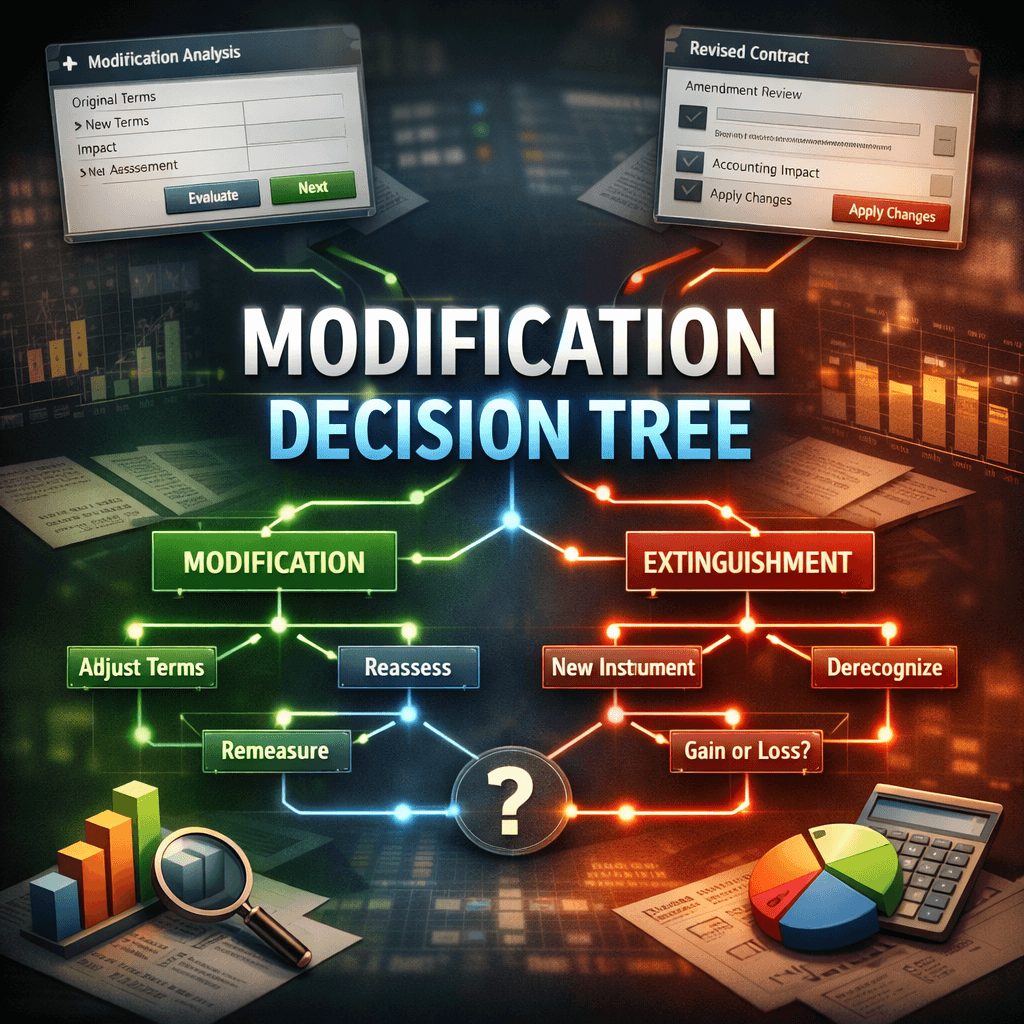
Some modifications require remeasurement of the lease liability with a corresponding adjustment to the ROU asset. Conversely, other modifications require reversal of the ROU asset with a gain or loss through the income statement.
The accounting treatment depends on whether the modification is a separate lease or an adjustment to the existing lease.
This distinction matters enormously for your financial statements. It affects when gains and losses are recognized. Additionally, it affects how lease liabilities are presented. It also affects the comparability of your results period to period.
The Tracking Problem
In a spreadsheet environment, tracking which leases have experienced modifications becomes burdensome. The spreadsheet doesn’t flag that a lease has been modified. Furthermore, it doesn’t prevent you from applying the wrong accounting treatment. It also doesn’t validate whether your modification accounting is consistent with prior similar modifications.
IFRS 16 compliance software systems maintain modification history. They link each modification to source documentation. Moreover, they apply modification accounting based on defined rules. They generate the required adjustment entries automatically. Finally, they provide audit trails that trace every change to source.
For detailed guidance on modification accounting, IFRS 16 lease modification accounting provides step-by-step treatment of various modification scenarios.
IFRS 16 Complaince Software Data Requirements Beyond Simple Calculations
Proper IFRS 16 compliance software implementation demands more than calculating liability amounts. Rather, it requires comprehensive data gathering that often reveals gaps in existing contract management systems.
Lease Identification Challenges
You need to identify all leases. This includes embedded leases within service contracts. Additionally, it includes arrangements where the right to use an identified asset is conveyed.
Many organizations discover embedded leases during initial implementation. Subsequently, they struggle to identify new embedded leases as new contracts are executed.
Payment Term Extraction
You need to extract payment terms comprehensively. This includes fixed payments, variable payments linked to indices or rates, and payments for purchase options. Additionally, it includes payments for residual value guarantees and payments for asset restoration obligations.
All of these must be documented and validated against source contracts.
Lease Term Determination
You need to determine lease terms accurately. IFRS 16 defines this specifically. It’s the non-cancellable period plus periods covered by renewal options that are reasonably certain to be exercised.
Additionally, it includes periods covered by termination options if the lessor has a significant incentive to exercise them. This three-part assessment requires judgment. Furthermore, it requires documentation and consistency across similar leases.
Classification Decisions
You need to classify short-term and low-value leases. These carry exemptions from recognition. A lease is short-term if its lease term is 12 months or less. Similarly, a lease is low-value if the underlying asset, when new, costs less than approximately $5,000.
These determinations sound simple. However, in practice, organizations struggle with application. When does a lease become reasonably certain to be exercised? How do you value an asset that’s leased second-hand? What’s your company’s definition of low-value?
The Validation Gap
Spreadsheet systems can track these data elements. However, what they can’t do is validate them consistently. They can’t flag that two similar leases received different low-value classifications.
They can’t identify that a lease term classification changed between periods without documented justification. Moreover, they can’t ensure that all leases use consistent assumptions for similar decisions.
Building Audit-Ready Lease Accounting Controls
Auditors expect documented policies and procedures for lease accounting. They want to see evidence that lease identification processes capture all leases. Furthermore, they want to verify that lease term determinations follow consistent logic. They also want to trace calculations to source contracts.
The Documentation Burden
In a spreadsheet environment, these expectations create enormous documentation burdens. You need to maintain separate spreadsheets for policies. Additionally, you need to document assumptions and create change logs.
You also need to build validation worksheets that test whether calculations are correct. Finally, you need to generate reconciliation schedules that connect your lease accounting to your general ledger.
This documentation consumes time without adding value to compliance. Rather, it’s largely defensive, created to respond to audit questions rather than to prevent errors.
How Software Transforms Audit Readiness
IFRS 16 compliance software systems provide documented audit readiness built into the system. They maintain configurable policies that govern lease identification, term determination, classification, and measurement.
They generate audit reports that show how each lease was identified, classified, and valued. Moreover, they provide audit trails that document every change. They also produce journal entry export files that connect lease accounting directly to general ledger postings.
The audit conversation changes when you’re using a system designed for compliance. Instead of explaining spreadsheet formulas, you’re demonstrating how defined rules were applied. Rather than reconstructing calculations, you’re showing calculated values with supporting documentation.
Instead of defending methodologies, you’re showing how policies were consistently implemented.
Why Retail & Multi-Entity Organizations Face Acute Spreadsheet Challenges
Some organizations face acute spreadsheet challenges due to their lease portfolio characteristics. Retail companies with hundreds of store leases face identification challenges. Meanwhile, equipment-leasing companies with constantly changing lease terms face modification challenges.
Multi-entity organizations face consolidation and reporting challenges.
Retail Company Complexities
Retail companies must identify all store leases across multiple properties and management structures. Some stores operate under unit leases. Conversely, some operate under master leases with sub-tenancy arrangements. Others sit in owned properties without recognized leases.
Identifying all leasing arrangements, then maintaining that inventory as stores open and close, creates spreadsheet scale challenges.
Equipment-Leasing Dynamics
Equipment-leasing companies often have variable lease terms that change throughout the lease life. Payment dates shift. Residual value estimates change. Rate indices move. Consequently, each change technically triggers a reassessment.
Managing dozens of reassessments per month in spreadsheet systems creates update challenges.
Multi-Entity Consolidation Issues
Multi-entity organizations must consolidate lease accounting across legal entities while maintaining entity-specific financial reporting. They need to track which entities are lessees, which are lessors, and which are parent companies guaranteeing leases.
They also need to ensure that intercompany lease eliminations are handled correctly in consolidated statements.
These scenarios aren’t theoretical problems. Rather, they’re daily realities for organizations managing thousands of leases across complex business structures. Spreadsheet systems simply don’t scale to these complexities without extraordinary manual effort.
The Documentation and Disclosure Burden
IFRS 16 requires extensive disclosures about lease agreements, lease liabilities, ROU assets, and lease-related income and expense. These disclosures include quantitative tables showing lease liability movement and ROU asset reconciliations.
Additionally, they include maturity analyses of future lease payments, sensitivity analyses, and qualitative descriptions of leasing arrangements.
Manual Disclosure Creation Problems
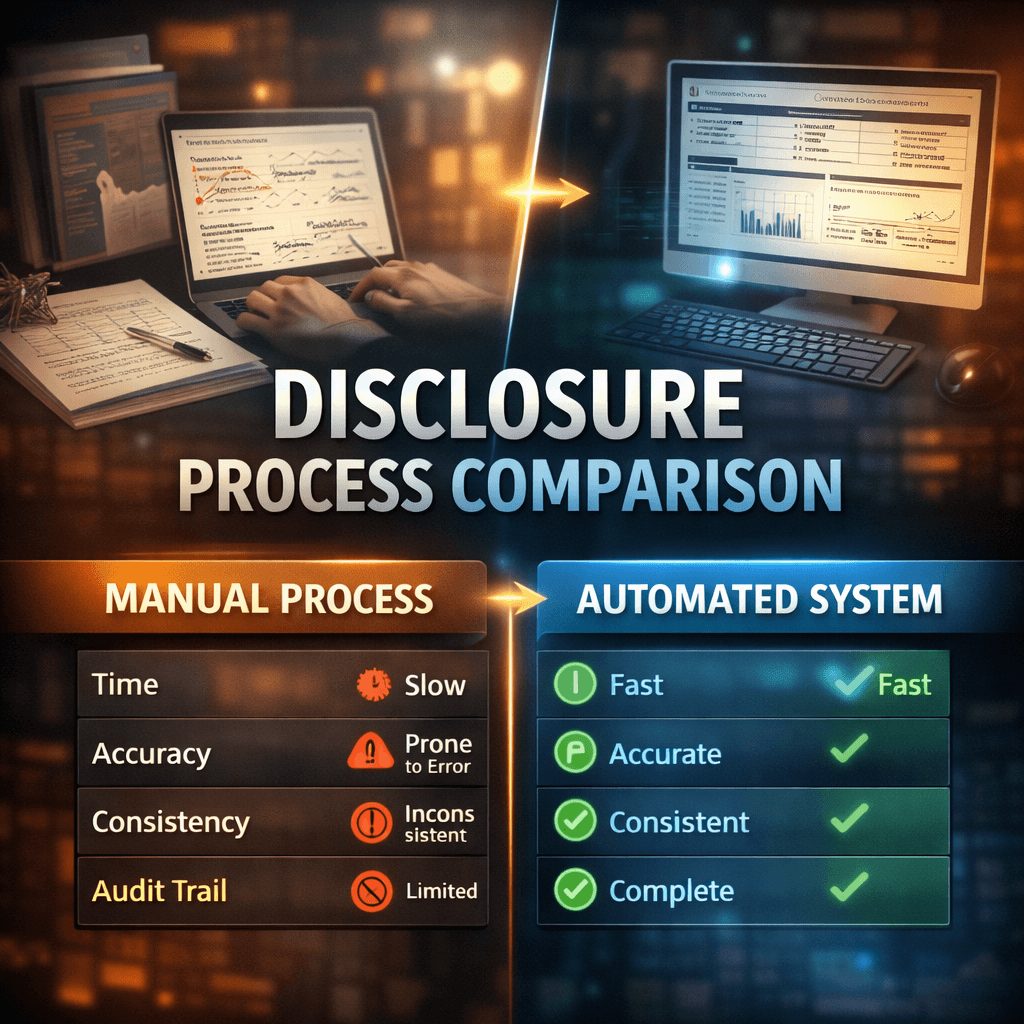
In a spreadsheet environment, disclosures are typically built manually from lease calculations. A finance team member extracts data from various spreadsheets. Then, they organize it into disclosure formats required by the financial statements. Finally, they manually verify that disclosures reconcile to the balance sheet.
This process is error-prone. Disclosures may not reconcile. Maturity schedules may not agree with lease contracts due to modification errors. Meanwhile, sensitivity analyses may reflect outdated assumptions.
The auditor typically requests multiple disclosure revisions before final statements are issued.
Automated Disclosure Generation
IFRS 16 compliance software systems generate disclosures directly from the calculation engine. If a lease is recorded in the system, it’s automatically included in disclosure schedules. Furthermore, if a lease is modified, disclosures update automatically.
If rates or terms change, the impact flows through to disclosures without manual intervention.
Understanding how an IFRS 16 reporting platform works can demonstrate the efficiency gains available to your team.
What Happens When Modifications Aren’t Properly Tracked
Consider a real scenario. A company leases office equipment for three years with a $1,000 annual payment. The implicit rate is 5%. Consequently, the initial lease liability is $2,723.
The company records this correctly.
The Modification Event
Two years into the lease, the lessor agrees to extend the lease term by one additional year and increase the annual payment to $1,100. This is a lease modification. Therefore, it requires remeasurement.
In a spreadsheet environment, someone needs to identify that this modification occurred. They need to locate the original lease calculation. Subsequently, they need to recalculate the liability based on the new lease term (two years remaining) and new payment amount.
They also need to update the amortization schedule. Finally, they need to calculate the adjustment entry.
The Common Failure Mode
What often happens instead? The modification gets recorded as a simple journal entry without the underlying lease liability recalculation. Consequently, the lease liability remains at its original balance despite the modified terms.
When the auditor tests the lease, they discover that the liability doesn’t reflect current lease terms. That’s an audit finding.
IFRS 16 compliance software systems require that modifications be recorded in the lease accounting module. They recalculate automatically. Moreover, they flag that the lease has changed. They generate the required adjustment entry. Finally, they prevent the scenario where modified terms exist without corresponding lease liability adjustments.
Moving Beyond Manual Processes for Sustained IFRS 16 Compliance Software
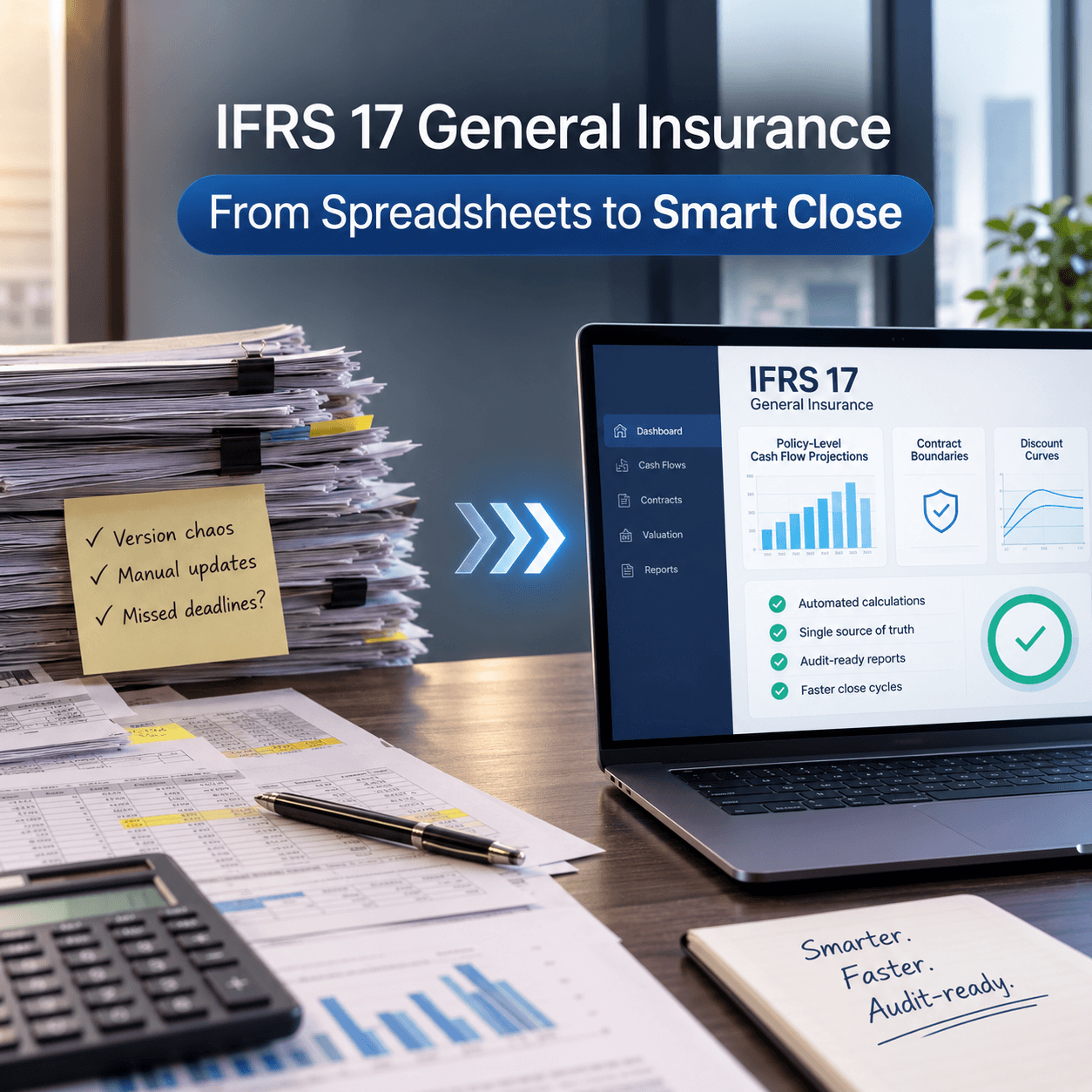
The transition from spreadsheet-based processes to IFRS 16 compliance software isn’t about adding software for software’s sake. Rather, it’s about addressing the fundamental limitations of spreadsheets for complex financial calculations.
Understanding Tool Limitations
Spreadsheets serve well for simple analyses and one-time calculations. However, lease accounting compliance is neither simple nor one-time. It demands precision, consistency, documentation, and adaptability across months and years of ongoing lease management.
The Accumulating Risk Factor
The risks of continued spreadsheet reliance accumulate each reporting period. Each new lease adds complexity. Similarly, each modification increases calculation burden. Each audit request reveals documentation gaps.
Early Adoption Advantages
Organizations that address spreadsheet limitations early gain several advantages. They reduce audit findings. Additionally, they lower the effort required for financial statement preparation.
They create institutional knowledge about lease accounting that survives staff changes. Furthermore, they build confidence that their financial statements are accurate and auditable.
Focus Your Energy Strategically
This is where organizations should focus their energy. Not on creating better spreadsheets, but on moving beyond spreadsheets entirely to dedicated IFRS 16 compliance software.
To start this transition, document your current lease portfolio completely. Gather all lease contracts and supporting documentation. Additionally, identify data gaps where contract terms aren’t fully documented.
Assess your current discount rate methodology to verify it aligns with IFRS 16 requirements. Furthermore, review your last audit findings to understand where your spreadsheet processes fell short.
From there, connect with a consultant who understands compliance requirements and the limitations of current processes. The investment in proper lease accounting systems pays back immediately through reduced audit effort and improved financial reporting quality.
Your lease accounting shouldn’t be held hostage by spreadsheet limitations. Precision, consistency, and documentation should be built into your compliance process itself.
Frequently Asked Questions About IFRS 16 Compliance Software
What exactly constitutes a lease under IFRS 16?
A lease is a contract that conveys the right to control an identified asset for a period of time in exchange for consideration. This includes arrangements that might not explicitly use the word “lease” but transfer use rights. Consequently, embedded leases within larger service contracts often catch organizations off-guard during implementation.
How do I know if a lease term is longer than twelve months for short-term lease exemption?
IFRS 16 defines the lease term as the non-cancellable period plus any periods covered by renewal options the lessee is reasonably certain to exercise. Additionally, it includes any termination options where the lessor has significant incentive to exercise. Many organizations find that leases initially classified as short-term become long-term once they properly assess renewal options.
What’s the difference between lease modifications and remeasurements?
A lease modification is an agreement between lessor and lessee that changes lease terms. Some modifications require remeasurement of the lease liability. Conversely, a remeasurement event is any change in facts or circumstances that affects lease classification or the amounts owed, such as a change in the index rate that affects variable payments.
Can I use the same discount rate for all my leases?
No. IFRS 16 compliance software requirements mandate the use of either the implicit rate (if readily determined) or the incremental borrowing rate specific to each lease. Different leases may have different rates based on their term, underlying asset, and credit characteristics. Consequently, auditors specifically test whether discount rates are appropriately differentiated.
Take Control of Your IFRS 16 Compliance Software Today
Spreadsheet-based lease accounting creates ongoing audit risk. It consumes disproportionate team effort. Moreover, it lacks the documentation that auditors expect.
The solution isn’t working harder with spreadsheets. Rather, it’s working smarter with systems designed specifically for lease accounting.
Explore Prima Consulting’s IFRS 16 advisory services to evaluate your current lease accounting processes. Let’s identify where your spreadsheet approach is creating risk and how proper IFRS 16 compliance software can address those gaps.
Your financial statements are too important to leave to manual calculations. Start your transition to reliable, auditable compliance today.
Contact Prima Consulting to discuss your lease accounting challenges and discover how proper systems can transform your compliance process.